Artwork
Pan Reclining before a Large Vase
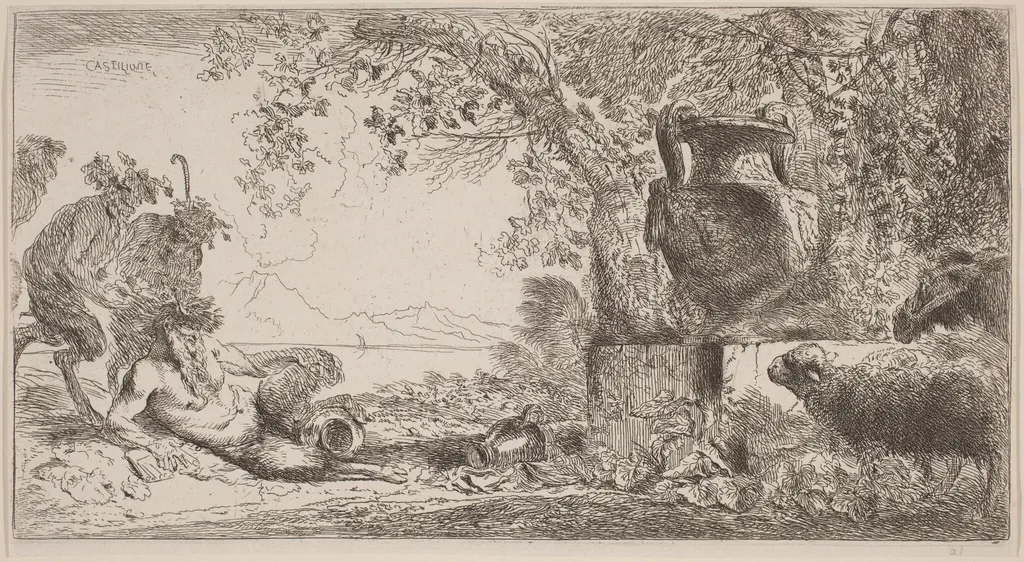
Pan Reclining before a Large Vase is an ink print by the Baroque artist Giovanni Benedetto Castiglione. It dates from 1642 and is held in the collection of the National Gallery of Art.
About this work
Overview
Created around 1642 by Giovanni Benedetto Castiglione, this etching on laid paper captures a moment of stillness in a mythological setting.
Created around 1642 by Giovanni Benedetto Castiglione, this etching on laid paper captures a moment of stillness in a mythological setting. Castiglione, known for his innovative printmaking, employed tonal wiping to soften the ink’s edges, producing a hazy, atmospheric effect. The work belongs to his broader exploration of pastoral subjects, blending classical mythology with intimate, naturalistic observation. Its quiet mood distinguishes it from more theatrical Baroque prints of the era.
Subject & Meaning
The figure of Pan, the Greek god of the wild, is depicted reclining beside a large ceramic vase, his posture relaxed and expression serene. Surrounded by dense foliage, he embodies a harmonious union with nature, a recurring theme in Castiglione’s mythological works. The vase, possibly symbolic of fertility or containment, anchors the composition without dominating it. The scene evokes contemplation rather than narrative, emphasizing Pan’s role as a spirit of quiet, untamed landscapes.
Technique & Style
Castiglione used etching combined with tonal wiping—a technique where ink is partially removed from the plate to create gradations of gray. This method allowed subtle transitions between light and shadow, lending the scene a soft, almost luminous quality. The laid paper’s texture enhances the tactile sense of the foliage and skin, while the sparse line work avoids clutter, focusing attention on the figure’s calm presence. The result is a delicate balance between precision and atmospheric suggestion.
History & Provenance
The print emerged during Castiglione’s mature period in Genoa, when he was refining his printmaking methods after years of painting. Though few records detail its early ownership, it was likely circulated among collectors familiar with his reputation as Il Grechetto. Its survival in good condition suggests it was valued for its technical innovation rather than its subject matter alone, reflecting the growing appreciation for prints as autonomous artworks in mid-17th-century Italy.
Context
In mid-17th-century Italy, mythological prints were often produced for private collections rather than public display. Castiglione’s focus on Pan aligns with a broader interest in pastoral themes among Genoese artists, who favored intimate, emotionally resonant scenes over grand historical narratives. His prints responded to a market seeking personal, contemplative imagery—distinct from the overt drama of Roman or Venetian Baroque traditions.
Legacy
Castiglione’s use of tonal wiping in this etching influenced later printmakers who sought to expand the expressive range of the medium beyond line-based definition. While not widely reproduced in his time, the work contributed to the recognition of etching as a vehicle for mood and texture. Modern scholars view it as a key example of how Baroque artists adapted classical subjects into quiet, personal visions, bridging myth and observation.
Artist & collection
Artist
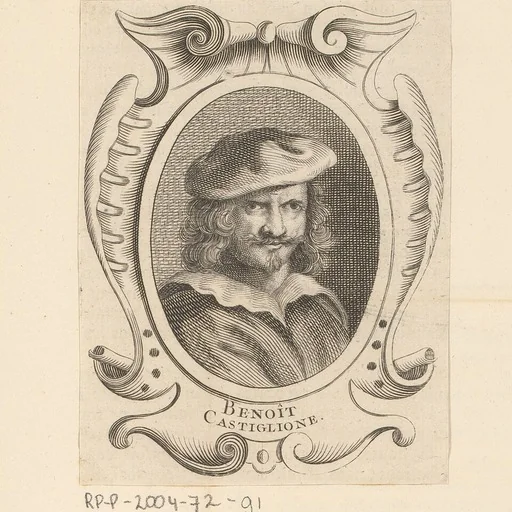
Giovanni Benedetto Castiglione
Giovanni Benedetto Castiglione (baptized 23 March 1609 – 5 May 1664) was an Italian Baroque painter, printmaker and draftsman, of the Genoese school.

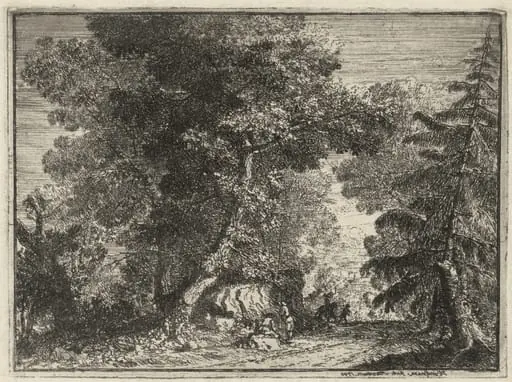 A Road through the Woods
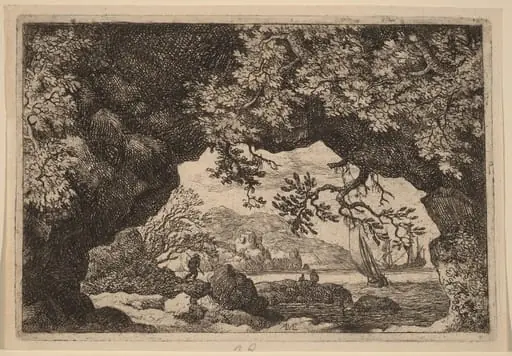 View through a Pierced Rock
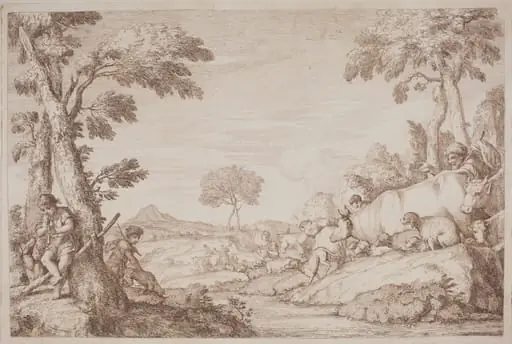 A Pastoral Journey with a Boy Playing His Flute by a Tree
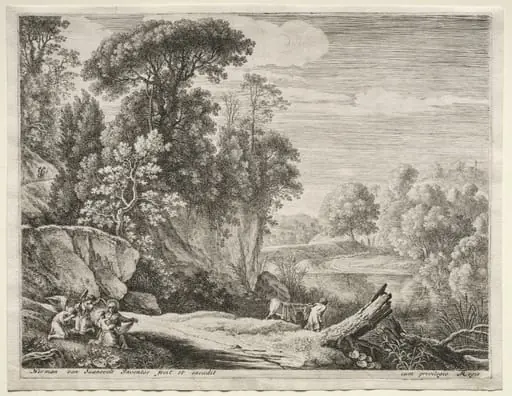 The Flight into Egypt: The Donkey Led to the River
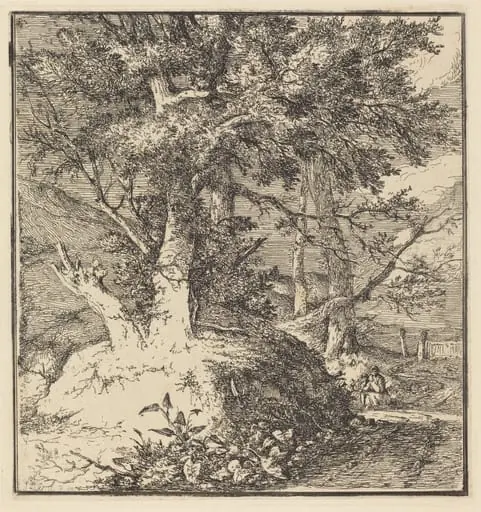 Tree on a Mound
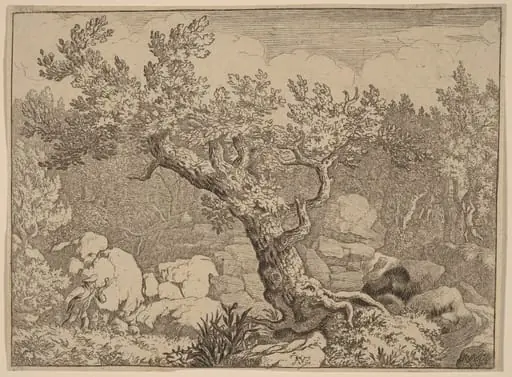 Sportsman near a Large Tree
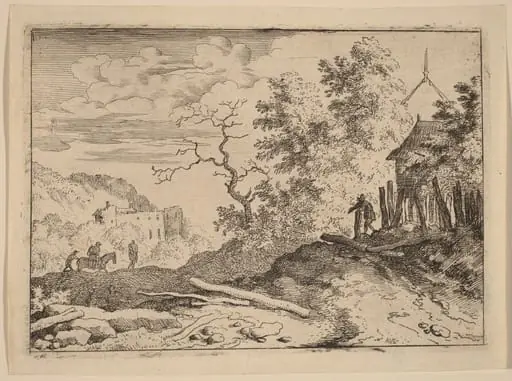 Hut with the Remains of a Hedge
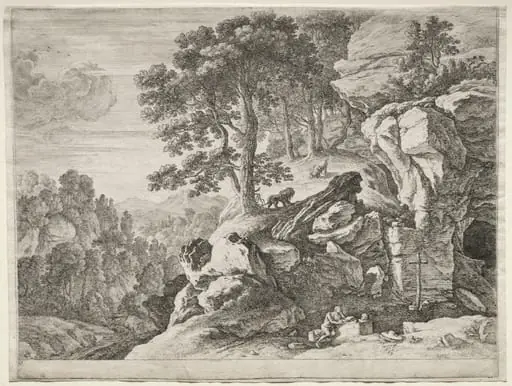 The Penitents: St. Jerome in the Desert
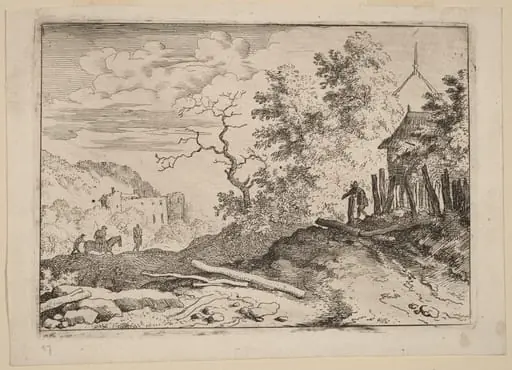 Hut with the Remains of a Hedge
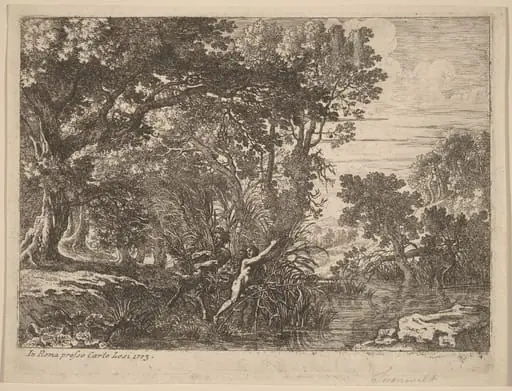 Pan and Syrinx
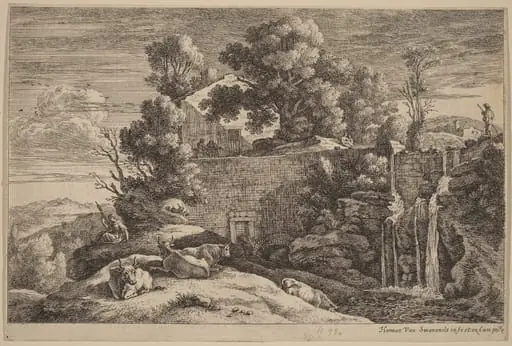 The Spinner and Four Cows
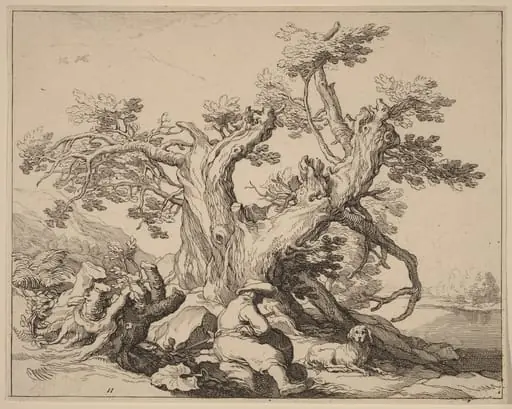 A Man and His Dog Resting by a Great Tree