Artwork
The Spinner and Four Cows
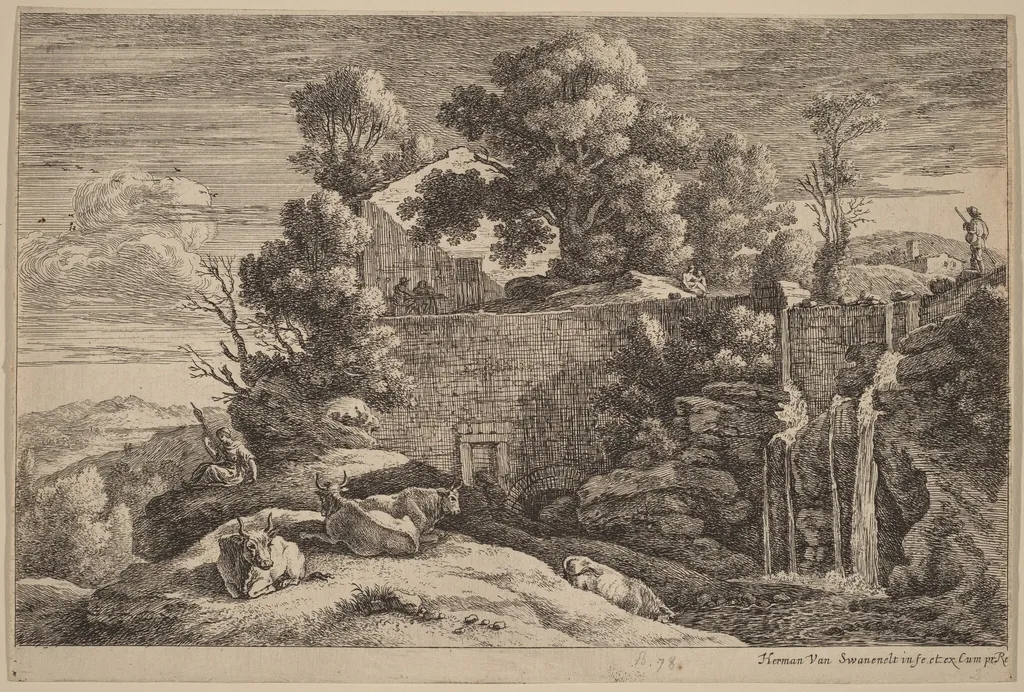
The Spinner and Four Cows is an ink print by the Baroque artist Herman van Swanevelt. It dates from 1628 and is held in the collection of the National Gallery of Art.
About this work
Overview
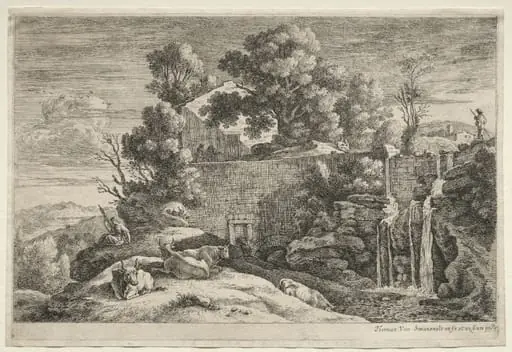
Created in 1628, this etching by Herman van Swanevelt presents a quiet rural scene centered on a woman engaged in spinning wool.
Created in 1628, this etching by Herman van Swanevelt presents a quiet rural scene centered on a woman engaged in spinning wool. Four cows graze nearby, while a distant structure and a solitary figure on a hillframe the composition. The work belongs to a tradition of Northern European landscape prints that emphasize stillness and everyday labor, rendered with careful line work and subtle tonal variation.
Subject & Meaning
The scene captures a moment of domestic labor within a pastoral setting, reflecting ideals of rural simplicity common in early 17th-century Dutch and Flemish art. The spinner’s focused posture and the calm animals suggest harmony between human activity and nature. No overt narrative is present; instead, the image conveys a contemplative rhythm of daily life, free from drama or symbolism.
Technique & Style
Swanevelt employed fine, controlled etching lines to define textures—the wool in the spinner’s dress, the coarse fur of the cows, the bark of trees. Light is suggested through gradations of ink, not wash, creating depth without heavy contrast. The composition uses recession: foreground figures are sharply detailed, while the background softens, guiding the eye toward the distant hill and building.
History & Provenance
The etching was produced during Swanevelt’s early career, likely in the Netherlands before his move to Rome. It reflects his training in Dutch printmaking traditions and his interest in landscape as an independent subject. No documented early ownership is known, but the work aligns with circulating prints of rural scenes popular among collectors of the period.
Context
In the 1620s, etchings of pastoral life were widely circulated in the Low Countries, appealing to urban audiences drawn to idealized visions of the countryside. Swanevelt’s work shares affinities with artists like Rembrandt and Jan van de Velde, though his style remains more restrained. This print contributes to a broader visual culture that elevated ordinary rural moments as subjects worthy of artistic attention.
Legacy
Though Swanevelt later gained recognition for Italianate landscapes, this early etching remains a quiet example of his foundational skill in tonal draftsmanship. It represents a transitional phase in Northern printmaking, where landscape and genre elements merged without theatricality. The work is preserved in institutional collections as a testament to the quiet dignity of everyday rural life in early modern Europe.
Artist & collection

 The Little Angels on the Hill
 Landscape with a Woman Spinning
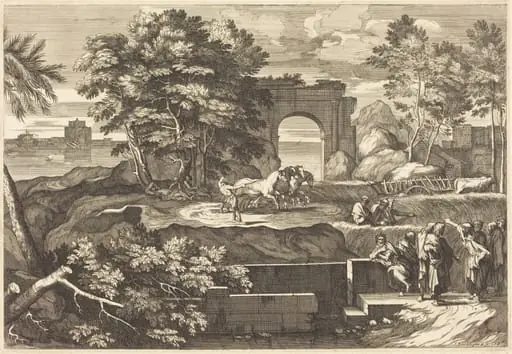 The Pharisees Complain to Our Lord
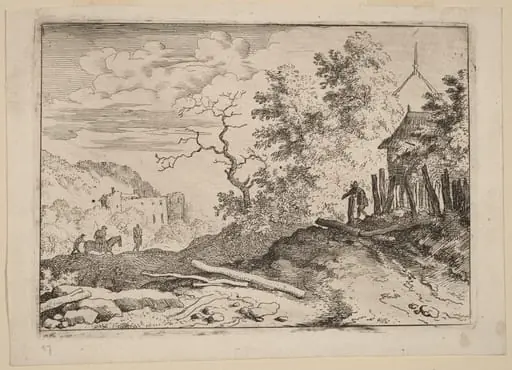 Hut with the Remains of a Hedge
 Hut with the Remains of a Hedge
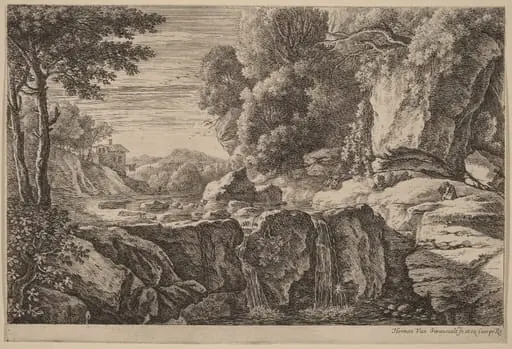 The Small Waterfall
 Classical Landscape with a Tempietto
 The Flight into Egypt: The Donkey Led to the River
 Building with a Square Tower
 The Donkey Led to the River
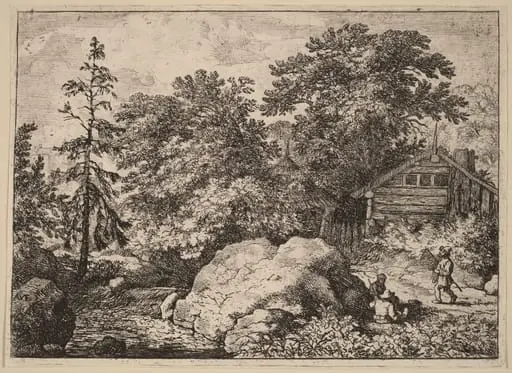 The Knoll
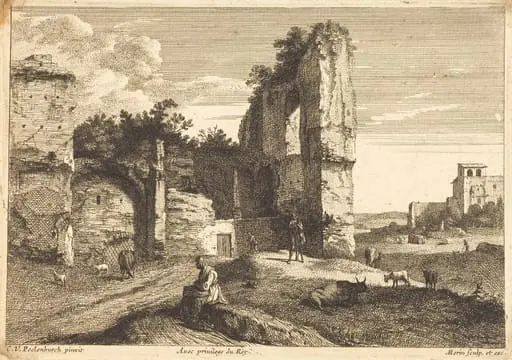 Old Woman Seated