Artwork
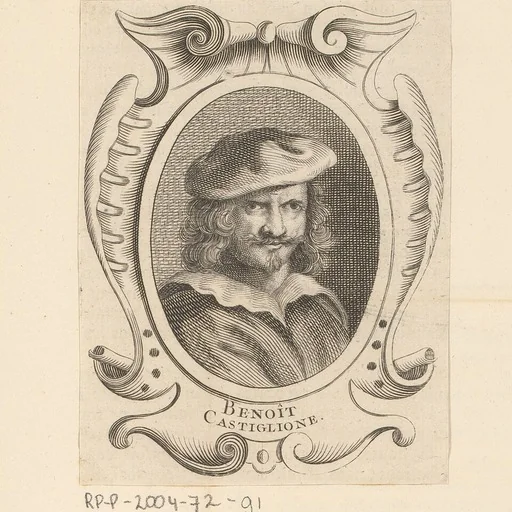
Self-Portrait(?), Wearing a Plumed Cap ["Portrait of Bernini"]
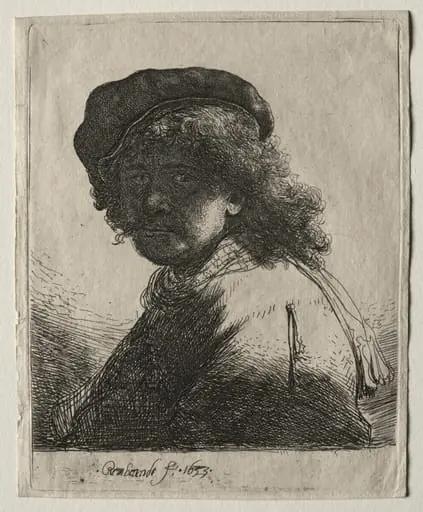
![Self-Portrait(?), Wearing a Plumed Cap ["Portrait of Bernini"], by Giovanni Benedetto Castiglione, ink, 1646](https://artifactworldgallery.com/img/giovanni-benedetto-castiglione--self-portrait-wearing-a-plumed-cap-portrait-of-bernini--4cf90707415539ae-w1024.webp)
Self-Portrait(?), Wearing a Plumed Cap ["Portrait of Bernini"] is an ink print by the Baroque artist Giovanni Benedetto Castiglione. It dates from 1646 and is held in the collection of the National Gallery of Art.
About this work
Overview
Created around 1646, this etching on laid paper is attributed to Giovanni Benedetto Castiglione, a Genoese artist active in the mid-17th century.
Created around 1646, this etching on laid paper is attributed to Giovanni Benedetto Castiglione, a Genoese artist active in the mid-17th century. Though labeled as a self-portrait, the identity of the sitter remains uncertain. The work belongs to a small group of prints in which Castiglione explored portraiture, distinguishing itself through its bold composition and expressive line work characteristic of his printmaking style.
Subject & Meaning
The figure wears a large, feathered cap that dominates the composition, suggesting status or theatricality rather than everyday attire. The direct gaze and partial shadowing of the face invite interpretation but offer no definitive clues to identity. While traditionally called a self-portrait, scholars note the lack of corroborating evidence, leaving open the possibility that it depicts a patron, colleague, or idealized persona.
Technique & Style
Castiglione employed etching with vigorous, fluid lines to capture texture and form, emphasizing the plume’s movement and the cap’s woolen surface. His handling of tone through varied line density reflects his experimental approach to printmaking. The background is left largely unworked, focusing attention on the head and hat, a compositional choice that heightens the portrait’s immediacy and psychological presence.
History & Provenance
The print emerged in the mid-17th century within Castiglione’s circle of collectors and fellow artists. Early records associate it with Italian and French collections, reflecting his reputation across borders. Its attribution as a self-portrait solidified in the 19th century, though modern scholarship treats the label with caution. The work survives in several institutional holdings, primarily in Europe and North America.
Context
In 1640s Italy, printmaking was increasingly valued as an independent art form, not merely a reproductive medium. Castiglione, known as Il Grechetto, stood apart for his inventive techniques and expressive subjects. This etching aligns with broader trends in Baroque portraiture that favored psychological nuance and individuality, even as it diverges from formal conventions through its informal, almost intimate framing.
Legacy
Though not widely reproduced in his lifetime, this etching contributed to Castiglione’s posthumous reputation as a daring printmaker. It exemplifies his ability to merge painterly sensibility with graphic precision. Later artists and collectors admired its vitality, influencing 18th-century approaches to the portrait print, particularly in its emphasis on character over idealization.
Artist & collection
Artist
Giovanni Benedetto Castiglione
Giovanni Benedetto Castiglione (baptized 23 March 1609 – 5 May 1664) was an Italian Baroque painter, printmaker and draftsman, of the Genoese school.

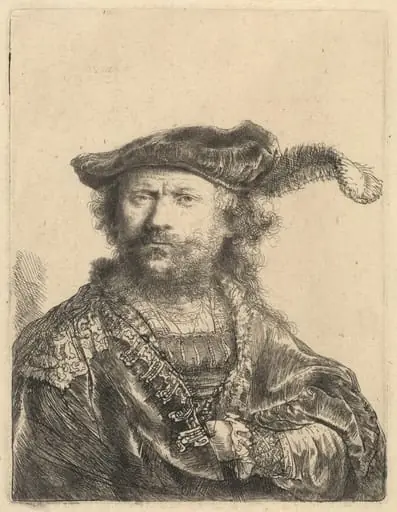 Self-Portrait in a Velvet Cap with Plume
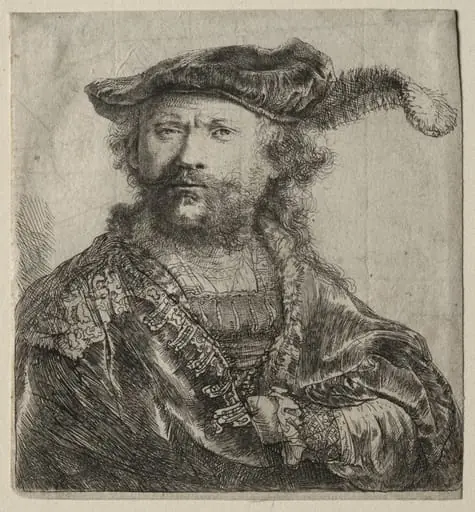 Self-Portrait in Velvet Cap with Plume
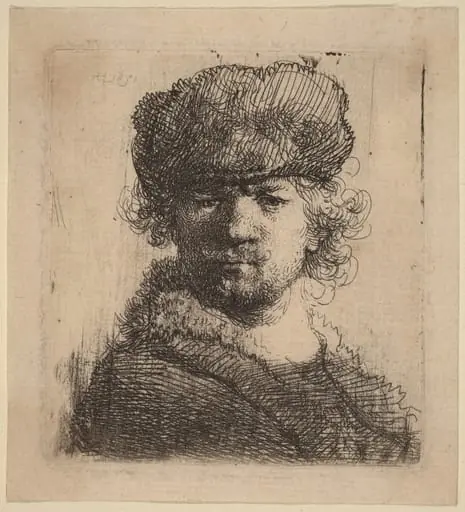 Self-Portrait in a Heavy Fur Cap
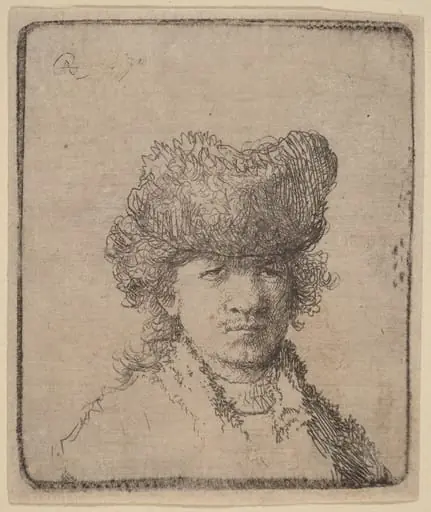 Self-Portrait in a Fur Cap
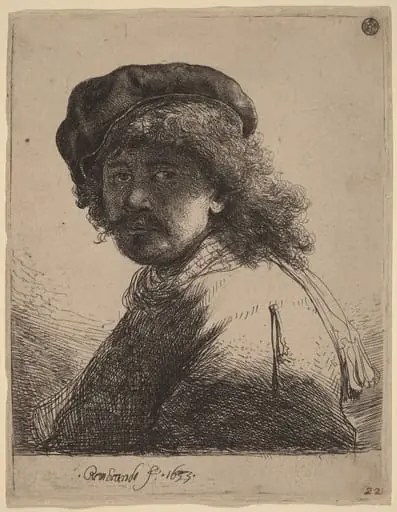 Self-Portrait in a Cap and Scarf with the Face Dark
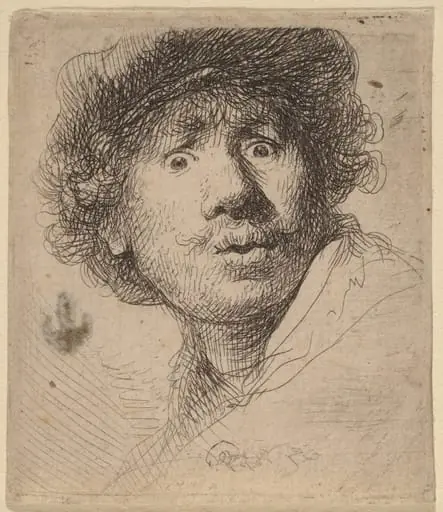 Self-Portrait in a Cap, Open-Mouthed
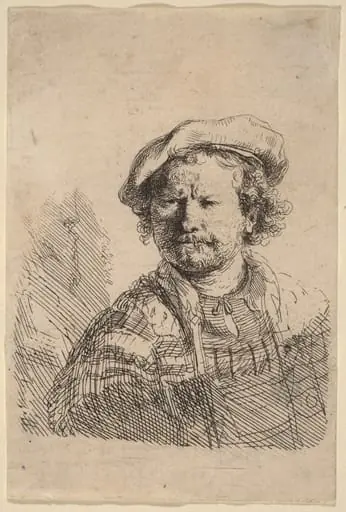 Self-Portrait in a Flat Cap and Embroidered Dress
 Self-Portrait in a Cap and Scarf with the Face Dark: Bust