Artwork
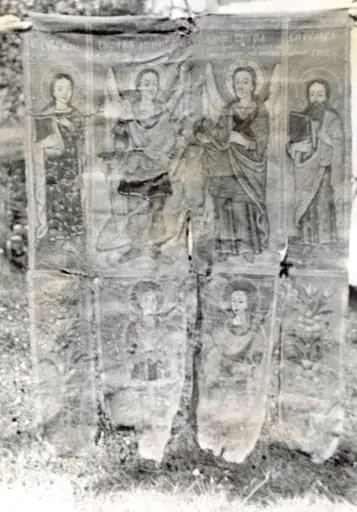
Pictura murală (ulei pe lemn) în interiorul bisericii de lemn „Sf. Arhangheli” din Ociu, comuna Vața de Jos, județul Hunedoara (1982)
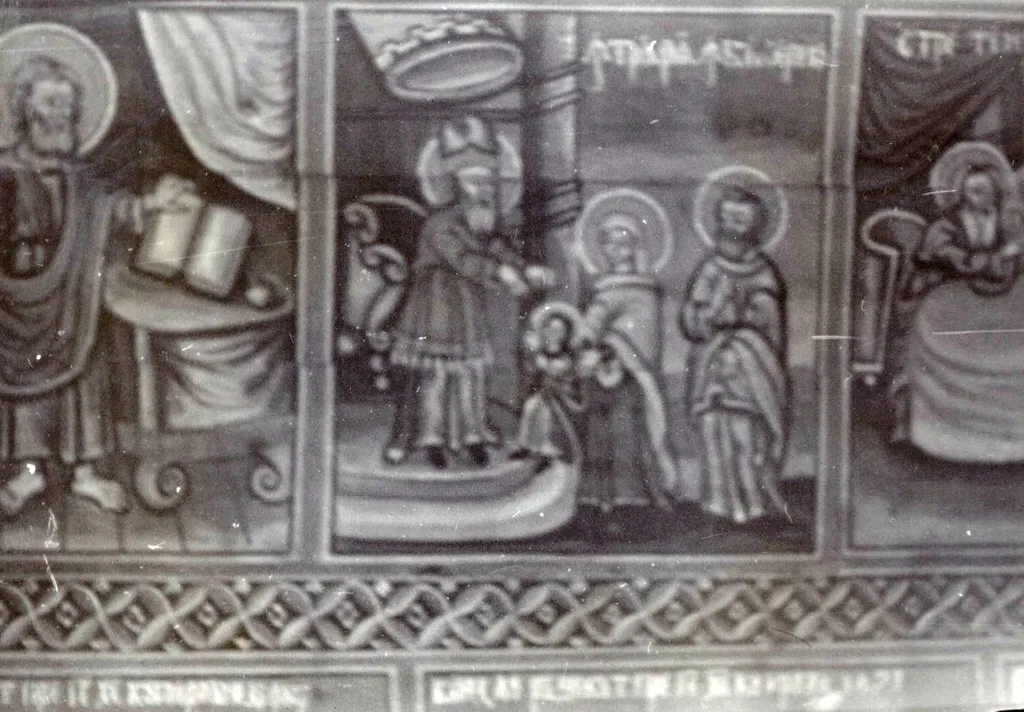
Pictura murală (ulei pe lemn) în interiorul bisericii de lemn „Sf. Arhangheli” din Ociu, comuna Vața de Jos, județul Hunedoara (1982) is a photography by Catalina Marin. It dates from 1982 and is held in the collection of the "Dimitrie Gusti" National Village Museum. A wooden church in Ociu, Hunedoara, built around 1750, contains interior wall paintings completed in 1821.
About this work
Bright colors cover every inch—angels, saints, and floral patterns glow under old oil paint.
In 1982, a photo shows the painted walls inside a wooden church in Ociu. The church dates to 1750, but the murals inside are from 1821. Bright colors cover every inch—angels, saints, and floral patterns glow under old oil paint.
This work preserves a rare time capsule. It records how rural artists decorated churches over 200 years ago. The mural’s vivid blues and reds still look fresh despite age.
Look up the artist who took this photo next: Catalina Marin.
Overview
A wooden church in Ociu, Hunedoara, built around 1750, contains interior wall paintings completed in 1821. These murals, executed in oil on wood, were documented in September 1982 during a research campaign led by Elena Alterescu and Cătălina Marin. The church, dedicated to the Archangels Michael and Gabriel, is listed as a historical monument under code LMI HD-II-m-A-03374, preserving a rare example of rural ecclesiastical decoration from the early 19th century.
Subject & Meaning
The murals depict a dense arrangement of religious figures, including angels and saints, alongside ornamental floral motifs. Their arrangement follows traditional Orthodox iconographic programs, intended to create a sacred atmosphere for worship. The emphasis on the Archangels reflects the church’s dedication and the liturgical importance of their feast day on November 8. The imagery served both devotional and didactic purposes for a largely illiterate rural congregation.
Technique & Style
Painted in oil on wooden panels, the murals feature bold, saturated hues of blue, red, and gold, applied with a direct, handcrafted approach. The style blends folk sensibility with ecclesiastical convention, lacking formal academic training but demonstrating skilled brushwork and compositional rhythm. Despite age and environmental exposure, the pigments retain remarkable vibrancy, suggesting the use of durable natural materials and careful application.
History & Provenance
The church was constructed in the mid-18th century, but its interior decoration was added decades later, in 1821, likely by a local itinerant painter. The murals remained largely untouched until their documentation in 1982, when photographic records were made as part of a regional study on traditional textiles and wedding customs. No artist’s signature or written record of the painter’s identity survives, leaving the work anonymous but culturally significant.
Context
These murals reflect a broader tradition in Transylvanian wooden churches, where rural communities invested in interior decoration as an act of spiritual and communal expression. Unlike urban churches, these spaces relied on local artisans who adapted ecclesiastical models to regional aesthetics. The 1821 date places the work in a period of relative stability before industrialization altered rural life, making it a valuable record of pre-modern religious art in Transylvania.
Legacy
The 1982 photographic documentation by Cătălina Marin preserved a visual record of the murals before potential deterioration or restoration. These images remain key references for scholars studying vernacular religious art in Romania. The church’s continued inclusion on the national monument list ensures its protection, and the murals stand as a quiet testament to the persistence of folk artistic traditions in isolated communities.
Artist & collection
Artist
She spent weeks in the same wooden church, sleeping on a bench behind the altar, because the light inside only hit the frescoes right at 10 a.m.
Museum
"Dimitrie Gusti" National Village Museum
Continue through works from the same source collection.
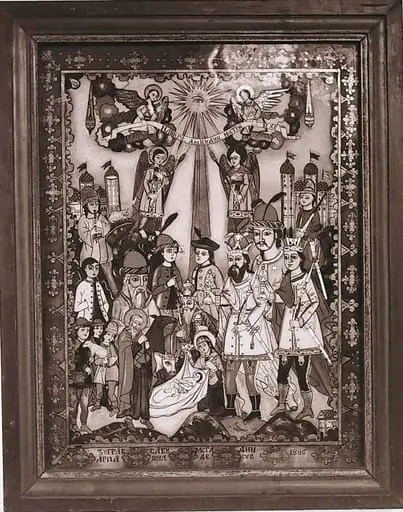 Secvențe din Muzeul Satului, icoană pe sticlă de Savu Moga: Nașterea Domnului - 1886 (1988)
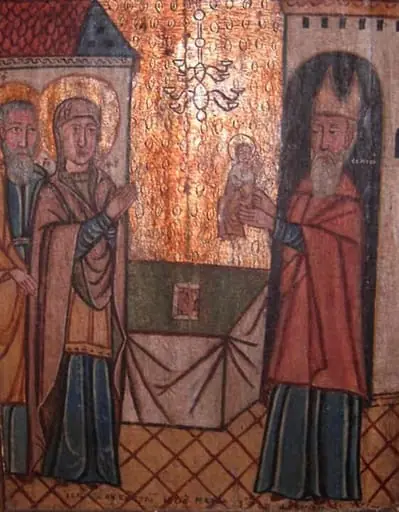 Întâmpinarea Domnului
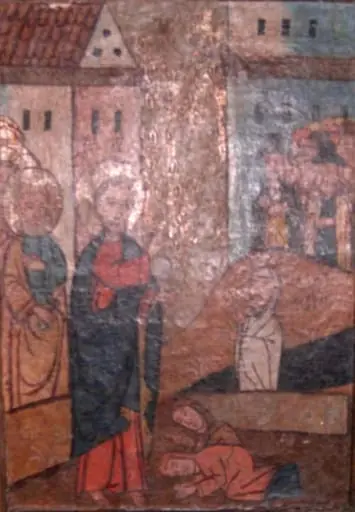 Învierea lui Lazăr
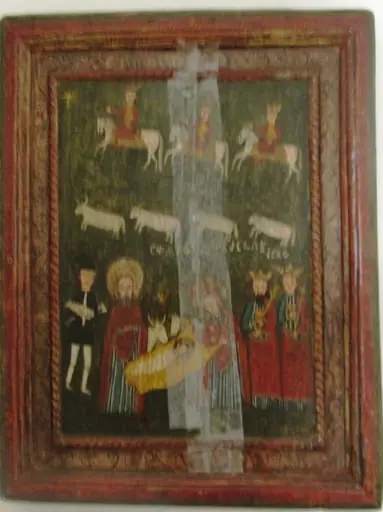 Nașterea lui Iisus
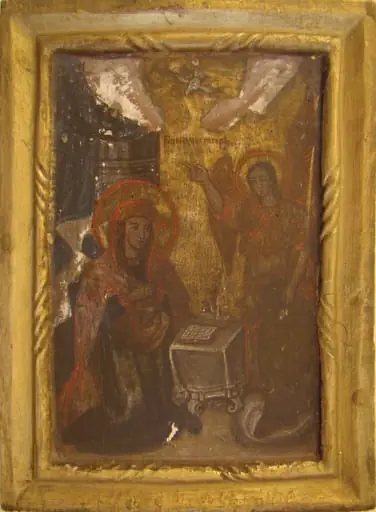 Buna Vestire
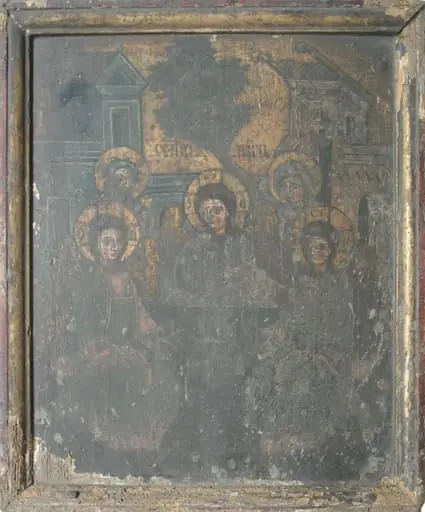 Cina de la Mamvri
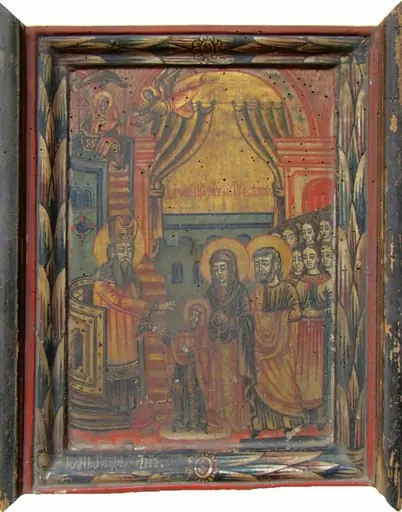 Intrarea în biserică a Maicii Domnului
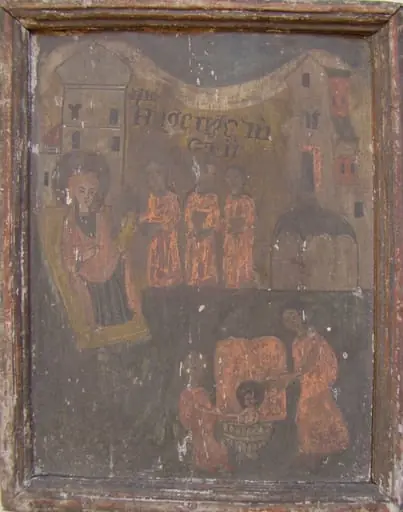 Nașterea Maicii Domnului
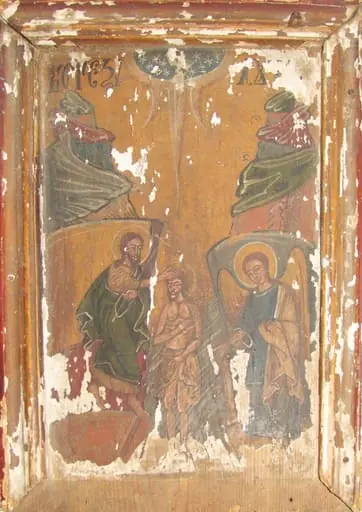 Botezul lui Iisus
 Nașterea Domnului
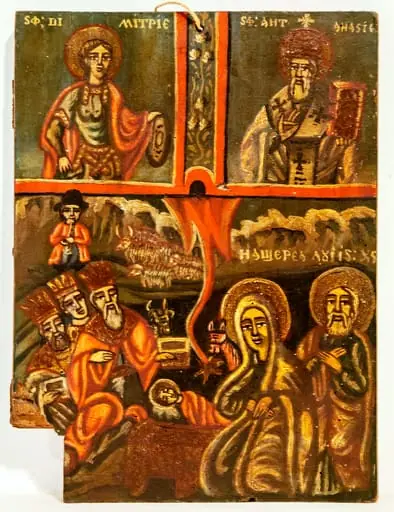 Câmpul icoanei împărțit în 2 registre orizontale inegale(cel de se 1/3 din suprafața icoanei, la rândul lui împărțit în 2 casete separate de o bandă verticală pe care este pictat un lujer cu flori albe. În registru inferior: Nașterea Domnului. În prim plan, Maria si Iosif îngenuncheați, central Pruncul Isus înfășat, așezat în iesle, în stânga lui cei trei magi, cu coroane împărătești pe cap, aducându-i daruri, în plan îndepărtat un cioban(în veșminte orășenești, cu pălărie neagră pe cap, cântând din fluier turmei de oi. În spatele Pruncului se văd capetele animalelor din grajd și o iesle. Steaua își revarsă razele asupra Pruncului(zonă incandescentă, terminată cu o stea deasupra acestuia). Pe fundalul întunecat, nori cu marginile albe. Sfinții din registrul superior sunt redați 3/4, sfântul Dimitrie tânăr, în veșminte militare, lorică, mantie roșie, scut în stânga, suliță în dreapta, Sfântul Atanasie, în veșminte arhierești, binecuvintează cu dreapta, în stânga ține cartea Evangheliilor ridicată. Părul și barba albe, mustățile lungi, veșmintele deschise la culoare, mitra înaltă, surmontată de o cruce albă. Cromatica: roșu, brun, alb, albastru, galben. Colț stânga jos lipsă. Stil naiv, popular.