Artwork
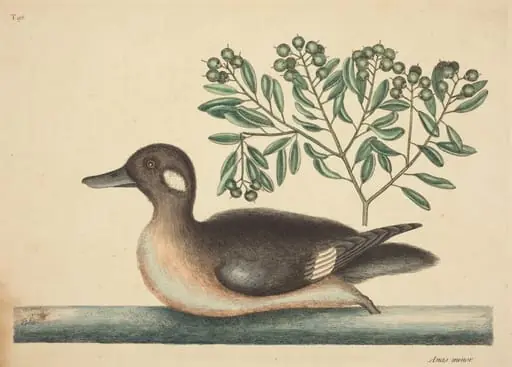
The Round Crested Duck (Mergus cucullatus)
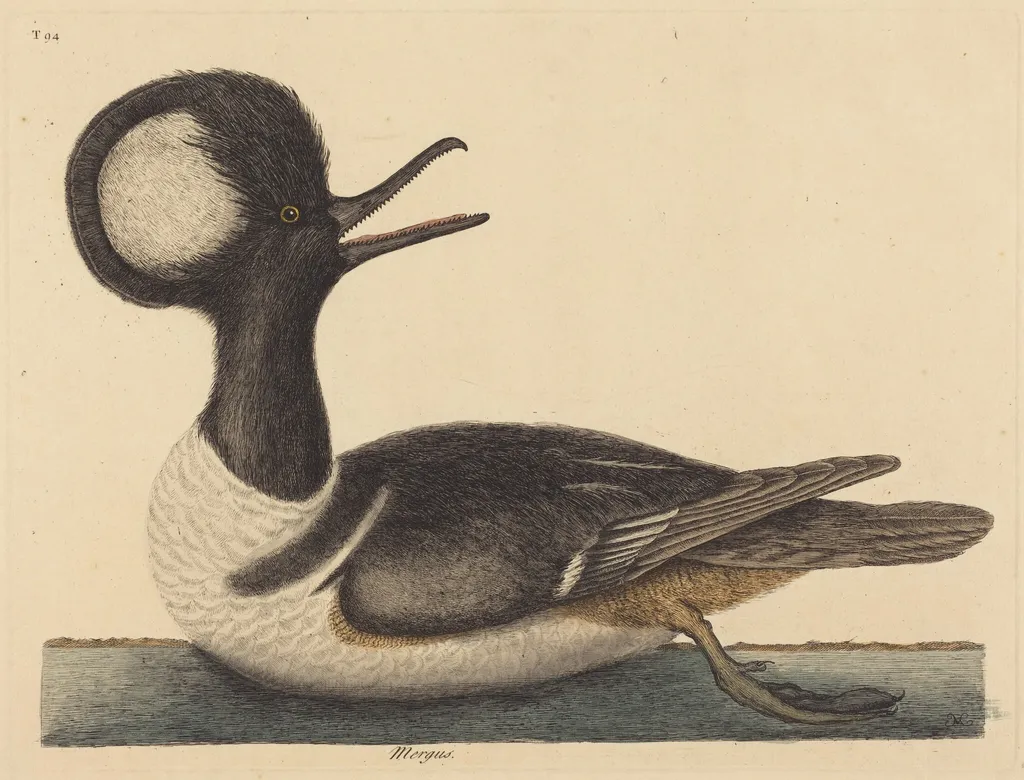
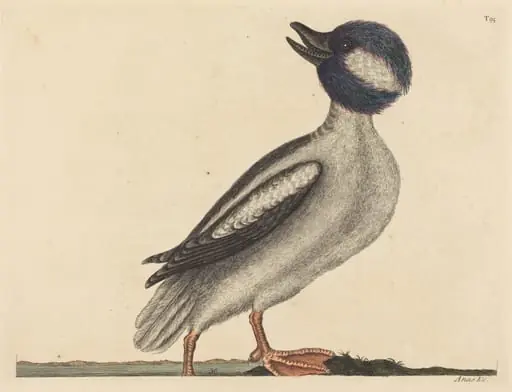
The Round Crested Duck (Mergus cucullatus) is an ink print by the Baroque artist Mark Catesby. It dates from 1737 and is held in the collection of the National Gallery of Art.
About this work
Overview
Created in 1737 by English naturalist Mark Catesby, this print depicts a species of merganser now known as the hooded merganser.
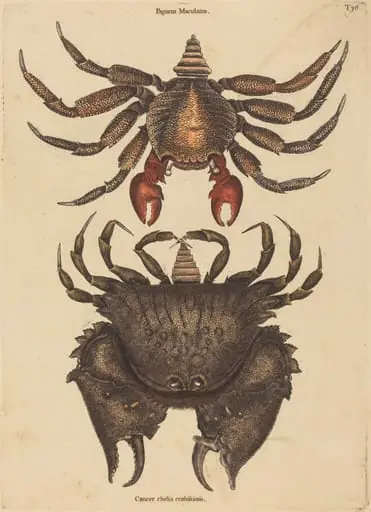
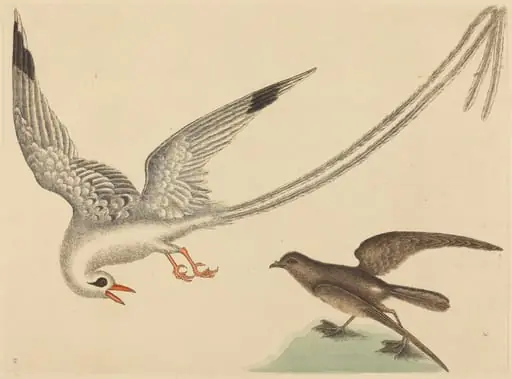
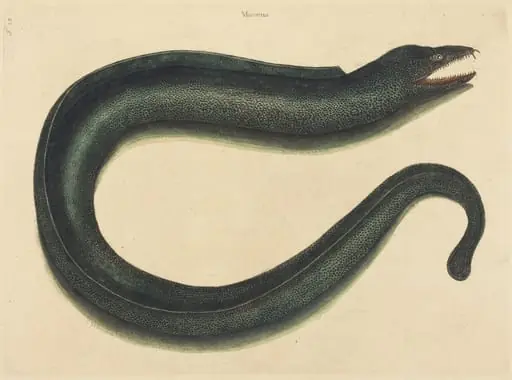
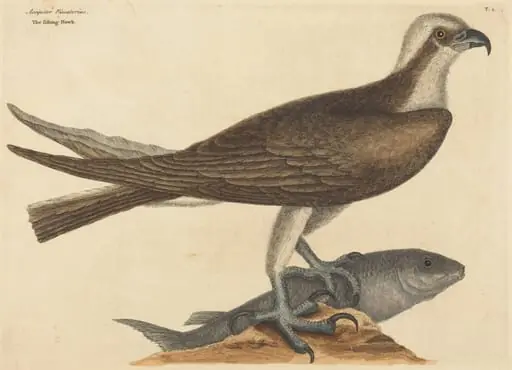
Created in 1737 by English naturalist Mark Catesby, this print depicts a species of merganser now known as the hooded merganser. Executed in etching and engraving with delicate hand coloring on laid paper, it forms part of a larger project documenting the wildlife of the southeastern North American colonies. The image was included in Catesby’s multi-volume *Natural History of Carolina, Florida and the Bahama Islands*, the first systematic visual record of the region’s animals and plants.
Subject & Meaning
The bird portrayed is a male hooded merganser, identified by its distinctive white crest, black head, and sharp, serrated beak adapted for catching fish. Positioned on a flat surface with minimal environmental detail, the composition emphasizes anatomical accuracy over habitat context. The inclusion of water and a small rock suggests its aquatic environment without distracting from the specimen’s form, reflecting the scientific intent to classify and record species with clarity.
Technique & Style
Catesby employed fine etched lines and engraved details to render the texture of feathers, using controlled ink work to suggest volume and depth. Subtle hand coloring—applied in water-based pigments—enhances the contrast between the bird’s white neck patch, black head, and faint yellow markings near the eye. The plain background isolates the subject, a deliberate choice to prioritize scientific observation over artistic embellishment, typical of natural history illustration of the period.
History & Provenance
The print was produced during Catesby’s two expeditions to the American Southeast between 1712 and 1726, with plates published in London between 1729 and 1747. Each image was hand-colored by skilled artisans under his supervision. Copies of the *Natural History* were distributed to European scientific institutions and collectors, establishing Catesby’s work as a foundational reference in early American natural history and influencing later illustrators like Audubon.
Context
In the early 18th century, European interest in New World biodiversity surged as colonial expansion opened access to unfamiliar species. Catesby’s project emerged amid growing scientific efforts to classify nature systematically. Unlike earlier illustrations that often mixed myth and observation, his work combined field sketches with precise rendering, contributing to the transition from curiosity-driven naturalism toward empirical zoology.
Legacy
Catesby’s plates set a precedent for detailed, life-sized natural history imagery in the English-speaking world. His method of combining direct observation with meticulous printmaking influenced generations of naturalists and illustrators. Though taxonomic names have changed, the precision and clarity of his depictions remain valuable for historical biology, offering insight into species as they were understood and recorded in the pre-Darwinian era.
Artist & collection

Artist
Mark Catesby (24 March 1683 – 23 December 1749) was an English naturalist who studied the flora and fauna of the New World.