Artwork
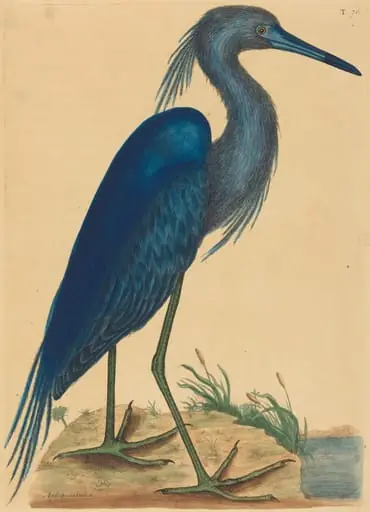
The Blue Heron (Ardea coerulea)
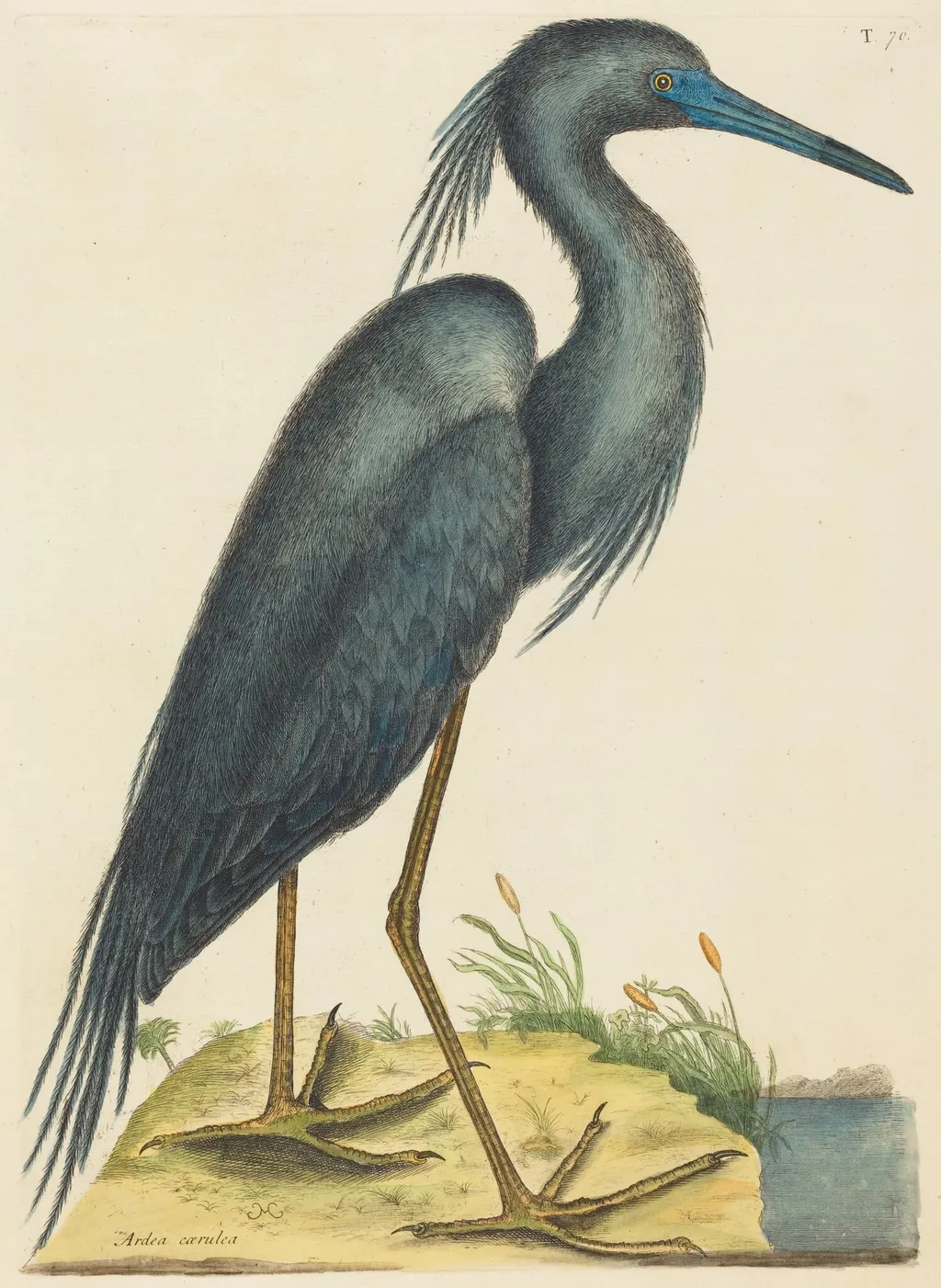
The Blue Heron (Ardea coerulea) is an ink print by the Baroque artist Mark Catesby. It dates from 1737 and is held in the collection of the National Gallery of Art. This hand-colored etching and engraving from 1737 represents a blue heron in its coastal wetland environment.
About this work
Overview
This hand-colored etching and engraving from 1737 represents a blue heron in its coastal wetland environment.
This hand-colored etching and engraving from 1737 represents a blue heron in its coastal wetland environment. Created by naturalist Mark Catesby, the print formed part of his two-volume *Natural History of Carolina, Florida and the Bahama Islands*, the first systematic visual record of North American wildlife. The work combines direct observation with reproductive printmaking techniques of the period.
Subject & Meaning
The composition centers on a solitary blue heron standing among aquatic vegetation, its elongated legs submerged in dark water. A small fish visible near its feet suggests the bird’s role in the ecosystem as both predator and participant. Through this depiction, Catesby aimed to document species morphology and habitat, reflecting Enlightenment-era priorities of classification and empirical study.
Technique & Style
The image was produced using etching and engraving on laid paper, with watercolor applied by hand afterward. Drypoint accents highlight the heron’s plumage, creating subtle tonal variations. Catesby’s approach balanced scientific accuracy with aesthetic considerations, employing linear precision to render anatomical details while allowing colorists to approximate natural hues.
History & Provenance
Executed during the 1720s and published in 1737, this print originated from Catesby’s field studies in colonial North America. The plates were engraved by professional artisans in England, with each impression individually colored. As part of the *Natural History*, the work circulated among collectors and institutions, contributing to eighteenth-century understanding of New World biodiversity.
Context
Catesby’s publication emerged during a period of expanding European interest in global natural history. Lacking photographic technology, researchers relied on artists to convey species’ appearances. His work predated Audubon’s bird illustrations by nearly a century, establishing foundational visual conventions for depicting North American fauna within their ecological settings.
Legacy
The *Natural History* plates, including this heron, influenced subsequent scientific illustration and ornithological study. As the first color images of North American birds, they provided reference material for later naturalists. The prints remain significant for their dual role as artistic objects and historical documents of pre-industrial ecosystems.
Artist & collection

Artist
Mark Catesby (24 March 1683 – 23 December 1749) was an English naturalist who studied the flora and fauna of the New World.

 The Blue Heron (Ardea coerulea)
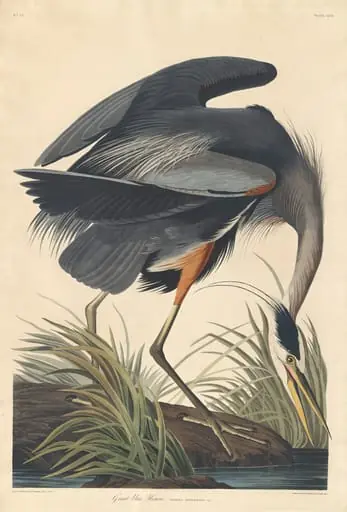 Great blue Heron
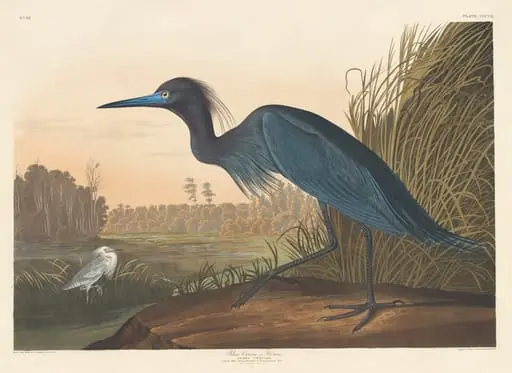 Blue Crane or Heron
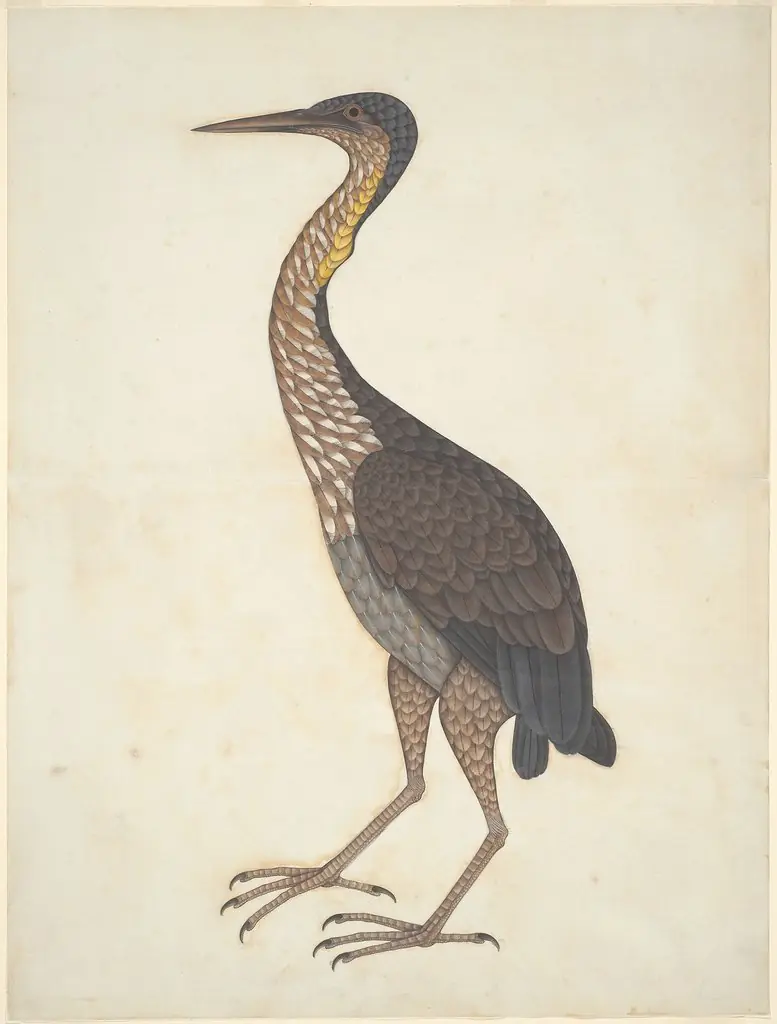 Purple Heron (Ardea purpurea)
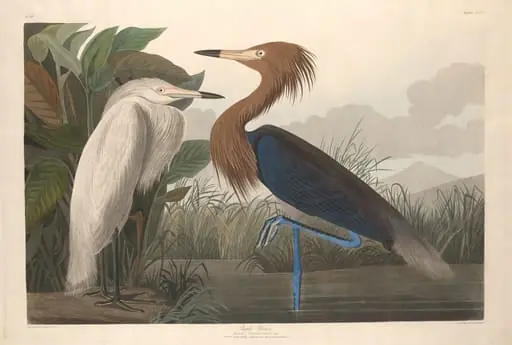 Purple Heron
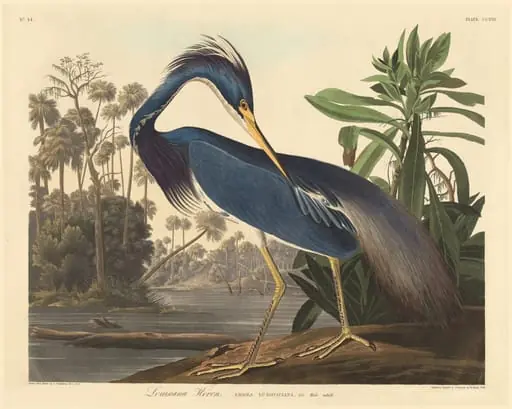 Louisiana Heron
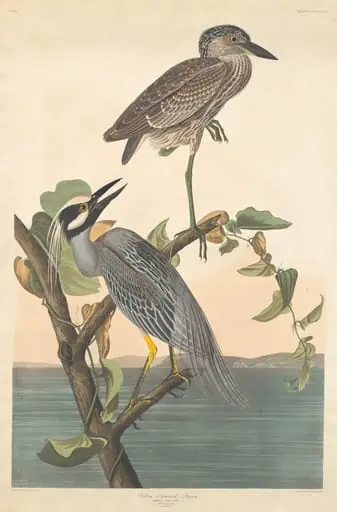 Yellow-crowned Heron
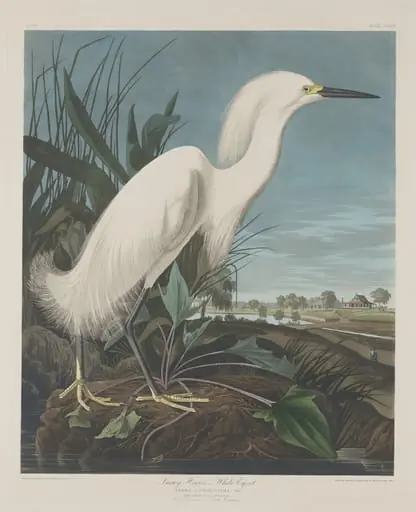 Snowy Heron, or White Egret
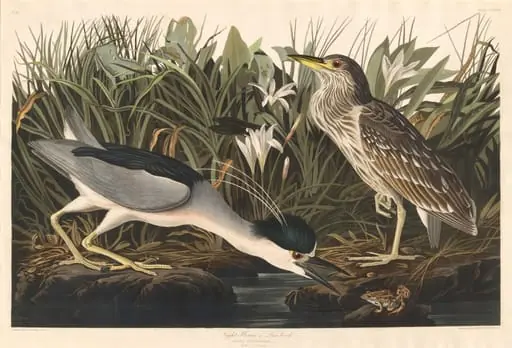 Night Heron or Qua bird
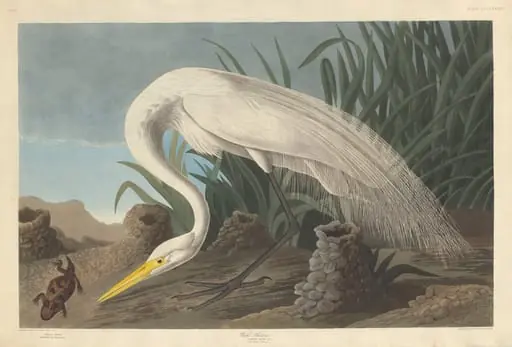 White Heron
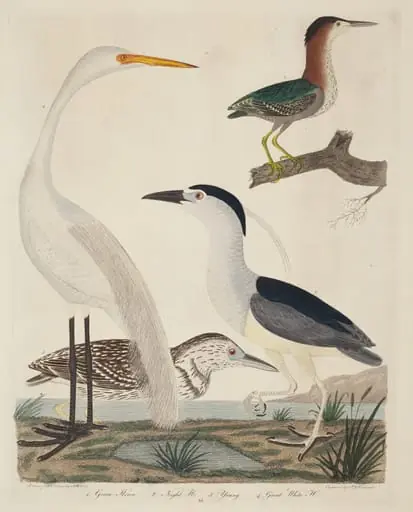 Green Heron, Night Heron, Young Heron, and Great White Heron
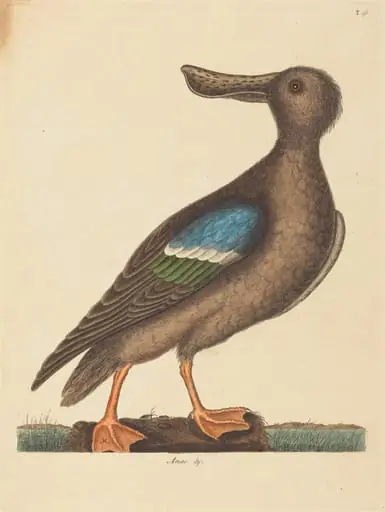 The Blue Winged Shoveler (Anas clypeata foemina)