Artwork
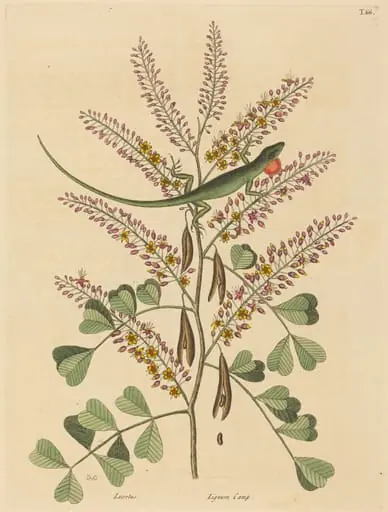
The Green Lizard of Jamaica (Lacerta bullaris)
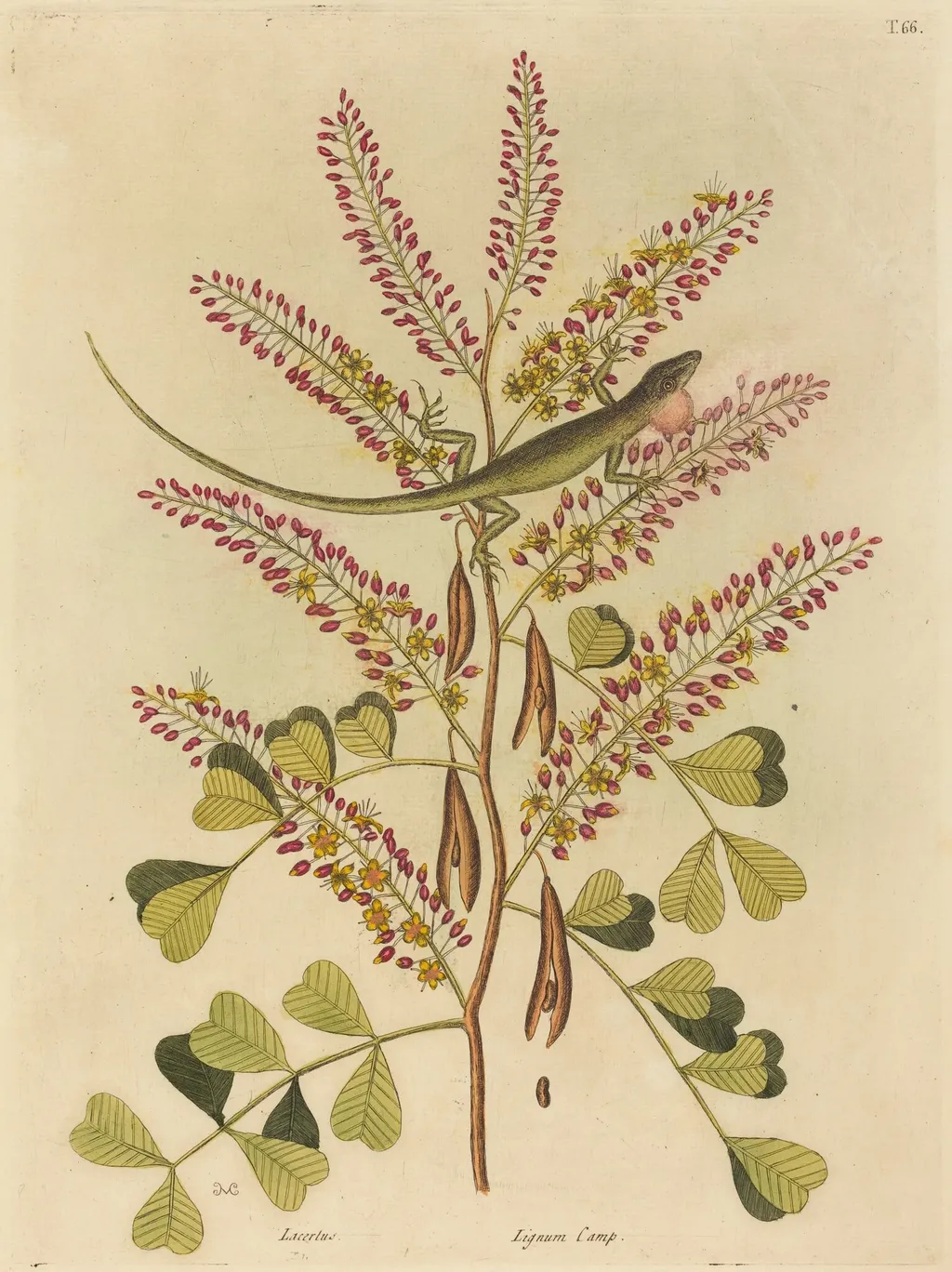
The Green Lizard of Jamaica (Lacerta bullaris) is an ink print by the Baroque artist Mark Catesby. It dates from 1737 and is held in the collection of the National Gallery of Art.
About this work
Overview
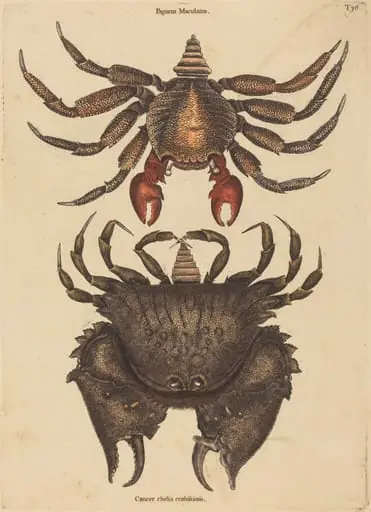
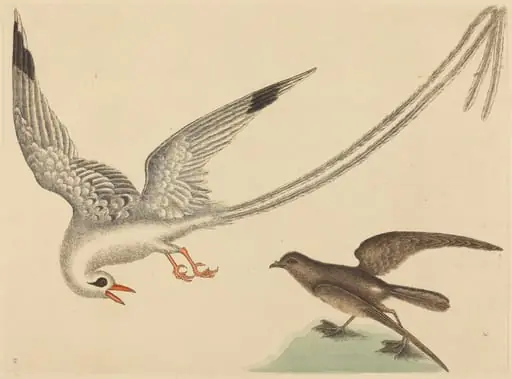
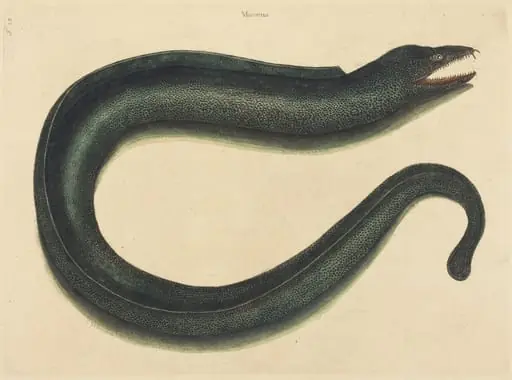
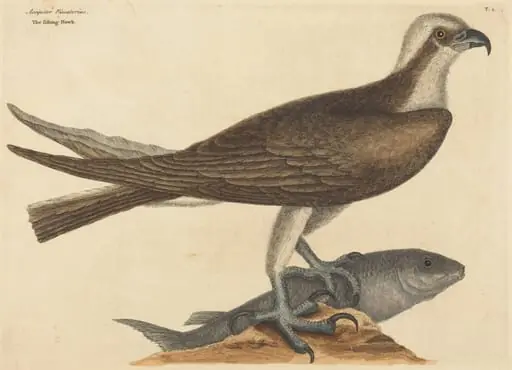
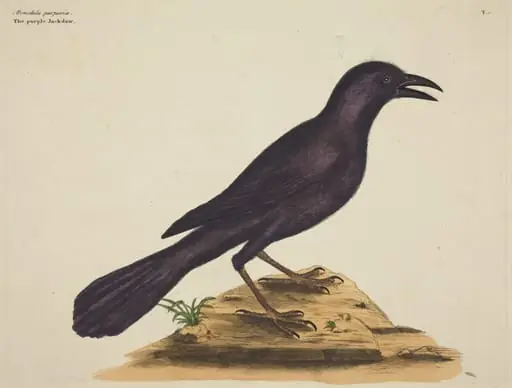
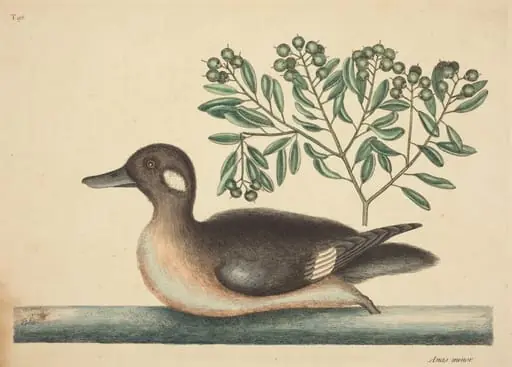
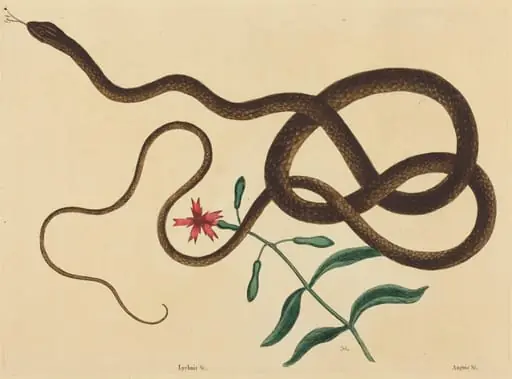
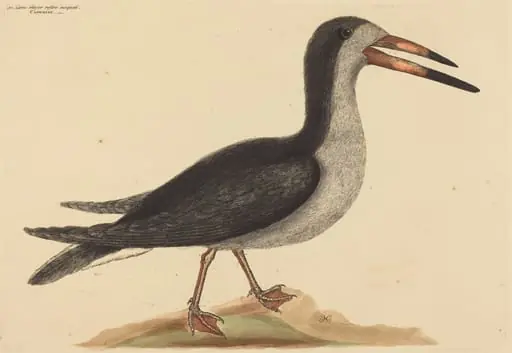
Mark Catesby’s 1737 print, *The Green Lizard of Jamaica*, is a hand-colored etching and engraving on laid paper, part of his comprehensive documentation of New World species. Created during his decade-long fieldwork in the American colonies, the image belongs to his landmark publication *Natural History of Carolina, Florida and the Bahama Islands*, the first illustrated survey of North American wildlife and plants produced in Europe.
Subject & Meaning
The lizard’s posture and the surrounding flora are rendered to reflect their natural coexistence, emphasizing ecological relationships over artistic flourish.
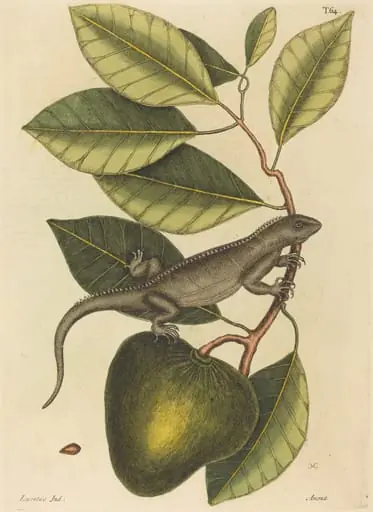
The print depicts a green lizard, likely *Anolis carolinensis*, perched on a branch amid clusters of red and yellow flowers and varied green foliage. Rather than a symbolic or decorative composition, the image serves as a precise biological record. The lizard’s posture and the surrounding flora are rendered to reflect their natural coexistence, emphasizing ecological relationships over artistic flourish.
Technique & Style
Catesby employed etching and engraving to define fine details, then applied watercolor by hand to achieve accurate coloration. Each element—the lizard’s scales, the veins in leaves, the texture of bark—was carefully rendered to support scientific clarity. The coloring, though delicate, avoids embellishment, prioritizing fidelity to observed specimens over aesthetic idealization.
History & Provenance
Created during Catesby’s expeditions between 1722 and 1726, the print was published in London in 1737 as part of the second volume of his *Natural History*. The work was funded through subscription and distributed to European scientific institutions. Original copies remain in major libraries and natural history collections, valued for their early documentation of species later classified by Linnaean taxonomy.
Context
In the early 18th century, European naturalists sought to classify the biological wealth of newly explored territories. Catesby’s work emerged alongside growing interest in empirical observation, predating the formalization of modern ecology. His illustrations were among the first to depict American species in their habitats, challenging prevailing European assumptions about New World biodiversity.
Legacy
Catesby’s prints influenced later natural history illustrators and provided foundational visual references for taxonomists. Though later works surpassed his accuracy, his integration of animals with native flora set a precedent for ecological illustration. The *Green Lizard of Jamaica* remains a key artifact in the history of scientific visualization, reflecting the transition from curiosity to systematic study.
Artist & collection

Artist
Mark Catesby (24 March 1683 – 23 December 1749) was an English naturalist who studied the flora and fauna of the New World.