Artwork
The Lyon Lizard (Lacerta 6-lineata)
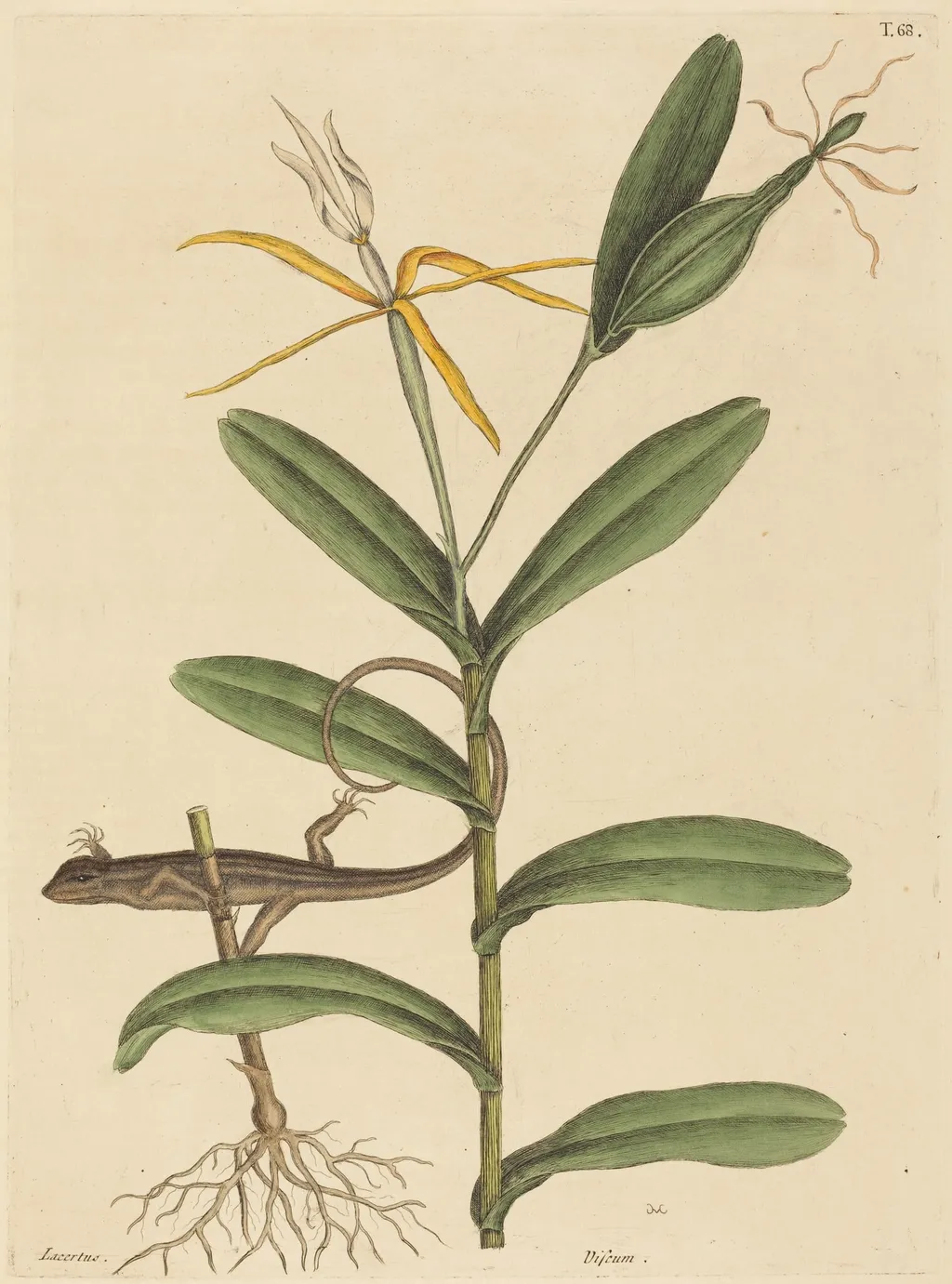
The Lyon Lizard (Lacerta 6-lineata) is an ink print by the Baroque artist Mark Catesby. It dates from 1737 and is held in the collection of the National Gallery of Art.
About this work
Overview
Executed in 1737, the image merges etching and engraving with applied watercolor on laid paper.
This hand-colored print originates from Mark Catesby’s *Natural History of Carolina, Florida and the Bahama Islands*, a foundational work published in stages between 1729 and 1747. Executed in 1737, the image merges etching and engraving with applied watercolor on laid paper. It represents one of the earliest systematic attempts to document North American wildlife through visual means, bridging scientific inquiry and artistic practice.
Subject & Meaning
The composition portrays a six-lined lizard (*Lacerta 6-lineata*) positioned along the stem of a flowering plant identified as *Vijium*. The lizard’s scaled body and the plant’s veined leaves are rendered with descriptive precision, emphasizing anatomical accuracy. Such depictions served dual purposes: cataloging species for scholarly reference while conveying the diversity of colonial ecosystems to European audiences.
Technique & Style
Catesby employed etching to establish fine lines, followed by engraving to deepen contours and textures. Hand coloring—applied after printing—enhanced the realism of the scene, with pigments carefully matched to the subjects’ natural hues. The resulting image balances scientific exactitude with a restrained aesthetic, avoiding idealization in favor of direct observation.
History & Provenance
Produced during Catesby’s extended residence in the American colonies, this print appeared in the second volume of his *Natural History*. The work was self-published in London, funded through subscription, and circulated among naturalists and collectors. Surviving impressions remain in institutional collections, reflecting its role in early modern natural science.
Context
Catesby’s project emerged amid growing European interest in global biodiversity. His illustrations predated Linnaean taxonomy but contributed to later classificatory systems. By depicting organisms in situ—rather than as isolated specimens—he anticipated ecological representation, though his primary aim remained documentation rather than theoretical synthesis.
Legacy
The print exemplifies the intersection of art and science in the eighteenth century, influencing subsequent naturalists and illustrators. Its methodical approach to species depiction set a precedent for later works, including Audubon’s *Birds of America*. Today, it endures as both a historical record and a testament to early efforts to visualize the natural world.
Artist & collection

Artist
Mark Catesby (24 March 1683 – 23 December 1749) was an English naturalist who studied the flora and fauna of the New World.

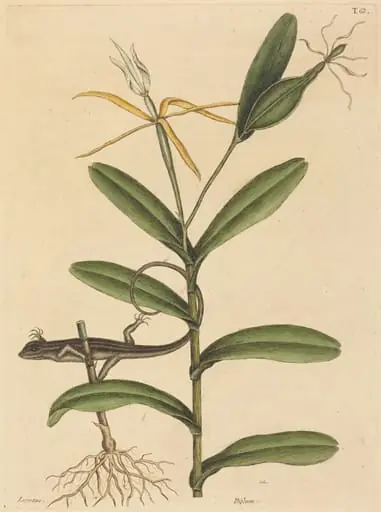 The Lyon Lizard (Lacerta 6-lineata)
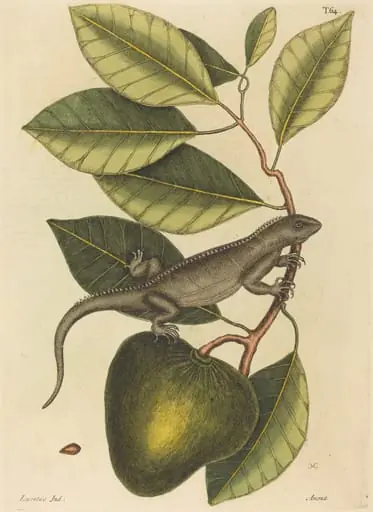 The Guana (Lacerta Iguana)
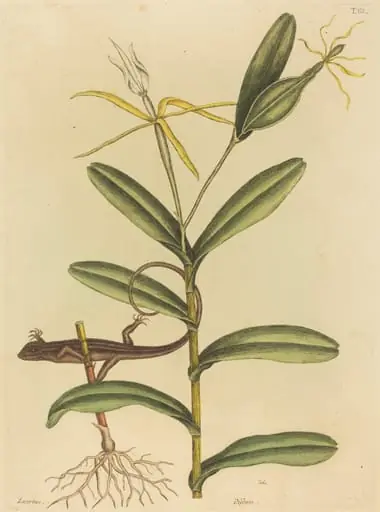 The Lyon Lizard (Lacerta 6-lineata)
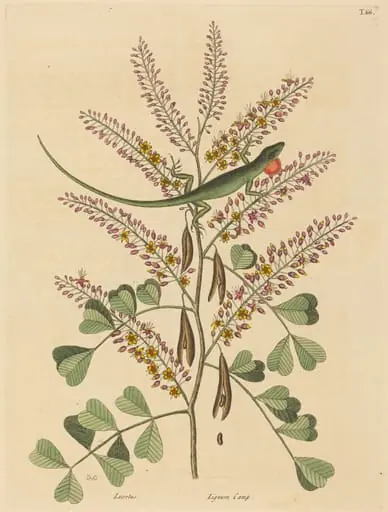 The Green Lizard of Jamaica (Lacerta bullaris)
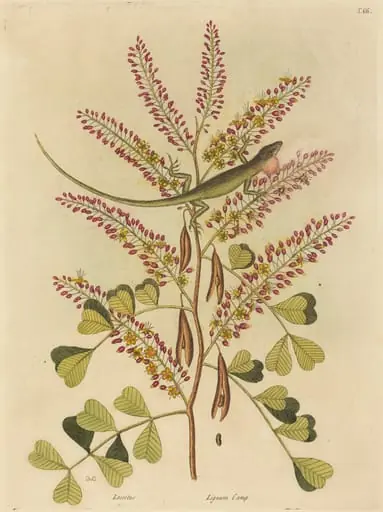 The Green Lizard of Jamaica (Lacerta bullaris)
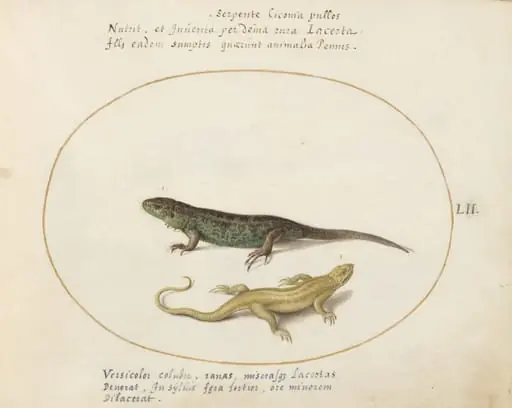 Plate 52: Two Sand Lizards
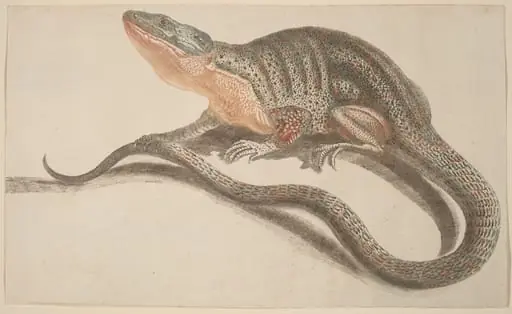 Lizard
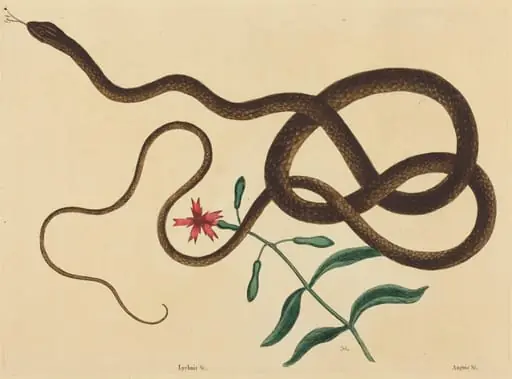
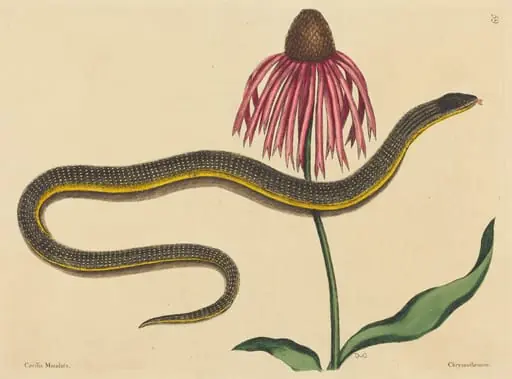 The Glass Snake (Anguis ventralis)
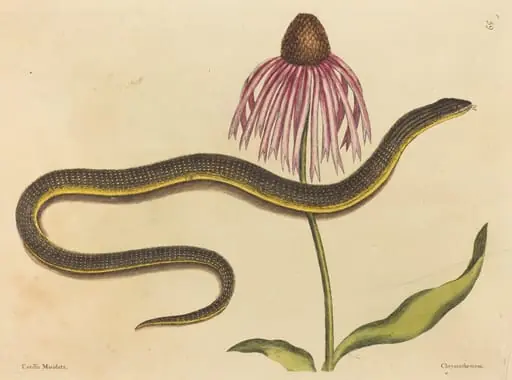 The Glass Snake (Anguis ventralis)
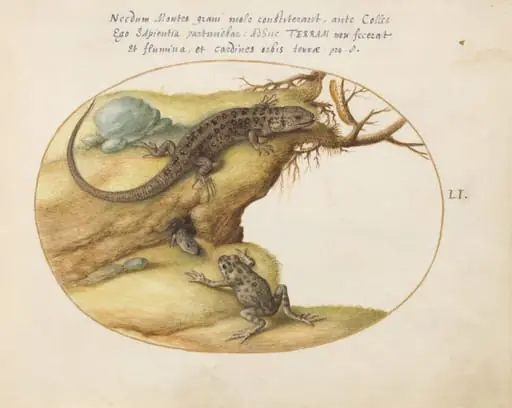 Plate 51: Two Sand Lizards, a Common Parsley Frog(?), and a Caterpillar