Artwork
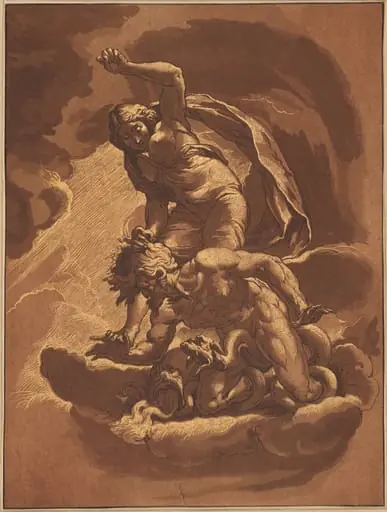
La Chute de Phaëton (The Fall of Phaeton)
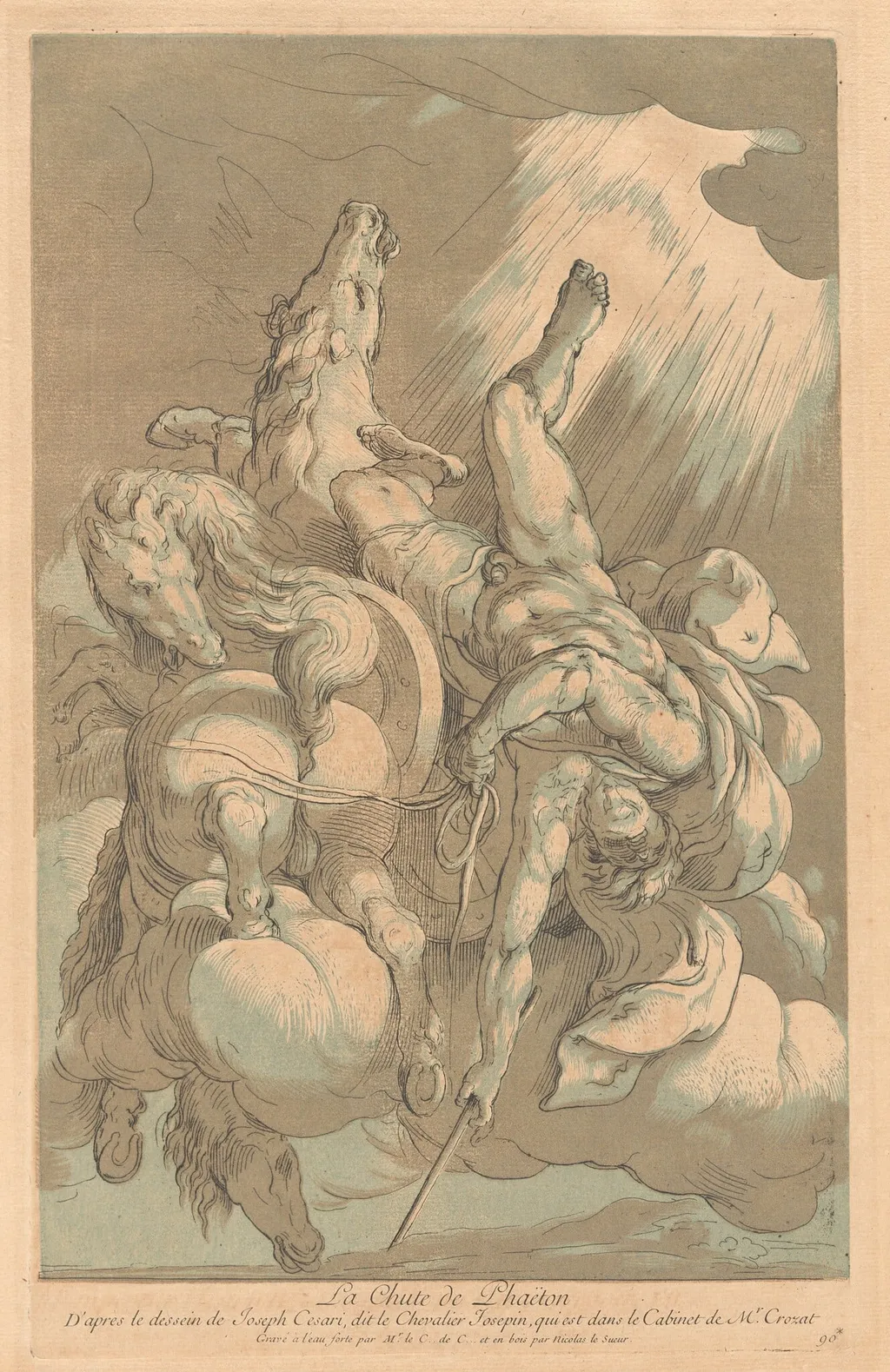
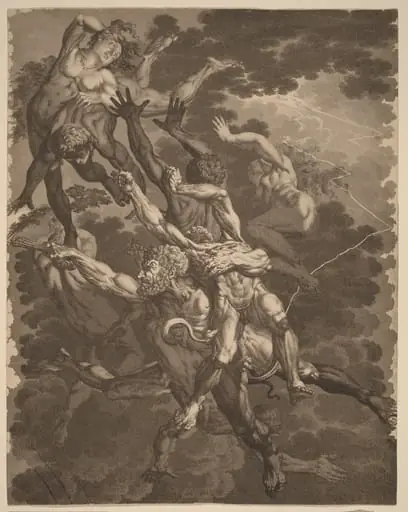
La Chute de Phaëton (The Fall of Phaeton) is an ink print by the Baroque artist Anne-Claude-Philippe de Tubières, comte de Caylus. It dates from 1736 and is held in the collection of the National Gallery of Art.
About this work
Overview
La Chute de Phaëton (The Fall of Phaeton) is a print created by Anne-Claude-Philippe de Tubières, comte de Caylus, around 1736. The work is executed as an etching combined with chiaroscuro woodcut, printed in three tones: black, light blue, and gray, on laid paper. It is part of the collection at the National Gallery of Art in Washington.
Subject & Meaning
The print depicts a chaotic scene interpreting the mythological narrative of Phaeton's fall. Phaeton, who lost control of the sun's chariot, is shown in a dramatic, mid-fall pose, with outstretched arms and a hand reaching upward. The composition conveys the turmoil and desperation of the mythological event.
Technique & Style
The artwork combines etching with chiaroscuro woodcut techniques, achieving a dynamic interplay of tones. The use of black, light blue, and gray inks creates a dramatic, almost stormy atmosphere, enhanced by the contrast between dark, streaked backgrounds and the lighter, swirling elements in the foreground.
History & Provenance
Created circa 1736 by Anne-Claude-Philippe de Tubières, comte de Caylus, the print is now held in the collection of the National Gallery of Art, Washington.
Context
The Fall of Phaeton is rooted in classical mythology, specifically Ovid's 'Metamorphoses'. The subject was a popular choice for 18th-century artists, allowing for the depiction of dramatic movement and emotional intensity. Caylus's interpretation reflects the Baroque influence prevalent during this period.
Legacy
While specific details on the print's direct influence are not widely documented, it contributes to the broader tradition of mythological themes in European printmaking of the 18th century, showcasing technical innovation in chiaroscuro and etching techniques of its time.
Artist & collection

Artist
Anne-Claude-Philippe de Tubières, comte de Caylus
Caylus, Anne-Claude-Philippe de Tubières, comte de (1692–1765) was an artist.