Artwork
Jesus Christ in Limbo
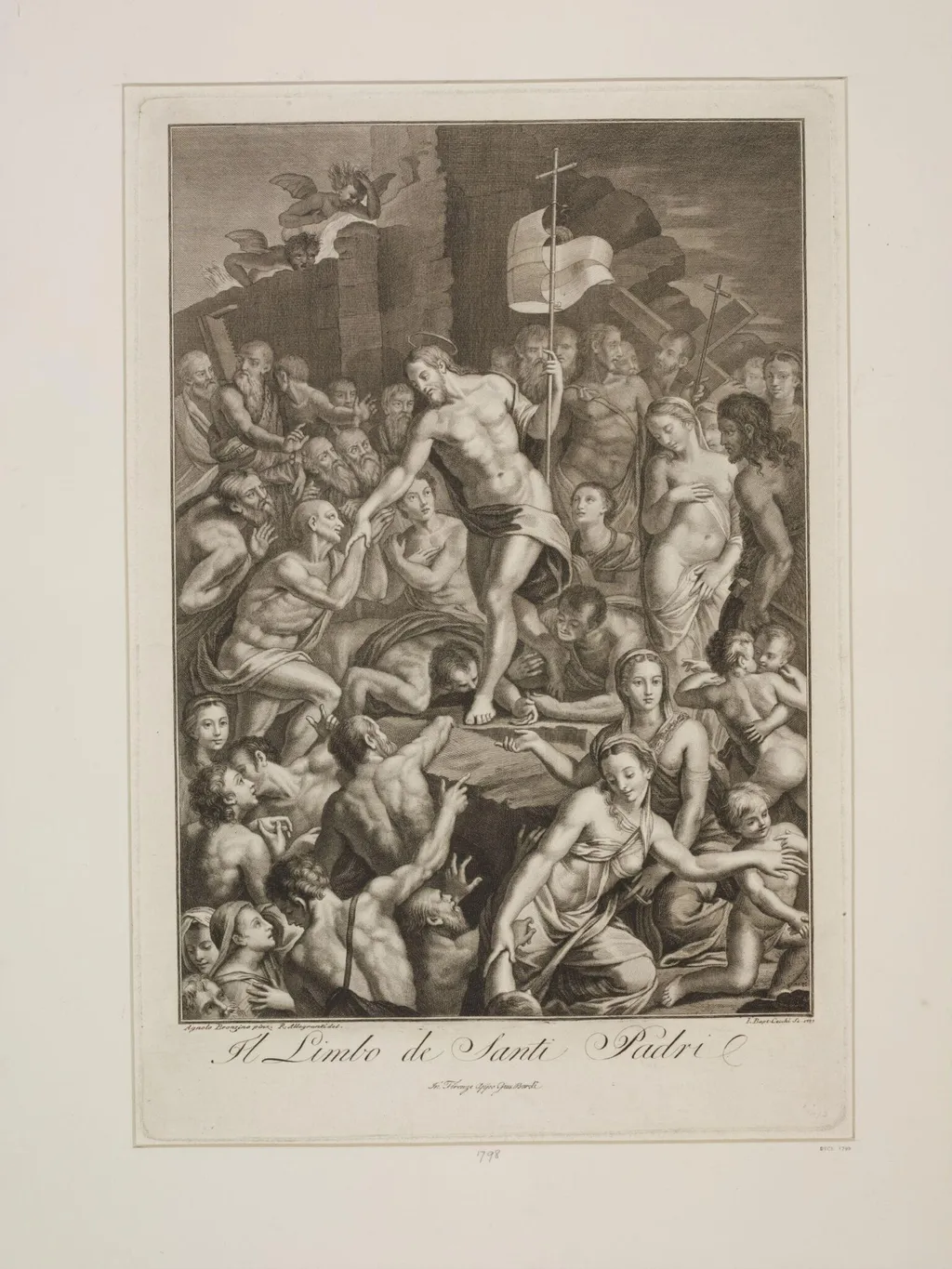
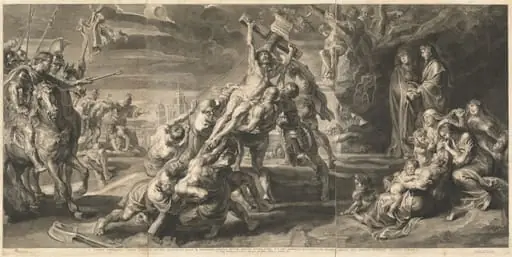
Jesus Christ in Limbo is a print by Giovanni Battista Cecchi. It dates from 1850 and is held in the collection of the Victoria and Albert Museum. This paper print, titled *Il Limbo de Santi Padri*, presents a densely populated composition centered on a figure bearing a cross.
About this work
Overview
This paper print, titled *Il Limbo de Santi Padri*, presents a densely populated composition centered on a figure bearing a cross. The scene is populated by kneeling and upright figures, some cradling infants, all converging toward the central crucifixion motif. In the distance, rugged cliffs rise beneath a sky populated by angels, framing the narrative within a dramatic, shadow‑filled space.
Subject & Meaning
The work visualizes the theological concept of limbo, a place where souls of the righteous awaited salvation before Christ’s redemptive act. By gathering saints, mothers, and children around the cross, the image underscores the intercession of Christ for those who had died without baptism, emphasizing the universal reach of his salvific power.
Technique & Style
Executed by Giovanni Battista Cecchi after a design by Alessandro Allori, the print employs strong chiaroscuro, contrasting deep shadows with illuminated forms to model the figures. Linear incisions define the crowded foreground, while cross‑hatching creates atmospheric depth, especially in the rocky backdrop and celestial realm.
History & Provenance
Cecchi, an active 18th‑century Italian printmaker, frequently reproduced compositions by leading painters such as Allori. This particular image reflects the collaborative practice of the period, where engravers disseminated popular religious subjects for devotional use. The print’s provenance traces to ecclesiastical collections in Tuscany, though exact ownership records remain limited.
Context
The depiction aligns with Counter‑Reformation visual strategies that emphasized the intercessory role of Christ and the saints. By situating the scene in a liminal space between earth and heaven, the image reinforces contemporary doctrines concerning the fate of unbaptized souls and the hope offered by Christ’s Passion.
Legacy
While not as widely reproduced as other crucifixion prints, this work illustrates the diffusion of Allori’s compositions through print media, contributing to the broader visual culture of early modern Catholicism. Its chiaroscuro treatment anticipates later Baroque approaches to dramatic lighting in religious engraving.
Artist & collection
Artist
Giovanni Battista Cecchi was an Italian engraver, active in a neoclassical style in his native Florence, Region of Tuscany, Italy.

 Four Saints
 The Entombment of Christ
 The Martyrdom of St. Sebastian
 Jesus Christ before Pontias Pilate
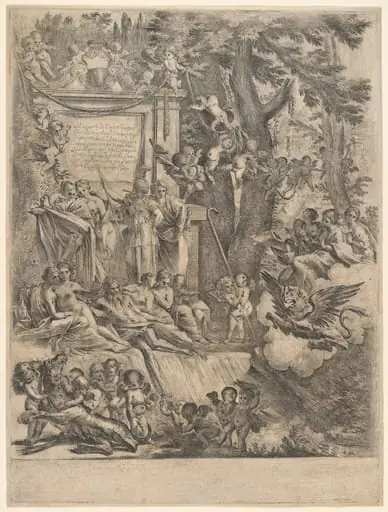 Allegory in Honor of the Arrival of Cardinal Franciotti as Bishop of Lucca
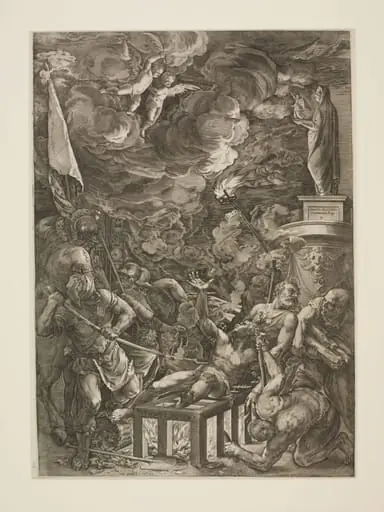 Martyrdom of St. Lawrence
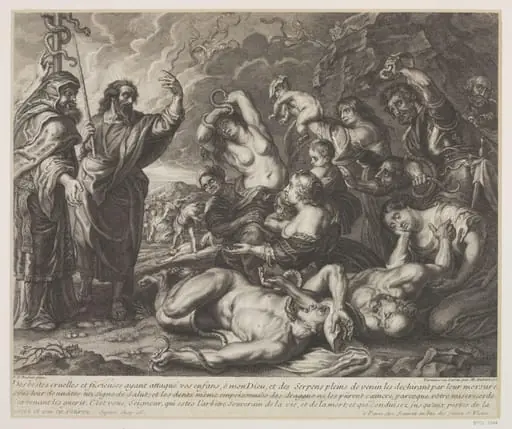 The Children of Israel and the Plague of Fiery Serpents
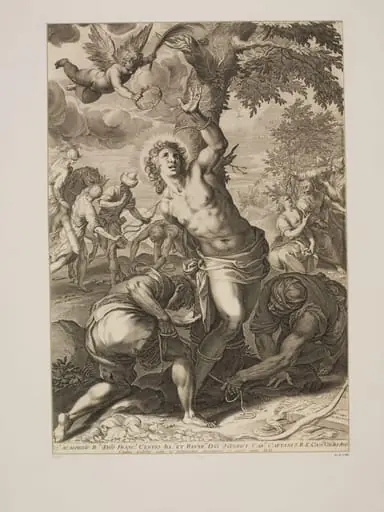 The Martyrdom of St. Sebastian
 The Elevation of the Cross