Artwork
The Assumption of the Virgin
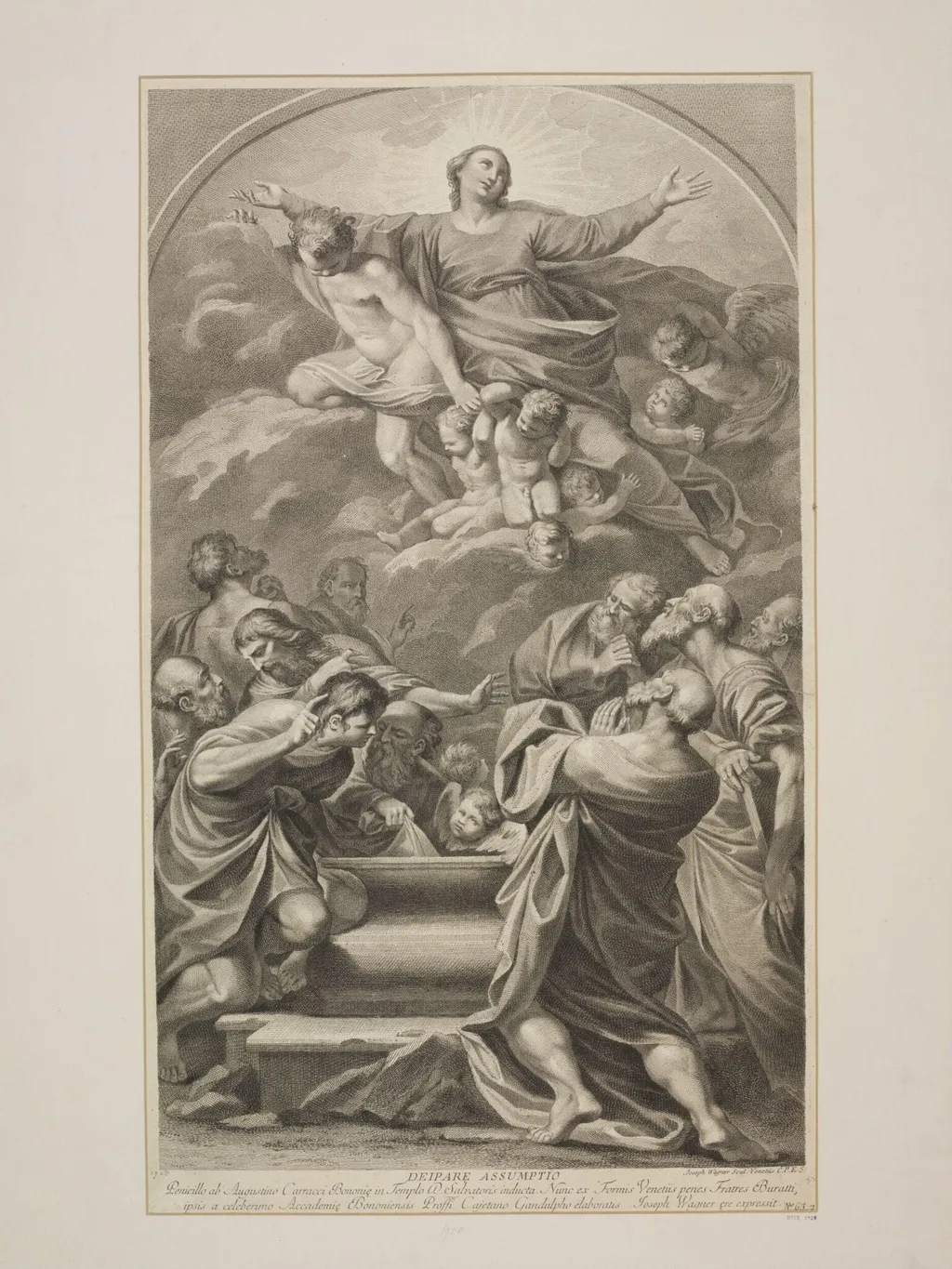
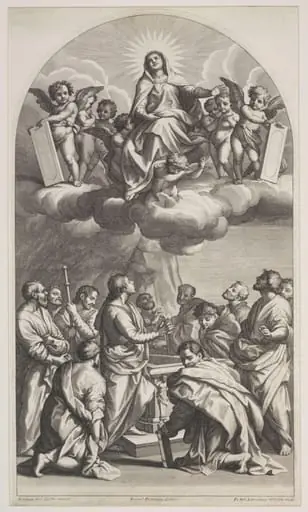
The Assumption of the Virgin is a print by Joseph Wagner. It dates from 1750 and is held in the collection of the Victoria and Albert Museum.
About this work
Overview
The Assumption of the Virgin is a 1750 print by Joseph Wagner, based on a design by Agostino Carracci, depicting the ascension of the Virgin Mary into heaven.
Subject & Meaning
The print illustrates a pivotal Christian moment: the Virgin Mary's assumption into heaven. Above, Mary, serene and outstretched, ascends surrounded by angels; below, a group of elders reacts with shock, awe, and sorrow, highlighting the emotional divide between the heavenly and earthly realms.
Technique & Style
The print employs strong chiaroscuro, with deep contrasts between light and dark to convey dynamic movement and emotional depth. Figures are defined by dark outlines against lighter backgrounds, enhancing the dramatic and spatial contrast between heaven and earth.
History & Provenance
Created in 1750 by Joseph Wagner from a design by Agostino Carracci, the print's specific provenance details are not provided in the available information.
Context
This work reflects Baroque influences in its dramatic lighting and emotional intensity, common in 18th-century religious art. The use of chiaroscuro underscores the artistic traditions of the time, emphasizing the spiritual and narrative drama of the scene.
Legacy
As a print, it contributed to the widespread dissemination of religious imagery during its time, making the Assumption narrative more accessible to a broader audience. Its artistic techniques reflect and reinforce the prevailing Baroque styles in religious art of the era.
Artist & collection