Artwork
Viviane
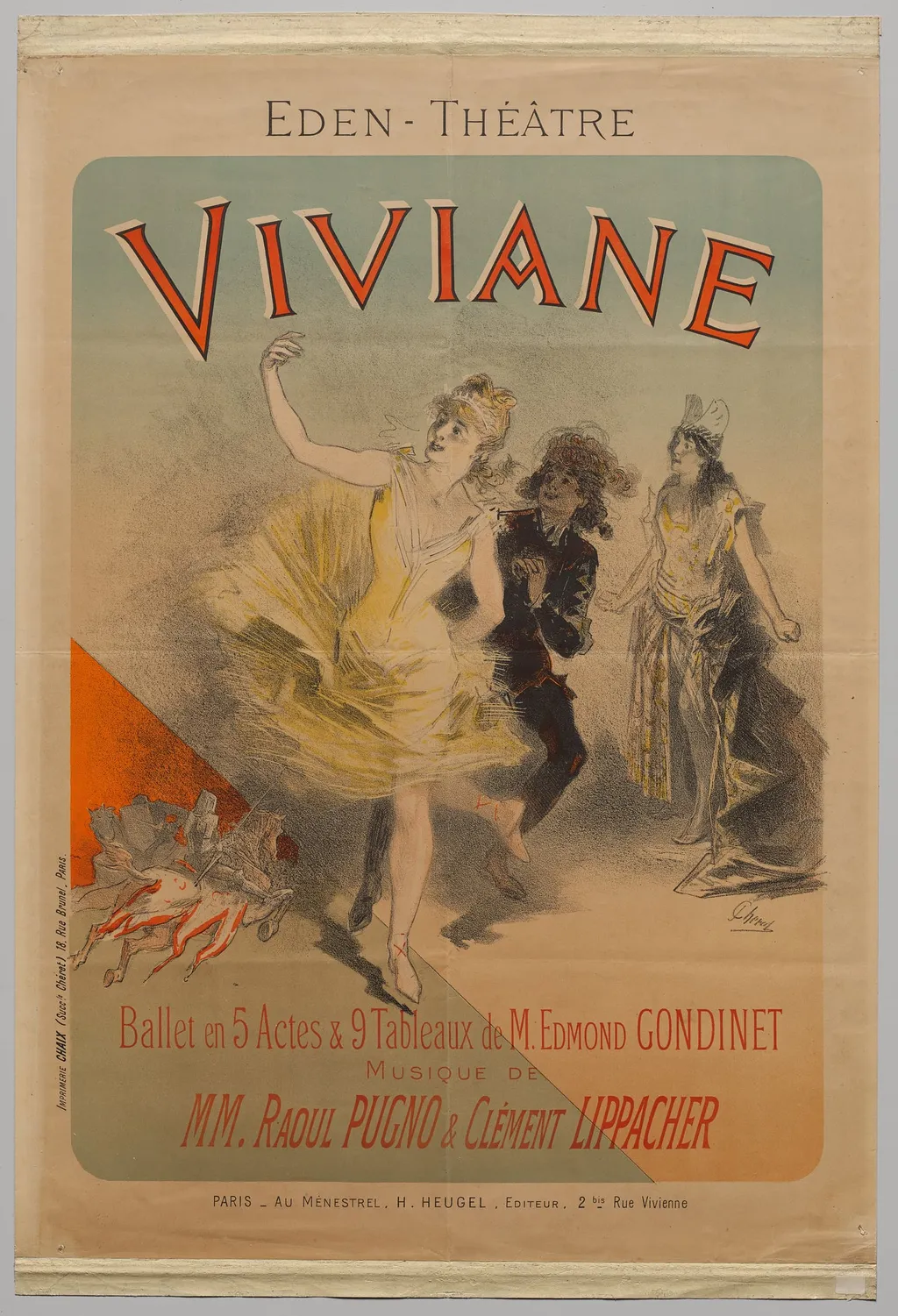
Viviane is a print by the Impressionist artist Jules Chéret. It dates from 1886 and is held in the collection of the Cleveland Museum of Art.
About this work
Overview
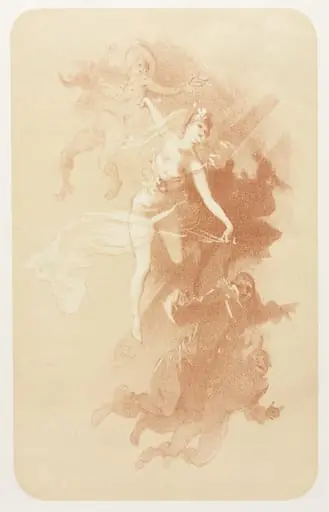
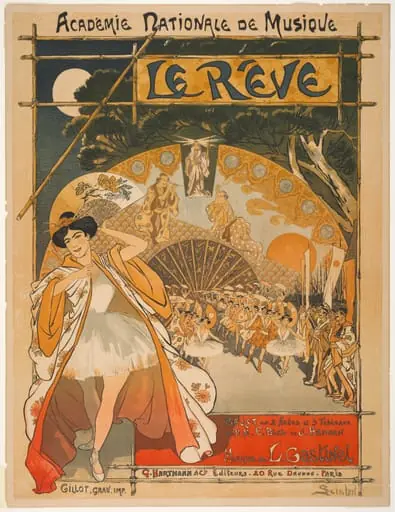
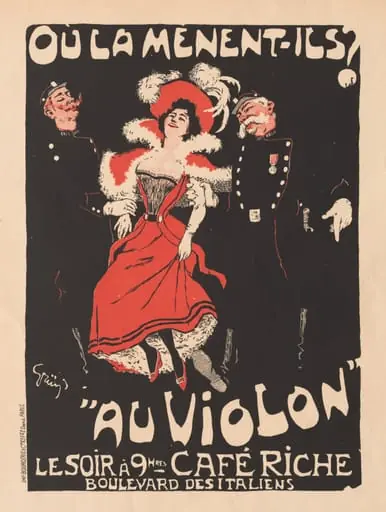
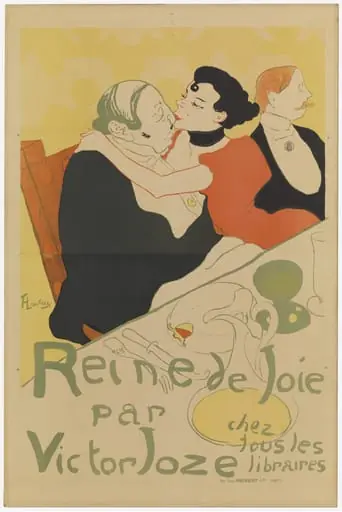
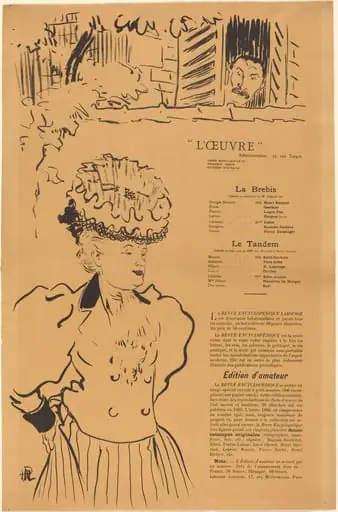
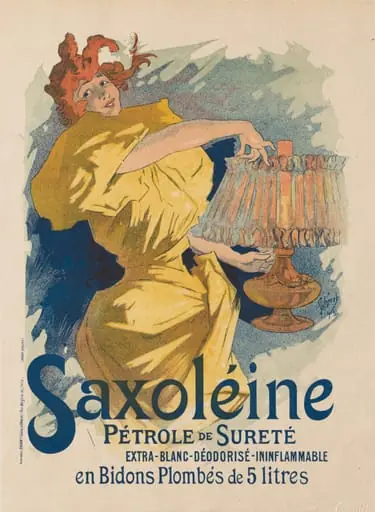
Viviane is an 1886 lithograph by French artist Jules Chéret, part of his series of decorative posters celebrating urban leisure. It was produced for commercial display and later acquired by The Cleveland Museum of Art. The work captures a moment of movement and social interaction, characteristic of Chéret’s focus on modern life in late 19th-century Paris.
Subject & Meaning
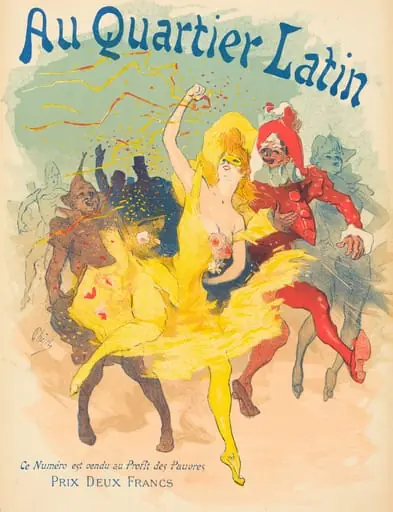
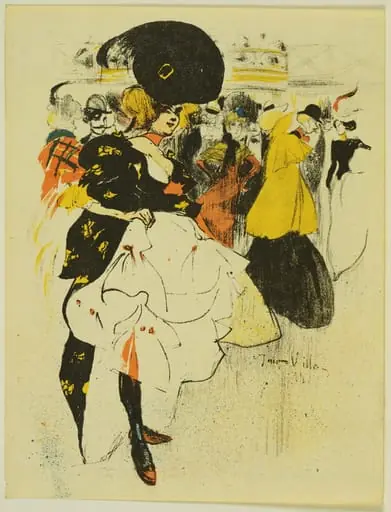
The central figure, Viviane, is depicted mid-dance, her arms extended in dynamic motion, suggesting spontaneity and vitality. Surrounding her are three figures in formal attire, observing with quiet attention. The scene evokes the atmosphere of Parisian dance halls or cabarets, where social boundaries blurred and public performance became a form of personal expression.
Technique & Style
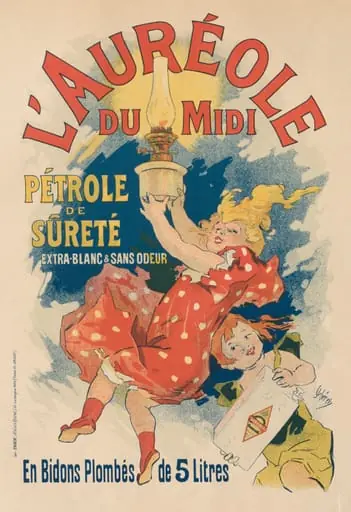
Chéret employed lithography to achieve bold, flat areas of color and fluid outlines, emphasizing rhythm over detail.
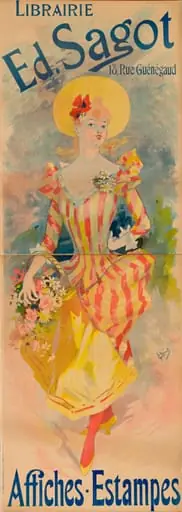
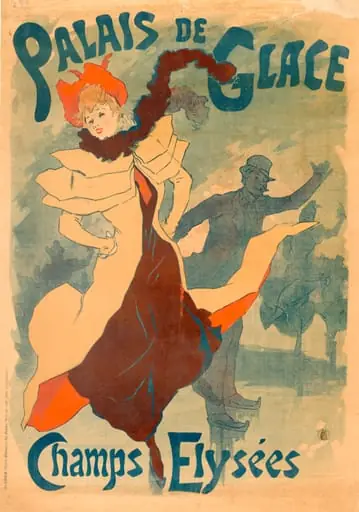
Chéret employed lithography to achieve bold, flat areas of color and fluid outlines, emphasizing rhythm over detail. The yellow dress contrasts with the soft blue-green background, drawing focus to the dancer’s motion. His use of simplified forms and stylized figures reflects the influence of Japanese prints and the decorative sensibilities of Art Nouveau, while retaining a sense of natural movement.
History & Provenance
Created as a commercial poster, Viviane was originally distributed in public spaces to advertise entertainment venues. It entered The Cleveland Museum of Art’s collection through established acquisition channels, likely as part of a broader effort to document the evolution of graphic design. Its preservation reflects growing institutional interest in posters as legitimate art forms by the early 20th century.
Context
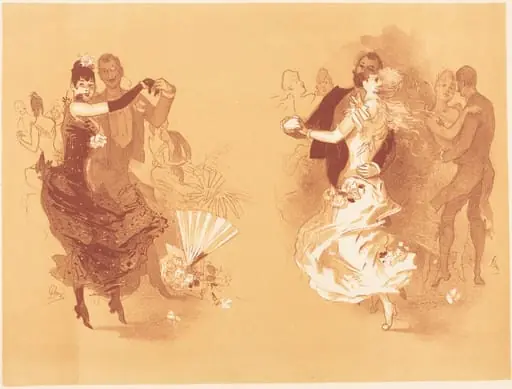
In the 1880s, Paris experienced a boom in nightlife and mass-produced visual culture. Chéret’s posters responded to this by transforming advertising into art, blending theatricality with accessibility. Viviane exemplifies how public imagery began to reflect the changing roles of women and the rise of leisure as a cultural force in urban society.
Legacy
Chéret’s work, including Viviane, helped redefine the poster as a medium worthy of artistic consideration. His influence extended to later designers and illustrators, shaping the visual language of advertising and graphic arts. Though created for ephemeral use, such works are now studied as documents of social and aesthetic transformation in modern Europe.
Artist & collection

Artist
Jules Chéret (31 May 1836 – 23 September 1932) was a French painter and lithographer who became a master of Belle Époque poster art. He has been called the father of the modern poster.