Artwork
Les Monologues: Eugénie m'avait donné rendez-vous auprès de la colonne pour minuit et demie...
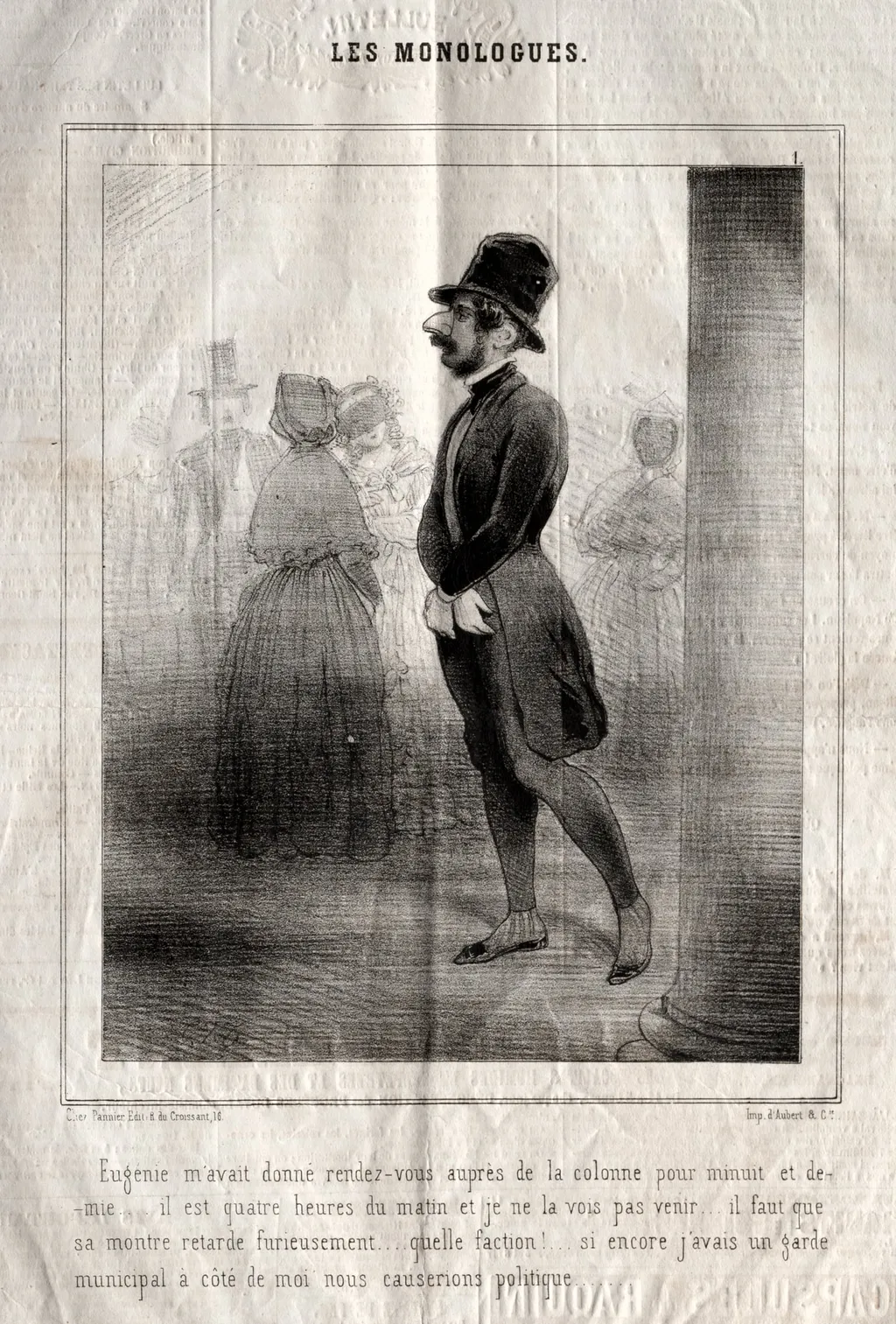
Les Monologues: Eugénie m'avait donné rendez-vous auprès de la colonne pour minuit et demie... is a print by the Romanticist artist Charles Joseph Traviès de Villers. It dates from 1838 and is held in the collection of the Cleveland Museum of Art.
About this work
Overview
It is part of a series titled Les Monologues, which presents fragmented scenes of Parisian life infused with literary tension.
Created around 1838 by Charles Joseph Traviès de Villers, this ink sketch captures a solitary urban moment at night. It is part of a series titled Les Monologues, which presents fragmented scenes of Parisian life infused with literary tension. The work resides in The Cleveland Museum of Art, where it is valued for its concise narrative and expressive line work, reflecting the artist’s interest in everyday drama.
Subject & Meaning
The scene depicts a man waiting in vain for a woman who has failed to appear. He stands rigid, hands in pockets, expression sullen; she walks away, her back turned, indifferent. The title, drawn from a theatrical monologue, suggests betrayal or abandonment. The empty street and distant glow amplify isolation, transforming a simple encounter into a psychological moment of disappointment, typical of Traviès’s satirical yet poignant observations of social behavior.
Technique & Style
Traviès employed rapid, fluid ink lines to convey movement and mood with minimal detail. The man’s posture and the woman’s retreating form are rendered with economical strokes, while the dark, unmodeled background heightens the sense of solitude. The text above, in French, functions as an internal monologue, merging visual and literary elements. This synthesis of drawing and narrative reflects the artist’s background in caricature and his engagement with contemporary literature.
History & Provenance
The sketch originates from Traviès’s series Les Monologues, produced during his time in Paris in the late 1830s. These works were likely intended for publication in illustrated journals, where his sharp social commentary found an audience. The piece entered The Cleveland Museum of Art’s collection through established acquisition channels, though its specific early provenance remains undocumented beyond its association with the artist’s known oeuvre.
Context
Emerging in the wake of Romanticism, Traviès’s work channels the era’s fascination with inner emotion and dramatic tension, though filtered through urban realism rather than grand historical themes. His sketches respond to the rise of print media and the public’s appetite for satirical, intimate glimpses of Parisian life. Unlike idealized Romantic figures, his characters are ordinary, flawed, and psychologically immediate.
Legacy
Traviès’s Les Monologues influenced later illustrators and graphic storytellers by demonstrating how brief visual narratives could convey complex emotional states. His fusion of text and image prefigured developments in comic art and literary illustration. Though less known today, his work remains a quiet precursor to modern visual storytelling, valued for its psychological precision and restraint.
Artist & collection

Artist
Charles Joseph Traviès de Villers
Charles-Joseph Traviès de Villers, also known simply as Traviès, was a Swiss-born French painter, lithographer, and caricaturist whose work appeared regularly in Le Charivari and La Caricature.

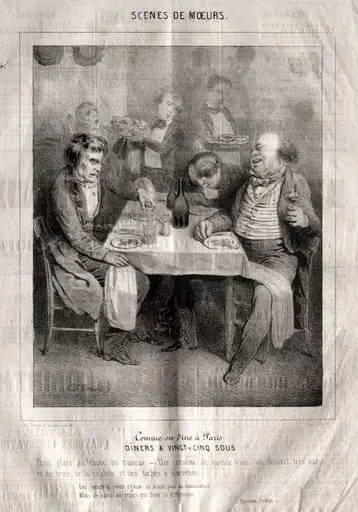 Scènes de moeurs: Comme ou dine à Paris. Diners a vingt-cing sous. Trois plates au choix du traiteur...
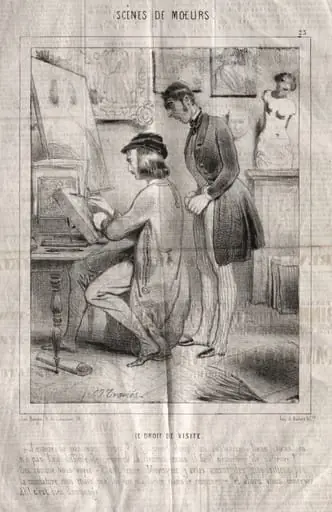 Scènes de moeurs: La Droit de visite. J'espère ne pas vous gener?...
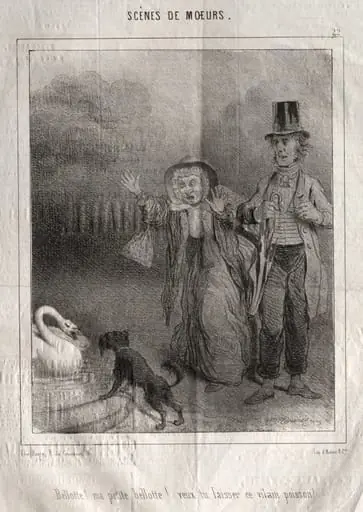 Scènes de moeurs: Bellotte! ma petite Bellote! veux-tu laisser ce vilain poisson!
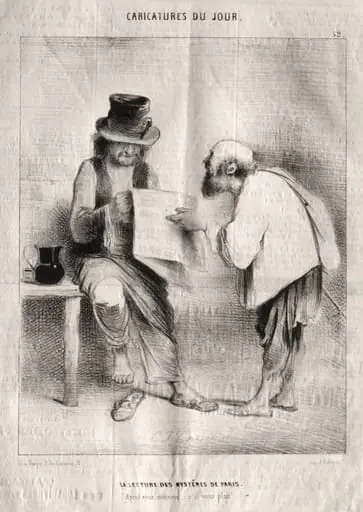 Caricatures du jour: La Lecture des mystères de Paris
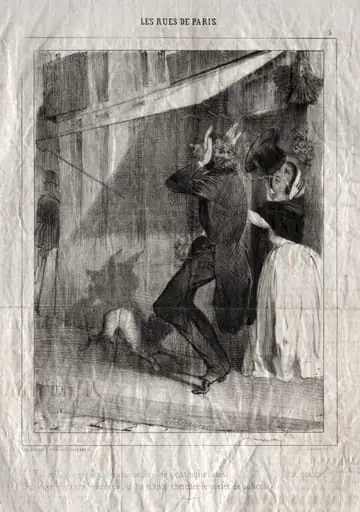 Les Rues de Paris: En voilà encore des mécaniques du cinq cent mille noms . . . c'est quelque chapelier qui aura invente ca. Ou 'on m'aille chercher le prefet de police!
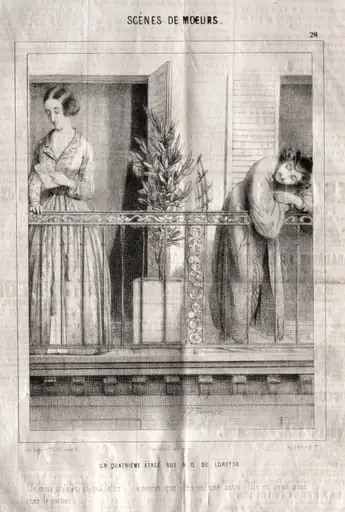 Scènes de moeurs: Un quatrieme étage rue N. D. de Lorette. Je crois qu'elle lit ma lettre...à moins que c'en soit une autre. Elle en avait neuf chez le portier
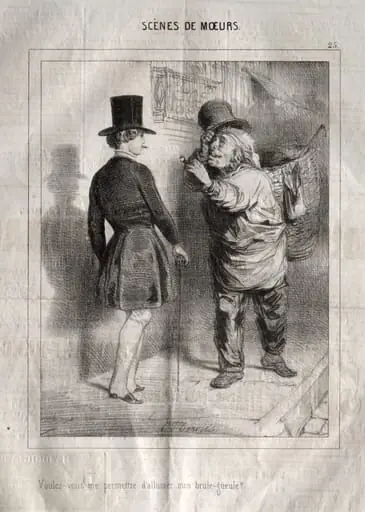 Scènes de Moeurs: Voulez-vous me permettre d'allumer mon brule-gueule?
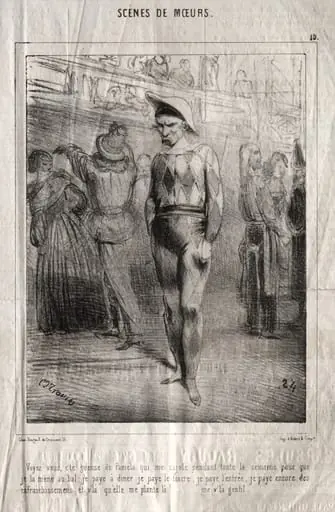 Scènes de moeurs: Voyez vous, c'te queuse de Pamela qui me cajole pendant toute la semaine pour que je la mene au bal...
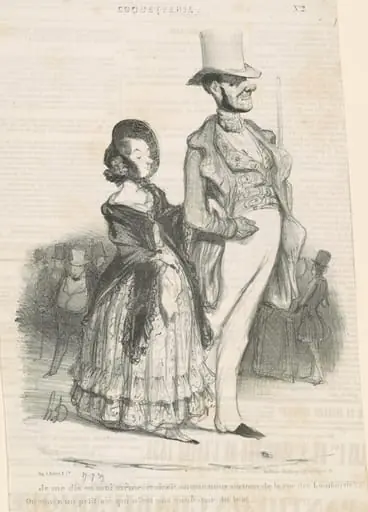 Je me dis en moi-même
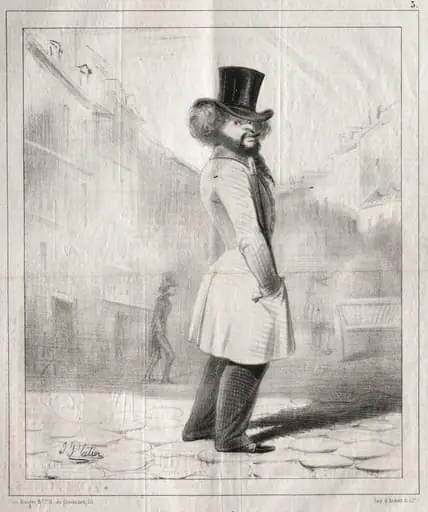 Le Lion de bas étage
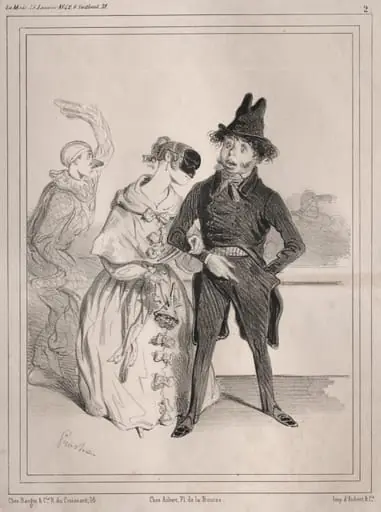 Pochades de carnaval: C'est singulier! elle me dit que je suis Philibert Désormeaux, et que je passe pour un imbecile!! ....où diable à-t-elle sù cela?
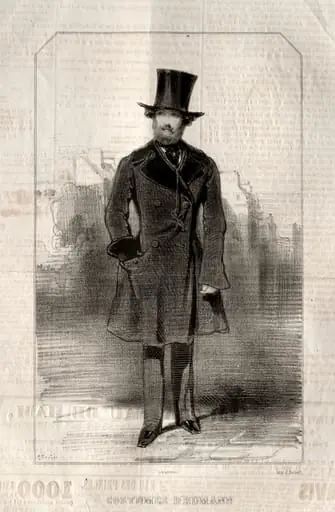 Costumes d' Humann
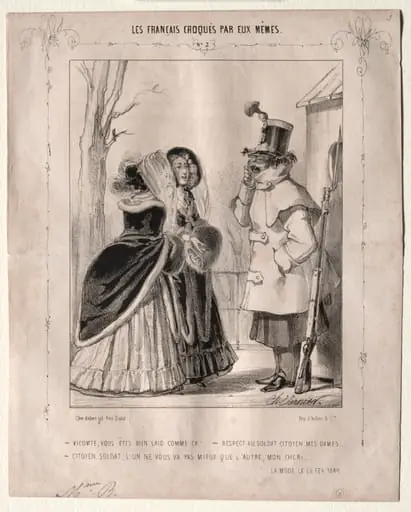 Les Français croquès par eux-mêmes: Vicomte, vous êtes bien laid comme ca!,,,Respect au soldat citoyen, mes dames...Citoyen, soldat, l'un ne vous va pas mieux que l'autre, mon cher!
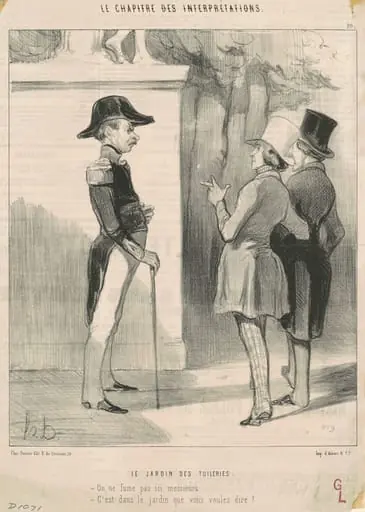 Le jardin des Tuileries
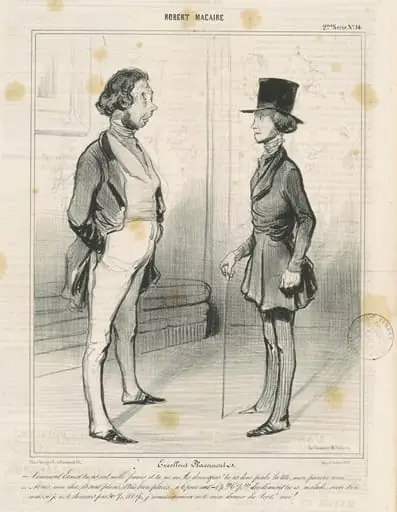 Excellent placement
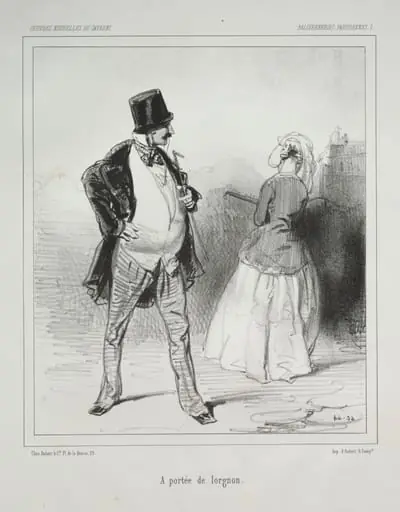 A portée de lorgnon
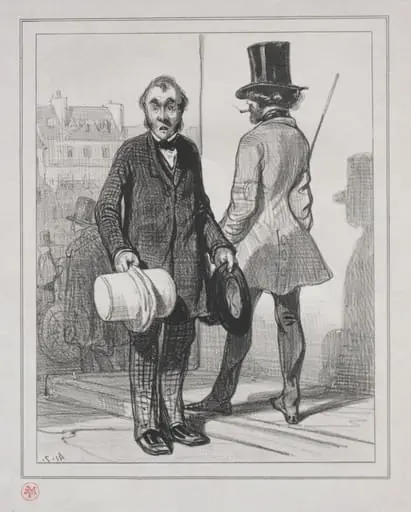 The Life of a Young Man
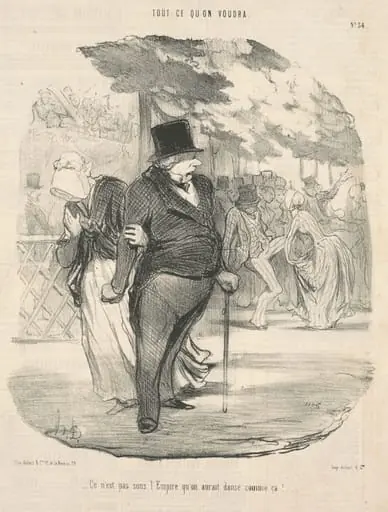 Ce n'est pas sous l"empire qu'on aurait dansé comme ca! ...
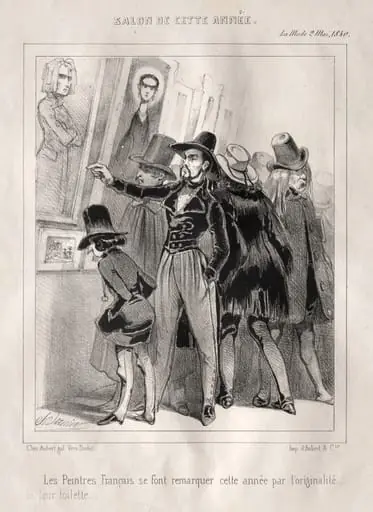 Les Peintres français se font remarquer cette année par l'originalité de leur toilette