Artwork
Scènes de Moeurs: Voulez-vous me permettre d'allumer mon brule-gueule?
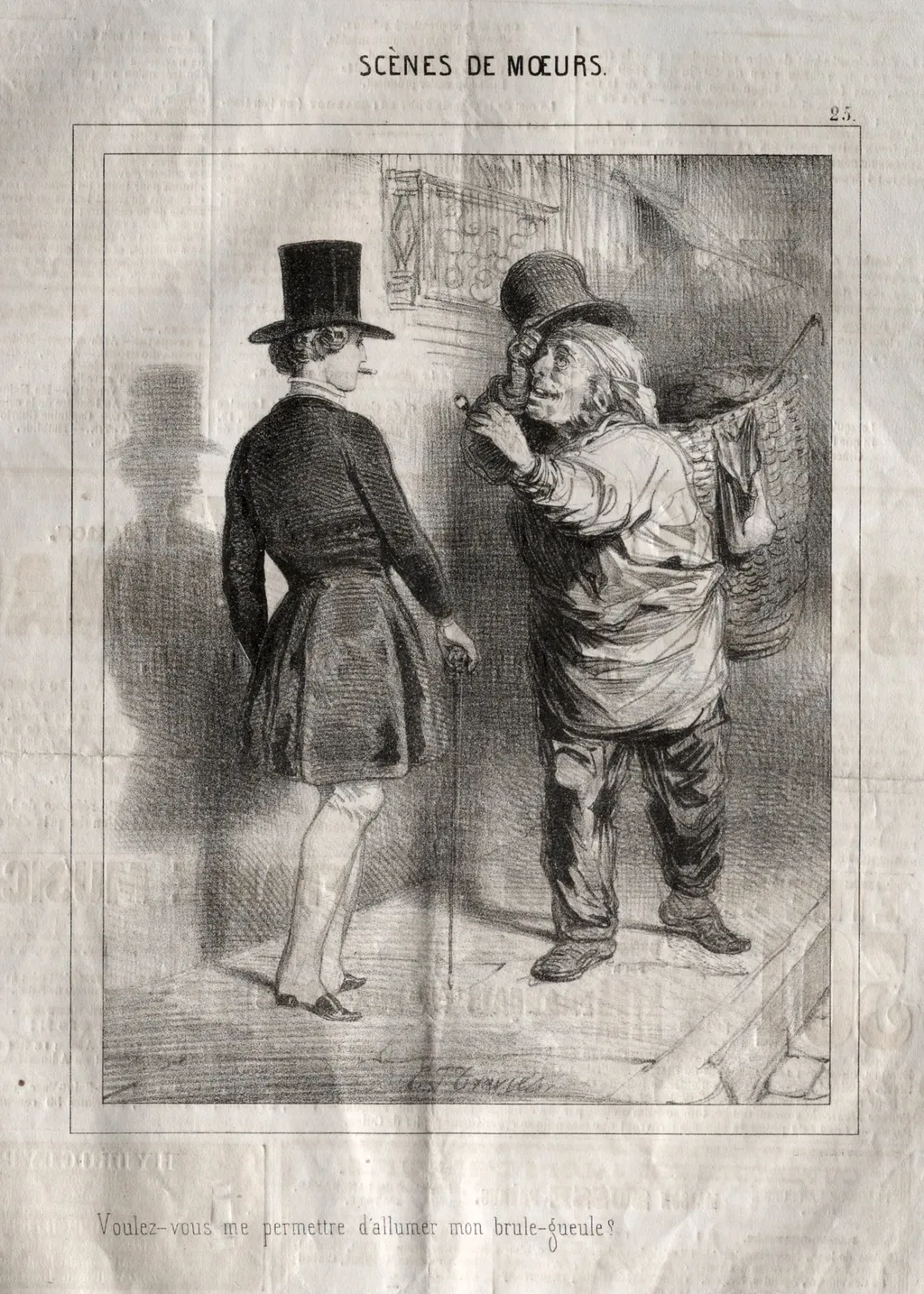
Scènes de Moeurs: Voulez-vous me permettre d'allumer mon brule-gueule? is a print by the Romanticist artist Charles Joseph Traviès de Villers. It dates from 1838 and is held in the collection of the Cleveland Museum of Art.
About this work
Overview
Unlike grand historical paintings, it focuses on a quiet, unguarded moment between two men, reflecting a growing interest in ordinary life during the period.
This print, created around 1838 by Charles Joseph Traviès de Villers, belongs to a series titled Scènes de Moeurs, which captures everyday social interactions in 19th-century France. It is part of the collection at The Cleveland Museum of Art. Unlike grand historical paintings, it focuses on a quiet, unguarded moment between two men, reflecting a growing interest in ordinary life during the period.
Subject & Meaning
The scene portrays two men in casual attire, one offering to light the other’s pipe—a gesture of social familiarity. The phrase in the title, translated as 'May I light your pipe?', suggests a moment of polite intimacy amid urban life. The interaction, though simple, reveals nuances of class, manners, and male camaraderie in Parisian society during the July Monarchy.
Technique & Style
Traviès rendered the scene with fine ink lines and subtle tonal washes, characteristic of lithographic printmaking. The figures are rendered with loose, expressive contours, emphasizing natural posture over idealized form. Background elements are minimized, directing focus to the dialogue between the men. The style leans toward observational realism rather than Romantic idealization, despite the era’s broader artistic trends.
History & Provenance
The print was produced during Traviès’s active years in Paris, where he documented urban life through satirical and anecdotal imagery. It entered The Cleveland Museum of Art’s collection through established acquisition channels in the 20th century, likely as part of a broader effort to represent European graphic arts of the 1830s–40s. Its provenance traces back to French private collections before institutional acquisition.
Context
Created during the July Monarchy, the print reflects a cultural shift toward documenting middle-class routines and social rituals. While Romanticism dominated fine art, graphic artists like Traviès turned to lithography to capture fleeting, unvarnished moments of public and private life. This work aligns with a growing print culture that valued wit, observation, and social commentary over mythological or heroic themes.
Legacy
Traviès’s prints, including this one, contributed to the evolution of social satire in French graphic arts. Though not widely known today, his work influenced later illustrators who sought to portray everyday life with nuance and humor. The print remains a quiet testament to the dignity found in mundane interactions, preserving a slice of Parisian social texture from the early 19th century.
Artist & collection

Artist
Charles Joseph Traviès de Villers
Charles-Joseph Traviès de Villers, also known simply as Traviès, was a Swiss-born French painter, lithographer, and caricaturist whose work appeared regularly in Le Charivari and La Caricature.

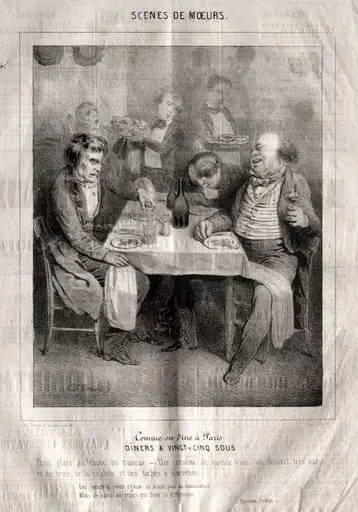 Scènes de moeurs: Comme ou dine à Paris. Diners a vingt-cing sous. Trois plates au choix du traiteur...
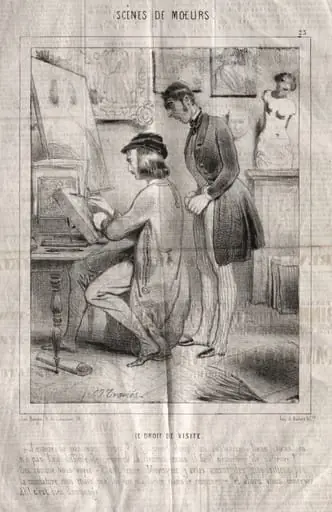 Scènes de moeurs: La Droit de visite. J'espère ne pas vous gener?...
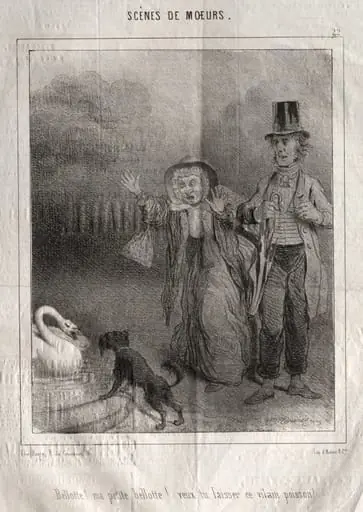 Scènes de moeurs: Bellotte! ma petite Bellote! veux-tu laisser ce vilain poisson!
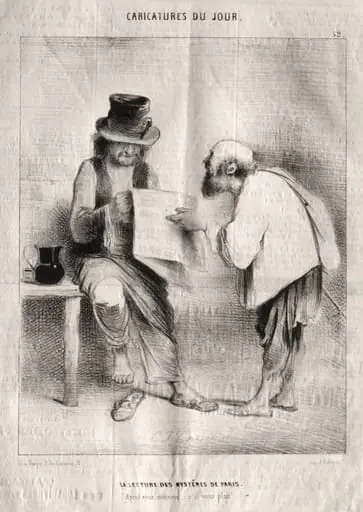 Caricatures du jour: La Lecture des mystères de Paris
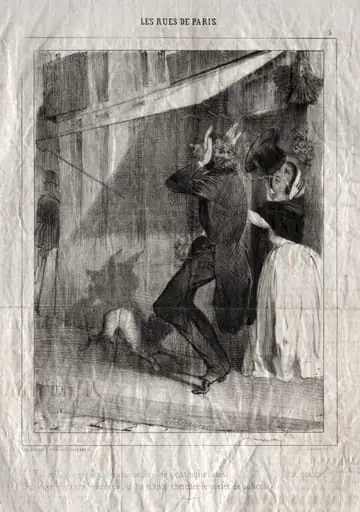 Les Rues de Paris: En voilà encore des mécaniques du cinq cent mille noms . . . c'est quelque chapelier qui aura invente ca. Ou 'on m'aille chercher le prefet de police!
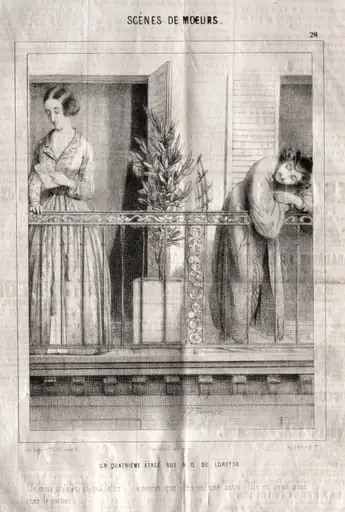 Scènes de moeurs: Un quatrieme étage rue N. D. de Lorette. Je crois qu'elle lit ma lettre...à moins que c'en soit une autre. Elle en avait neuf chez le portier
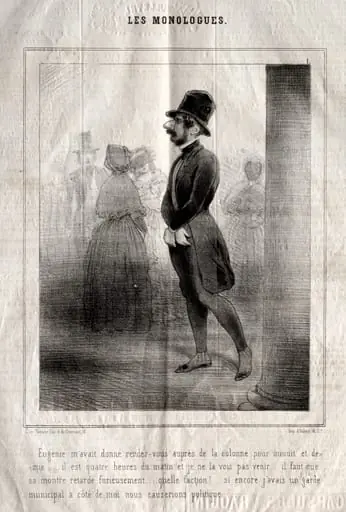 Les Monologues: Eugénie m'avait donné rendez-vous auprès de la colonne pour minuit et demie...
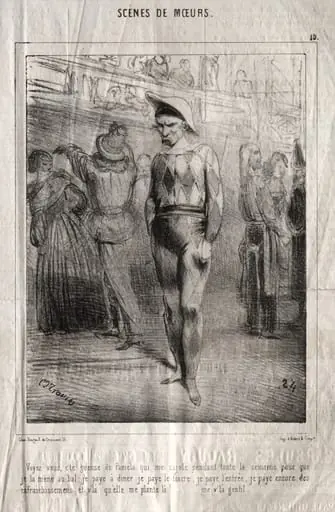 Scènes de moeurs: Voyez vous, c'te queuse de Pamela qui me cajole pendant toute la semaine pour que je la mene au bal...
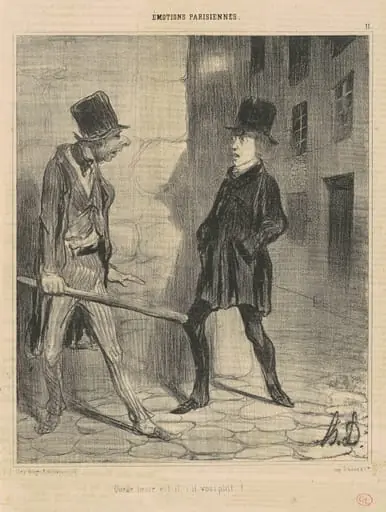 Quelle heure est'il, s'il vous plait?...
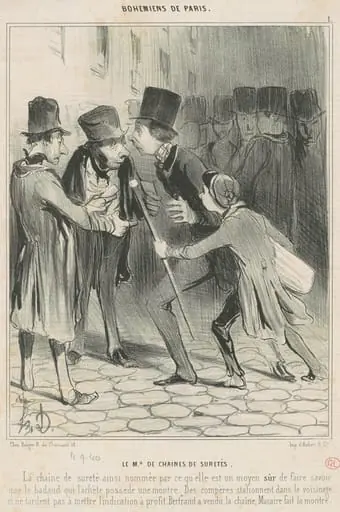 Le Md de Chaines de suretés
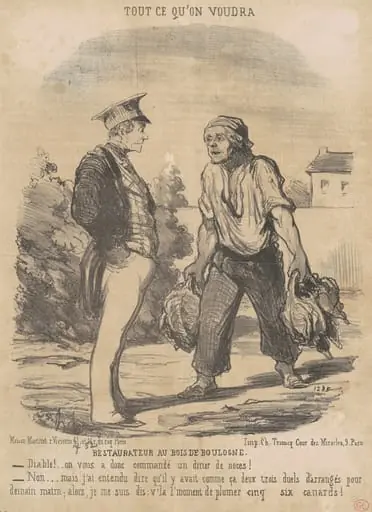 Restaurateur au Bois de Boulogne
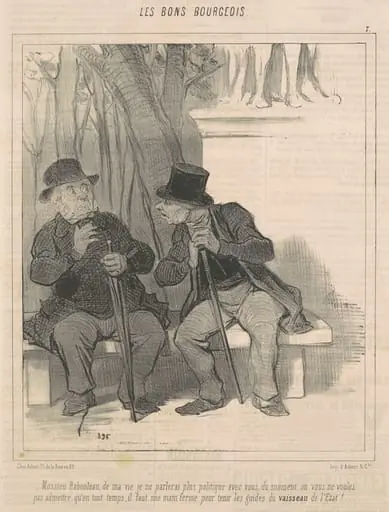 Mossieu Rabourdeau ... je ne parlerai plus politique avec vous ..
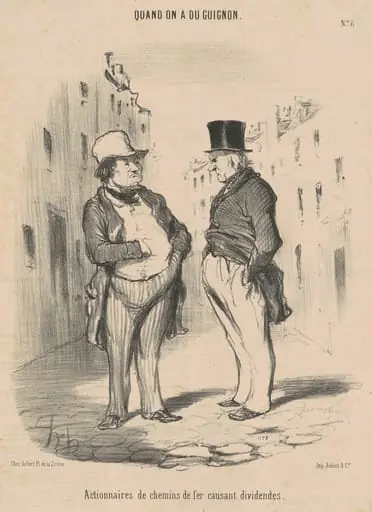 Actionnaires de chemins de fer causant dividendes
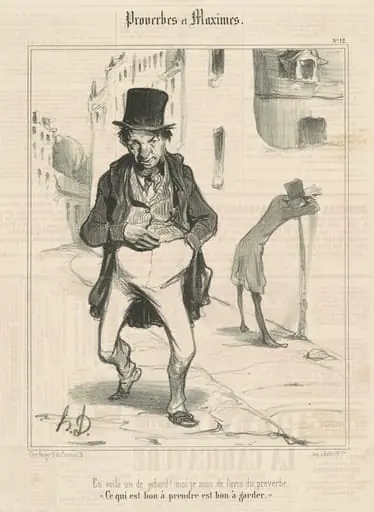 En voila un de jobard! ...
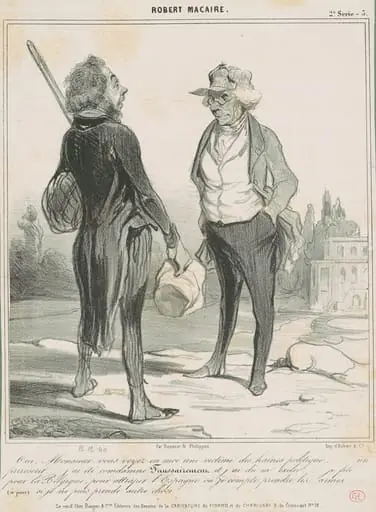 Oui, monsieur, vous voyez en moi une victime
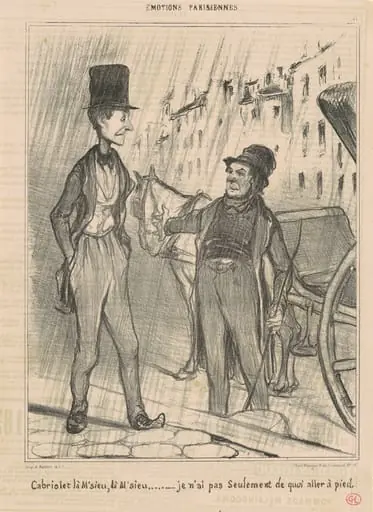 Cabriolet là M'sieu, là M'sieu...
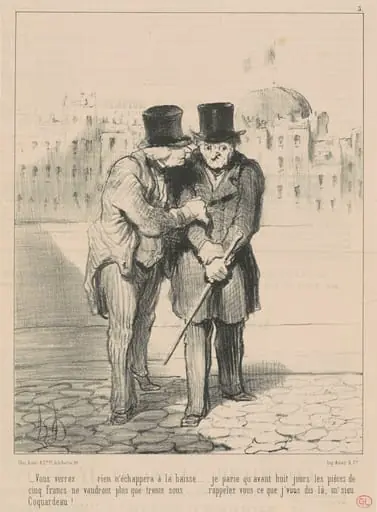 Vous verrez ... rien n'échappera a la baisse ...
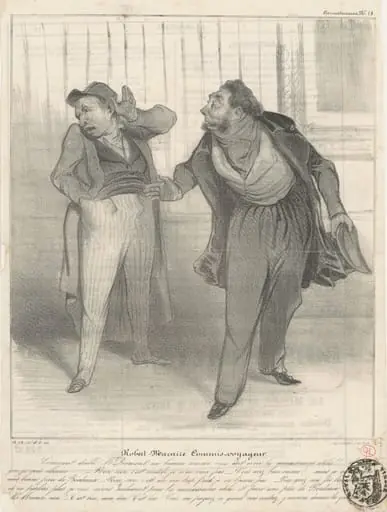 Robert Macaire commis-voyageur
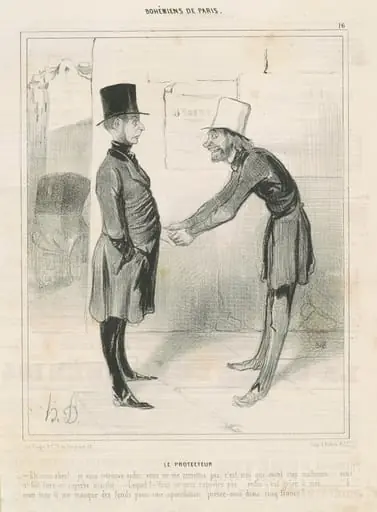 Le Protecteur
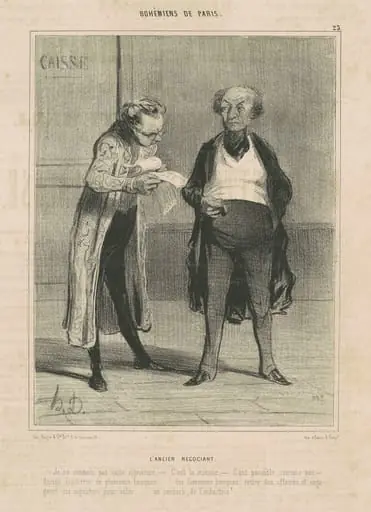 L'ancien négociant