Artwork
Les Rues de Paris: En voilà encore des mécaniques du cinq cent mille noms . . . c'est quelque chapelier qui aura invente ca. Ou 'on m'aille chercher le prefet de police!
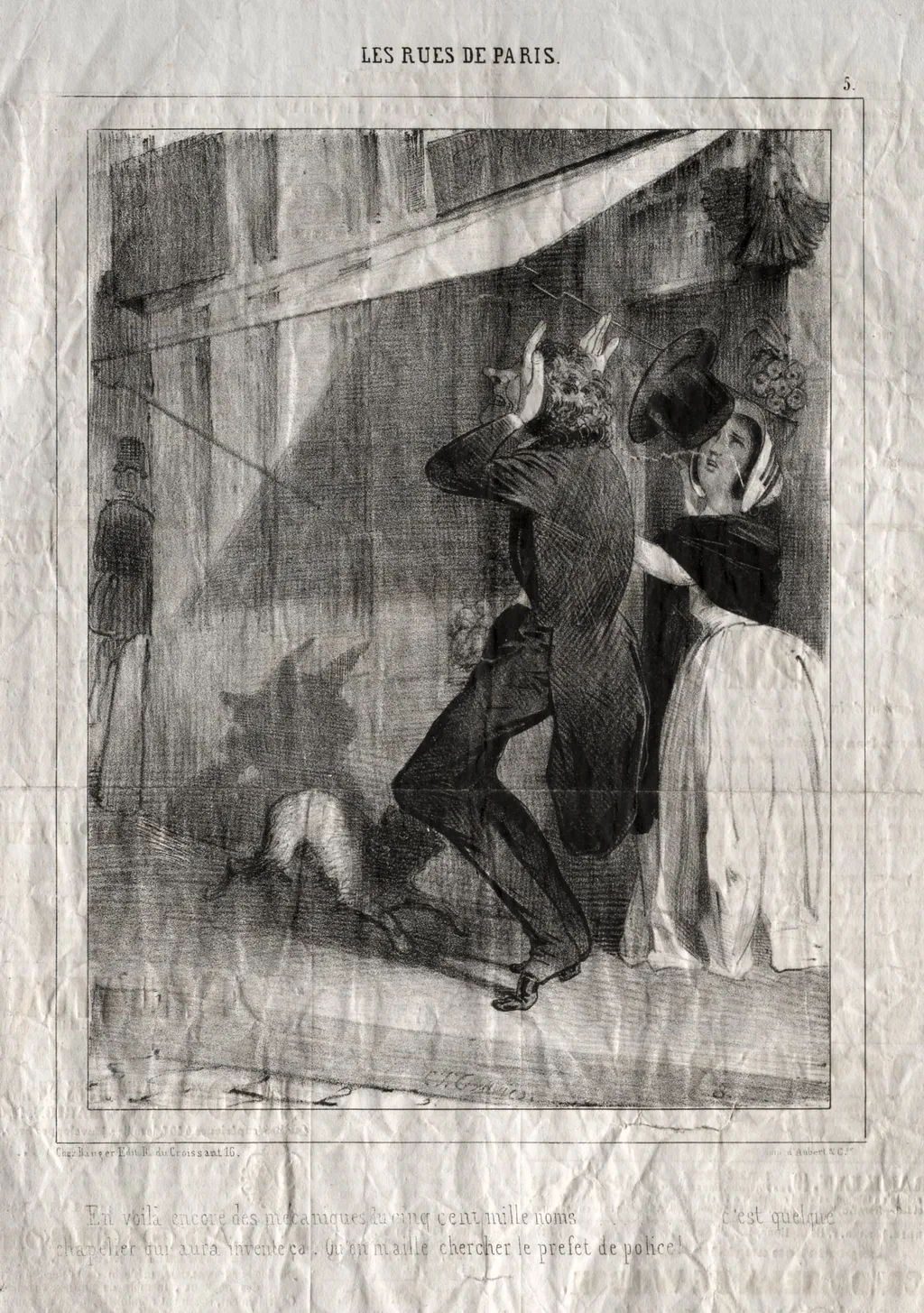
Les Rues de Paris: En voilà encore des mécaniques du cinq cent mille noms . . . c'est quelque chapelier qui aura invente ca. Ou 'on m'aille chercher le prefet de police! is a print by the Romanticist artist Charles Joseph Traviès de Villers. It dates from 1838 and is held in the collection of the Cleveland Museum of Art.
About this work
Overview
This lithograph by Charles Joseph Traviès de Villers, dated around 1838, captures a fleeting, chaotic moment on a Parisian street.
This lithograph by Charles Joseph Traviès de Villers, dated around 1838, captures a fleeting, chaotic moment on a Parisian street. Rendered in rapid, expressive lines, the scene depicts a man tumbling backward, hat in hand, while a woman observes from the side. The dark, loosely drawn buildings frame the action, and a dog lies near the curb. The title, written in bold capitals, frames the incident as both absurd and emblematic of urban disorder.
Subject & Meaning
The image portrays an ordinary yet absurd mishap—likely a man slipping or tripping—amid the bustle of city life. The caption mocks the notion that such a spectacle could be the invention of a hat-maker, suggesting the chaos of Paris is so bizarre it seems engineered. The woman’s gaze and the fallen hat imply a moment of public humiliation, turning the mundane into a satirical commentary on urban anonymity and the unpredictability of street life.
Technique & Style
Traviès employed swift, sketch-like lithographic lines to convey motion and spontaneity. The figures are simplified, with minimal detail, emphasizing gesture over realism. The dark, uneven textures of the buildings contrast with the dynamic sprawl of the figures, heightening the sense of disorder. The composition feels unpolished, mirroring the immediacy of a street observation rather than a staged scene, aligning with the artist’s journalistic approach to urban subjects.
History & Provenance
Created around 1838, the print was part of Traviès’s broader series documenting Parisian life during the July Monarchy. It was likely published in a periodical or as a standalone satirical print, common in mid-19th-century France. The work entered the collection of The Cleveland Museum of Art through established acquisition channels, preserving its role as a record of urban satire from the era.
Context
In the 1830s, Paris underwent rapid modernization, and artists increasingly turned to street scenes as subjects of social observation. Traviès’s work reflects the Romantic fascination with the irregular and the everyday, but with a satirical edge. Unlike idealized depictions of urban life, his prints highlight absurdity and human folly, aligning with the rise of illustrated journalism and the growing public appetite for witty, critical portrayals of city existence.
Legacy
Traviès’s lithographs contributed to a tradition of urban satire that influenced later illustrators and cartoonists. His ability to distill complex social moments into single, humorous images helped shape visual commentary in print media. While not widely known today, his work remains a valuable document of how 19th-century artists observed and critiqued the rhythms of modern city life with wit and precision.
Artist & collection

Artist
Charles Joseph Traviès de Villers
Charles-Joseph Traviès de Villers, also known simply as Traviès, was a Swiss-born French painter, lithographer, and caricaturist whose work appeared regularly in Le Charivari and La Caricature.

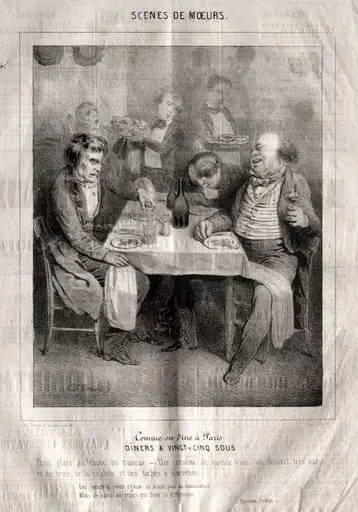 Scènes de moeurs: Comme ou dine à Paris. Diners a vingt-cing sous. Trois plates au choix du traiteur...
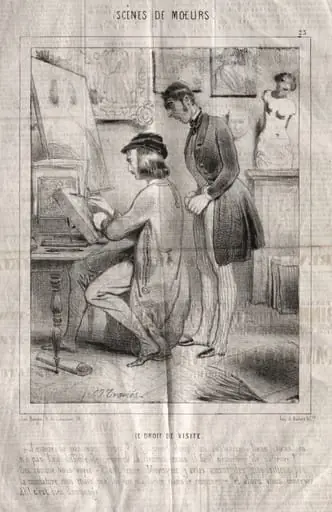 Scènes de moeurs: La Droit de visite. J'espère ne pas vous gener?...
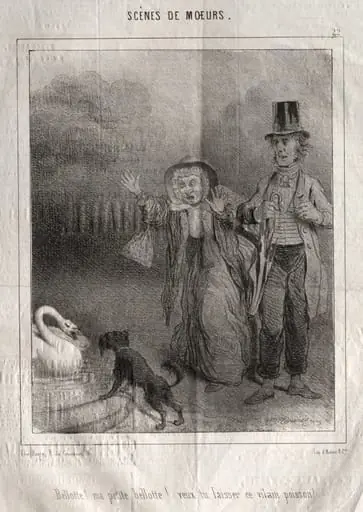 Scènes de moeurs: Bellotte! ma petite Bellote! veux-tu laisser ce vilain poisson!
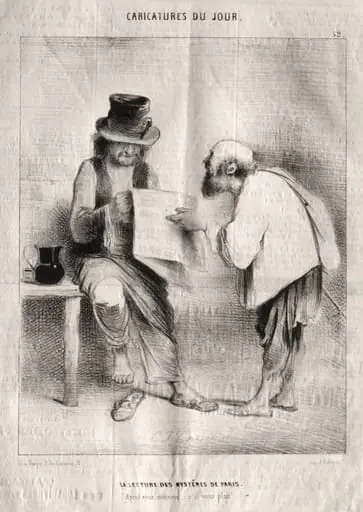 Caricatures du jour: La Lecture des mystères de Paris
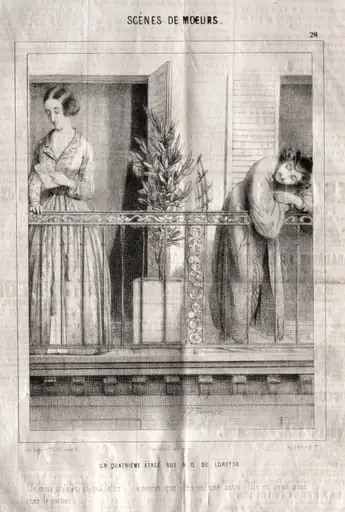 Scènes de moeurs: Un quatrieme étage rue N. D. de Lorette. Je crois qu'elle lit ma lettre...à moins que c'en soit une autre. Elle en avait neuf chez le portier
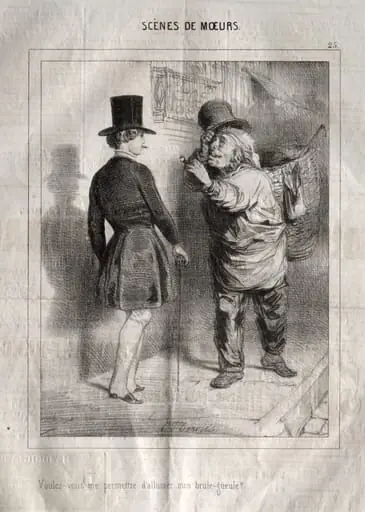 Scènes de Moeurs: Voulez-vous me permettre d'allumer mon brule-gueule?
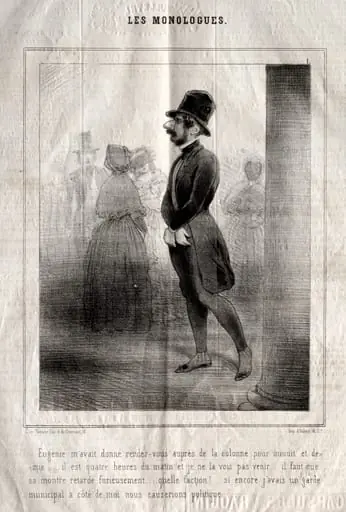 Les Monologues: Eugénie m'avait donné rendez-vous auprès de la colonne pour minuit et demie...
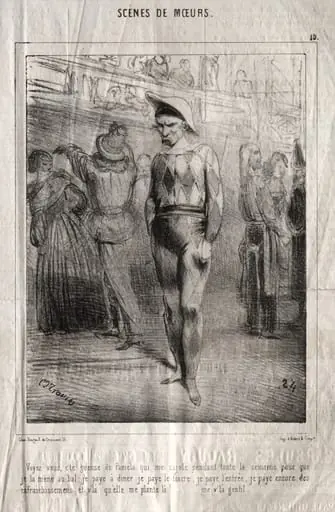 Scènes de moeurs: Voyez vous, c'te queuse de Pamela qui me cajole pendant toute la semaine pour que je la mene au bal...
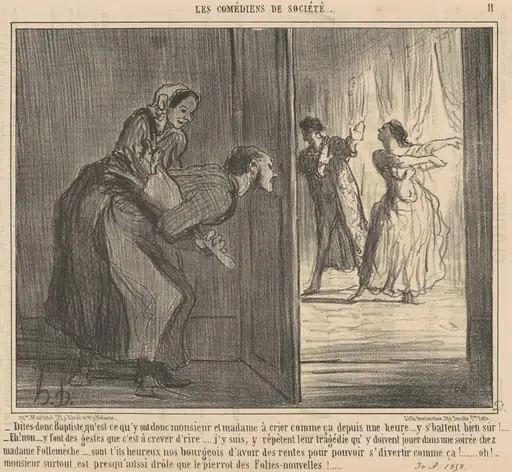 Dites-donc Baptiste ...
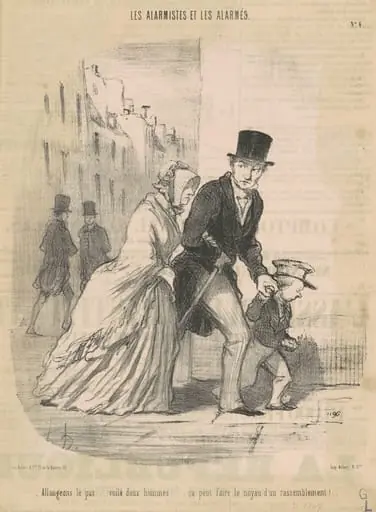 Allongeons le pas ... voila ceux hommes ...
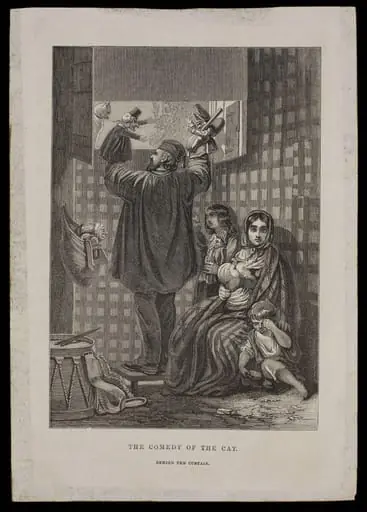 George Speaight Punch & Judy Collection
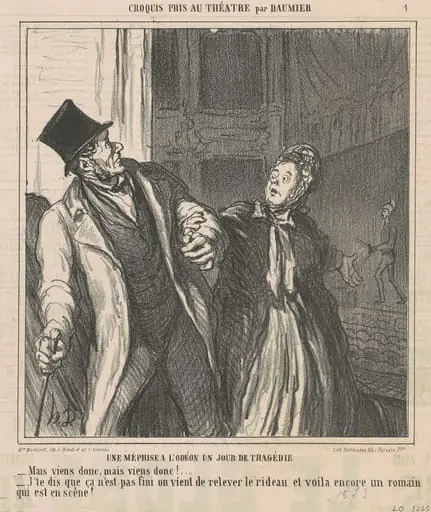 Une méprise a l'odéon ...
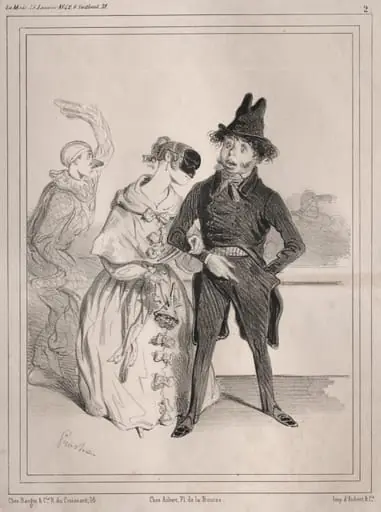 Pochades de carnaval: C'est singulier! elle me dit que je suis Philibert Désormeaux, et que je passe pour un imbecile!! ....où diable à-t-elle sù cela?
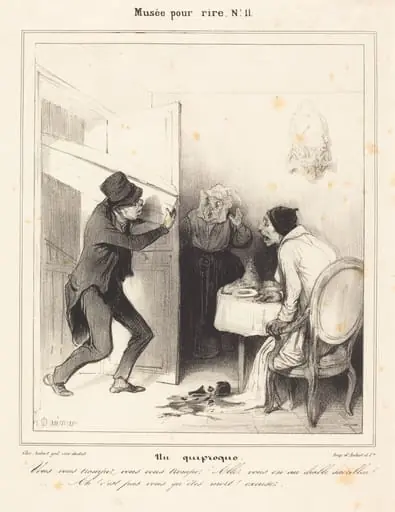 Un quiproquo - Vous vous trompez... allez... au diable...
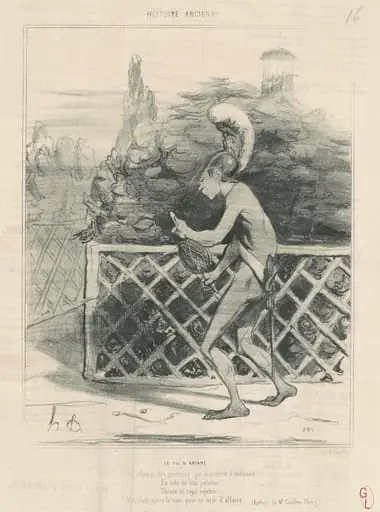 Le fil d'Ariane
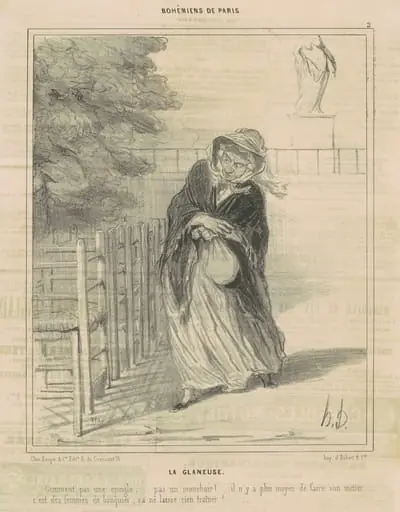 La Glaneuse
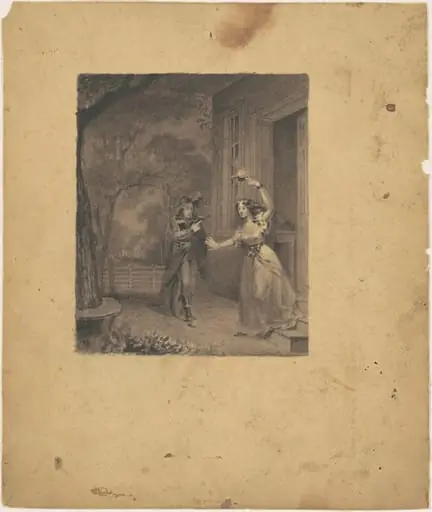 The Bride of Lammermoor
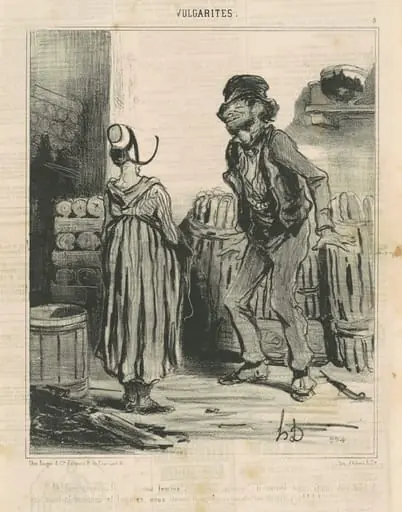 Ah! Fouchtrra! ... Ma femme ...
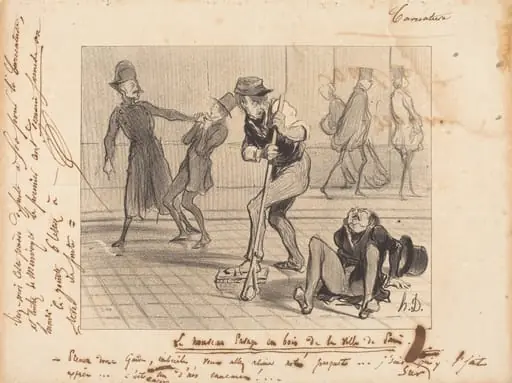 Le Nouveau pavage en bois... de Paris