Artwork
Scènes de moeurs: Un quatrieme étage rue N. D. de Lorette. Je crois qu'elle lit ma lettre...à moins que c'en soit une autre. Elle en avait neuf chez le portier
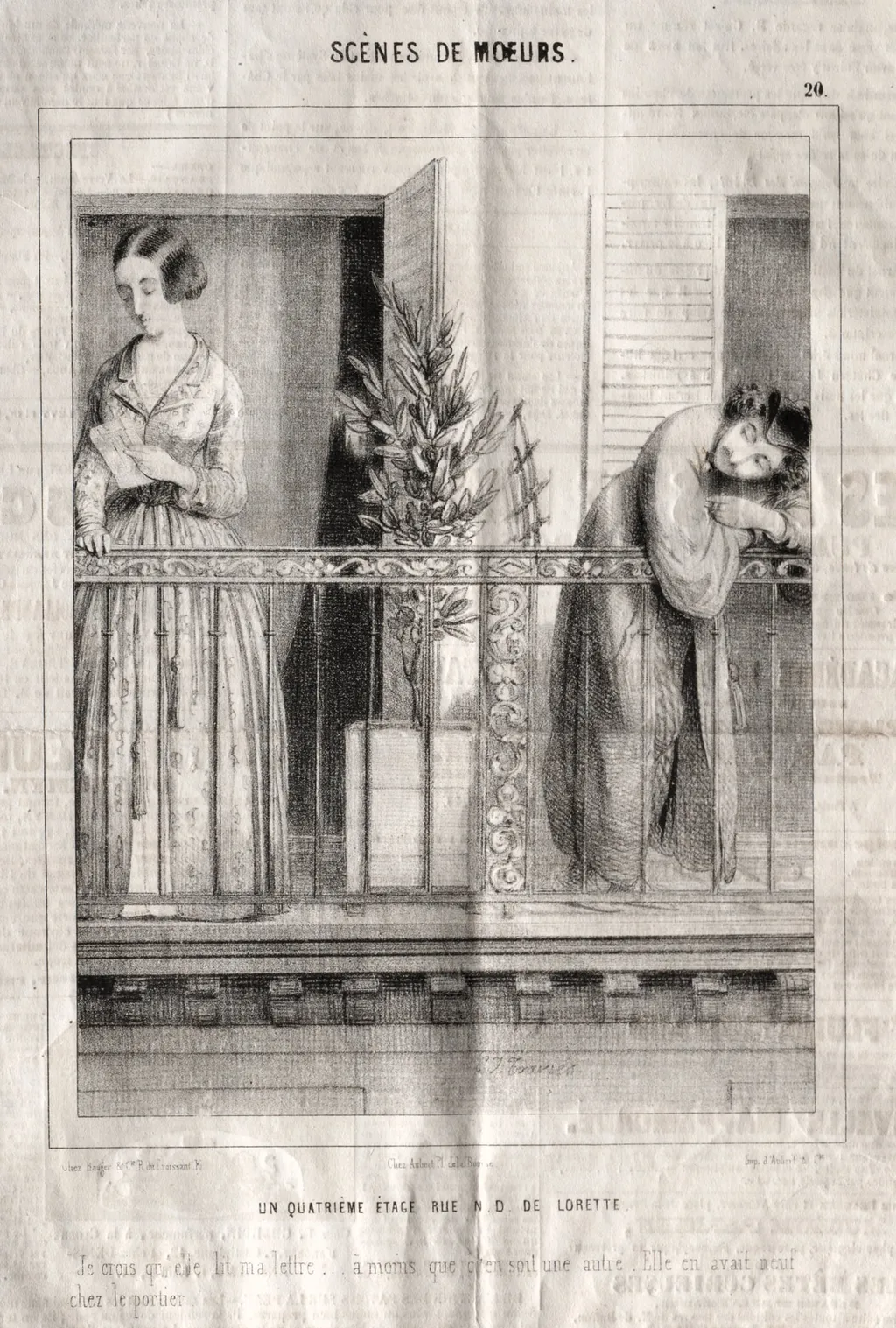
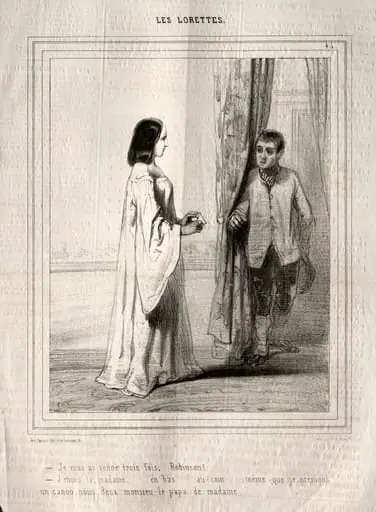
Scènes de moeurs: Un quatrieme étage rue N. D. de Lorette. Je crois qu'elle lit ma lettre...à moins que c'en soit une autre. Elle en avait neuf chez le portier is a print by the Romanticist artist Charles Joseph Traviès de Villers. It dates from 1838 and is held in the collection of the Cleveland Museum of Art.
About this work
Overview
The title suggests an intimate, possibly anxious narrative involving correspondence, hinting at the private dramas of ordinary residents.
This lithograph by Charles Joseph Traviès de Villers, dated around 1838, captures a quiet moment on a Parisian balcony. It belongs to a series documenting urban life, rendered with observational precision. The scene is unadorned, set against a modest apartment building on rue N.D. de Lorette. The title suggests an intimate, possibly anxious narrative involving correspondence, hinting at the private dramas of ordinary residents.
Subject & Meaning
Two women occupy the narrow balcony: one seated rigidly, holding an object in her lap; the other leaning over the rail, her face obscured. The presence of nine letters at the porter’s lodge, referenced in the title, implies a context of unopened mail and withheld communication. Their postures convey tension—waiting, suspicion, or solitude—inviting speculation about personal secrets and the weight of unspoken words in urban isolation.
Technique & Style
Executed in lithography, the work employs fine, controlled lines to define architecture and figures with clarity. Shading is minimal, emphasizing form over atmosphere. The composition is tightly framed, focusing attention on the women and the balcony’s confined space. The plain building and street below are rendered with understated detail, reinforcing the scene’s realism and grounding it in everyday observation rather than idealization.
History & Provenance
Created in the late 1830s, this print was part of Traviès’s series Scènes de moeurs, which documented Parisian social life with wit and nuance. It entered the collection of The Cleveland Museum of Art through established acquisition channels, likely as part of a broader effort in the 20th century to preserve 19th-century French graphic art. Its provenance reflects scholarly interest in urban visual culture of the July Monarchy era.
Context
Traviès’s work emerged during a period when Paris was rapidly expanding and social hierarchies were shifting. Artists increasingly turned to domestic and street scenes to capture the rhythms of middle-class life. This print aligns with a growing trend of depicting private moments—letters, glances, pauses—as carriers of psychological depth, distinct from grand historical or mythological subjects.
Legacy
Though not widely exhibited today, Traviès’s series contributed to the documentation of urban intimacy in pre-modern France. His focus on subtle gestures and unspoken narratives influenced later realist and impressionist depictions of daily life. This print remains a quiet testament to the emotional undercurrents of ordinary existence, preserved through the medium of printmaking.
Artist & collection

Artist
Charles Joseph Traviès de Villers
Charles-Joseph Traviès de Villers, also known simply as Traviès, was a Swiss-born French painter, lithographer, and caricaturist whose work appeared regularly in Le Charivari and La Caricature.

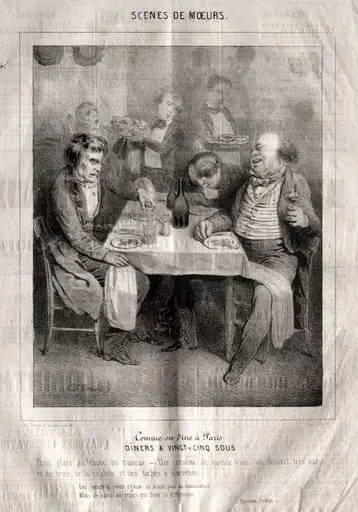 Scènes de moeurs: Comme ou dine à Paris. Diners a vingt-cing sous. Trois plates au choix du traiteur...
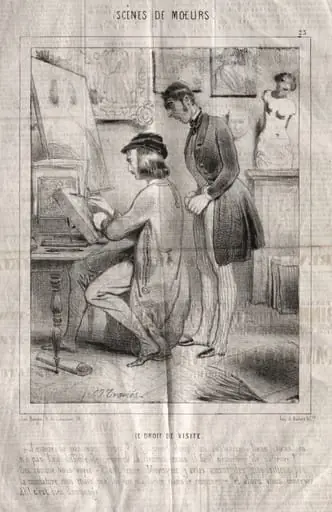 Scènes de moeurs: La Droit de visite. J'espère ne pas vous gener?...
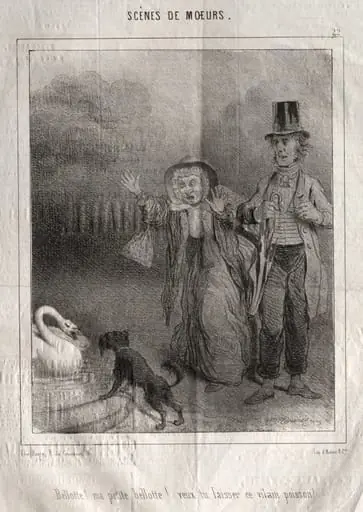 Scènes de moeurs: Bellotte! ma petite Bellote! veux-tu laisser ce vilain poisson!
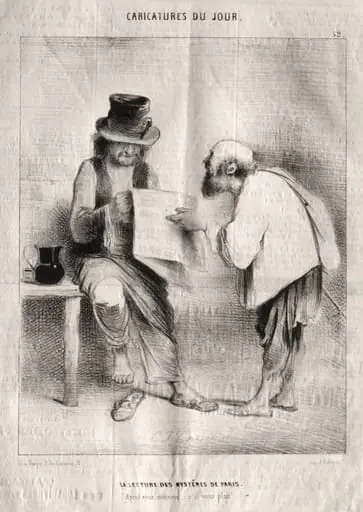 Caricatures du jour: La Lecture des mystères de Paris
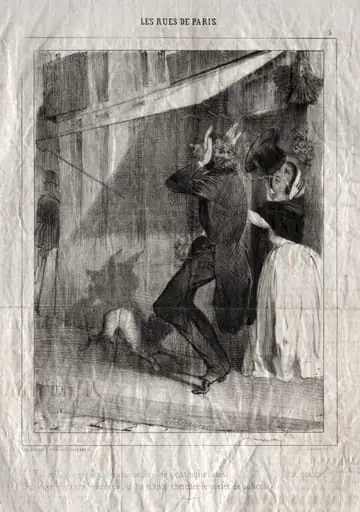 Les Rues de Paris: En voilà encore des mécaniques du cinq cent mille noms . . . c'est quelque chapelier qui aura invente ca. Ou 'on m'aille chercher le prefet de police!
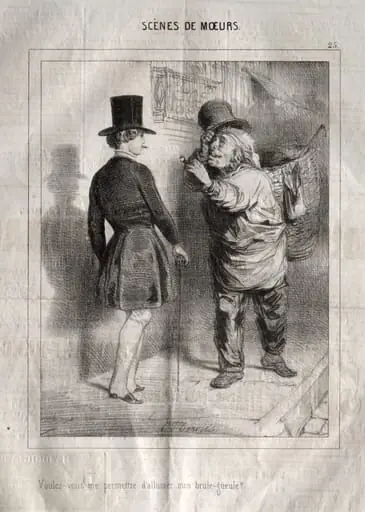 Scènes de Moeurs: Voulez-vous me permettre d'allumer mon brule-gueule?
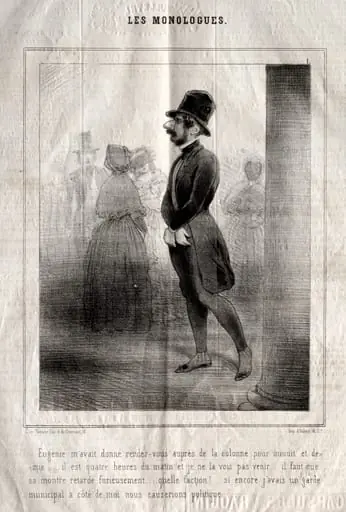 Les Monologues: Eugénie m'avait donné rendez-vous auprès de la colonne pour minuit et demie...
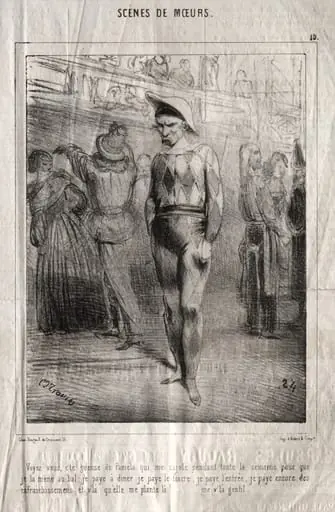 Scènes de moeurs: Voyez vous, c'te queuse de Pamela qui me cajole pendant toute la semaine pour que je la mene au bal...
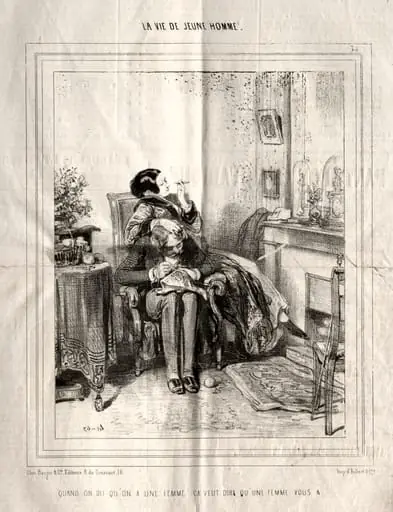 La Vie de Jeune Homme
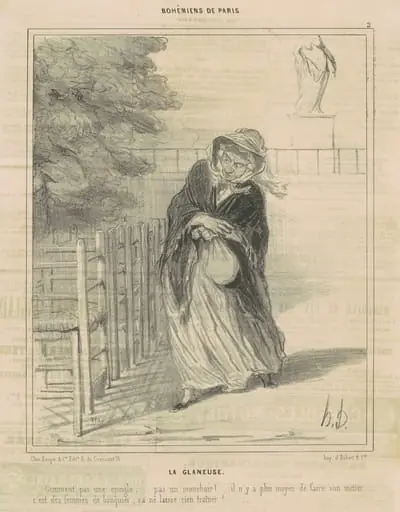 La Glaneuse
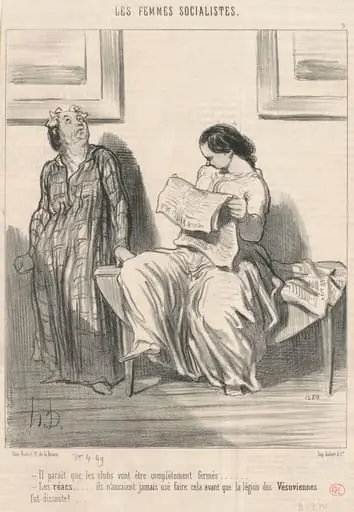 Il parait que les clubs vont être ... fermés ...
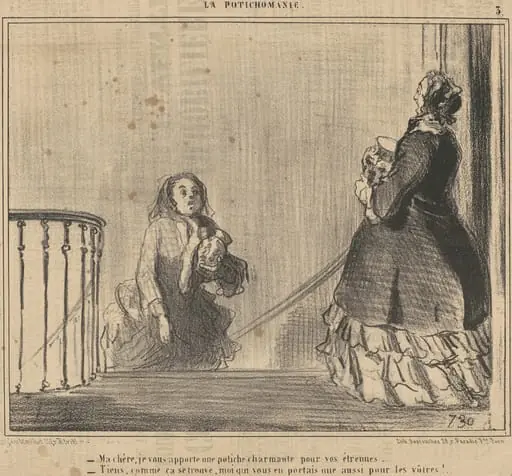 Ma chére, je vous apporte une potiche ...
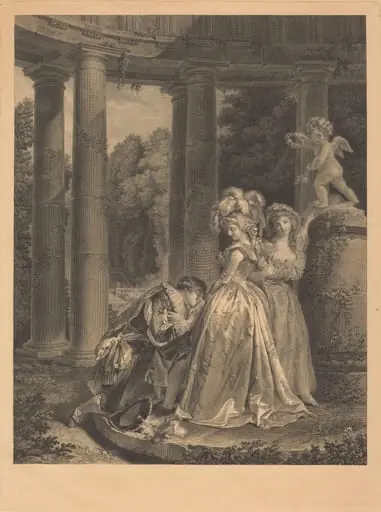 La Declaration
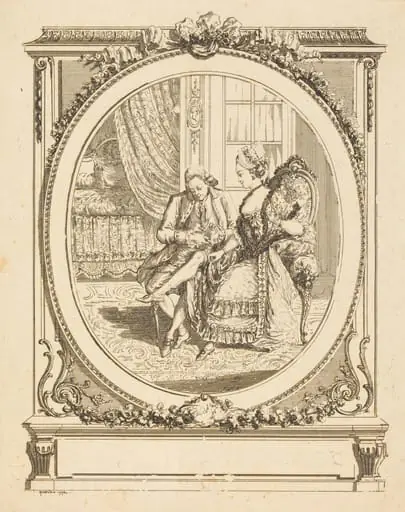 La jarretière
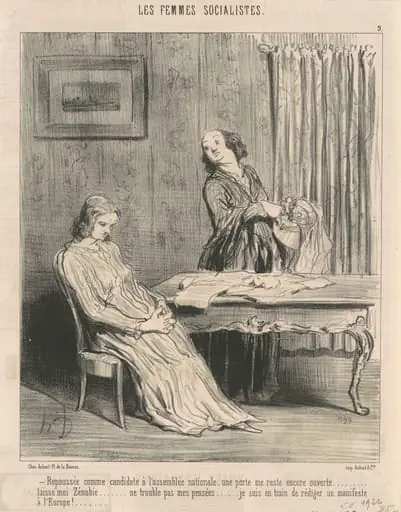 Repoussée ... une porte me reste ouverte ...
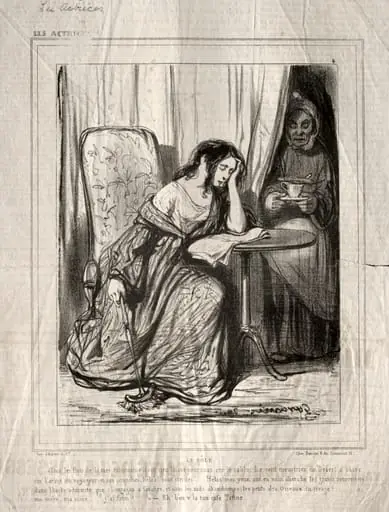 Les Actrices: Le Rôle
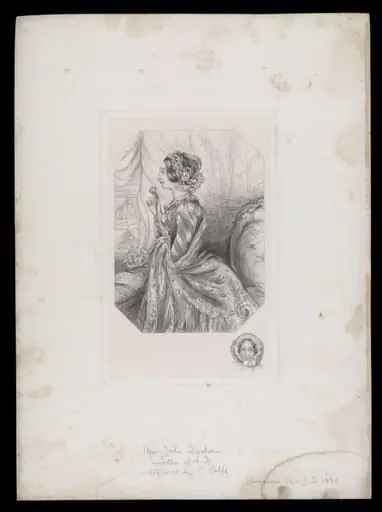 H Beard Print Collection
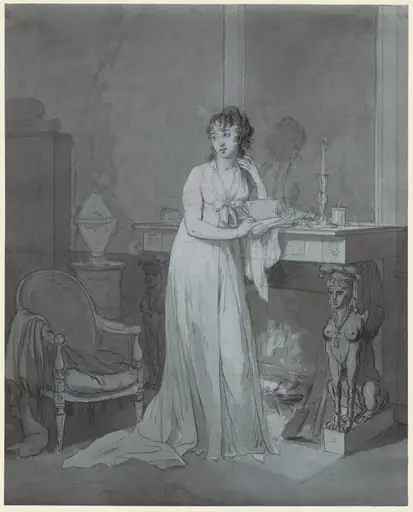 Woman in Front of a Fireplace
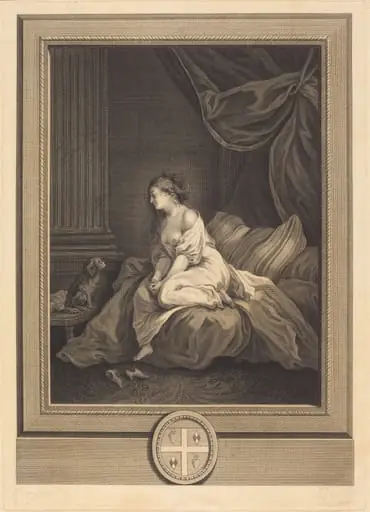 S'il m'etoit aussi fidele
 Les Lorettes