Artwork
Autun, Tower of Ursulines
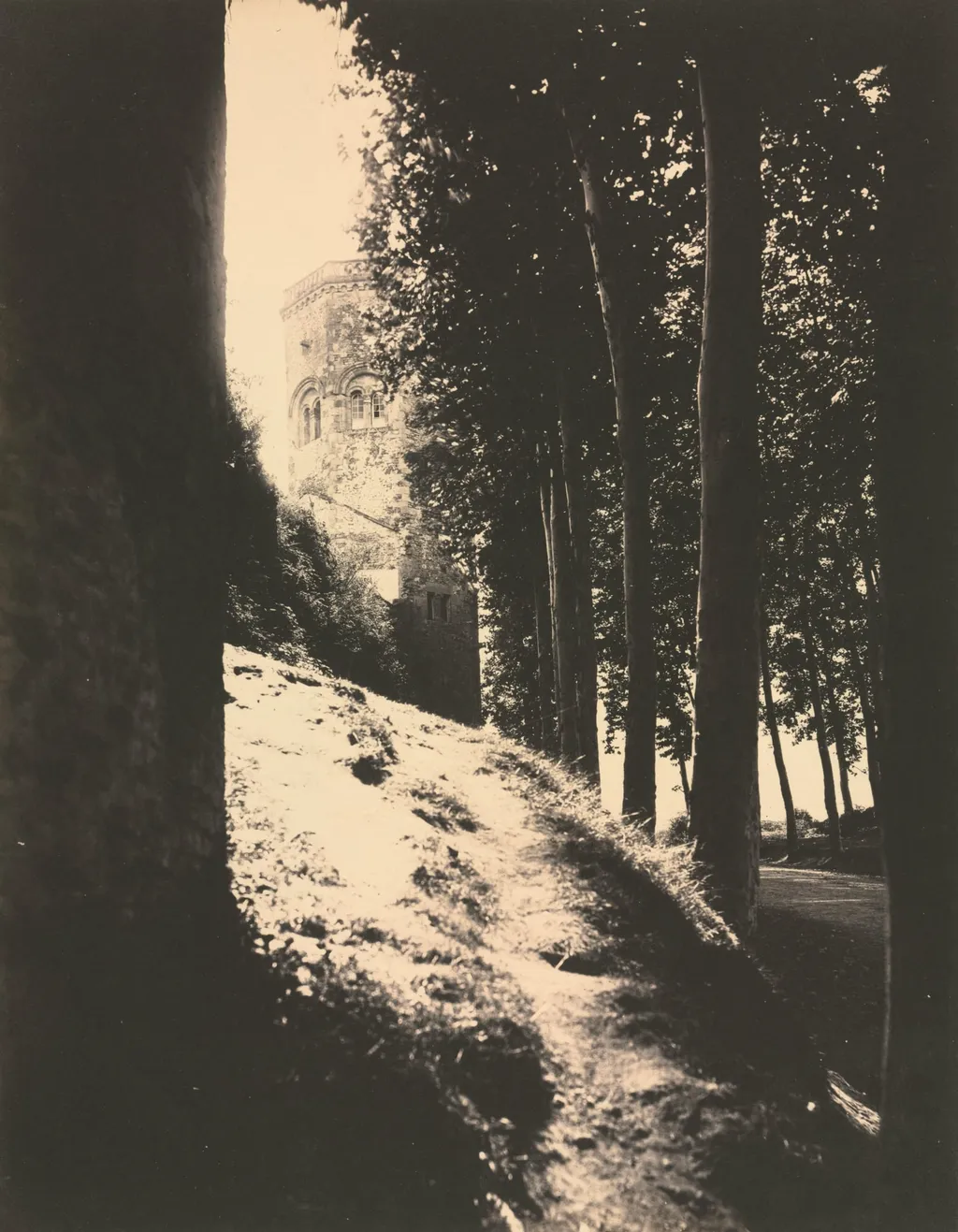
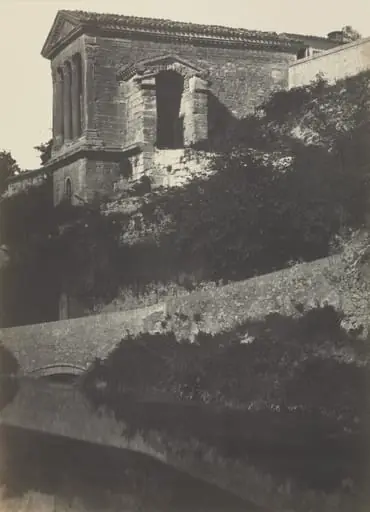
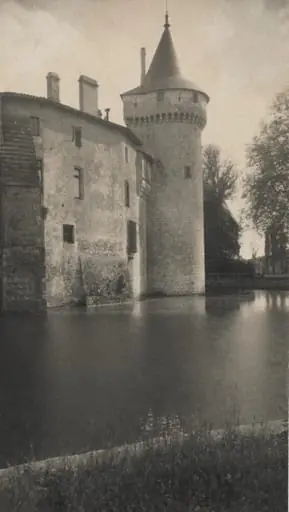
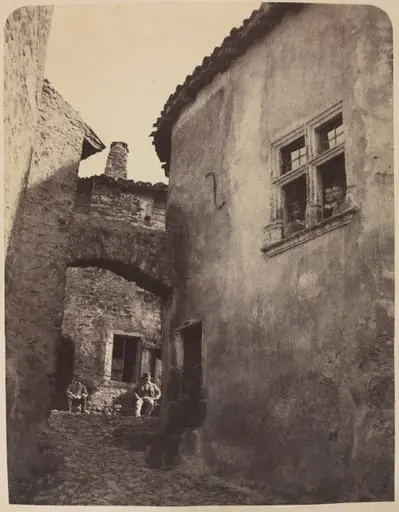
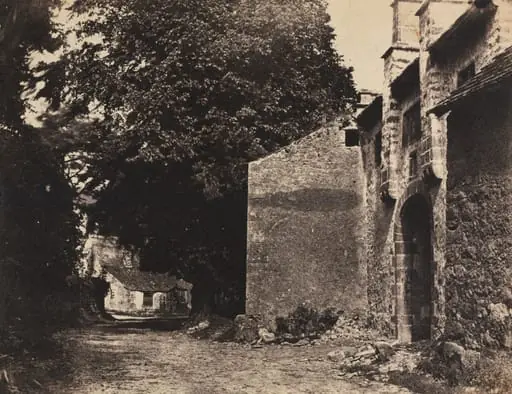
Autun, Tower of Ursulines is a photography by the Impressionist artist Charles Lenormand. It dates from 1864 and is held in the collection of the Cleveland Museum of Art.
About this work
Overview
Charles Lenormand captured the Tower of Ursulines in Autun around 1864 using photographic techniques of the mid-nineteenth century.
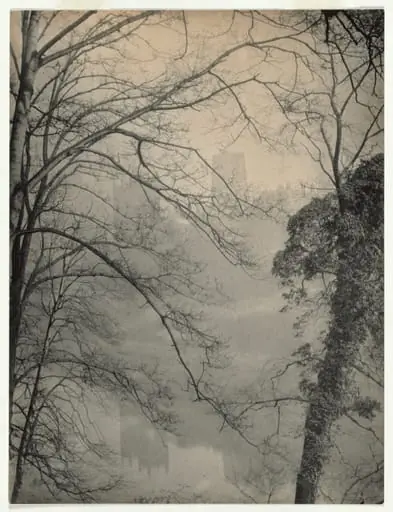
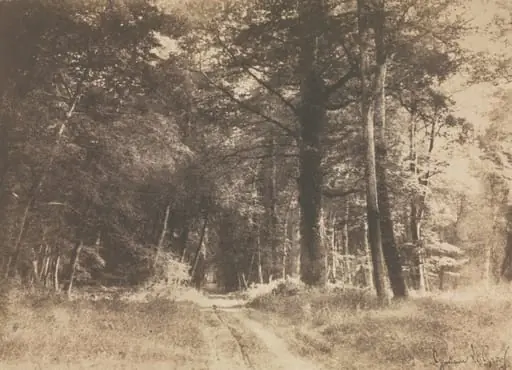
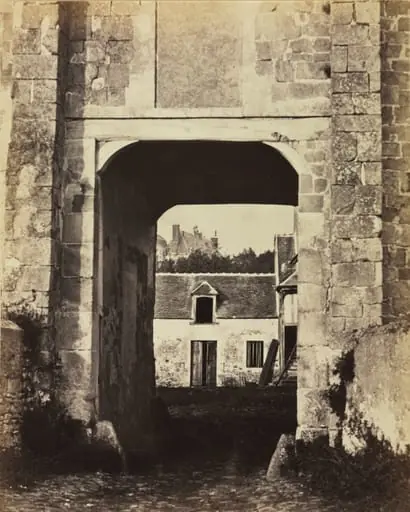
Charles Lenormand captured the Tower of Ursulines in Autun around 1864 using photographic techniques of the mid-nineteenth century. The image is part of the collection at The Cleveland Museum of Art. It presents a quiet, atmospheric approach to architectural documentation, emphasizing mood over precise detail. The composition guides the viewer’s eye along a winding path toward a distant structure, framed by dense foliage.
Subject & Meaning
The subject is a secluded stone tower surrounded by woodland, suggesting isolation and time’s passage. The path, barely visible beneath heavy shadows, implies a journey or transition. The softened architecture and dim lighting evoke a sense of quiet reverence, as if the building exists outside of daily life. The image does not celebrate grandeur but instead invites contemplation of solitude and decay.
Technique & Style
Lenormand employed strong contrasts between light and shadow, a method rooted in chiaroscuro, to define form and depth within the photograph. The interplay of sunlight filtering through canopy and the dark, dense undergrowth creates a sculptural effect. The exposure favors tonal drama over sharp detail, particularly in the distant tower, which dissolves into haze, enhancing the image’s atmospheric quality.
History & Provenance
Created in the early years of photographic practice, the work reflects the growing interest in documenting historic French architecture. Lenormand, active in the 1860s, contributed to a wave of image-making that preserved regional monuments before industrialization altered the landscape. The photograph entered The Cleveland Museum of Art’s collection as part of its broader holdings in 19th-century European photography.
Context
In the 1860s, photography was increasingly used to record heritage sites, often by artists seeking to elevate the medium beyond mere documentation. Lenormand’s image aligns with a French tradition of romanticizing ruins and ecclesiastical structures, resonating with contemporary literary and painterly interests in melancholy, nature, and the sublime.
Legacy
The photograph stands as an early example of how light and composition could convey emotional tone in photographic art. While not widely exhibited, it contributes to the understanding of how 19th-century photographers adapted painterly principles to the camera. Its quiet intensity influenced later practitioners who valued atmosphere over clarity in architectural imagery.
Artist & collection