Artwork
St. Julien le Vauvre, Vue extérieur
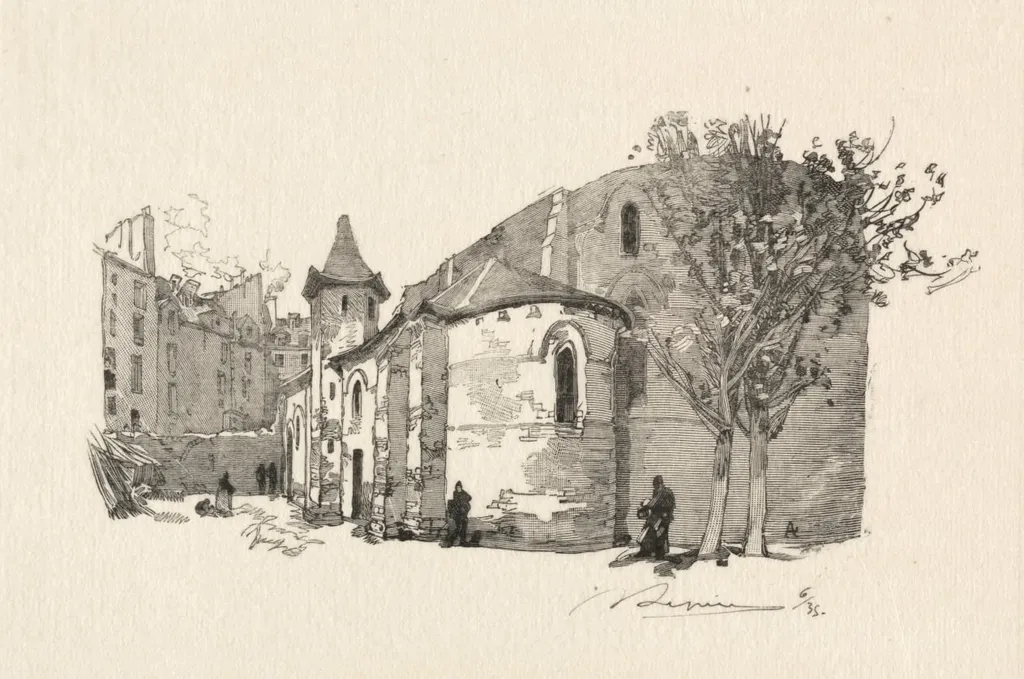
St. Julien le Vauvre, Vue extérieur is a print by the Impressionist artist Auguste Lepère. It dates from 1894 and is held in the collection of the Cleveland Museum of Art. Auguste Louis Lepère, a French artist active in the late 19th century, produced this wood engraving in 1894.
About this work
Overview
Known for his role in revitalizing woodcut techniques in Europe, he combined printmaking with painting to capture everyday architectural scenes.
Auguste Louis Lepère, a French artist active in the late 19th century, produced this wood engraving in 1894. Known for his role in revitalizing woodcut techniques in Europe, he combined printmaking with painting to capture everyday architectural scenes. This work presents an exterior view of the medieval church of Saint-Julien-le-Pauvre in Paris, rendered with deliberate simplicity and attention to atmospheric detail.
Subject & Meaning
The scene centers on the ancient stone church of Saint-Julien-le-Pauvre, a structure dating to the 12th century, nestled within a narrow Parisian alley. Surrounding buildings and bare winter trees frame the composition, suggesting quiet urban solitude. The inclusion of tiny pedestrian figures reinforces the church’s integration into daily life, not as a monument, but as a lived-in presence within the city’s fabric.
Technique & Style
Lepère employed wood engraving to achieve fine linear control, using loose, rapid strokes to suggest texture and movement. He emphasized chiaroscuro to model the weathered stone surfaces, with deep shadows pooling in crevices and light glancing off rough masonry. The tonal contrasts create depth without heavy shading, reflecting a restrained, observational approach rooted in direct sketching rather than idealized form.
History & Provenance
The print entered the collection of The Cleveland Museum of Art as part of its broader acquisition of late 19th-century European prints. Lepère’s works were widely circulated among collectors and artists during his lifetime, particularly for their technical innovation in wood engraving. This piece remains a representative example of his commitment to documenting ordinary architectural subjects with precision and sensitivity.
Context
In the 1890s, Paris saw renewed interest in medieval architecture amid urban modernization. Artists like Lepère turned to historic buildings as subjects of quiet reverence, countering the rapid transformation of the city. His focus on modest, unadorned structures reflected a broader cultural movement valuing authenticity and the passage of time over grandeur or ornament.
Legacy
Lepère’s wood engravings influenced a generation of printmakers seeking to elevate the medium beyond reproduction. His emphasis on direct observation and tactile surface treatment helped redefine wood engraving as a legitimate art form. This work endures as a testament to his belief that the beauty of architecture lies not in its scale, but in its quiet endurance.
Artist & collection
Artist
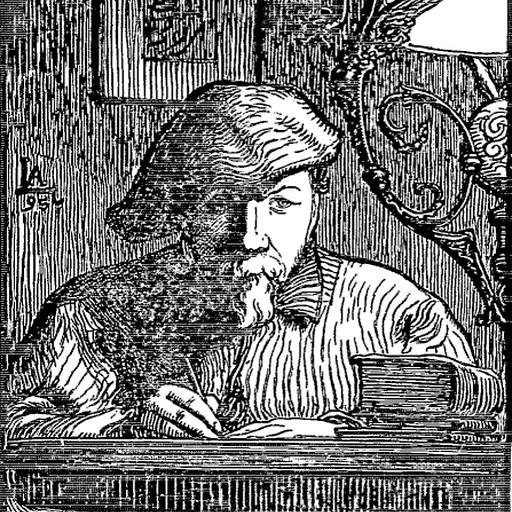
Louis-Auguste Lepère (30 November 1849 – 20 November 1918) was a French painter and etcher. Lepère is also considered a leader in the creative revival of wood engraving in Europe.

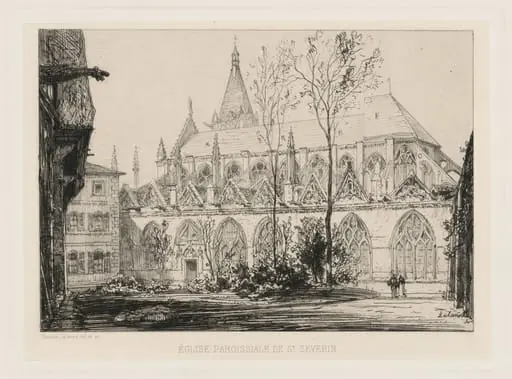 Église Paroissiale de St. Séverin
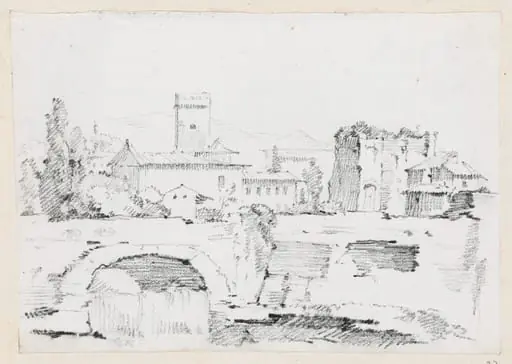 An Italian Town with a Stone Bridge and a Waterfall
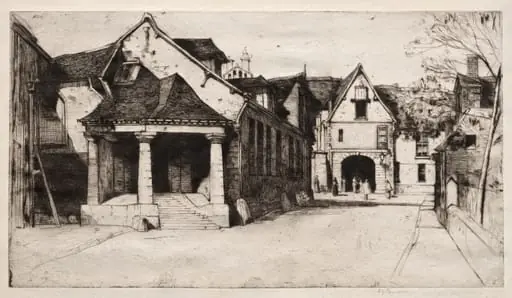 Old Museum, Beauvais
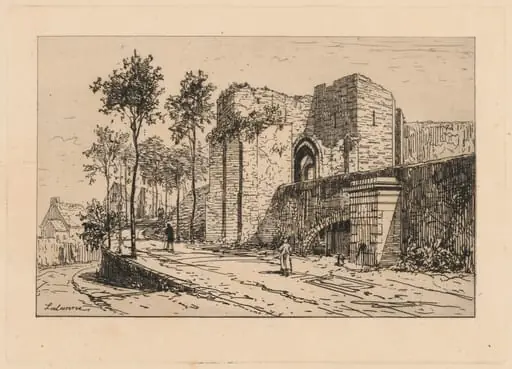 City Ramparts
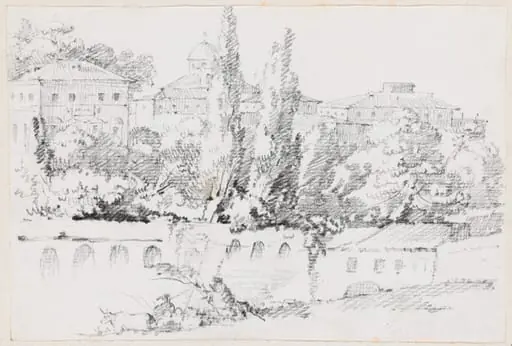 Walls of Rome with Santa Maria del Popolo in the Distance
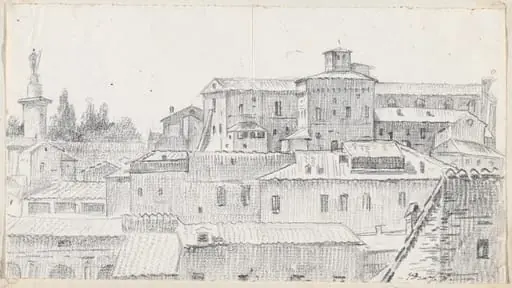 The Capitoline Hill
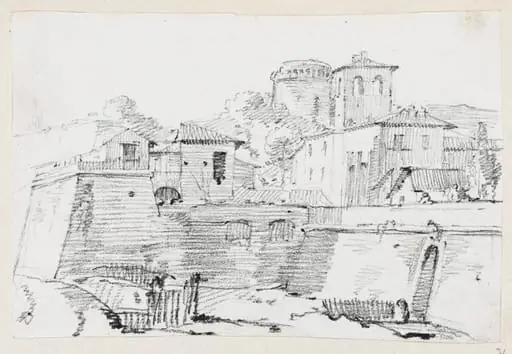 A Fortified Town in Italy
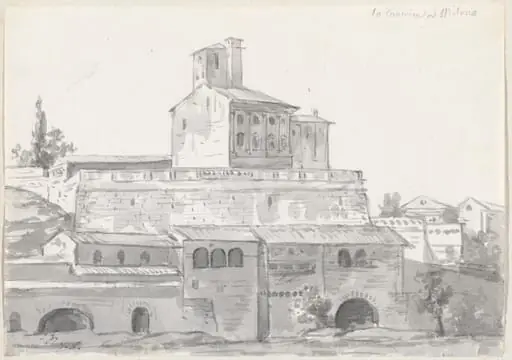 The Canonica of Sant'Ambrogio, Milan
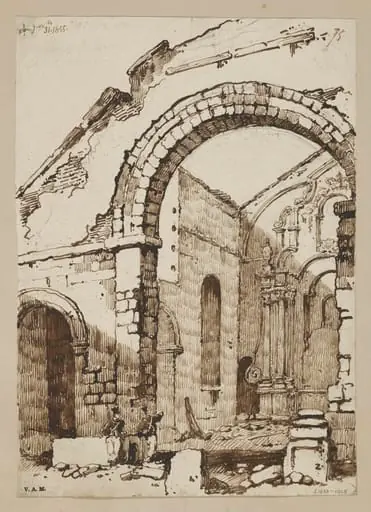 The ruins of St Paul's church, Macau, after the fire of 26 January 1835
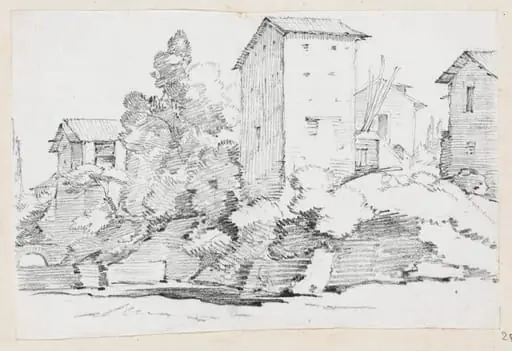 Italian Farm Buildings by a Stream