Artwork
Rebus: "No, Morny is not dead for he is marrying again"
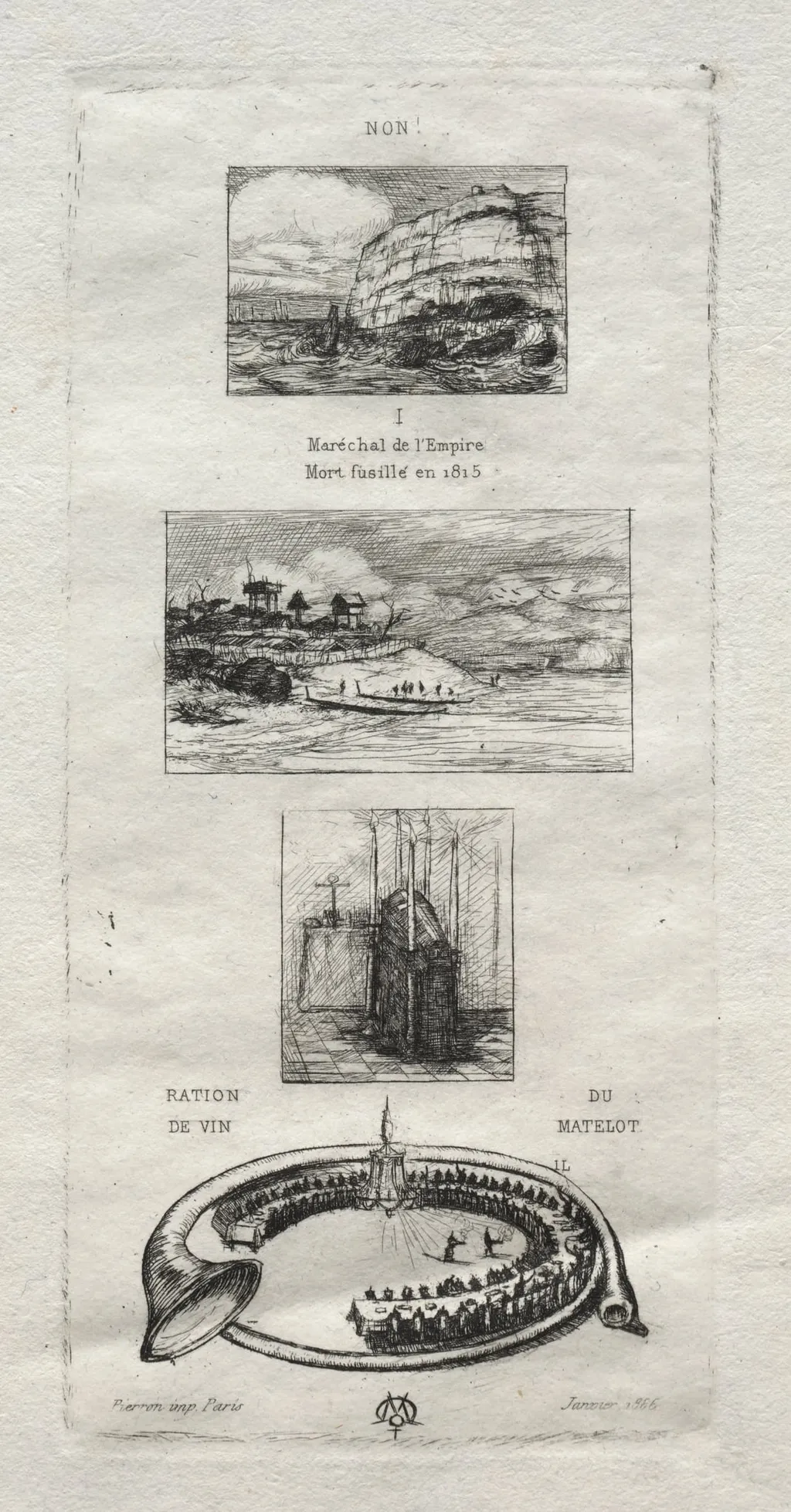
Rebus: "No, Morny is not dead for he is marrying again" is a print by the Impressionist artist Charles Meryon. It dates from 1866 and is held in the collection of the Cleveland Museum of Art.
About this work
"* The top drawing is marked *"Marechal de l’Empire / Mort fusillé en 1815"*—a reference to a famous military leader executed in 1815.
This sketch shows four small, black-and-white drawings stacked vertically. The top one depicts a shipwreck with waves crashing over a sinking vessel. The second has a village by the water with people and windmills. The third shows a lone ship with a tall mast. The bottom drawing is a fortress with a crowd inside, labeled with French words like *"ration de vin"* and *"du matelot."*
The top drawing is marked *"Marechal de l’Empire / Mort fusillé en 1815"*—a reference to a famous military leader executed in 1815. The whole image plays with words and pictures, like a puzzle.
If you like this mix of pictures and hidden meanings, look up chiaroscuro next—it’s a technique that uses strong light and dark contrasts, similar to how Meryon plays with shadows here.
Overview
Created in 1866, this print by French etcher Charles Meryon presents a four‑panel rebus—a visual puzzle that merges text and imagery. The work consists of four vertically stacked black‑and‑white sketches, each pairing a scene with brief French captions that together suggest the title’s statement about Morny’s marital status.
Subject & Meaning
The panels juxtapose maritime and civic motifs: a shipwreck overwhelmed by waves, a riverside village with windmills, a solitary vessel with a towering mast, and a fortified interior populated by figures labeled with phrases such as “ration de vin” and “du matelot.” These images, together with the inscription referencing a marshal executed in 1815, function as cryptic clues that resolve into the rebus’s declaration.
Technique & Style
Meryon employed traditional etching, a medium he favored due to his colour‑blindness, allowing him to render stark contrasts and fine line work. The monochrome palette emphasizes chiaroscuro effects, while the precise hatching conveys both the drama of the sea and the solidity of architectural forms.
History & Provenance
The print emerged two years before Meryon’s death in an asylum, a period marked by his deteriorating mental health. Though celebrated in France as the pre‑eminent 19th‑century etcher, his reputation remained modest in English‑speaking circles during his lifetime and shortly thereafter.
Context
Meryon’s oeuvre is dominated by melancholic, Gothic visions of Paris, yet this rebus diverges by employing a playful, puzzle‑like format. The reference to the 1815 execution of a Napoleonic marshal situates the work within contemporary French historical memory, while the domestic allusion to Morny hints at personal or political gossip of the era.
Artist & collection
Artist
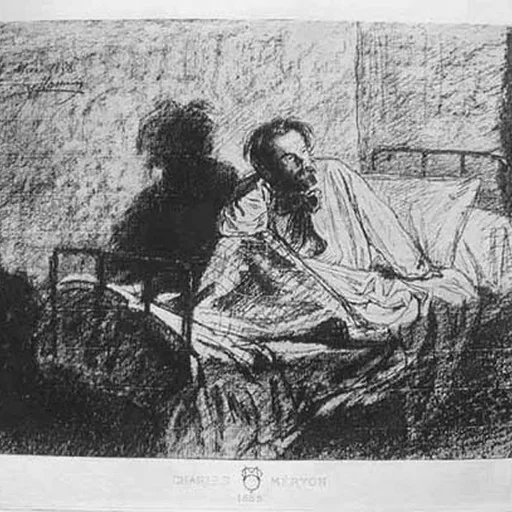
Charles Meryon (sometimes Méryon, 23 November 1821 – 14 February 1868) was a French artist who worked almost entirely in etching, as he had colour blindness.

 Preface
 South Sea Fishers
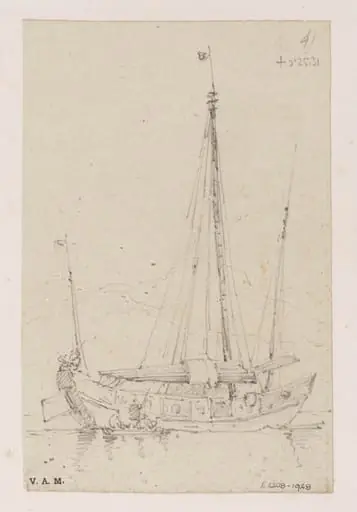 A three-masted junk with a smaller boat alongside
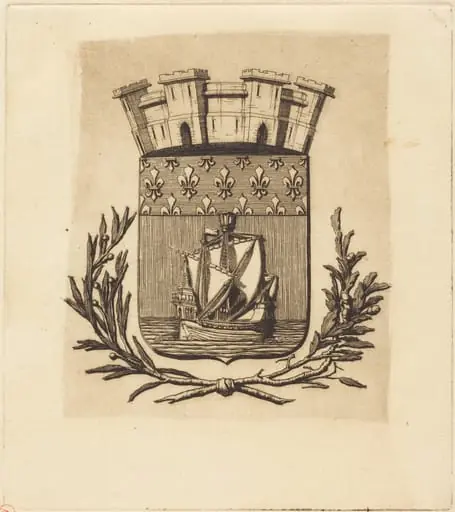 Armes symboliques de la ville de Paris (Symbolical Arms of the City of Paris)
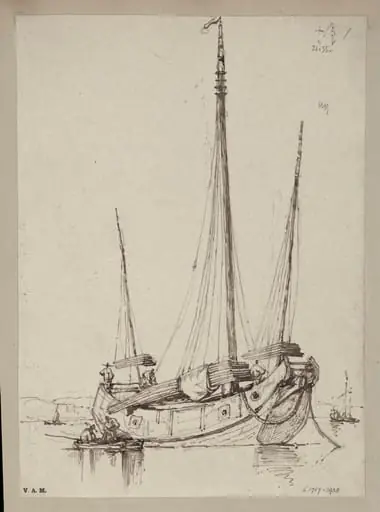 A junk hauling planks aboard
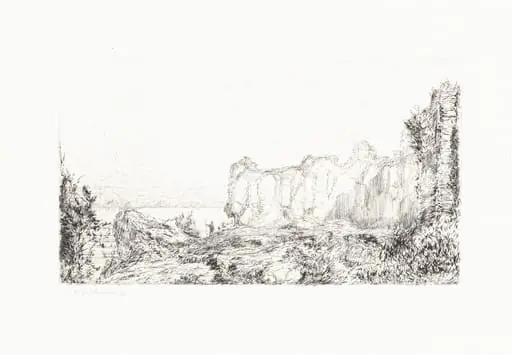 Castellammare
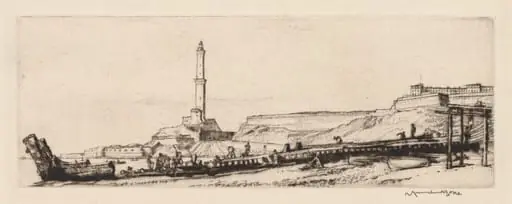 The Langterna, Genoa
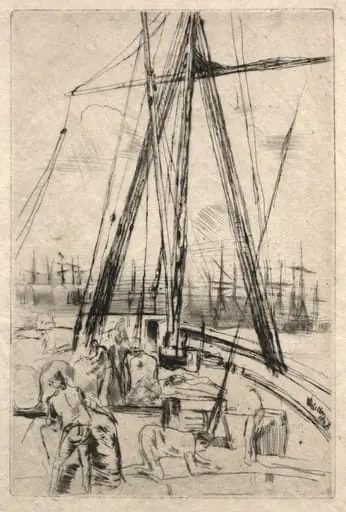 Shipping at Liverpool
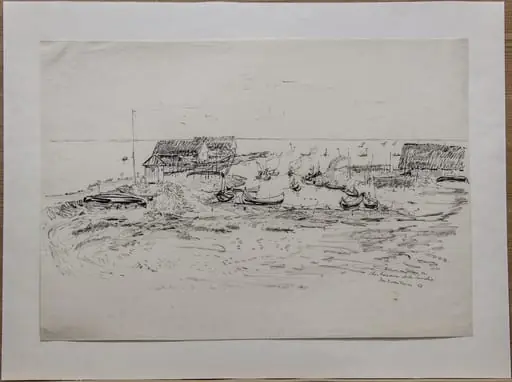 Bărci cu pânze la cherhanaua de la Sarichioi
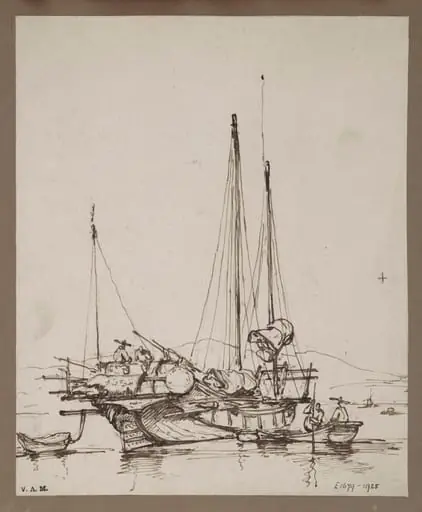 A drawing by George Chinnery of aA Chinese junk, with figures aboard and small craft alongside
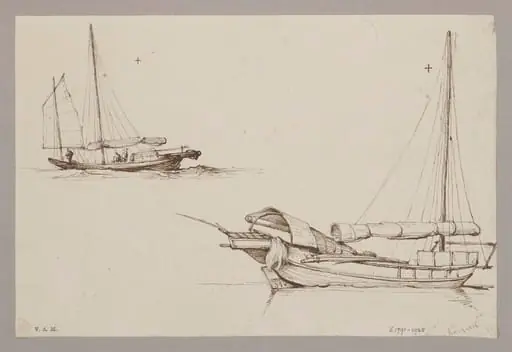 Small Chinese junks
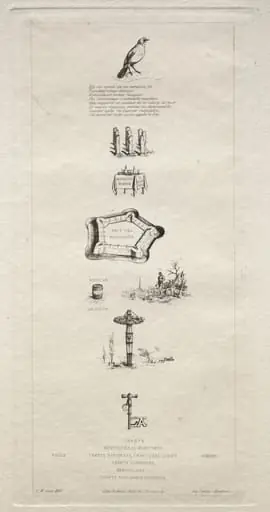 Rebus: "Beranger was not really strong for he never had the key to the fields"