Artwork
The New Bridge and the Samaritaine seen from under the First Arch of the Exchange Bridge, Paris
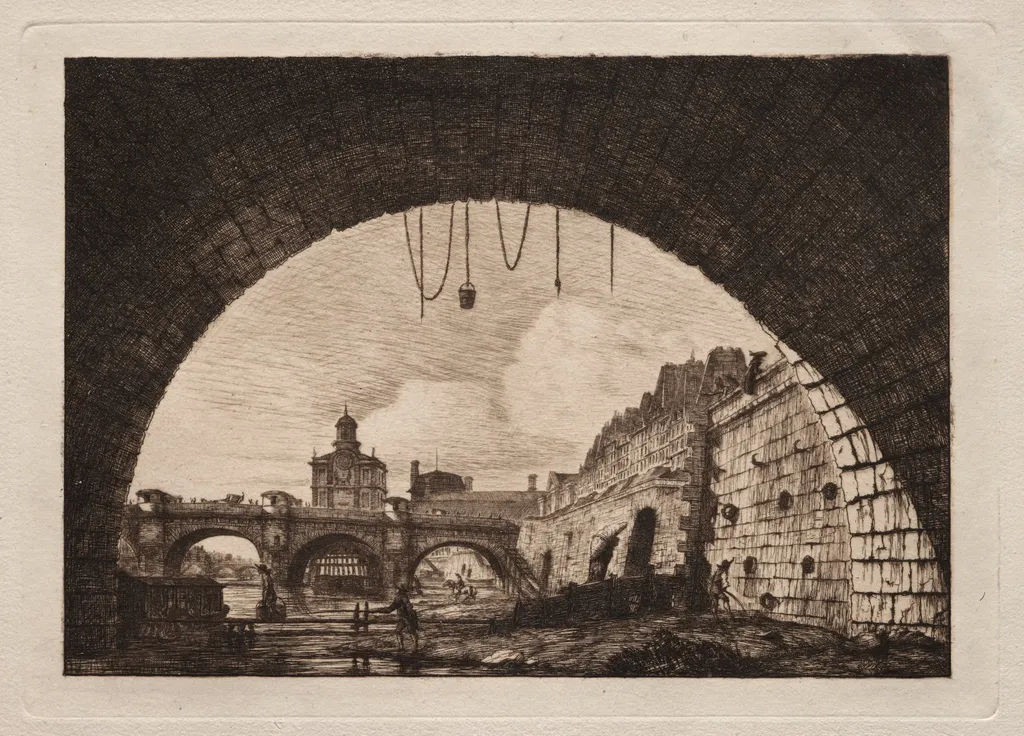
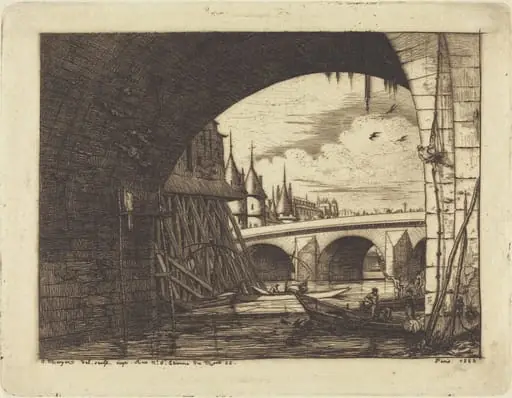
The New Bridge and the Samaritaine seen from under the First Arch of the Exchange Bridge, Paris is a print by the Impressionist artist Charles Meryon. It dates from 1855 and is held in the collection of the Cleveland Museum of Art.
About this work
Overview
The composition isolates a fleeting moment in the city’s evolving landscape, emphasizing architectural detail and atmospheric tension over broad panoramas.
Created in 1855 by Charles Meryon, this etching captures a narrow view of Paris beneath the Exchange Bridge, framing the New Bridge and the Samaritaine building. Meryon, who worked exclusively in black-and-white due to color blindness, used the medium to explore urban transformation. The composition isolates a fleeting moment in the city’s evolving landscape, emphasizing architectural detail and atmospheric tension over broad panoramas.
Subject & Meaning
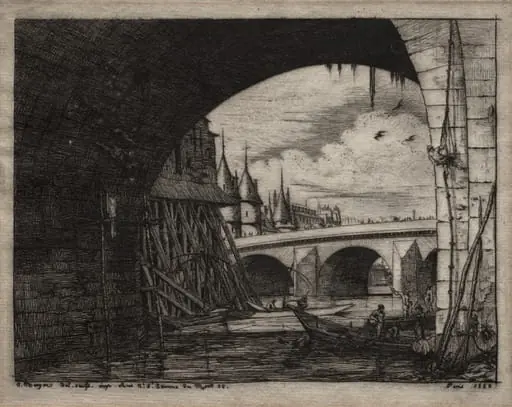
The scene depicts the Seine flowing beneath a stone bridge, with pedestrians moving along its parapet and laborers on scaffolding beside the Samaritaine, then under construction. The dark arch frames the view like a window, drawing attention to the contrast between ancient stonework and modern development. The lone lantern suggests quiet observation, reinforcing the print’s contemplative tone and Meryon’s interest in the quiet rhythms of city life.
Technique & Style
Meryon employed fine, controlled etching lines to build depth and texture, using dense shadows and delicate highlights to model forms. The pale oval of sky contrasts sharply with the heavy arch and water, creating a sense of enclosure. His use of chiaroscuro enhances the mood without melodrama, focusing on the interplay of light and structure rather than narrative. The precision of his technique reflects his meticulous approach to capturing architectural nuance.
History & Provenance
This print belongs to Meryon’s broader series documenting Paris during rapid modernization in the mid-19th century. It was produced during a period when he was deeply engaged with the city’s changing face, often returning to the same sites over years. The work remained in private collections after his death, later entering institutional holdings as interest in his etchings grew among scholars and print collectors.
Context
Meryon worked amid Haussmann’s renovations, when old Paris was being dismantled and rebuilt. His prints, unlike official records, focused on transitional zones—bridges, construction sites, and forgotten corners. While others celebrated progress, he recorded its dissonance: the coexistence of labor, decay, and endurance. His perspective was shaped by personal isolation and a fascination with the city’s hidden layers.
Legacy
Meryon’s etchings, once overlooked, gained recognition in the late 19th and early 20th centuries for their psychological depth and technical mastery. He redefined etching as a vehicle for urban introspection, influencing later artists interested in the emotional weight of architecture. His work remains a vital record of Paris not as it was idealized, but as it was lived—fragmented, shadowed, and quietly changing.
Artist & collection
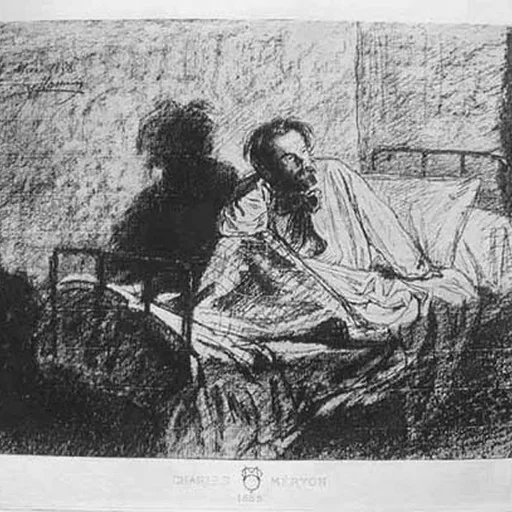
Artist
Charles Meryon (sometimes Méryon, 23 November 1821 – 14 February 1868) was a French artist who worked almost entirely in etching, as he had colour blindness.

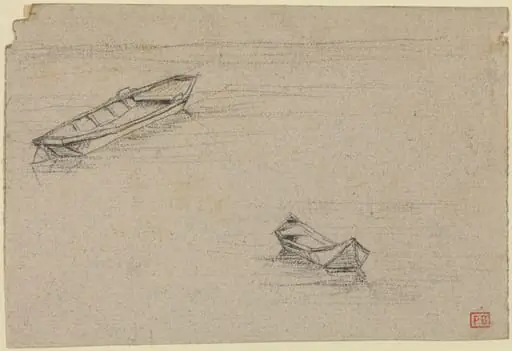
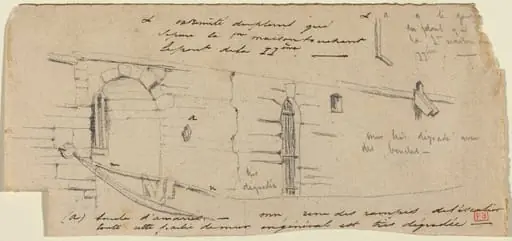
 L'arche du Pont Notre-Dame, Paris (An Arch of the Notre-Dame Bridge, Paris)
 Etchings of Paris: An Arch of the Notre Dame Bridge
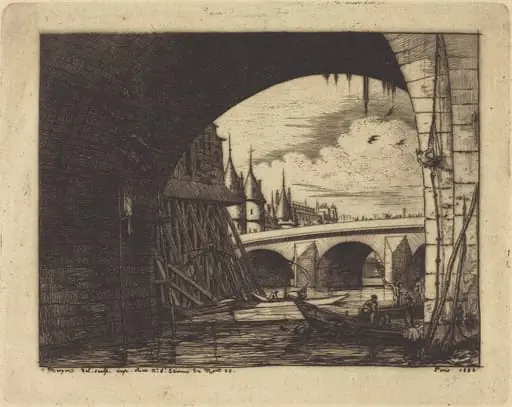 L'arche du Pont Notre-Dame, Paris (An Arch of the Notre-Dame Bridge, Paris)
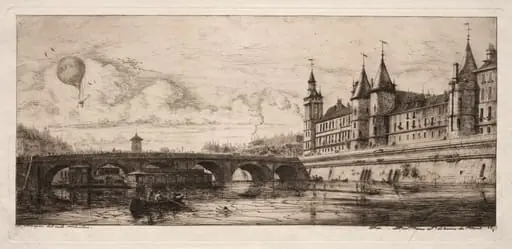 Etchings of Paris: The Exchange Bridge
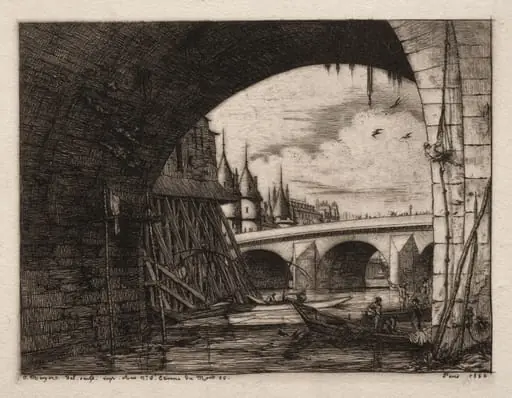 L'arch du Pont Notre Dame, Paris
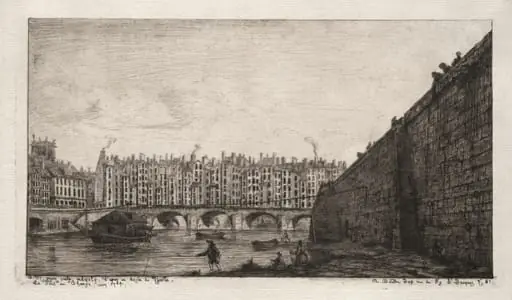 The Exchange Bridge, Paris, about 1784