Artwork
The Prodigal Son
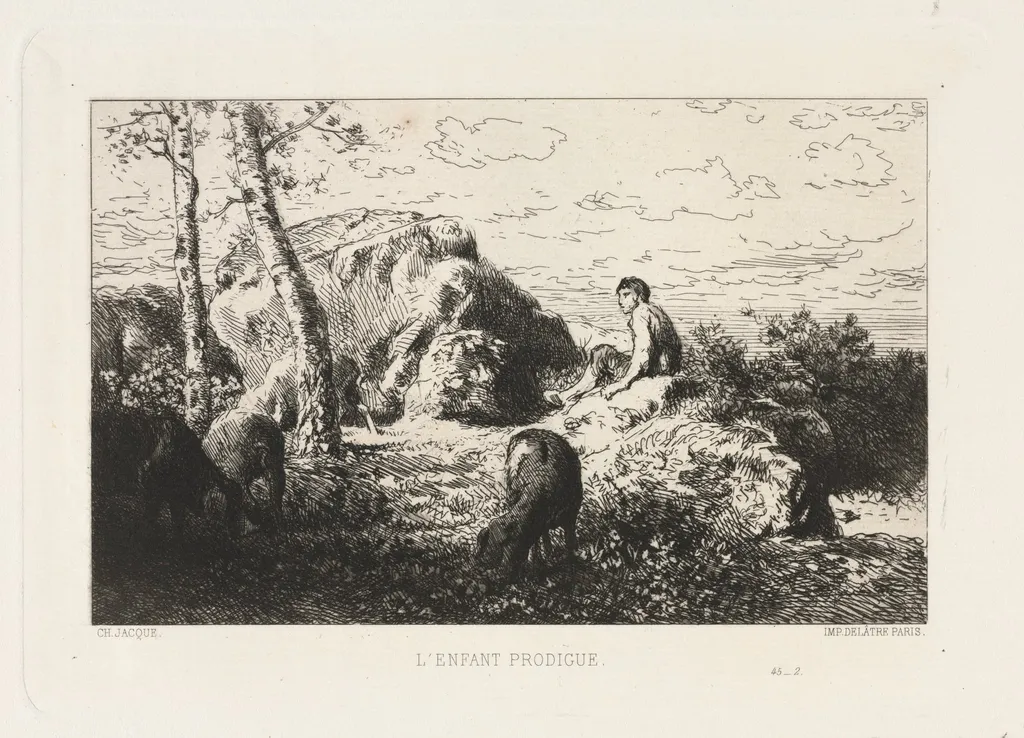
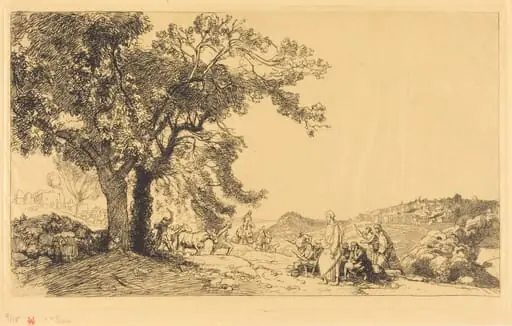
The Prodigal Son is a print by the Impressionist artist Charles Jacque. It dates from 1868 and is held in the collection of the Cleveland Museum of Art.
About this work
Overview
The Prodigal Son, a print by Charles-Émile Jacque, dates to around 1868. Associated with the Barbizon School, Jacque typically depicted rural life and landscapes, though this work is a narrative scene, likely inspired by biblical parables.
Subject & Meaning
The print illustrates a poignant moment from the biblical parable of the Prodigal Son, showing a figure in a state of destitution, accompanied by a pig and observed by a barefoot boy, conveying themes of hardship and potential redemption.
Technique & Style
Jacque employed characteristic Barbizon School naturalism, using rough, textured lines to convey the harshness of the subject’s circumstances, evident in the rendering of clothing, landscape, and the expressive, quickly suggested sky.
History & Provenance
Created circa 1868, the print reflects Jacque’s association with the Barbizon movement, alongside artists like Jean-François Millet, emphasizing rural and everyday life themes.
Context
The work aligns with the broader Realist movement, which sought to portray everyday life with urgency and authenticity, often focusing on the struggles of the common man and the natural world.
Artist & collection
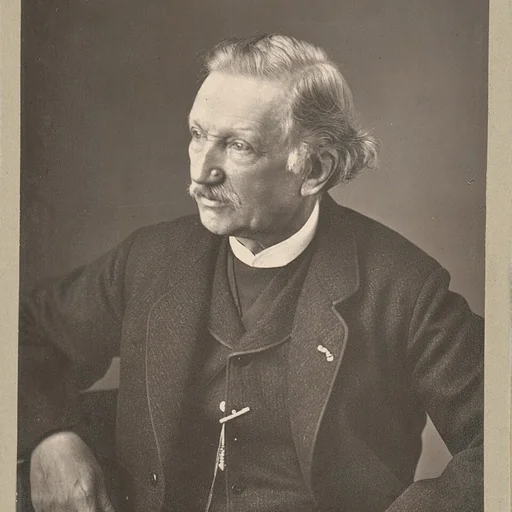
Artist
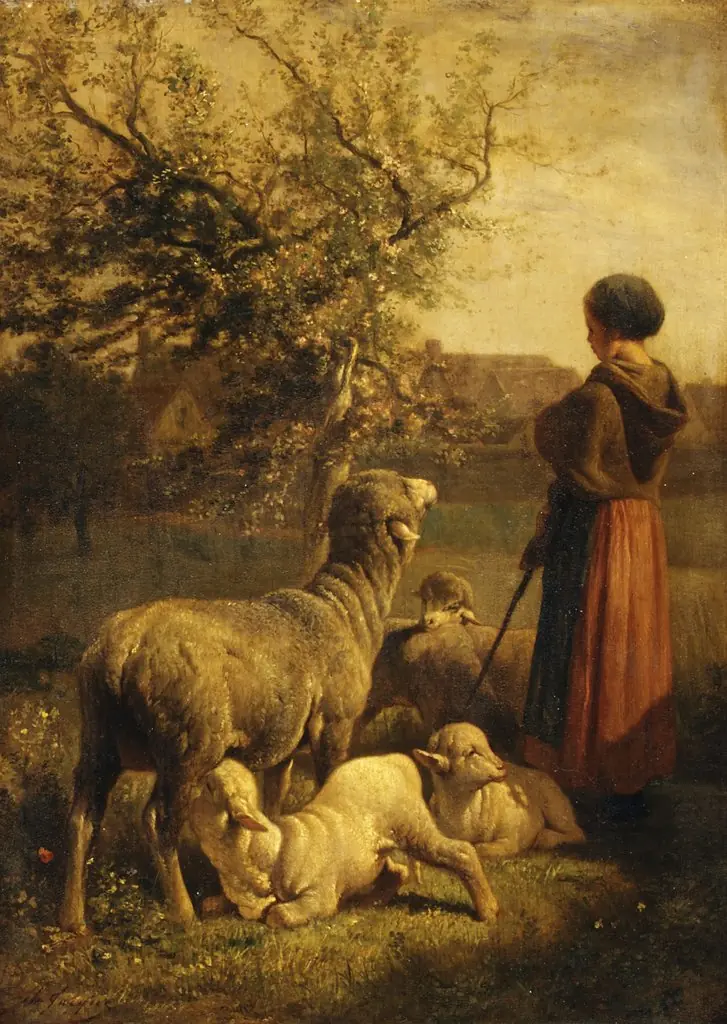
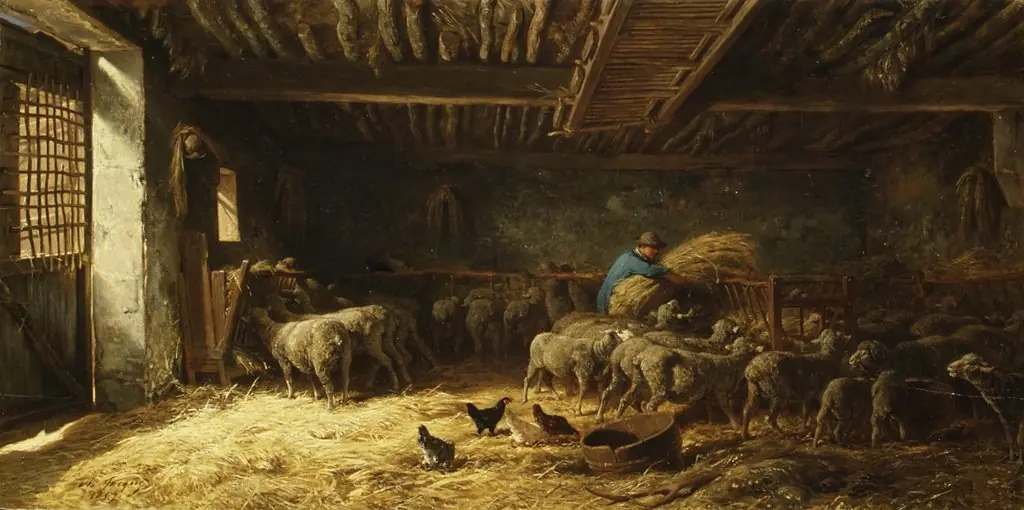
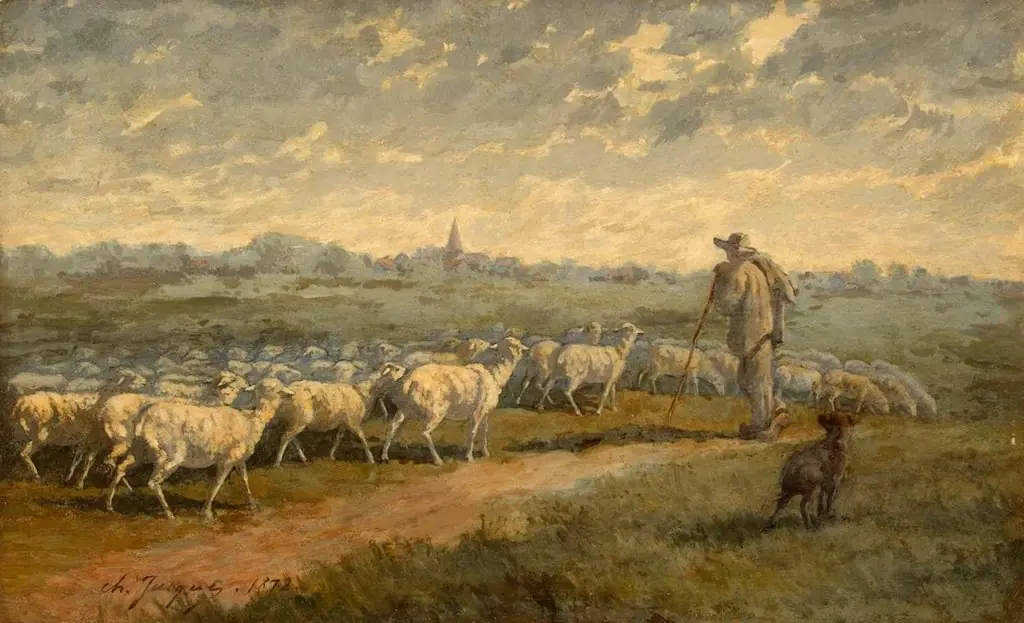
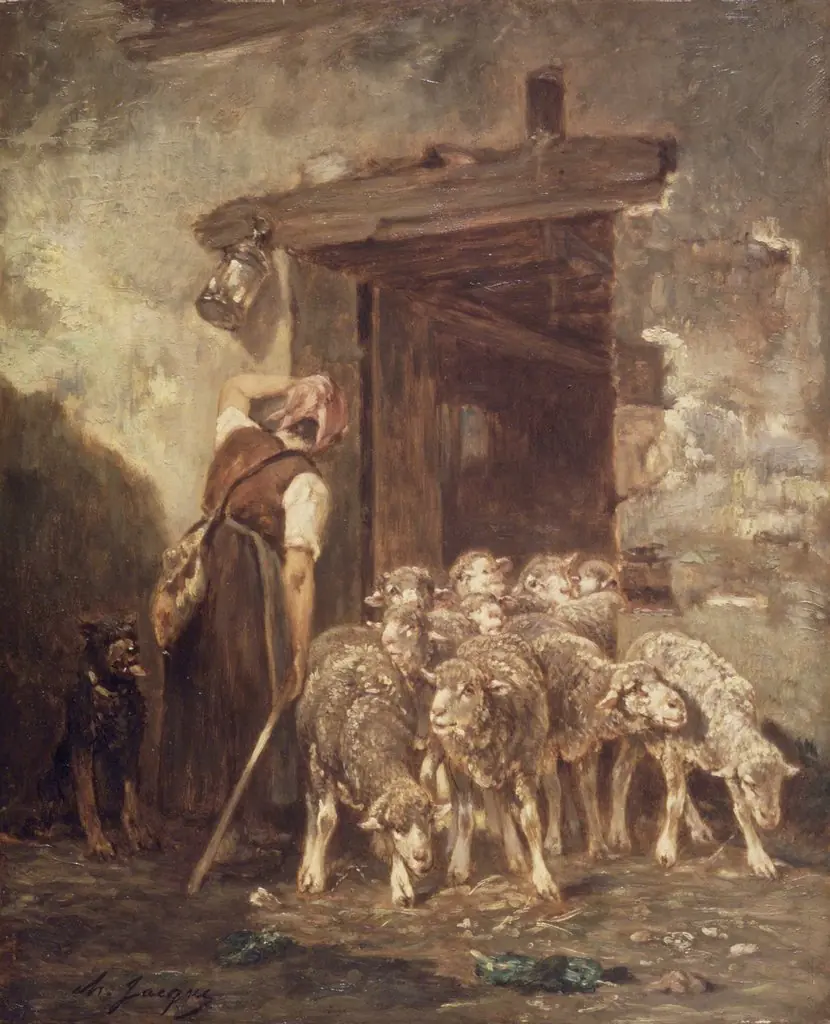
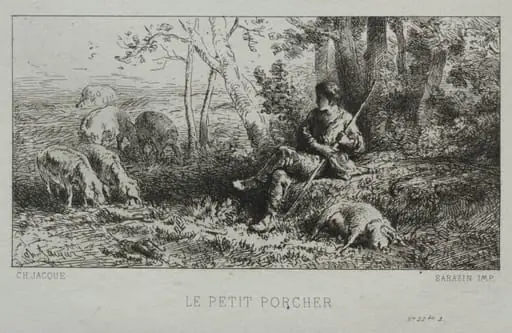
Charles-Émile Jacque (23 May 1813 – 7 May 1894) was a French painter of Pastoralism and engraver who was, with Jean-François Millet, part of the Barbizon School. He first learned to engrave maps when he spent seven years in the French Army.