Artwork
The Ford (Le passage du gué)
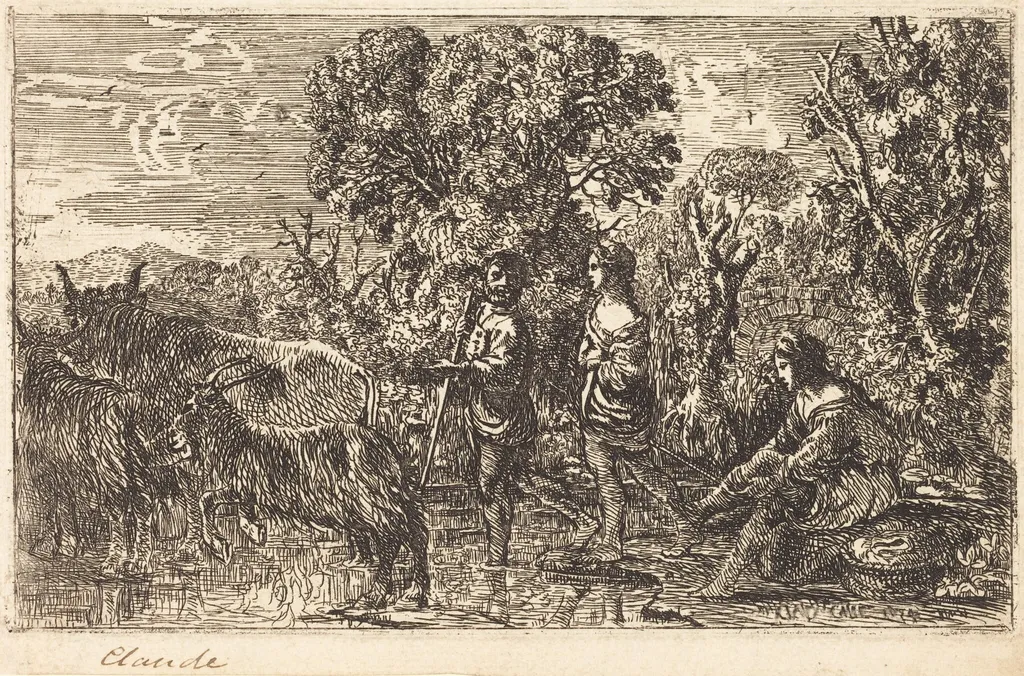
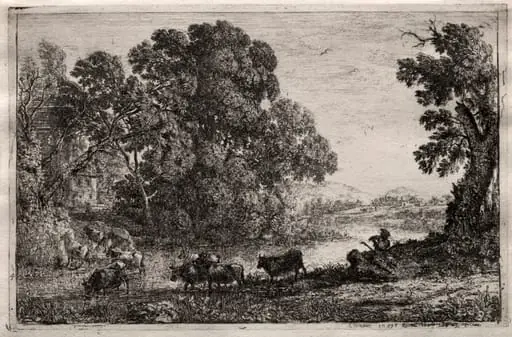
The Ford (Le passage du gué) is an ink print by the Baroque artist Claude Lorrain. It dates from 1634 and is held in the collection of the National Gallery of Art.
About this work
Overview
Created in 1634, *The Ford (Le passage du gué)* is an etching by Claude Lorrain, a French artist who spent most of his life in Italy.
Created in 1634, *The Ford (Le passage du gué)* is an etching by Claude Lorrain, a French artist who spent most of his life in Italy. Unlike his larger painted landscapes, this work belongs to a smaller body of printed studies that allowed him to explore light, composition, and natural detail with precision. The plate was incised by hand, capturing subtle shifts in tone and texture that echo his painted scenes.
Subject & Meaning
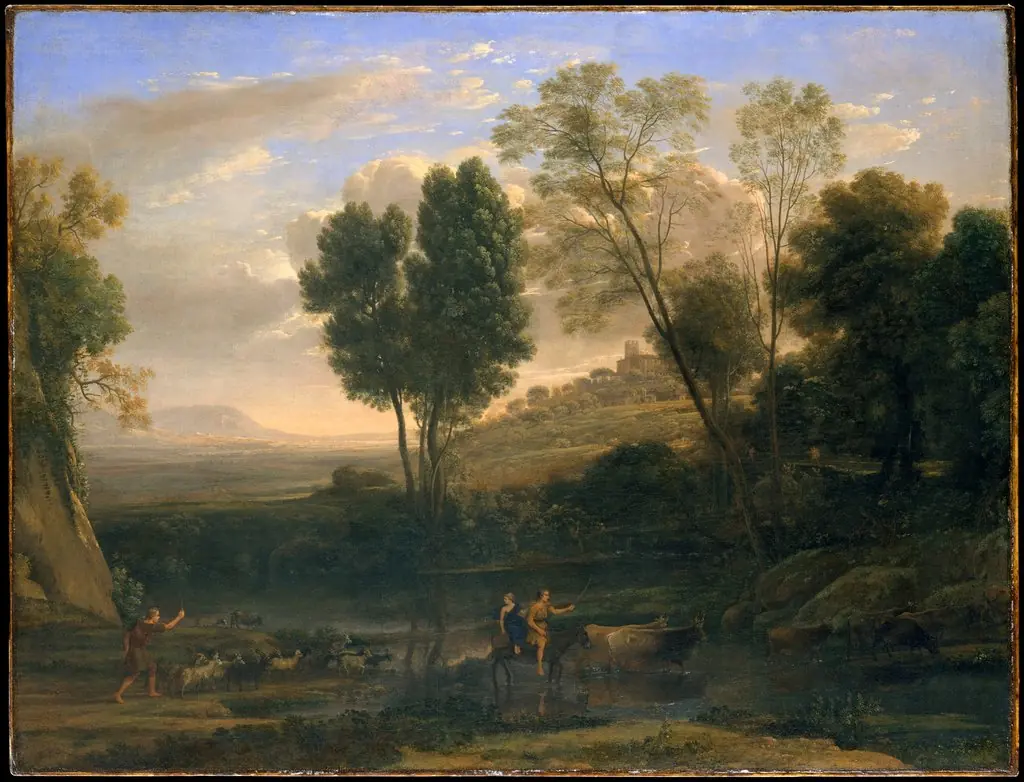
The scene depicts a quiet river crossing, with figures and animals moving through shallow water beneath a canopy of trees. There is no overt narrative or religious reference; instead, the focus lies in the quiet rhythm of daily movement within nature. The composition suggests a moment suspended in time, emphasizing harmony between human activity and the landscape rather than storytelling.
Technique & Style
Lorrain employed etching to render fine atmospheric effects: delicate lines suggest dappled light filtering through foliage, while varied hatching conveys the texture of water, bark, and earth. The plate’s incised lines allowed for controlled gradations of tone, enabling a sense of depth and airiness. His approach prioritized naturalism over dramatic contrast, aligning with his broader preference for serene, balanced compositions.
History & Provenance
The etching was produced during Lorrain’s mature period in Rome, where he cultivated a reputation for landscape studies among collectors and fellow artists. Though few impressions survive from the original plate, it was circulated among connoisseurs and later copied by printmakers. Its survival reflects its role as a reference work rather than a commercial product.
Context
In early 17th-century Italy, landscape was gaining recognition as an independent genre, distinct from historical or religious painting. Lorrain’s etchings contributed to this shift, offering detailed observations of the Roman countryside that influenced both painters and printmakers. His work stood apart from the theatricality of contemporaries by favoring calm, observed nature over staged drama.
Legacy
Lorrain’s etchings, including *The Ford*, became models for later landscape artists seeking to capture natural light and spatial depth. Though not widely reproduced in his lifetime, they were studied by 18th-century British and French painters who admired their restraint and precision. The work remains a quiet testament to the evolving status of landscape as a subject worthy of artistic attention.
Own this work as a print
Artist & collection
Artist
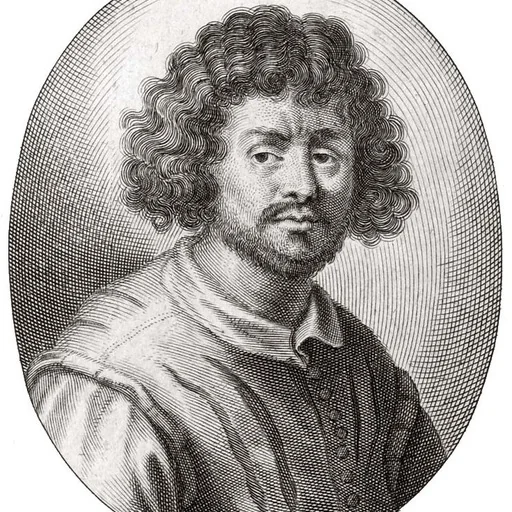
Claude Lorrain (French: ; born Claude Gellée , called le Lorrain in French; traditionally just Claude in English; c.

 The Cowherd
 River Landscape with Tobias and the Angel
 A Thick Forest
 Mercury Lulling Argus to Sleep
 The Flight into Egypt (La fuite en Egypte)
 The Flight into Egypt: The Donkey Led to the River
 Woman, Satyr Child, and Goat in a Landscape
 Mercury Silencing Battus
 Mercury Silencing Battus
 Salmacis and Hermaphroditus