Artwork
Half-length Portrait of a Seated Woman
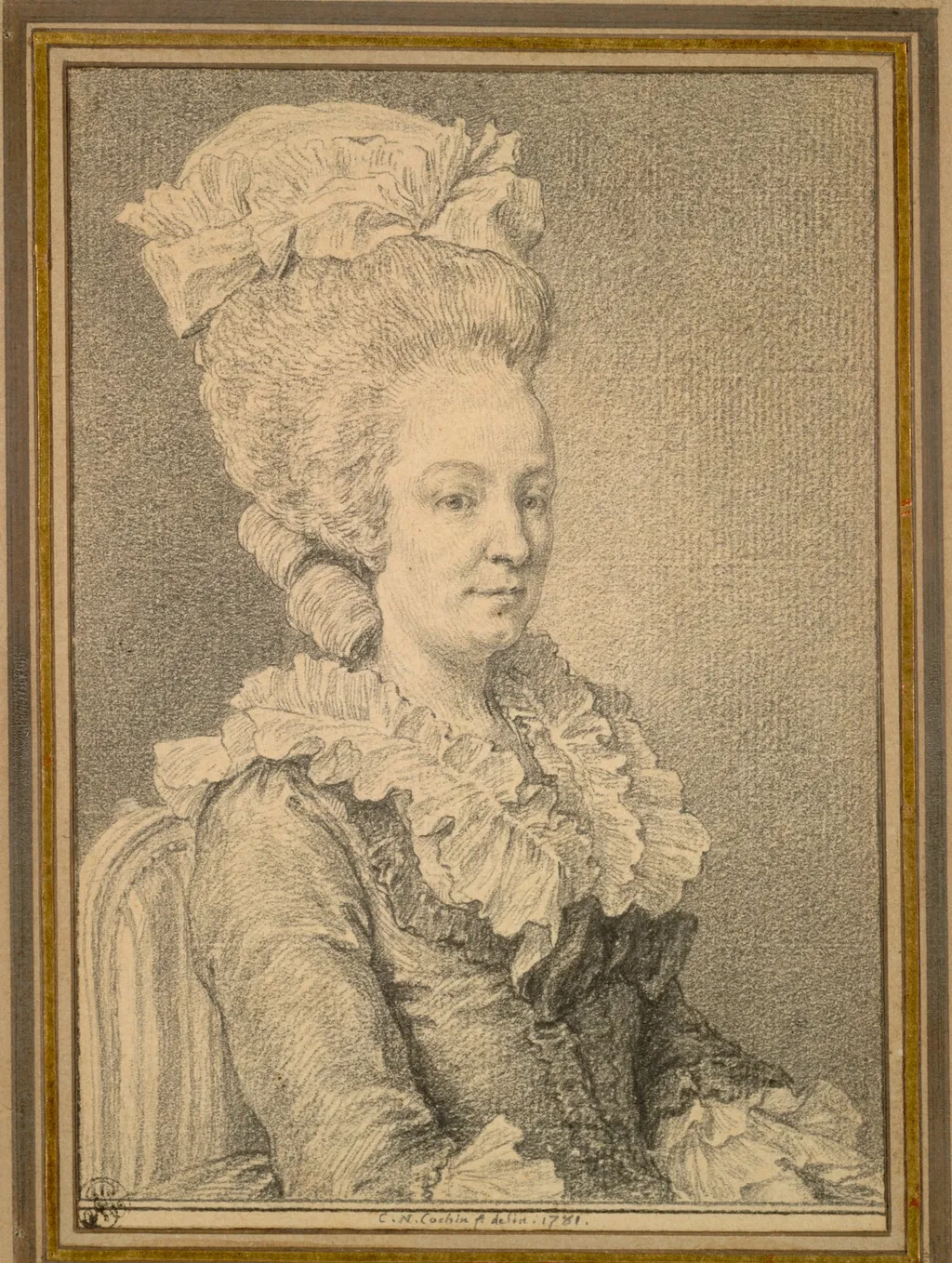
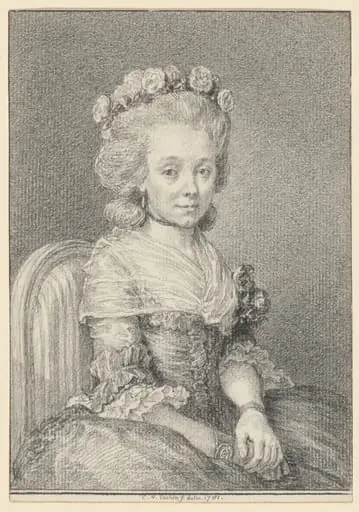
Half-length Portrait of a Seated Woman is a drawing by the Romanticist artist Charles-Nicolas Cochin. It dates from 1781 and is held in the collection of the Cleveland Museum of Art. This drawing by Cochin depicts a seated woman in half-length, a departure from his usual profile portraits.
About this work
Look up other portraits from France, 18th century to see how artists dressed their sitters.
A woman sits sideways in a chair, her face turned toward us. She wears a soft cap and a ruffled dress with tiny flowers. One hand rests on the chair arm, the other holds a folded fan.
Most of Cochin’s portraits show people in profile, like coins. This one is different—half the body, more relaxed. The woman’s name is lost, but her clothes say she was someone important in 1780s France.
Look up other portraits from France, 18th century to see how artists dressed their sitters.
Overview
This drawing by Cochin depicts a seated woman in half-length, a departure from his usual profile portraits. Executed with fine linework and subtle tonal gradations, it captures her in a natural, intimate pose. Though signed and dated, the sitter’s identity remains unknown. The composition suggests a shift in Cochin’s approach late in his career, favoring fuller figures over profile busts.
Subject & Meaning
The woman’s attire—soft cap, floral-patterned dress, and folded fan—indicates upper-class status in late 18th-century France. Her relaxed posture and direct gaze convey quiet dignity rather than formal grandeur. Though her name is lost, the presence of two related drawings of similarly dressed women suggests a familial connection, possibly documenting a single household’s members during a period of evolving social portraiture.
Technique & Style
Cochin employs delicate pen and ink with light washes to model form and texture, emphasizing fabric folds and the softness of the cap. Unlike his earlier medal-like profiles, this work integrates the figure with its environment, using the chair as a compositional anchor. The subtle rendering of the fan and lace details reflects his mastery of fine line and restrained tonality.
History & Provenance
The drawing is signed and dated by Cochin, confirming its authenticity. In recent years, two companion drawings—depicting women in identical attire and seated in the same chair—appeared at auction in Paris. Their proximity in style and subject supports the theory that all three were created as a set, likely commissioned by or for the same family during the 1780s.
Context
In 1780s France, portraiture was shifting from rigid formality toward more personal, domestic representations. Cochin’s half-length format aligns with this trend, contrasting with the profile tradition rooted in classical medals. The emphasis on everyday elegance, rather than heraldic symbols, reflects broader cultural changes in how aristocracy and bourgeoisie wished to be seen.
Legacy
This drawing exemplifies Cochin’s late stylistic evolution and his role in redefining portrait drawing beyond ceremonial profiles. While less celebrated than his painted works, such intimate studies reveal his sensitivity to individual presence. The existence of related sheets underscores his practice of creating thematic series, offering rare insight into private familial portraiture of the period.
Artist & collection
Artist
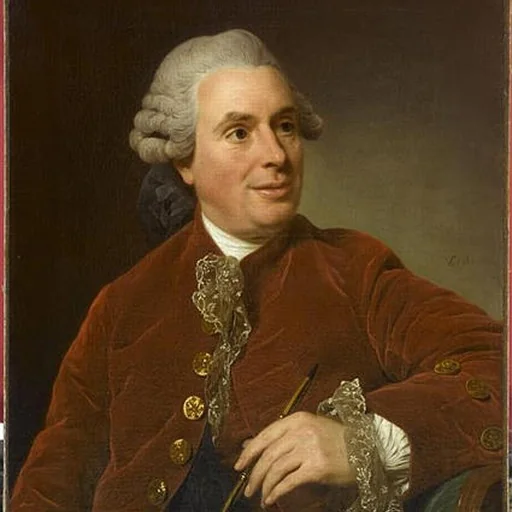
Charles-Nicolas Cochin was a French engraver, designer, writer, and art critic. To distinguish him from his father of the same name, he is variously called Charles-Nicolas Cochin le Jeune, Charles-Nicolas Cochin le…

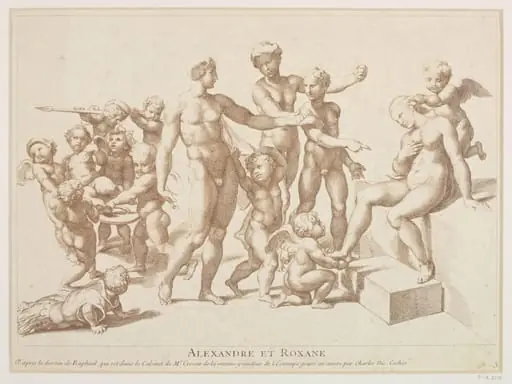
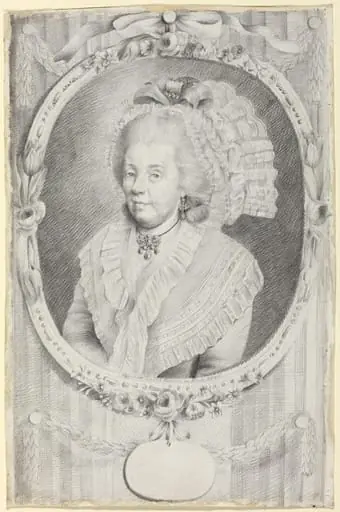 Frau Gottfried von Herder
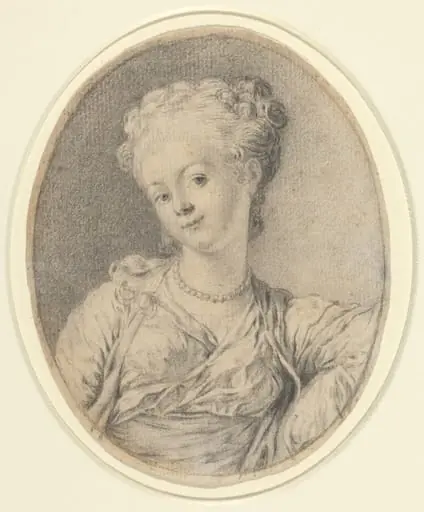 Lady's Head
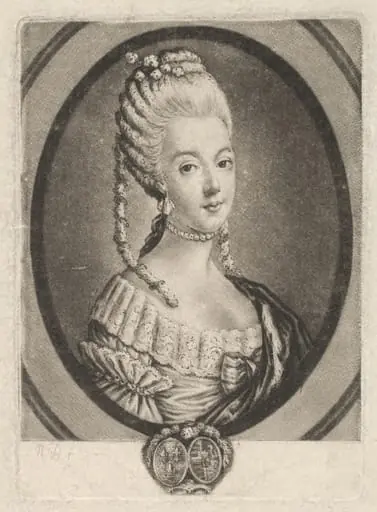 Marie-Antoinette
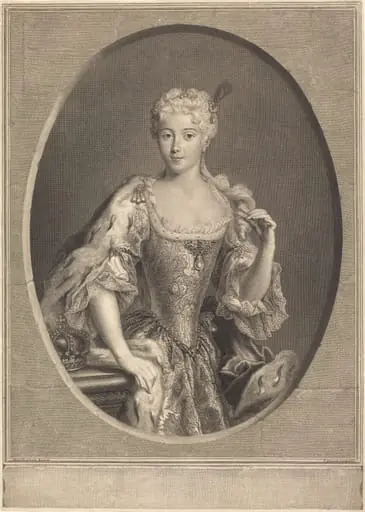 Maria Klementyna Sobieska
 Mademoiselle Grogniard, Dame de Saint-Just
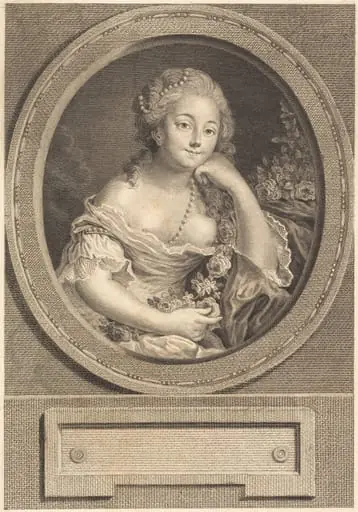 Le léger vêtement
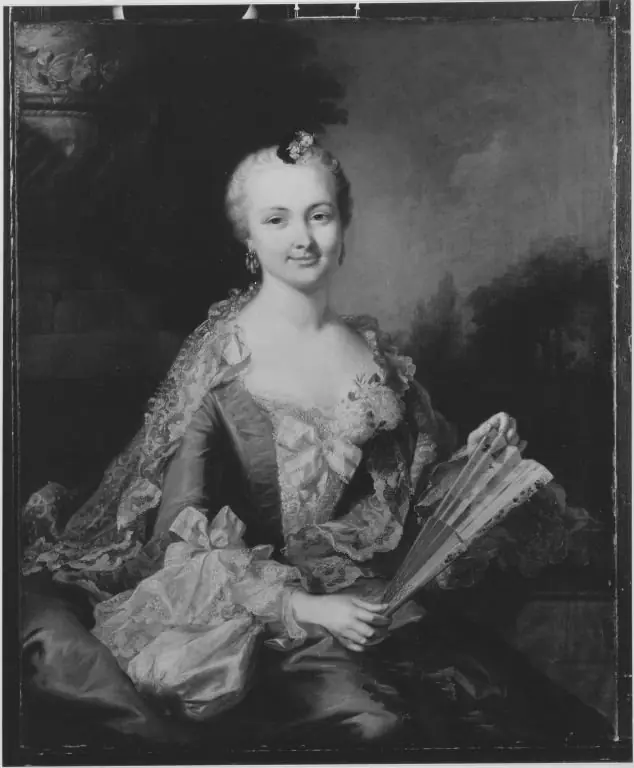 Johanna Elisabeth von Schmerfeld
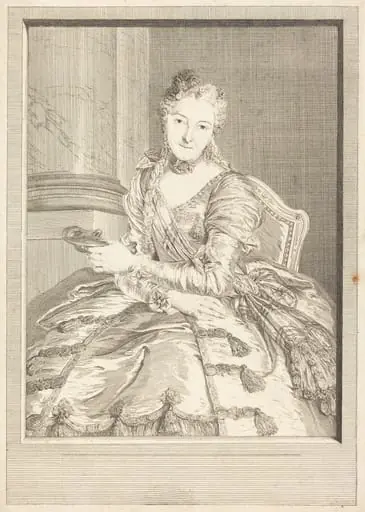 Mme. de M ... en habit de bal
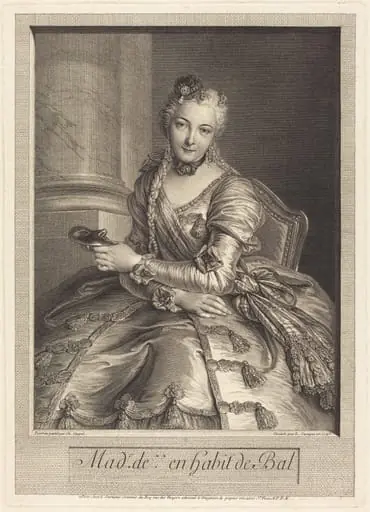 Mme. de M ... en habit de bal
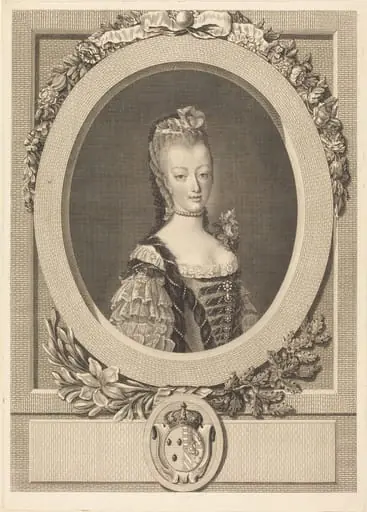 Marie-Antoinette of France
![A Woman Wearing a Straw Hat [Madame de Pompadour?], by Marco Alvise Pitteri](https://artifactworldgallery.com/img/marco-alvise-pitteri--a-woman-wearing-a-straw-hat-madame-de-pompadour--a8849525097954a5-w320.webp) A Woman Wearing a Straw Hat [Madame de Pompadour?]
A Woman Wearing a Straw Hat [Madame de Pompadour?]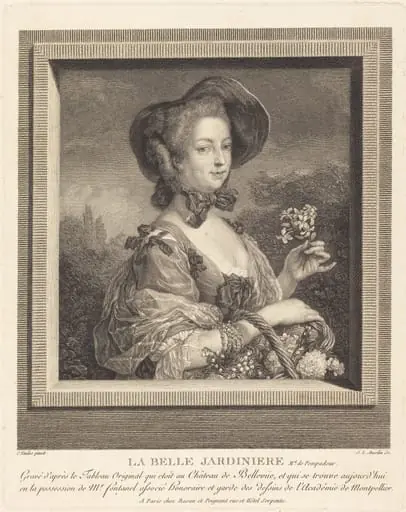 La Belle Jardinière - Madame de Pompadour