Artwork
Dulcinea del Toboso
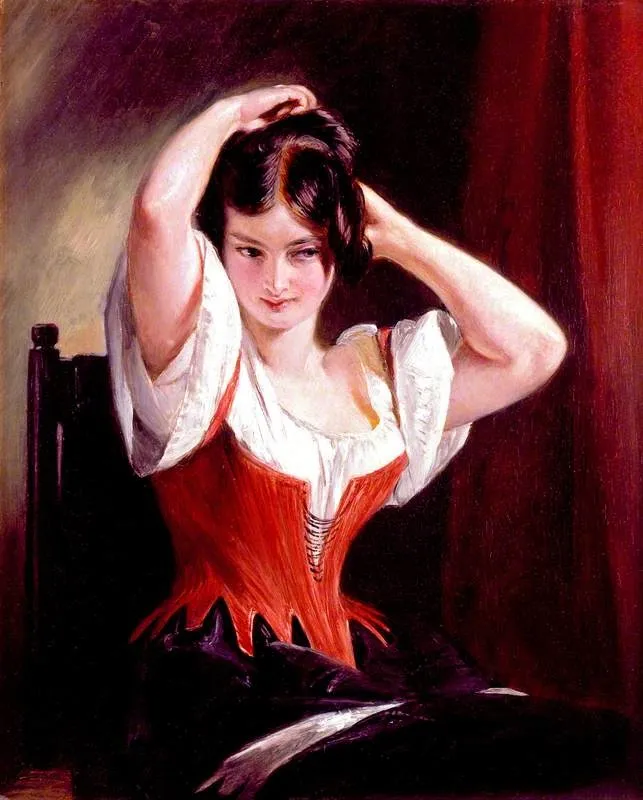
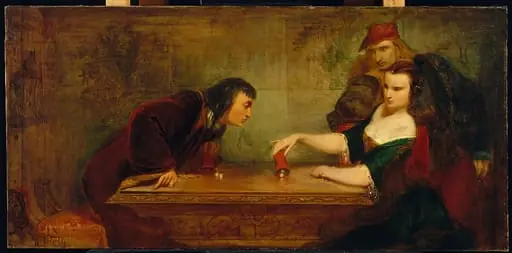
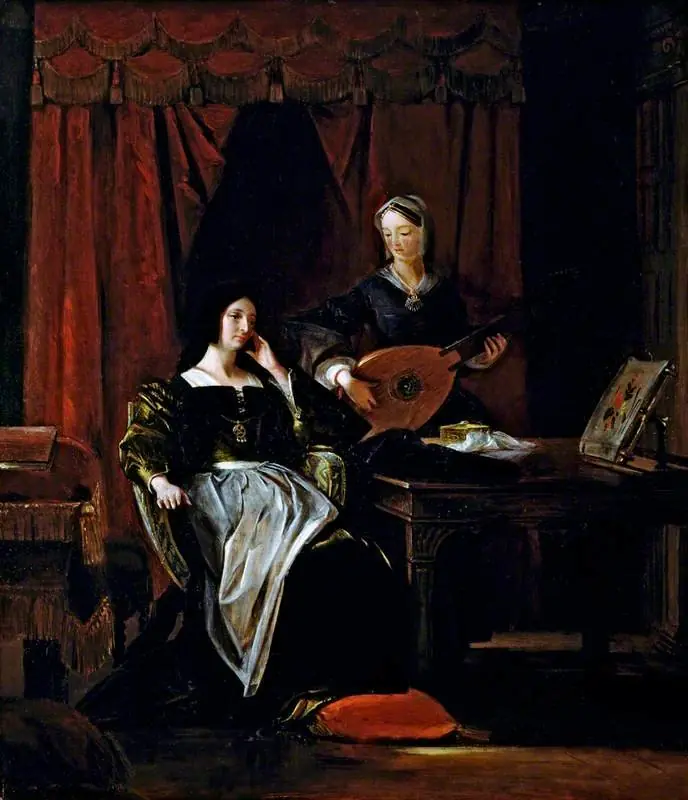
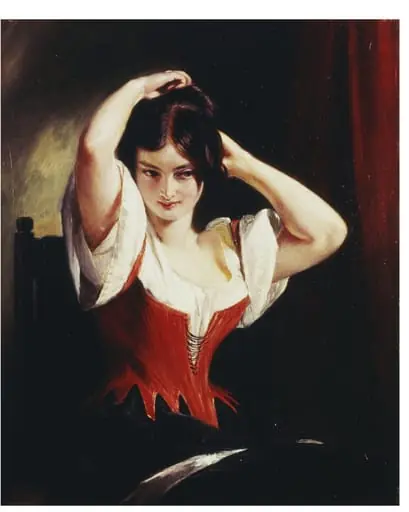
Dulcinea del Toboso is an oil painting by Charles Robert Leslie. It dates from 1839 and is held in the collection of the Victoria and Albert Museum.
About this work
Overview
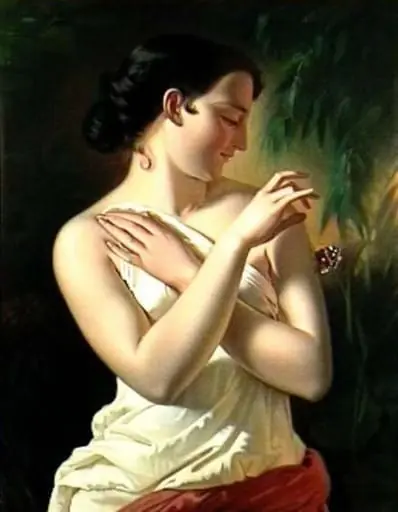
Painted in 1839 by Charles Robert Leslie, Dulcinea del Toboso is an oil-on-canvas work depicting a literary figure from Cervantes’s Don Quixote. The painting captures a quiet, introspective moment, isolating the character in a dimly lit interior. Leslie, an American-born artist active in Britain, chose to focus on a symbolic rather than narrative scene, emphasizing emotional presence over action.
Subject & Meaning
The absence of chivalric symbols shifts focus to her humanity, suggesting the psychological weight of being an object of unattainable devotion.
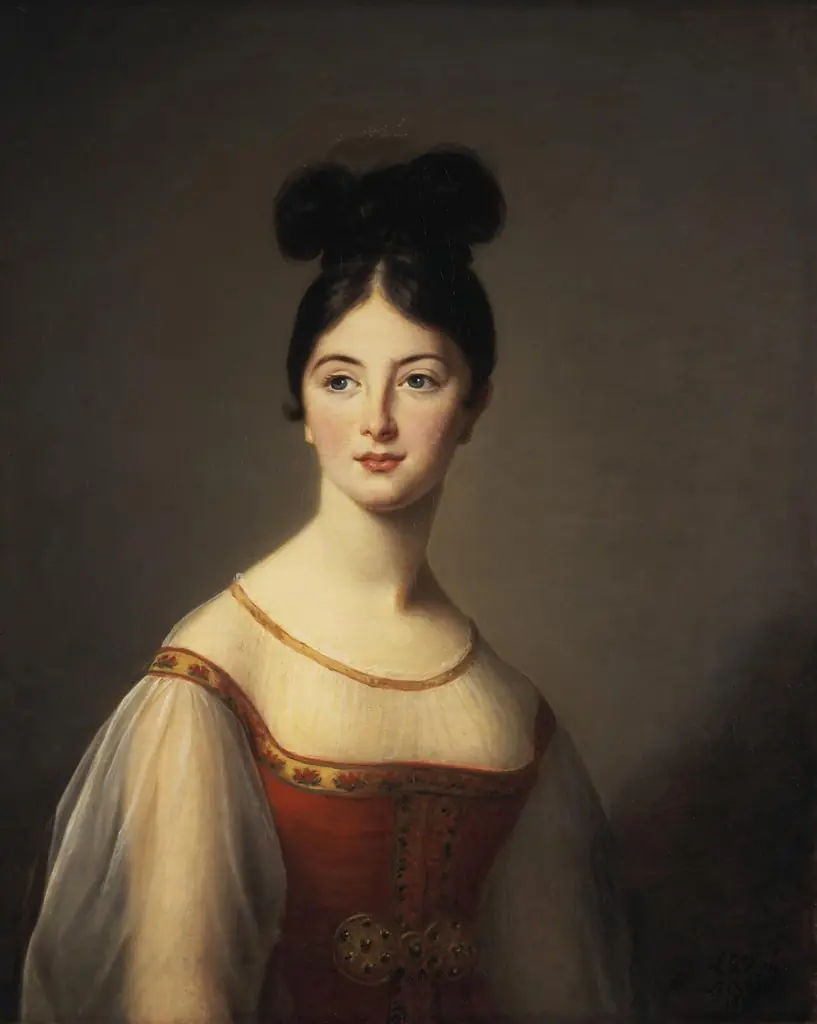
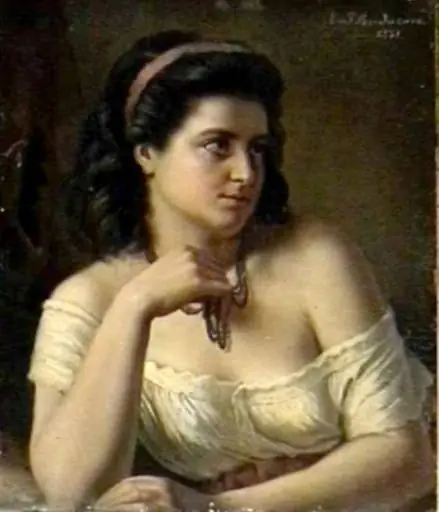
Dulcinea del Toboso is the idealized love interest of Don Quixote, a peasant woman transformed in his mind into a noble lady. Leslie portrays her not as a knight’s fantasy but as a grounded, solitary figure—hands raised to her head, as if in contemplation or distress. The absence of chivalric symbols shifts focus to her humanity, suggesting the psychological weight of being an object of unattainable devotion.
Technique & Style
Leslie employs chiaroscuro to model the figure with subtle gradations of light and shadow, lending volume to the form against a dark, neutral background. The red corset and white blouse create a restrained chromatic contrast, drawing attention to the upper body and face. Brushwork is precise yet soft, avoiding theatricality; the composition’s simplicity enhances the intimacy of the moment.
History & Provenance
The painting entered the collection of the Victoria and Albert Museum in the 19th century, likely through acquisition or donation during a period of growing interest in literary subjects in British art. Its presence in the museum reflects Victorian-era fascination with narrative painting drawn from literature, particularly works of the Spanish Golden Age.
Context
In the 1830s, British artists increasingly turned to literary themes as alternatives to historical or religious subjects. Leslie, influenced by both Romanticism and the realist tendencies of contemporary portraiture, sought to humanize literary figures. Dulcinea’s portrayal diverges from idealized depictions, aligning with a broader trend toward psychological depth in visual storytelling.
Legacy
Though not widely exhibited today, the painting remains a notable example of 19th-century literary illustration in British art. It exemplifies how artists engaged with classical texts not through grand spectacle but through quiet, personal moments. Its preservation in the V&A underscores its role in documenting the intersection of literature and visual culture in the Victorian period.
Artist & collection