Artwork
Vainqueurs et vaincus, tout est fricot pour le diable (The Vanquishers and the Vanquished, All Food for the Devil)
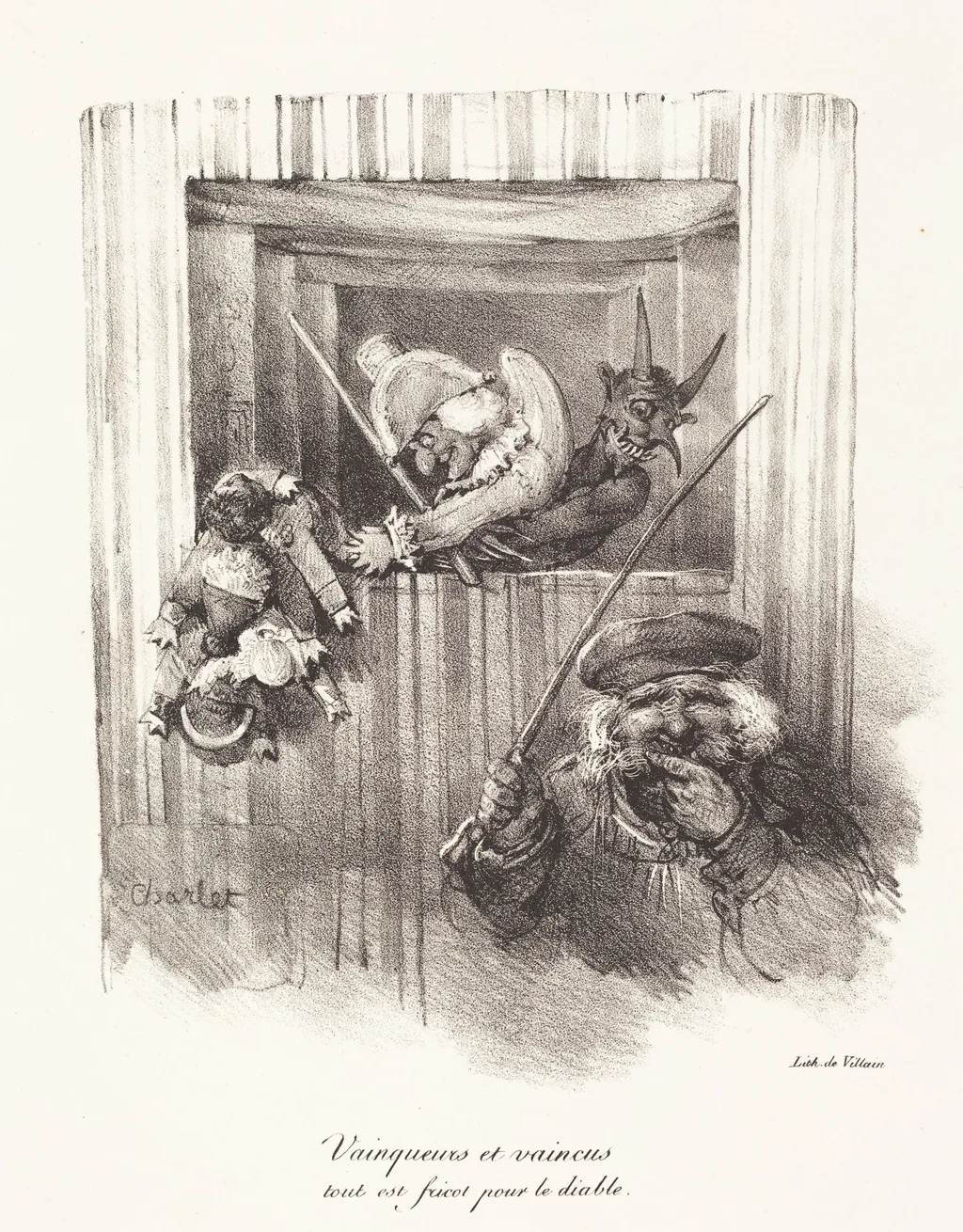
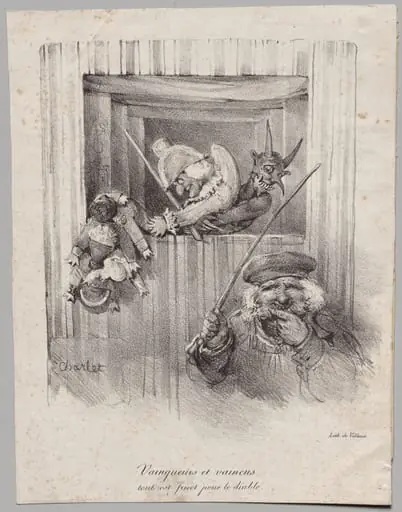
Vainqueurs et vaincus, tout est fricot pour le diable (The Vanquishers and the Vanquished, All Food for the Devil) is an ink print by the Romanticist artist Nicolas Toussaint Charlet. It dates from 1822 and is held in the collection of the National Gallery of Art.
About this work
The central figure is dressed in a large hat and holds a sword, while another figure in the foreground wears a hat and holds a long pole.
This lithograph depicts a dramatic scene with multiple figures, some of whom are wearing masks and costumes. The central figure is dressed in a large hat and holds a sword, while another figure in the foreground wears a hat and holds a long pole. The background of the image is not clearly defined, but it appears to be a dark and ominous setting.
The image is rendered in a range of grays, with some areas of darker shading that add depth and dimension to the scene. The overall effect is one of drama and tension, as if the figures are engaged in a fierce battle or struggle.
The image is a lithograph on wove paper, created by Nicolas-Toussaint Charlet in 1822. It is an example of Romanticism, a movement that emphasized emotion and imagination in art. To learn more about this style, look up Romanticism.
Overview
Vainqueurs et vaincus, tout est fricot pour le diable (The Vanquishers and the Vanquished, All Food for the Devil) is a 1822 lithograph on wove paper by Nicolas-Toussaint Charlet, a French artist known for his military-themed works.
Subject & Meaning
The lithograph depicts a dramatic, tense scene with multiple figures, some in masks and costumes, amidst an undefined dark background. Central figures include one with a large hat and sword, and another with a hat and long pole, suggesting a fierce battle or struggle, reflecting the artist's exploration of conflict.
Technique & Style
Executed in a range of grays with deep shading, the lithograph showcases Charlet's use of chiaroscuro to create depth and drama, characteristic of Romantic-era printmaking.
History & Provenance
Created in 1822, the work is a typical example of Charlet's military-themed oeuvre, though specific provenance details are not provided.
Context
The piece exemplifies the Romantic movement's emphasis on emotion and drama, fitting within Charlet's broader body of work focused on military subjects.
Artist & collection

Artist
Nicolas-Toussaint Charlet was a French painter and printmaker, more especially of military subjects.

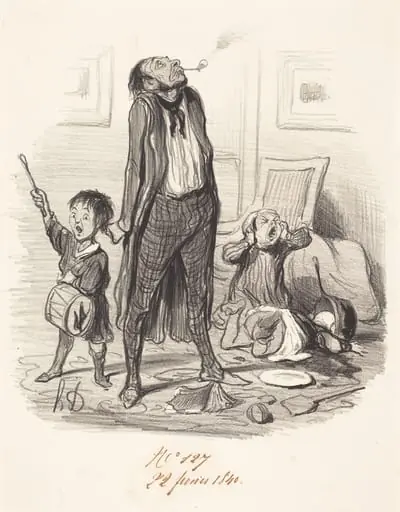 Poète classique composant une églogue...
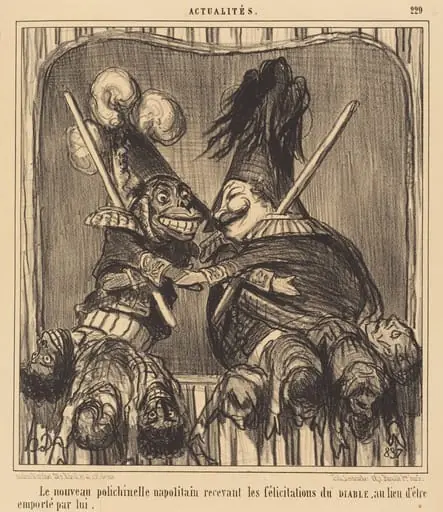 Le Nouveau polichinelle napolitain
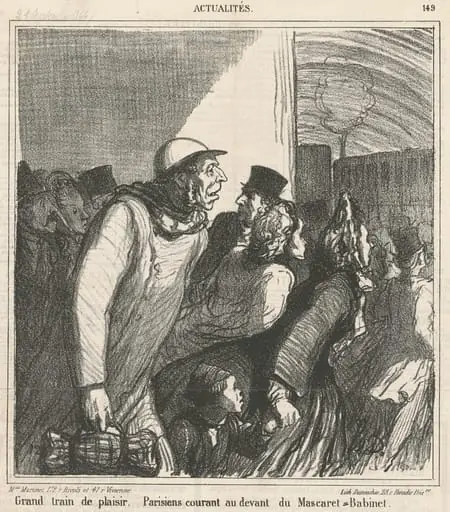 Grand train de plaisir
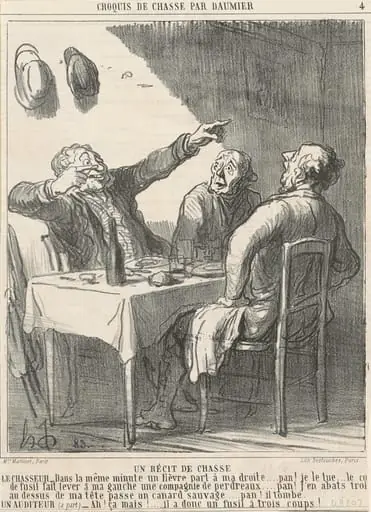 Un récit de chasse
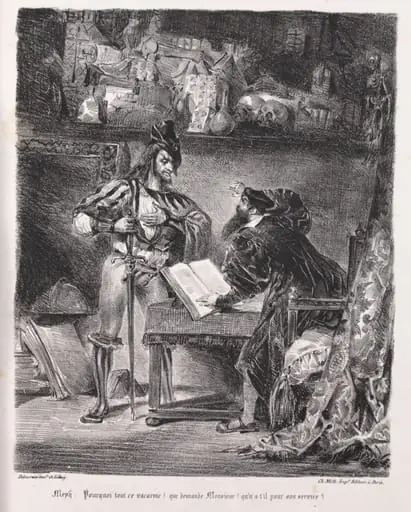 Illustrations for Faust: Méphistophélés visits Faust
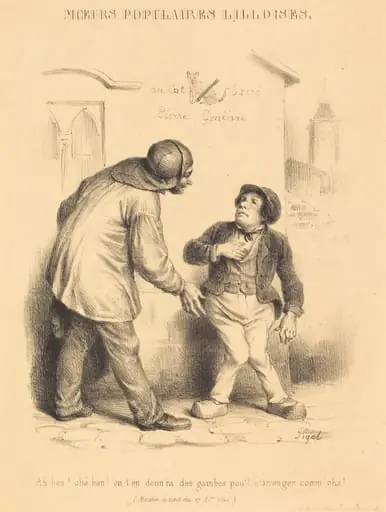 Ah Ben!...
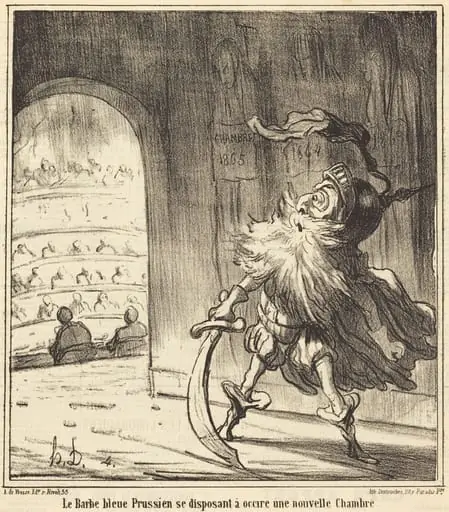 Le Barbe bleu Prussien...
 Membre... du dix Décembre prenant le la...
![Mascaras crueles (Cruel Masks) [recto], by Francisco Goya](https://artifactworldgallery.com/img/francisco-goya--mascaras-crueles-cruel-masks-recto--c8ed74cbe3eadfd0-w320.webp) Mascaras crueles (Cruel Masks) [recto]
Mascaras crueles (Cruel Masks) [recto] Bertrand, j'adore l'industrie...
 Joseph and Mary Prepare to Leave
 Winners and Losers, All Are Food for the Devil