Artwork
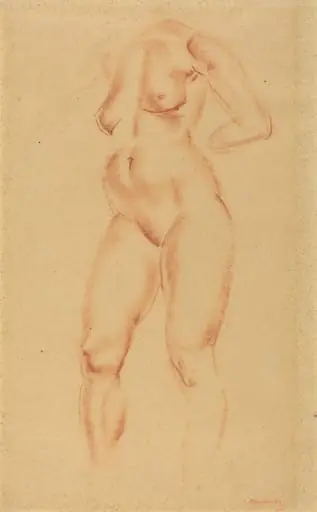
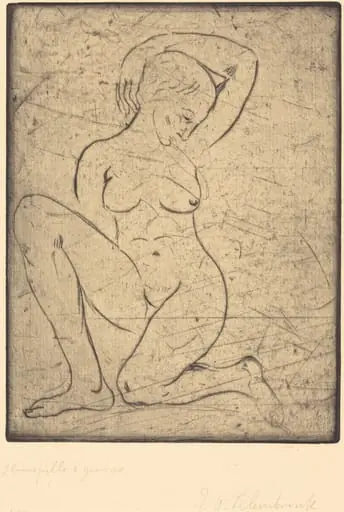
Standing Girl with Arms Behind her Head
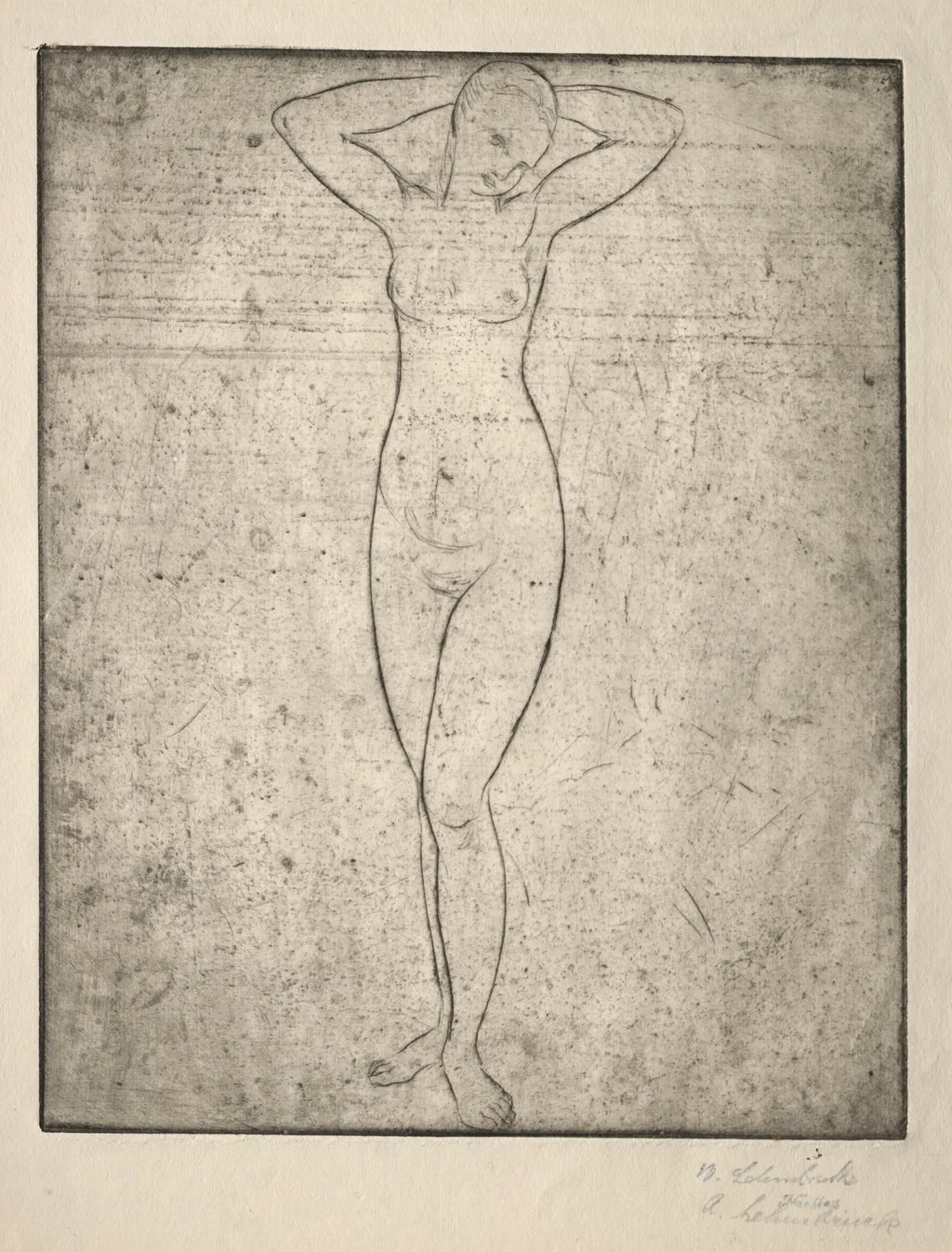
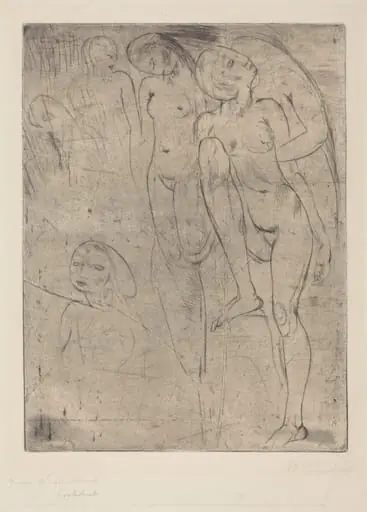
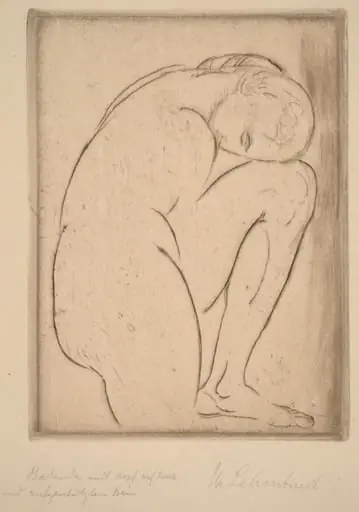
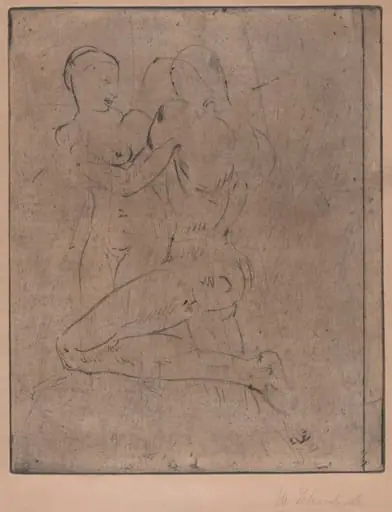
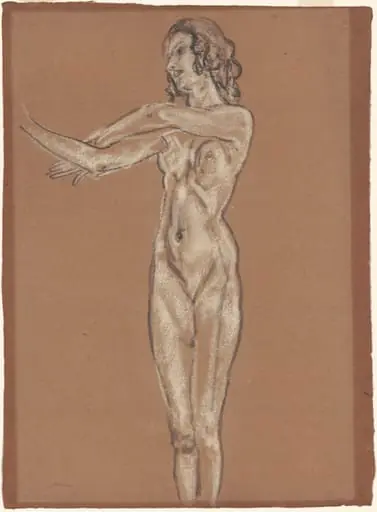
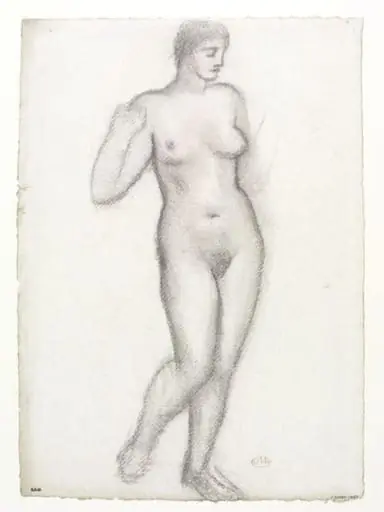
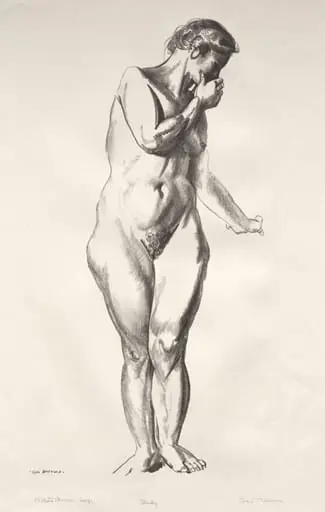
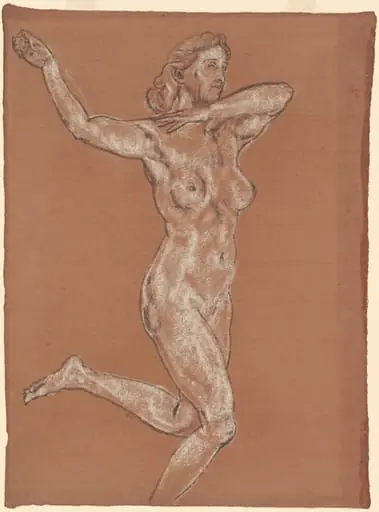
Standing Girl with Arms Behind her Head is a print by Wilhelm Lehmbruck. It dates from 1912 and is held in the collection of the Cleveland Museum of Art.
About this work
Overview
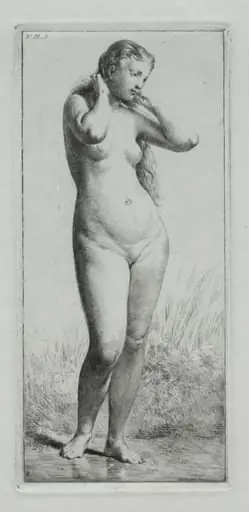
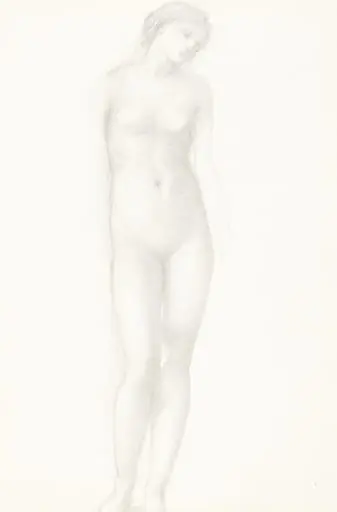
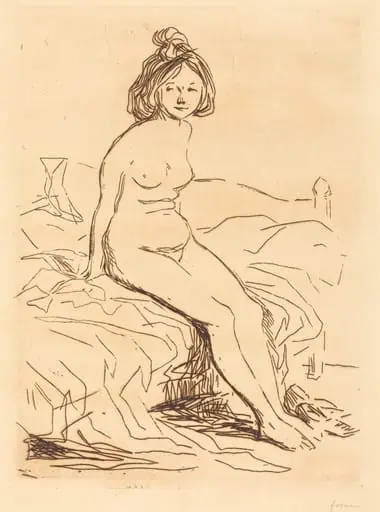
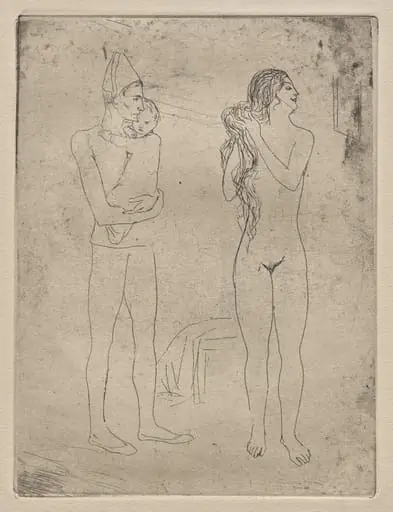
Created in 1912 by German artist Wilhelm Lehmbruck, this drawing captures a standing female figure with arms raised behind her head.
Created in 1912 by German artist Wilhelm Lehmbruck, this drawing captures a standing female figure with arms raised behind her head. Executed in pencil on textured paper, the work emphasizes form and posture over detail. Its rapid, assured lines suggest a spontaneous study, prioritizing the silhouette and equilibrium of the body. The absence of facial features or environment directs focus to the figure’s physical presence and internal tension.
Subject & Meaning
The solitary figure, posed with arms extended backward, evokes a quiet introspection. The posture suggests both vulnerability and restraint, as if the subject is suspended between movement and stillness. There is no narrative context, allowing the pose itself to convey emotional weight. Lehmbruck’s choice to isolate the body reflects an interest in universal human states rather than individual identity.
Technique & Style
Lehmbruck employed minimal, confident pencil strokes to define the figure’s elongated form. The rough paper texture enhances the drawing’s immediacy, while faint underlying marks reveal a process of refinement. Details such as clothing or facial features are omitted, emphasizing volume and proportion. The style bridges observational realism with expressive simplification, aligning with early 20th-century tendencies to distill emotion through form.
History & Provenance
The drawing originates from Lehmbruck’s productive period in the years preceding World War I, when he was deeply engaged with studies of the human figure. It likely served as a preparatory sketch or independent study, part of a broader body of work exploring posture and psychological presence. Its survival reflects its significance within his artistic practice, though specific ownership history prior to institutional acquisition remains undocumented.
Context
Lehmbruck worked amid a shift in German art toward emotional expression and formal abstraction. While influenced by classical sculpture and naturalism, he moved away from ornamental detail toward simplified, elongated forms. This drawing aligns with contemporaneous explorations by artists like Egon Schiele and Oskar Kokoschka, who sought to convey inner states through bodily language rather than external realism.
Legacy
The drawing exemplifies Lehmbruck’s enduring contribution to modern sculpture’s visual language. His focus on the body as a vessel of psychological depth influenced later generations of sculptors and draftsmen. Though less known than his monumental works, this intimate study reveals the precision and sensitivity underpinning his larger achievements in three-dimensional form.
Artist & collection
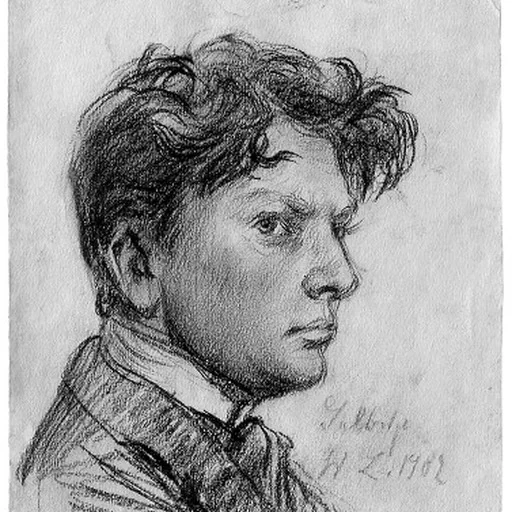
Artist
Wilhelm Lehmbruck (4 January 1881 – 25 March 1919) was a German sculptor. One of the most important of his generation, he was influenced by realism and expressionism.