Artwork
Paintings after Ancient Masters: Scholar Reading in a Thatched Hut by a Waterfall
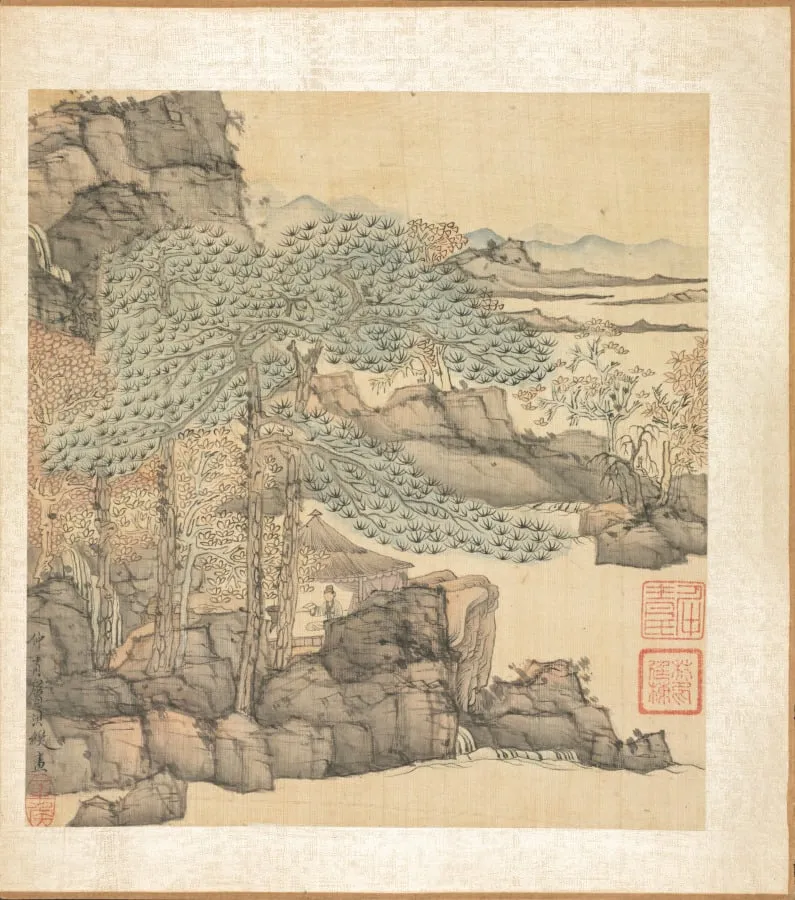
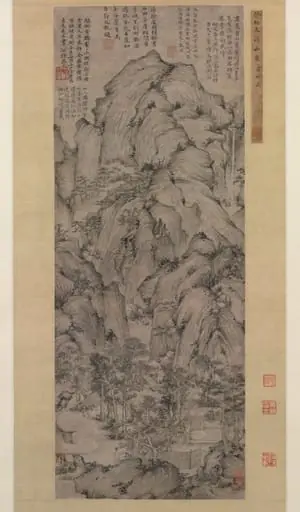
Paintings after Ancient Masters: Scholar Reading in a Thatched Hut by a Waterfall is an unspecified painting by the Ming dynasty painting artist Chen Hongshou. It dates from 1625 and is held in the collection of the Cleveland Museum of Art.
About this work
His lines are crisp, almost like woodblock prints, yet the tiny details feel personal—like a quiet joke between the artist and the past.
A lone scholar sits under a thatched roof, reading beside a rushing waterfall. Rocks and twisted pines frame the scene in black ink.
Chen Hongshou painted this centuries after the Ming Dynasty fell, but he kept its old styles alive. His lines are crisp, almost like woodblock prints, yet the tiny details feel personal—like a quiet joke between the artist and the past.
Look up the subject china, ming dynasty (1368–1644) to see how later artists like Chen kept its traditions breathing.
Overview
Chen Hongshou’s double-album of twenty paintings, including Scholar Reading in a Thatched Hut by a Waterfall, gathers landscapes, figures, and floral motifs into a cohesive late-career project. Among these, one leaf depicts a woman—a rare subject in his later work. The entire series reflects a deliberate retreat from grandeur, favoring intimate, scaled-down compositions that evoke contemplation rather than spectacle.
Subject & Meaning
The lone scholar seated beneath a humble thatched roof, engrossed in a text beside a cascading waterfall, embodies a quiet resistance to political upheaval. Painted after the fall of the Ming Dynasty, the scene mirrors the withdrawn, restrained lives of loyalist scholars stripped of public role. The isolation and stillness suggest not despair, but a preserved inner dignity amid diminished circumstances.
Technique & Style
Chen’s brushwork is precise and linear, recalling woodblock printing in its clarity, yet infused with subtle, idiosyncratic detail. Figures and elements are miniaturized, not for decorative effect, but to mirror the compressed world of the displaced literati. Ink tones are restrained, textures deliberate—rocks, twisted pines, and water rendered with economy, each stroke carrying historical weight.
History & Provenance
Created in the decades following the Ming collapse, the album belongs to Chen’s final creative phase, when he turned inward, reviving archaic styles as acts of cultural preservation. Though no specific early ownership is documented, the album’s survival reflects its resonance among collectors who valued its quiet defiance and technical mastery over overt political statements.
Context
In the wake of dynastic change, many Ming loyalists withdrew from public life, turning to art, poetry, and solitude. Chen’s work aligns with this cultural shift, reviving Song and Yuan aesthetic principles—deliberately outdated—to sustain a visual language tied to a lost order. His miniaturization echoes the practice of viewing miniature rock gardens, where the small became a vessel for the vast.
Legacy
Chen’s late albums, including this one, influenced later artists who sought to reconcile personal expression with historical continuity. His fusion of archaism with psychological depth offered a model for how tradition could be sustained not through imitation, but through reimagined restraint. The work remains a quiet testament to art as a space of endurance.
Artist & collection


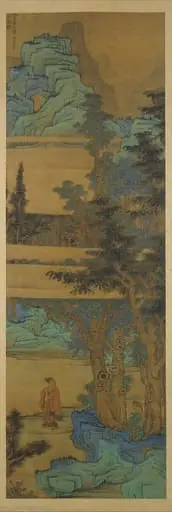 明 陳洪綬 樹下高士圖 軸|Scholar-recluse in blue-green landscape
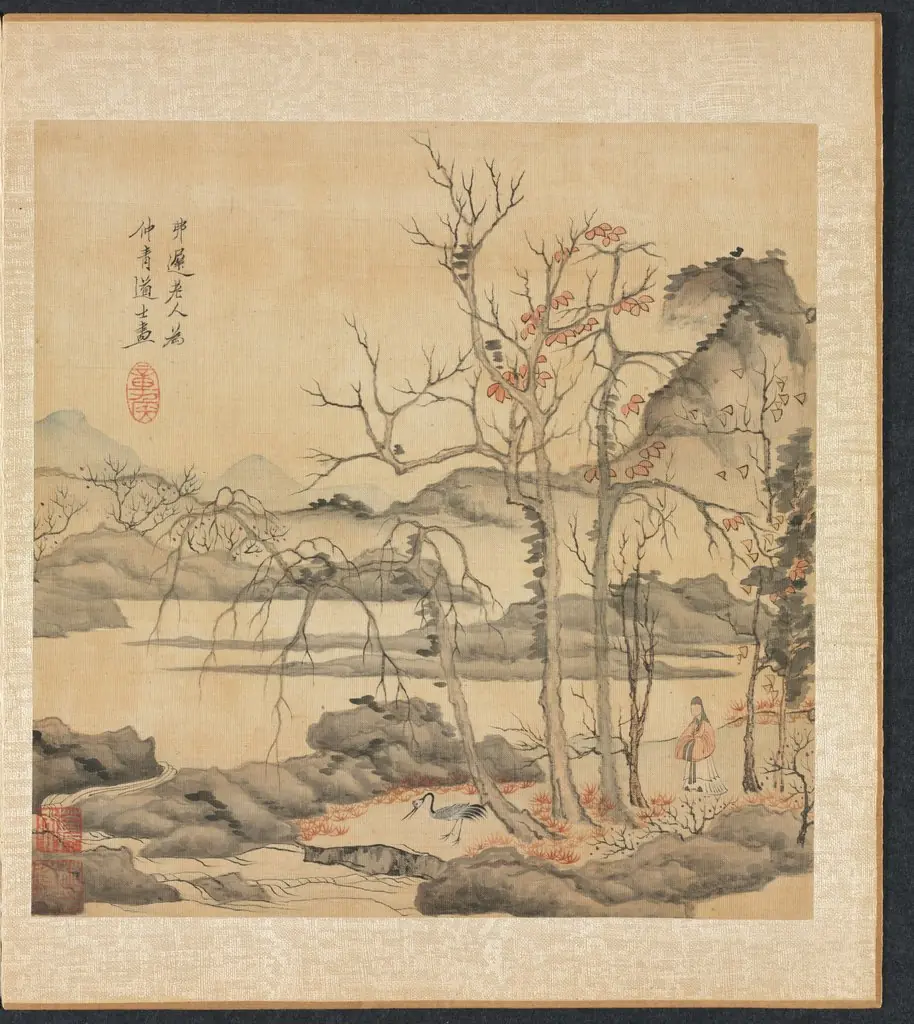 Paintings after Ancient Masters: Daoist and Crane in Autumn Landscape
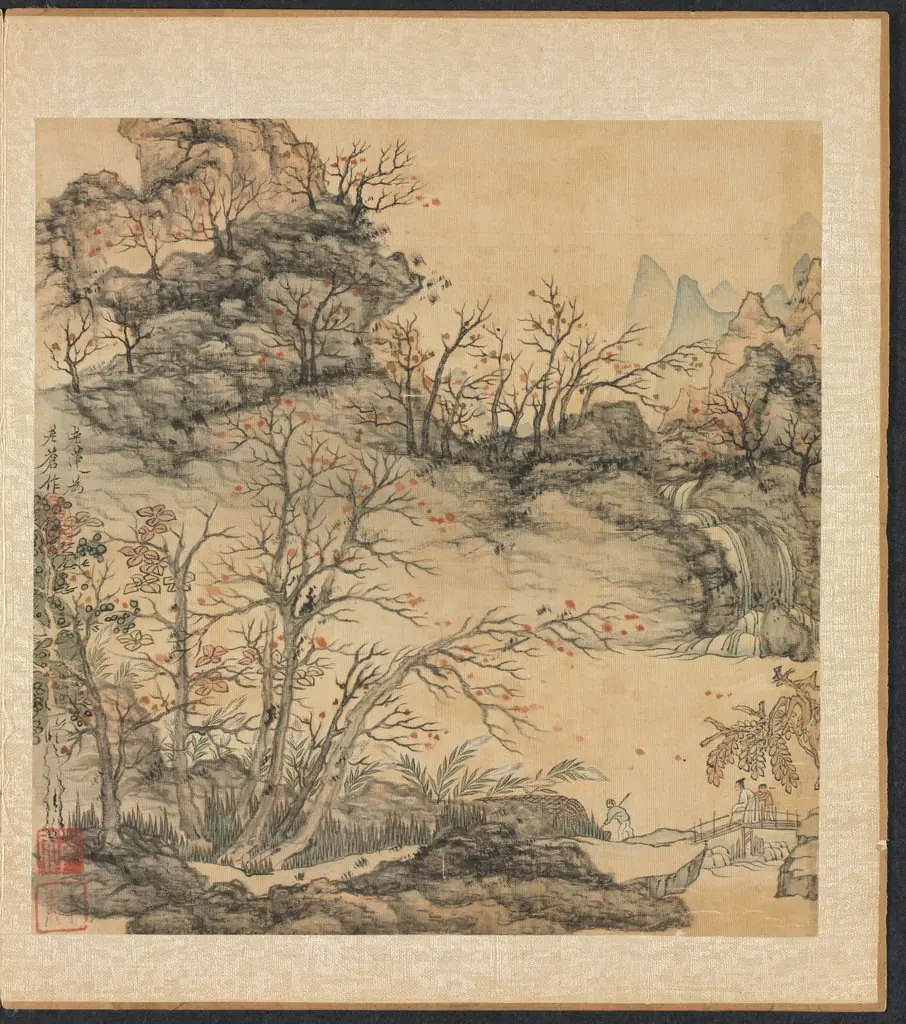 Paintings after Ancient Masters: Autumn Landscape
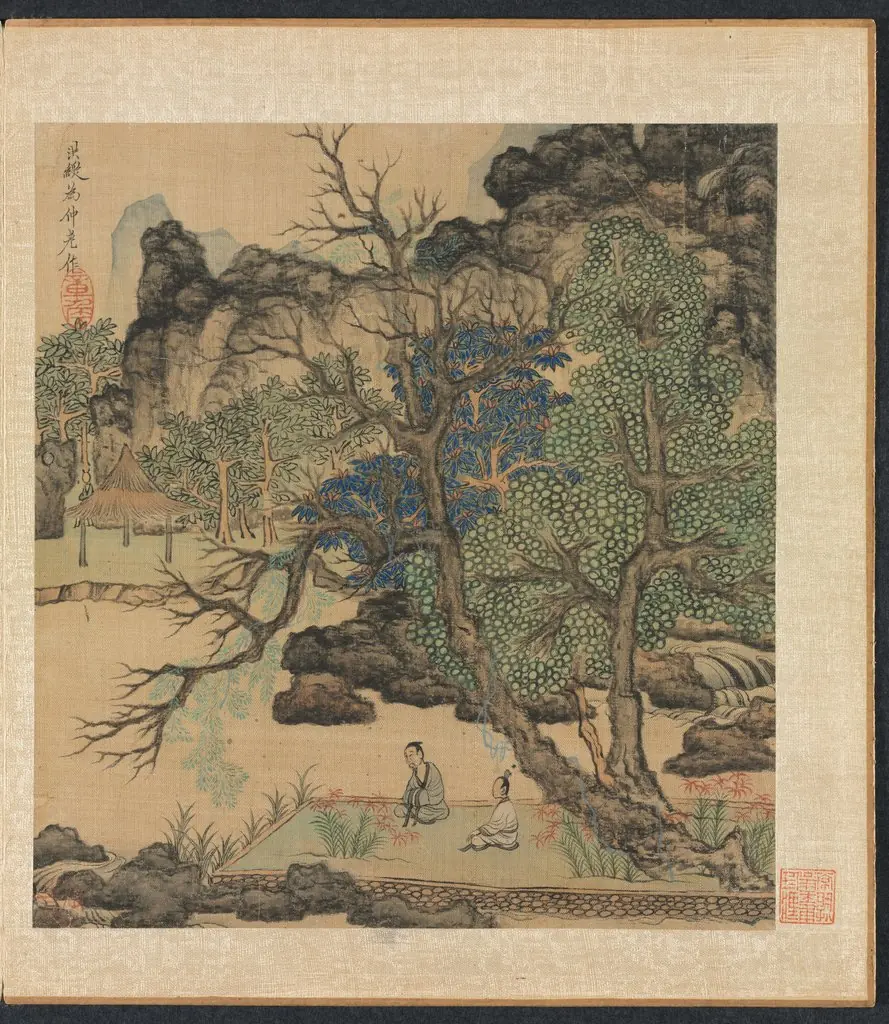 Paintings after Ancient Masters: Scholars in a Garden
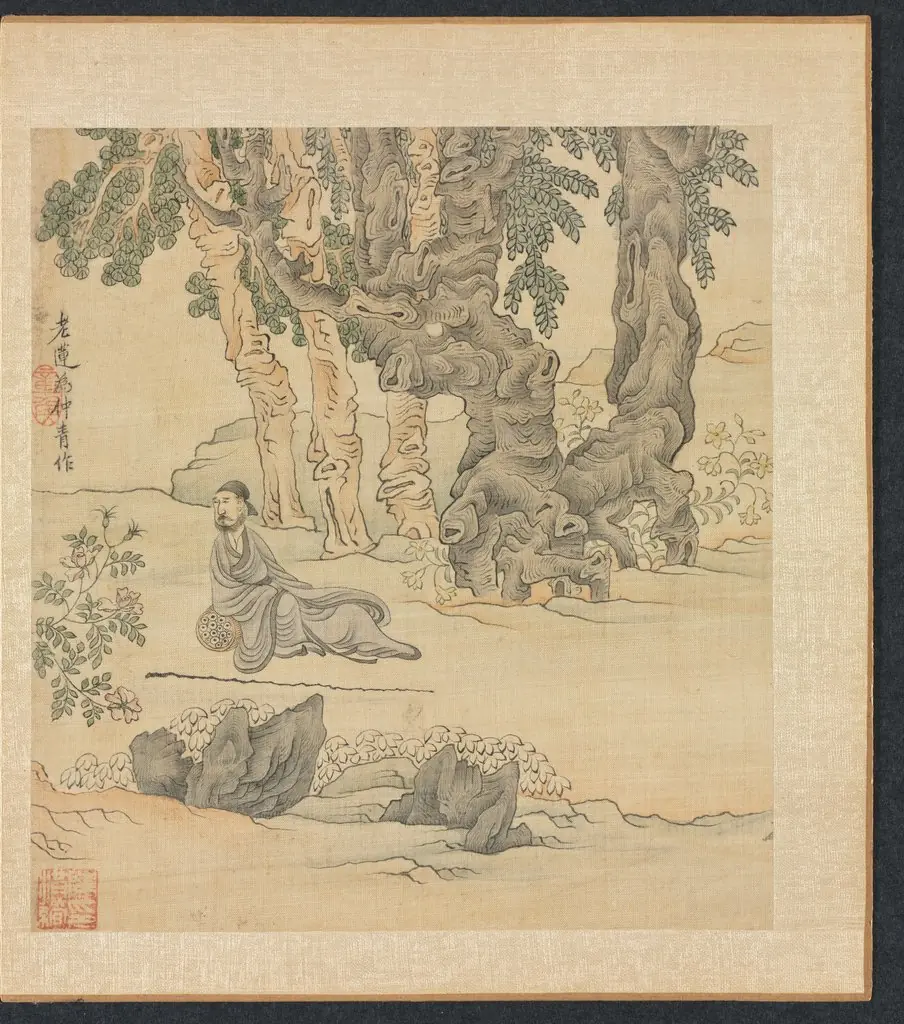 Paintings after Ancient Masters: Portrait of Zhongqing in a Landscape
 明 陳洪綬 準提佛母法像圖 軸|Bodhisattva Guanyin in the Form of the Buddha Mother
 明 陳洪綬 山水花鳥人物圖 扇冊|Landscapes and Flowers
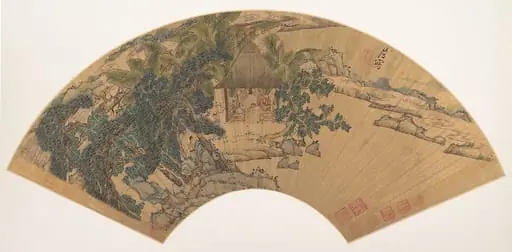 明 陳洪綬 山水圖 扇|Landscape
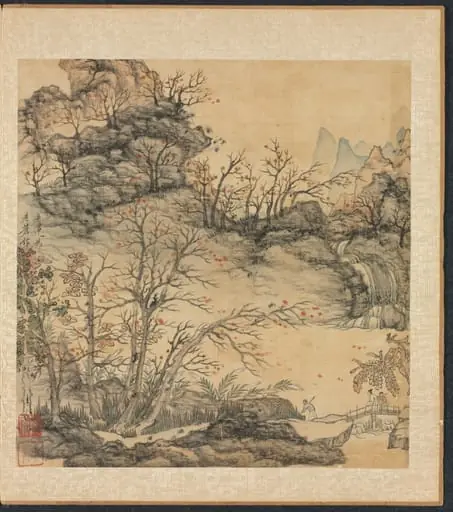 Paintings after Ancient Masters: Autumn Landscape
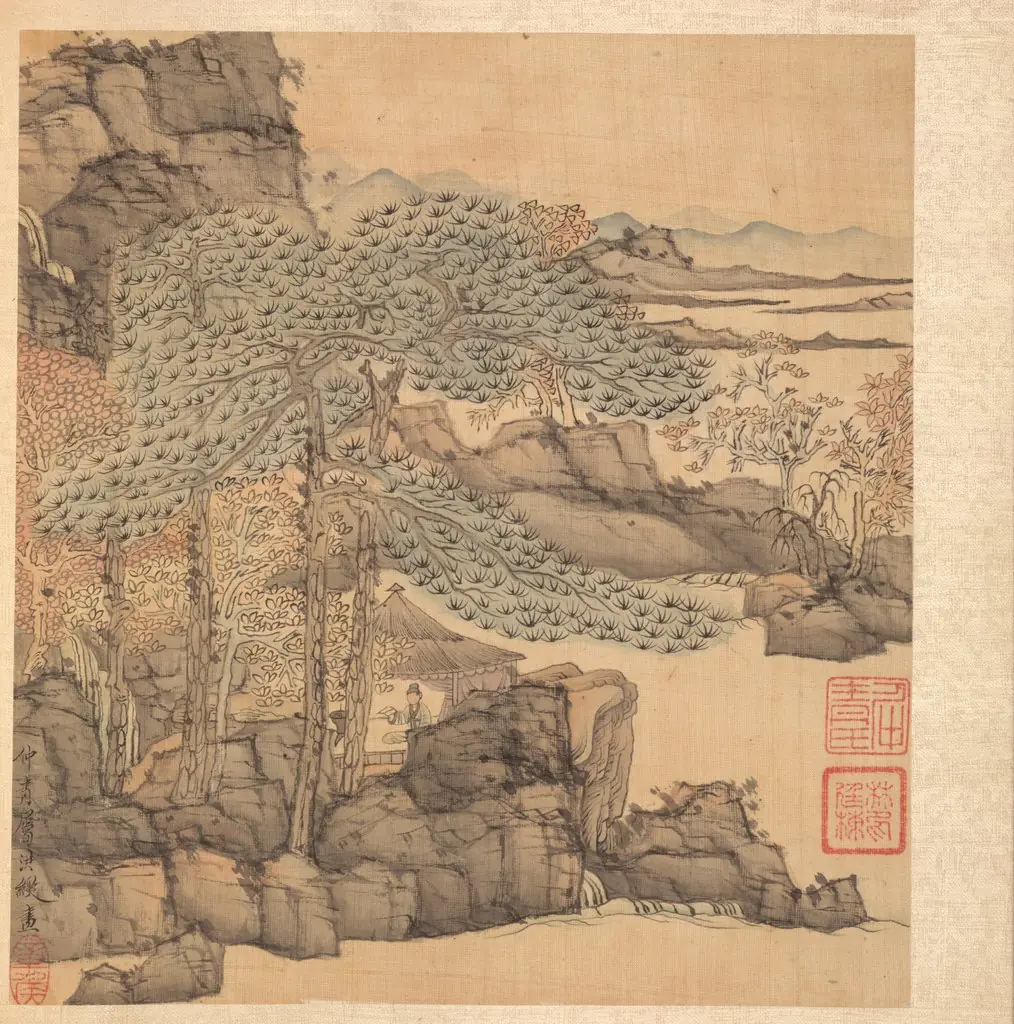 Paintings after Ancient Masters: Scholar Reading in a Thatched Hut by a Waterfall
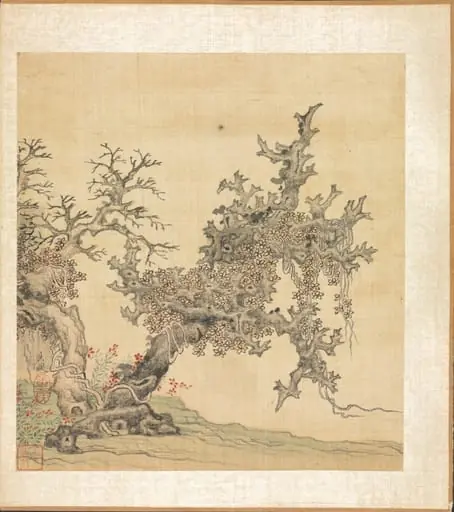 Paintings after Ancient Masters: An Ancient Tree
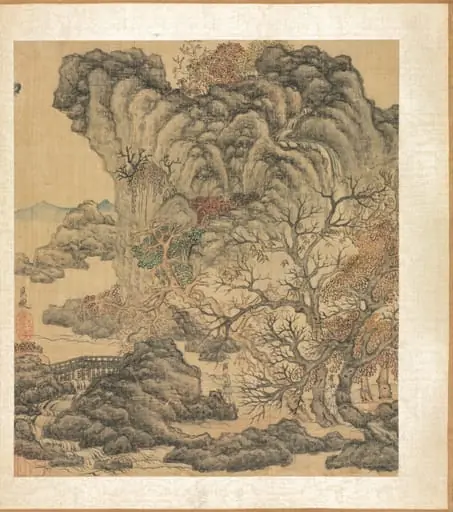 Paintings after Ancient Masters:Travelers in an Autumn Landscape
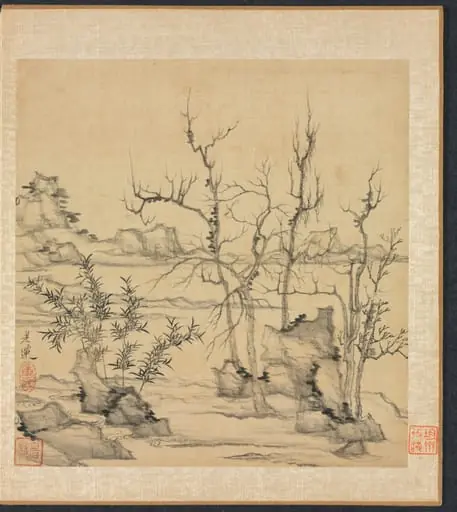 Paintings after Ancient Masters: Landscape in the Style of Ni Zan
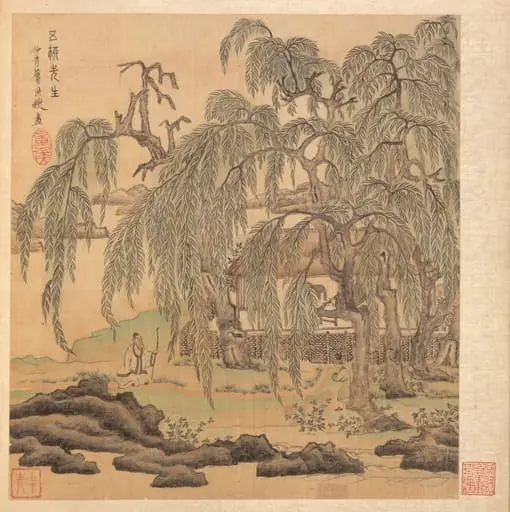 Paintings after Ancient Masters: Mr. Five Willows (Wuliu), Tao Yuanming
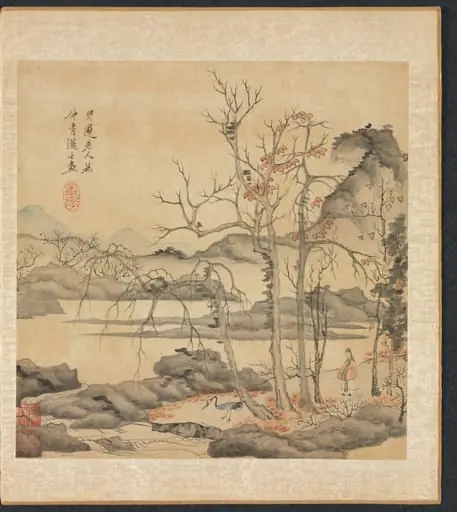 Paintings after Ancient Masters: Daoist and Crane in Autumn Landscape
 Streams and Mountains