Artwork
Paintings after Ancient Masters: Mr. Five Willows (Wuliu), Tao Yuanming
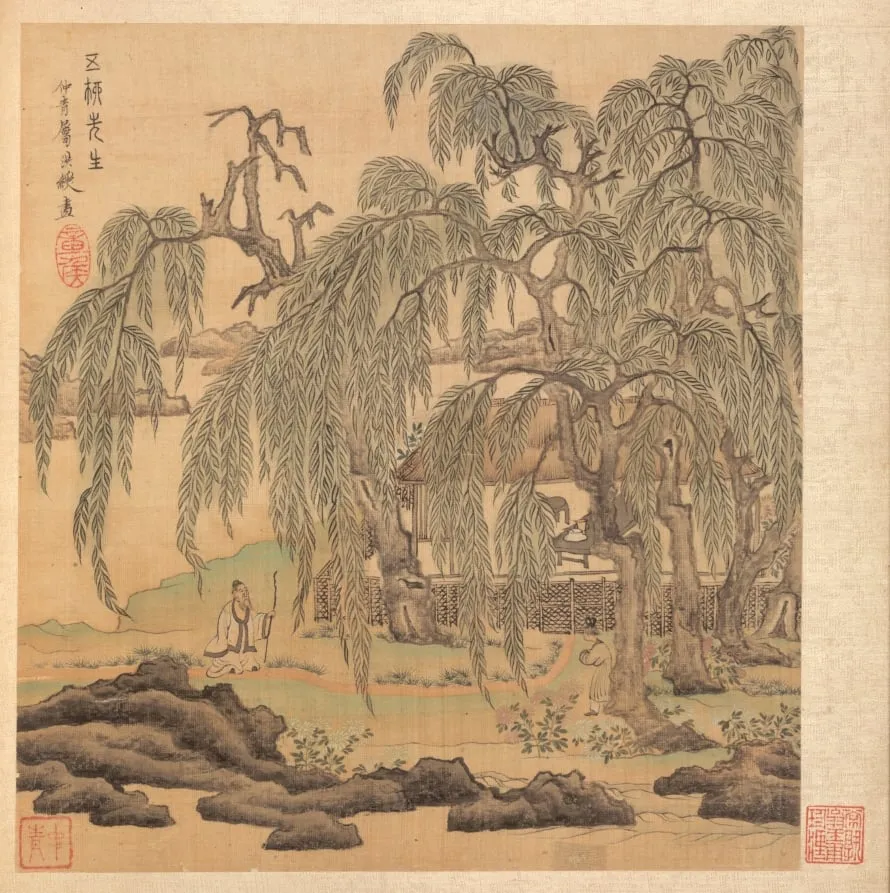
Paintings after Ancient Masters: Mr. Five Willows (Wuliu), Tao Yuanming is an unspecified painting by the Chinese Orthodox School artist Chen Hongshou. It dates from 1625 and is held in the collection of the Cleveland Museum of Art.
About this work
If you like how Chen mixes old tales with bold lines, look up Ming dynasty (1368–1644) paintings next.
You see a thin man in a plain robe standing under five willow trees.
Chen Hongshou painted this in the 1600s, but the man is from a poem written a thousand years earlier. The artist liked old stories—he made them look fresh by giving the trees sharp, almost cartoonish leaves and putting the man in a pose that feels both stiff and alive.
If you like how Chen mixes old tales with bold lines, look up Ming dynasty (1368–1644) paintings next.
Overview
This work belongs to a double-album of twenty paintings by Chen Hongshou, created in the early 17th century. The album juxtaposes landscapes, figures and floral motifs, and includes a single leaf that depicts a woman—a motif absent from Chen’s later collections. The present piece portrays a slender scholar in a plain robe standing beneath a grouping of five willow trees.
Subject & Meaning
The solitary figure is drawn from a poem composed roughly a millennium before Chen’s time, linking the painting to a long literary tradition. The arrangement of the five willows and the upright posture of the scholar convey a tension between restraint and vitality, suggesting the inner resolve of a cultured individual confronting an uncertain world.
Technique & Style
Chen renders the willows with sharply defined, almost caricatured leaves, while the figure is rendered in a stiff yet animated pose. The composition is deliberately reduced in scale, echoing the miniature aesthetics of Chinese scholar’s gardens, table rocks and ancient roots, and reflects the artist’s penchant for archaic, highly refined brushwork without overt sentimentality.
History & Provenance
Executed in the 1600s during the late Ming dynasty, the painting forms part of Chen Hongshou’s mature output, a period noted for synthesizing antiquarian subjects with a personal visual language. The album’s survival in a double‑leaf format suggests it was intended for private contemplation rather than public display, aligning with the collector’s scholarly interests.
Context
Chen’s late works often mirror the psychological state of Ming loyalist officials and scholars who, after the dynasty’s decline, experienced loss of status and moral dislocation. The intentional diminishment of scale and the focus on solitary, contemplative scenes can be read as visual metaphors for the constrained existence of this disenfranchised intellectual class.
Artist & collection


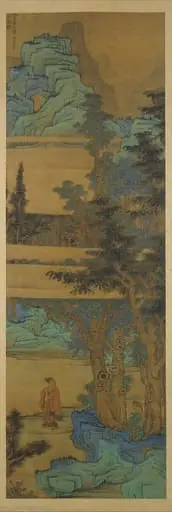 明 陳洪綬 樹下高士圖 軸|Scholar-recluse in blue-green landscape
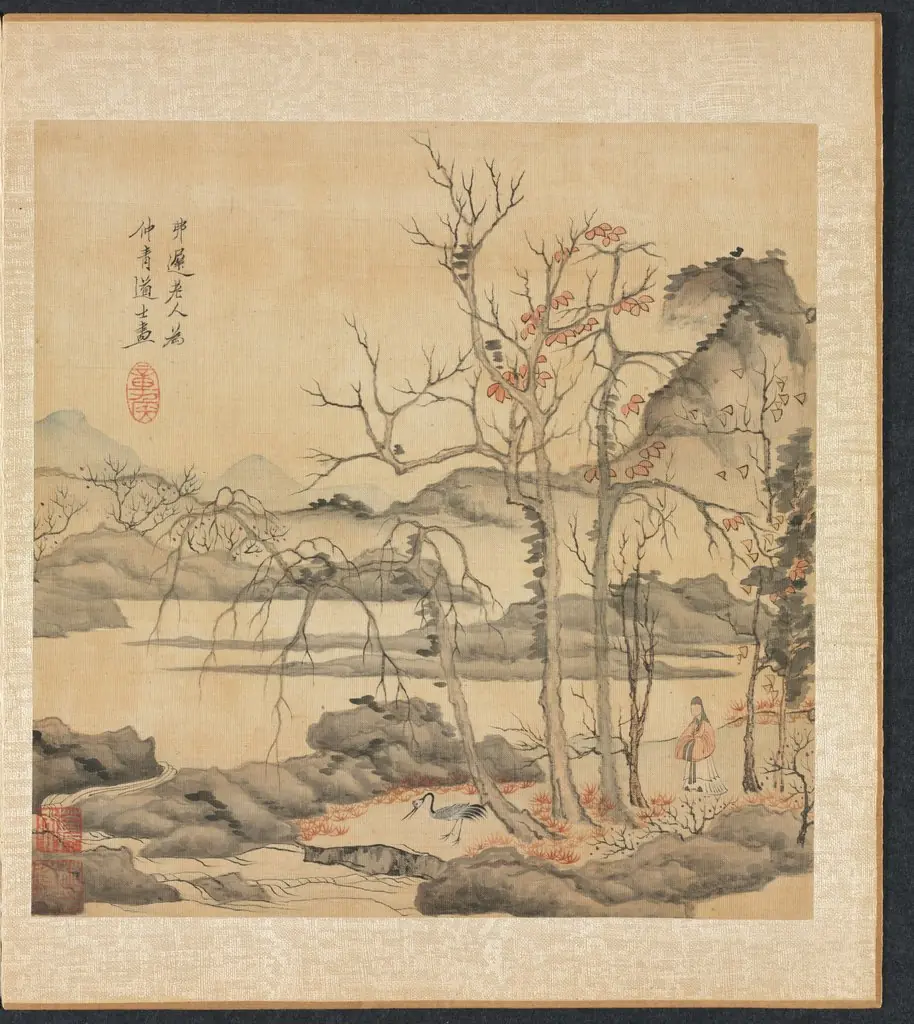 Paintings after Ancient Masters: Daoist and Crane in Autumn Landscape
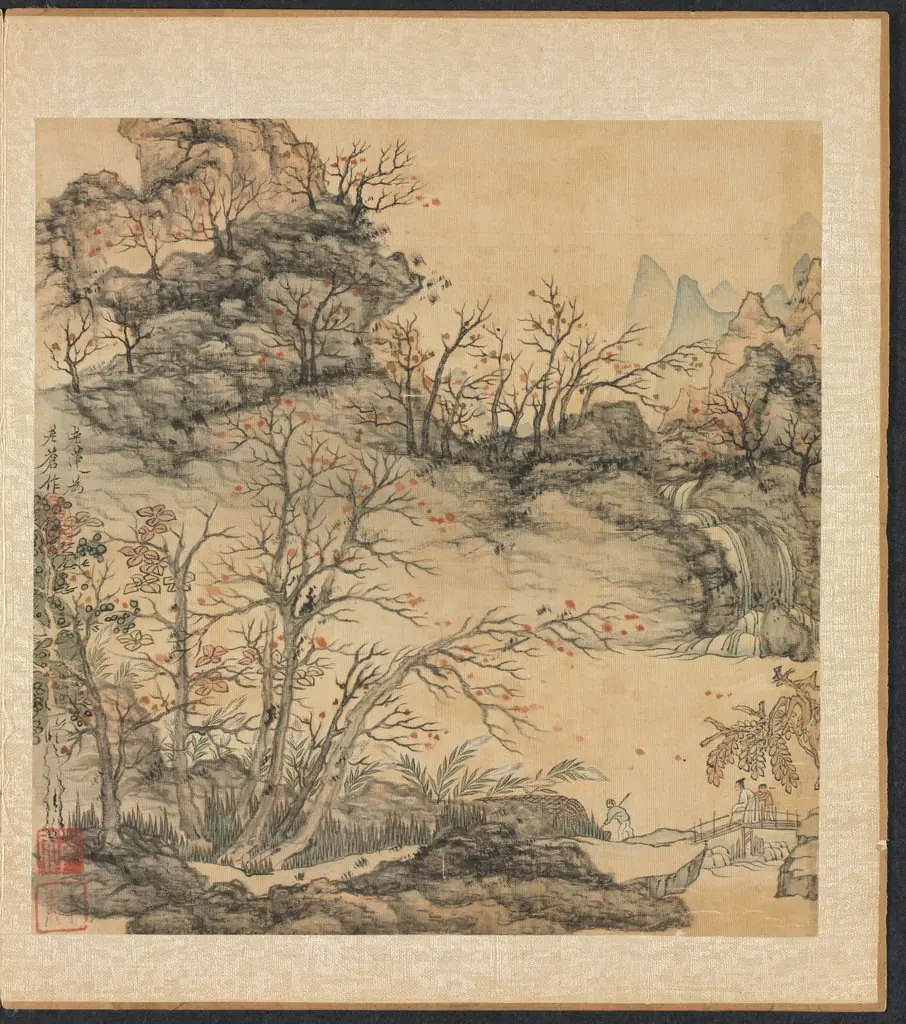 Paintings after Ancient Masters: Autumn Landscape
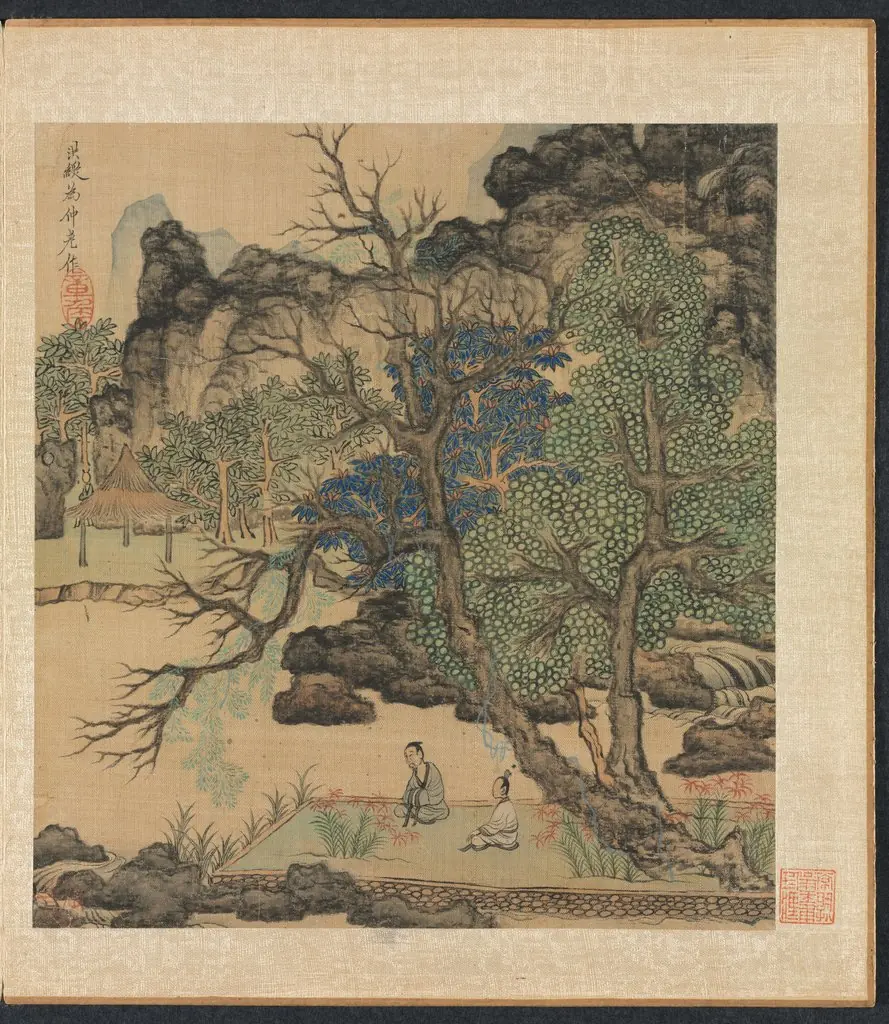 Paintings after Ancient Masters: Scholars in a Garden
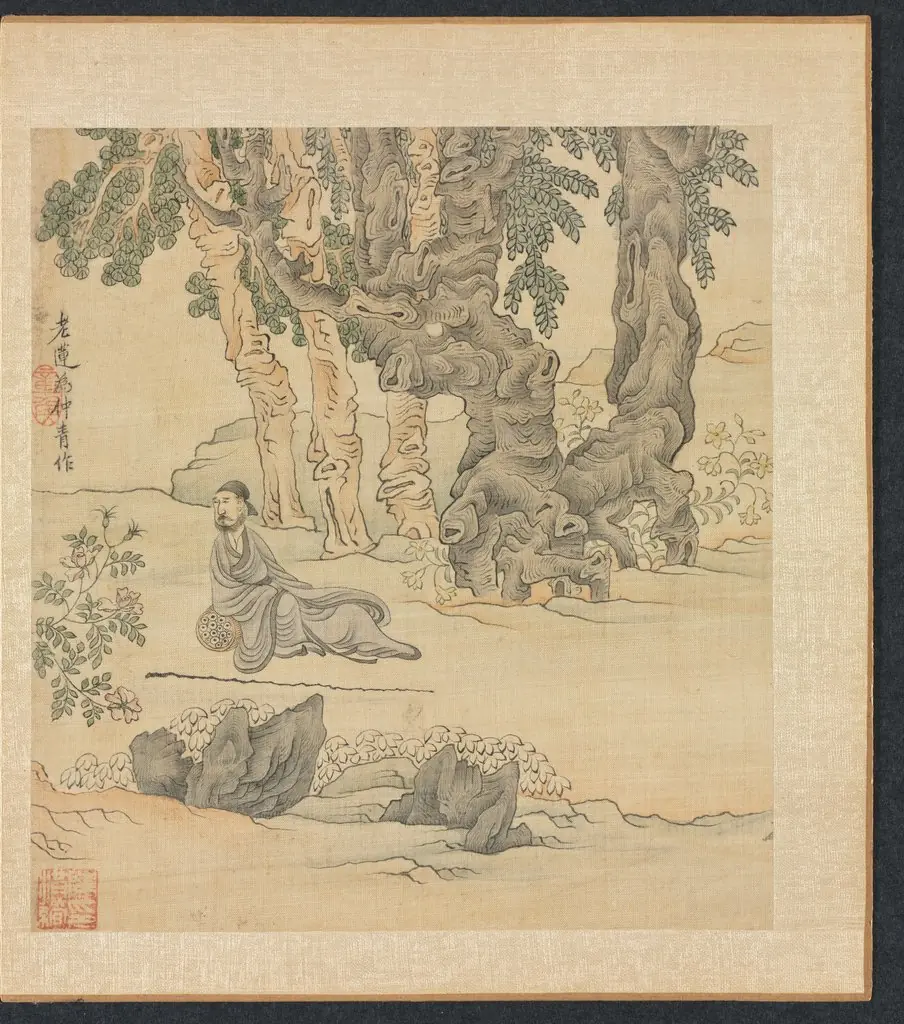 Paintings after Ancient Masters: Portrait of Zhongqing in a Landscape
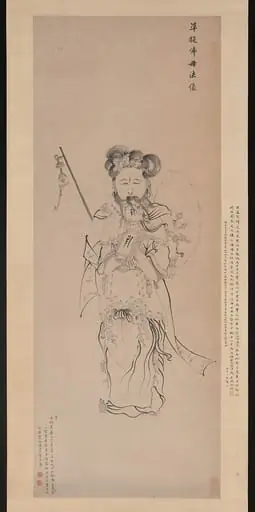 明 陳洪綬 準提佛母法像圖 軸|Bodhisattva Guanyin in the Form of the Buddha Mother
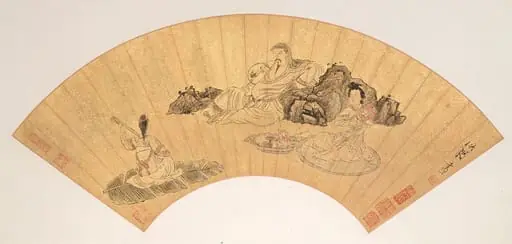 明 陳洪綬 山水花鳥人物圖 扇冊|Landscapes and Flowers
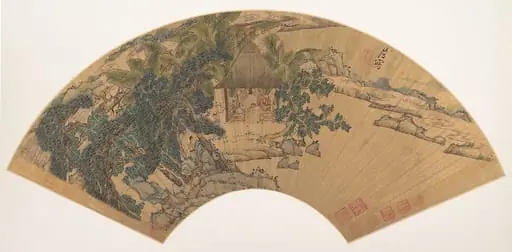 明 陳洪綬 山水圖 扇|Landscape
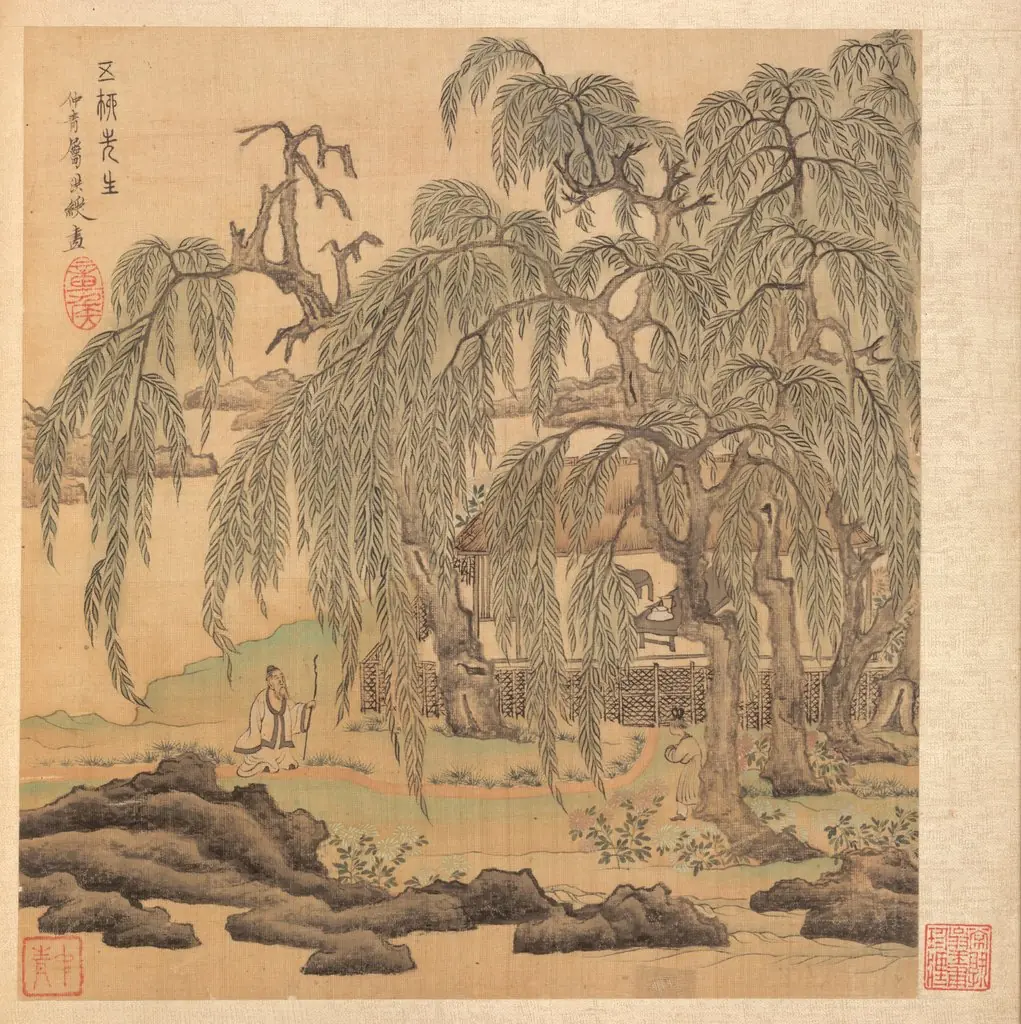 Paintings after Ancient Masters: Mr. Five Willows (Wuliu), Tao Yuanming
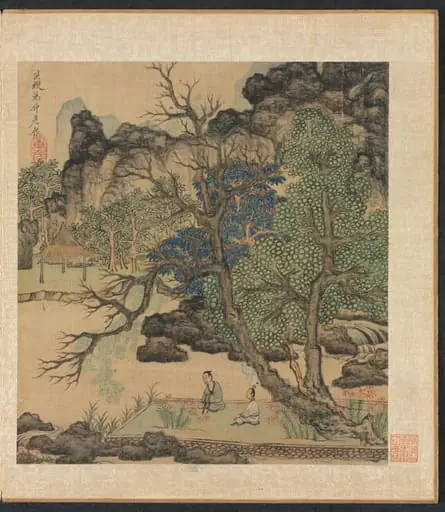 Paintings after Ancient Masters: Scholars in a Garden
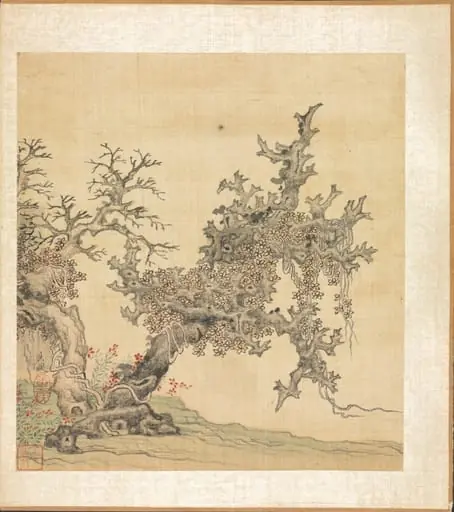 Paintings after Ancient Masters: An Ancient Tree
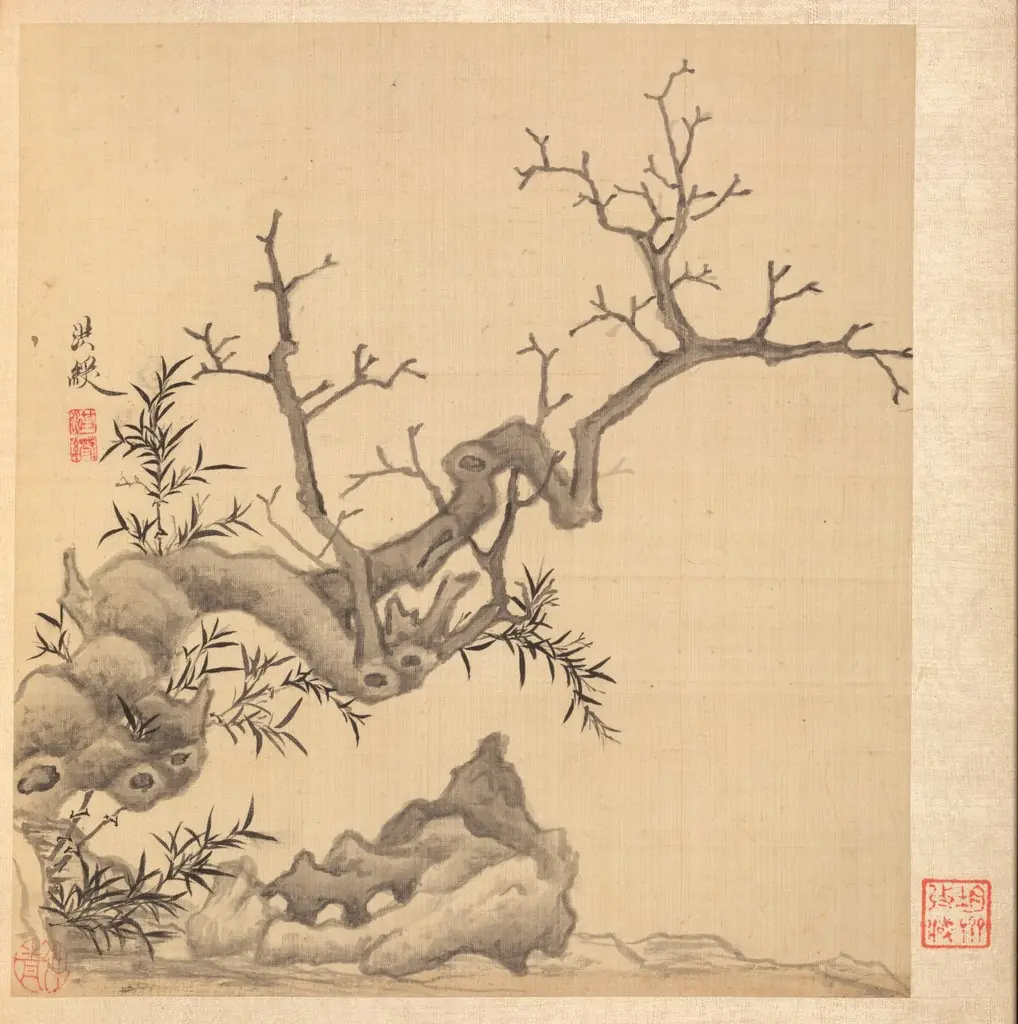 Paintings after Ancient Masters: Rock, Old Tree, and Bamboo
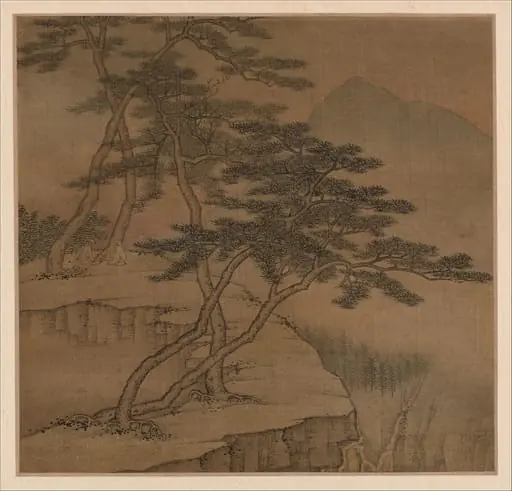 清 高岑 擬古山水圖 冊 絹本|Landscapes in the styles of old masters
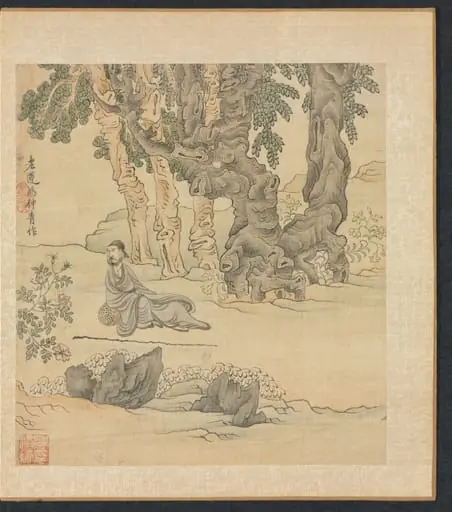 Paintings after Ancient Masters: Portrait of Zhongqing in a Landscape
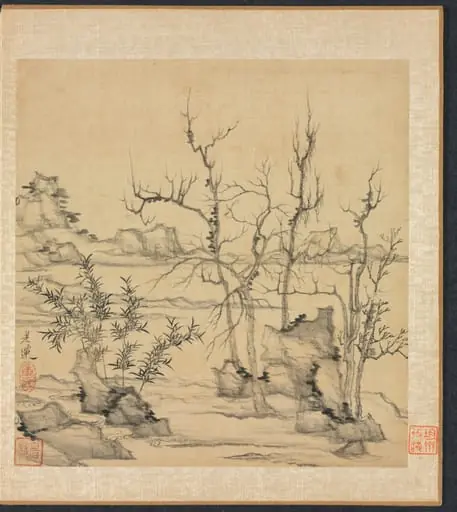 Paintings after Ancient Masters: Landscape in the Style of Ni Zan
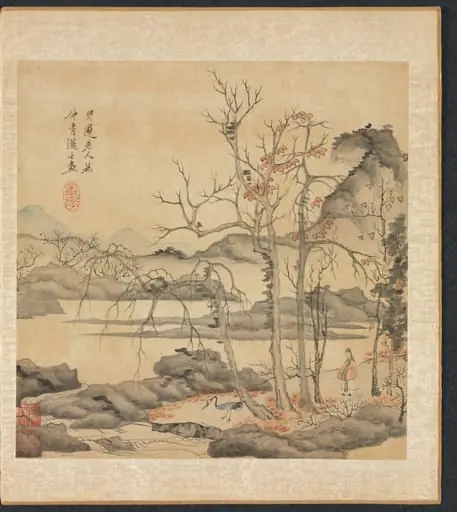 Paintings after Ancient Masters: Daoist and Crane in Autumn Landscape
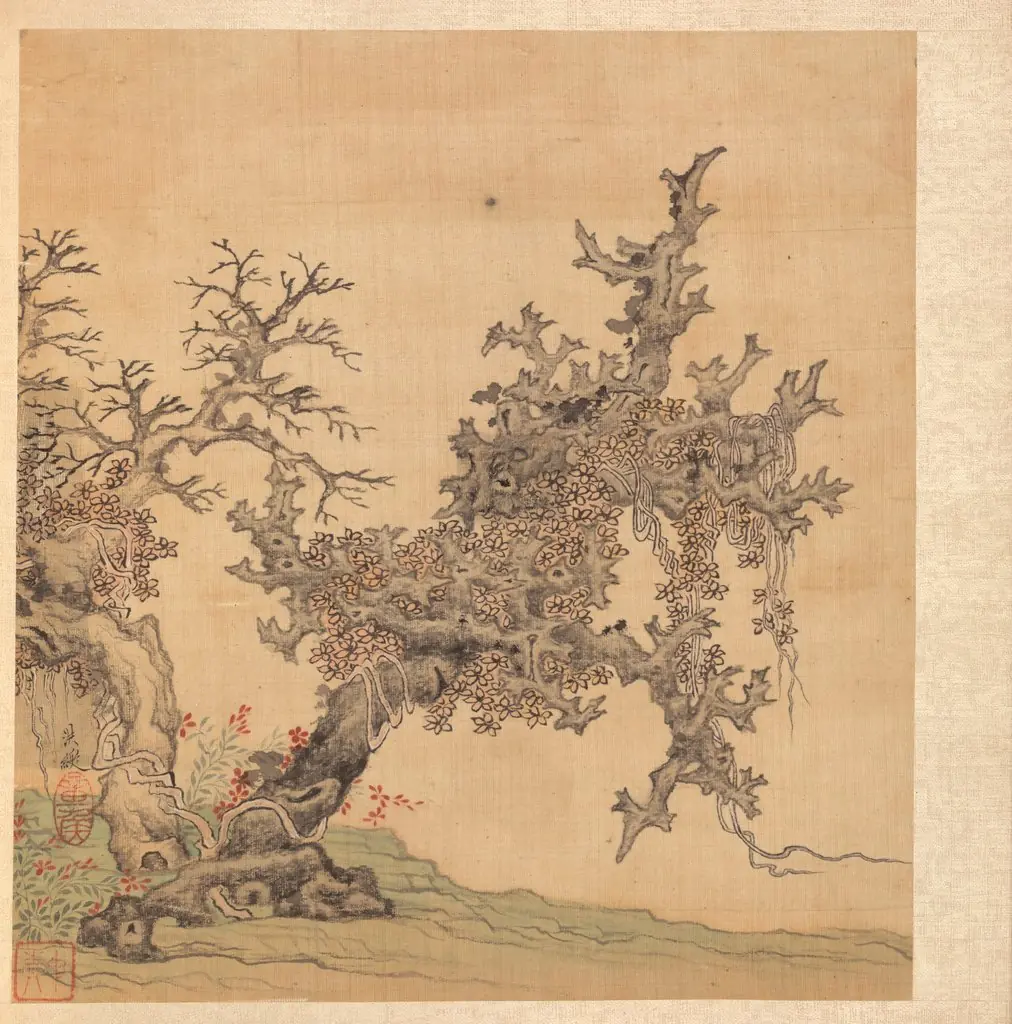 Paintings after Ancient Masters: An Ancient Tree
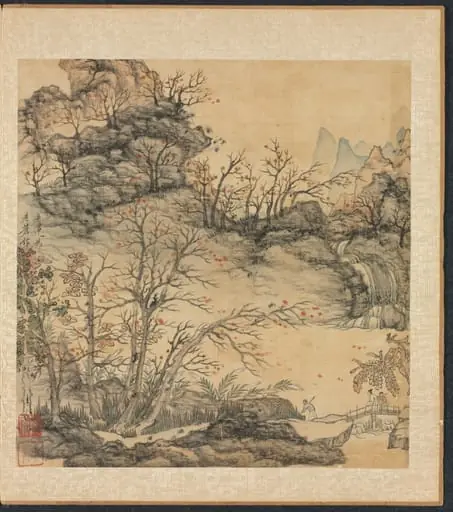 Paintings after Ancient Masters: Autumn Landscape
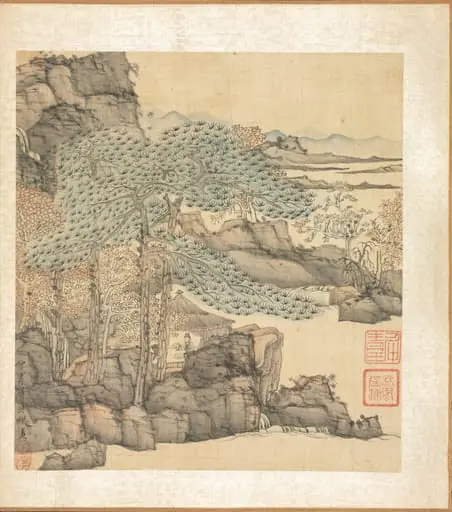 Paintings after Ancient Masters: Scholar Reading in a Thatched Hut by a Waterfall