Artwork
Self-Portrait
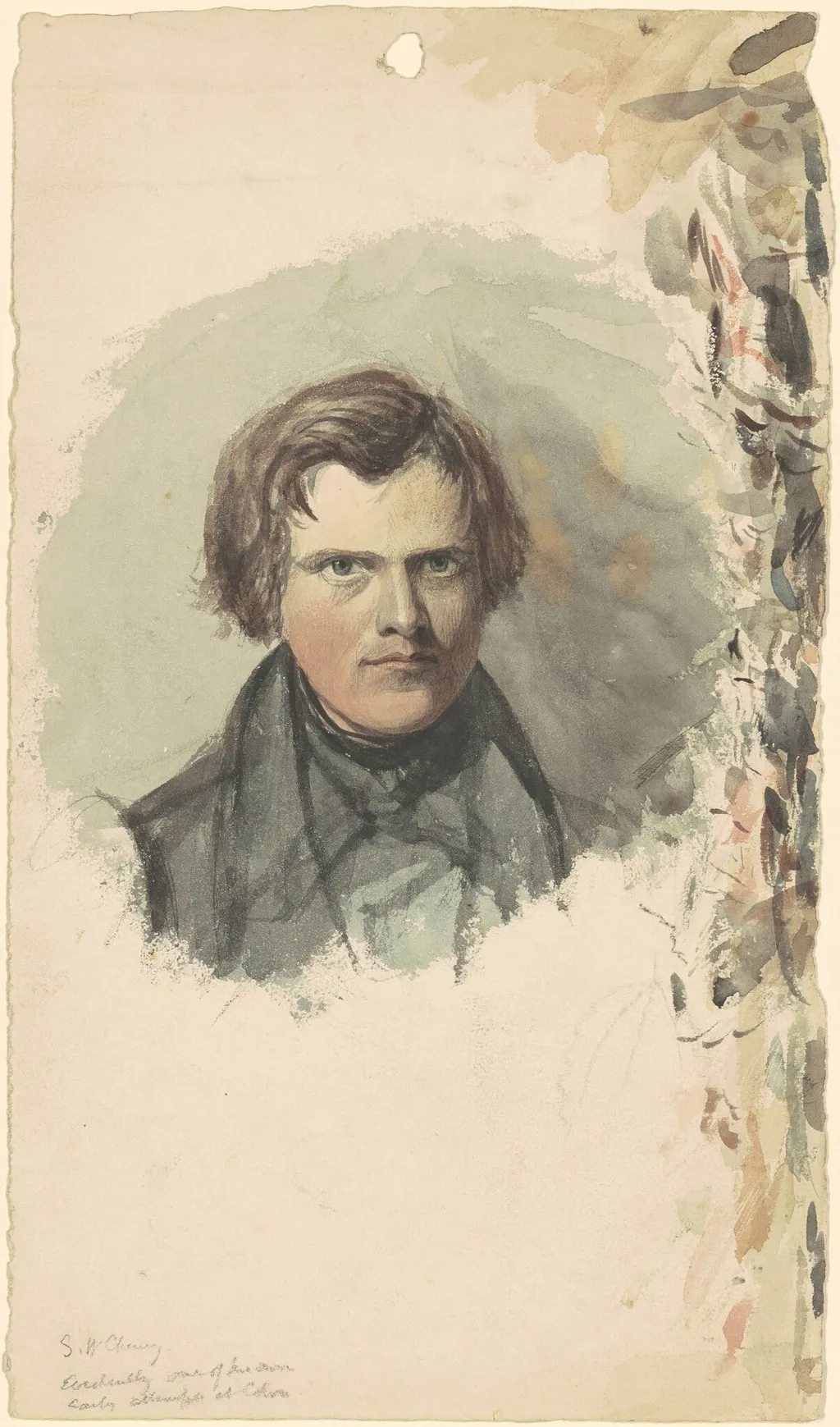
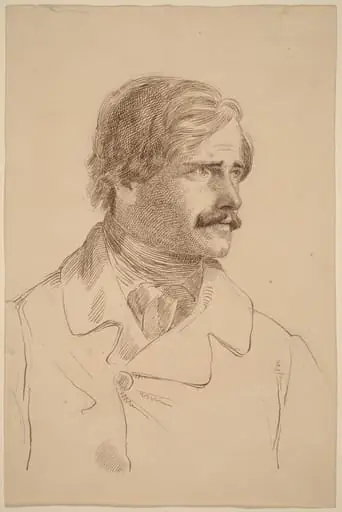
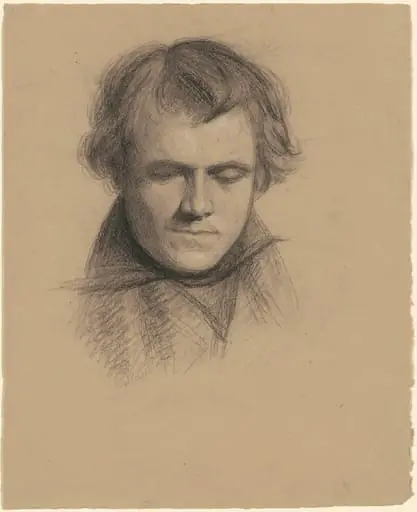
Self-Portrait is a graphite drawing by the Romanticist artist Seth Wells Cheney. It dates from 1834 and is held in the collection of the National Gallery of Art.
About this work
Overview
Executed on wove paper with irregular edges, the work combines delicate graphite underdrawing with translucent watercolor washes.
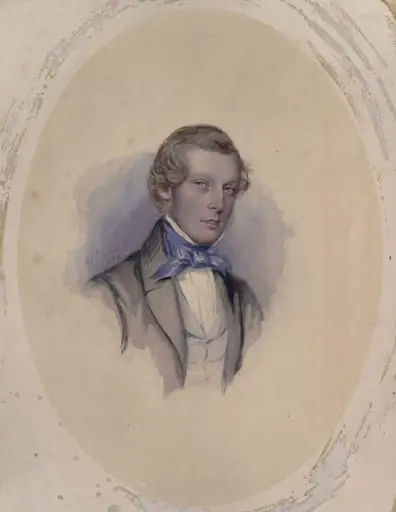
Seth Wells Cheney created this watercolor drawing around 1834, depicting himself in profile. Executed on wove paper with irregular edges, the work combines delicate graphite underdrawing with translucent watercolor washes. The composition focuses on the head and shoulders, emphasizing quiet introspection rather than theatrical presentation. The paper’s texture and unframed edges suggest an intimate, personal study rather than a formal commission.
Subject & Meaning
The portrait presents Cheney as a contemplative figure, dressed in a dark jacket with dark hair neatly combed. His gaze is directed slightly away from the viewer, conveying a sense of inward focus. There is no overt symbolism or adornment; the simplicity of the rendering suggests an emphasis on personal identity and artistic self-awareness, typical of early 19th-century American artists documenting their own presence.
Technique & Style
Cheney employed graphite to define the contours and structure of his face, then layered transparent watercolor to model form and suggest volume. The background, rendered in soft, muted tones, subtly separates the figure without distracting from it. The use of wove paper, a relatively new material at the time, allowed for fine detail and even washes, reflecting his technical familiarity with emerging artistic materials.
History & Provenance
The drawing dates from the early 1830s, a period when Cheney was establishing his career as a portraitist in New England. It likely served as a personal record or a study for larger works. While its early ownership is undocumented, it entered institutional collections in the 20th century, preserved as an example of American watercolor portraiture from the antebellum era.
Context
In the 1830s, American artists increasingly turned to watercolor for its portability and immediacy, especially for intimate portraits. Cheney, trained in Boston and later in Europe, was part of a generation blending European techniques with domestic subjects. This self-portrait reflects the growing cultural value placed on individual identity and the artist’s role within it.
Legacy
Cheney’s self-portrait remains a modest but significant artifact of early American art, illustrating the quiet dignity of the artist’s self-representation. Though not widely exhibited, it contributes to understanding how 19th-century artists used drawing to explore personal and professional identity outside the constraints of formal portraiture.
Artist & collection


![Self-Portrait [recto], by Seth Wells Cheney](https://artifactworldgallery.com/img/seth-wells-cheney--self-portrait-recto--f24f5e103b321eb5-w320.webp)
![Young Woman, Florence [recto], by Seth Wells Cheney](https://artifactworldgallery.com/img/seth-wells-cheney--young-woman-florence-recto--05fb201b0cc35006-w320.webp)
![Two Women [recto], by Seth Wells Cheney](https://artifactworldgallery.com/img/seth-wells-cheney--two-women-recto--7bf98ab7c247bdd5-w320.webp)