Artwork
Untitled
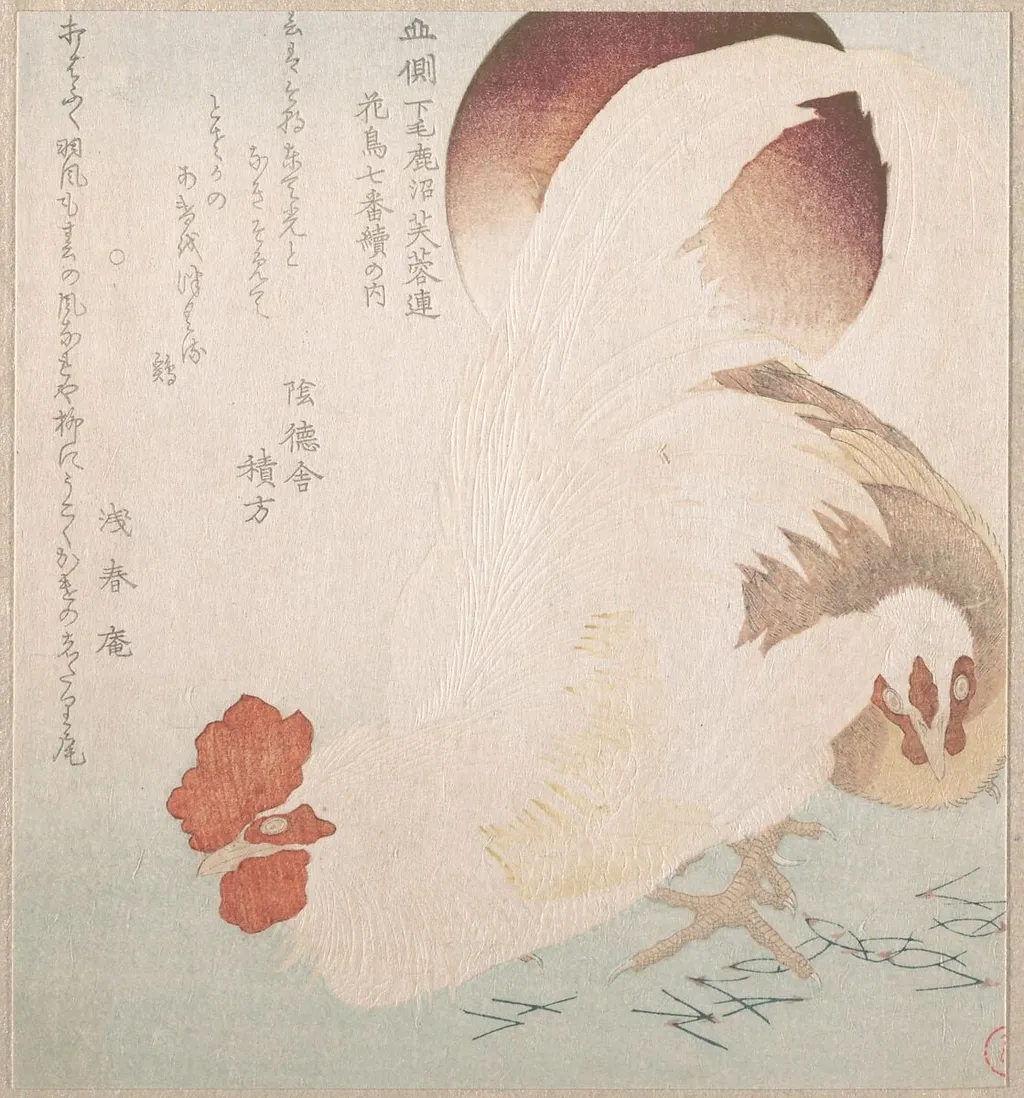
Untitled is an ink print by the Romanticist artist Totoya Hokkei. It dates from 1800 and is held in the collection of the Metropolitan Museum of Art.
About this work
Overview
This woodblock print, part of a surimono album, dates to around 1800 and is attributed to Totoya Hokkei. Executed in ink and color on paper, it belongs to a private, elite genre of Japanese prints often commissioned for special occasions. The work is currently held in the collection of The Metropolitan Museum of Art, where it is preserved as an example of early 19th-century Japanese printmaking.
Subject & Meaning
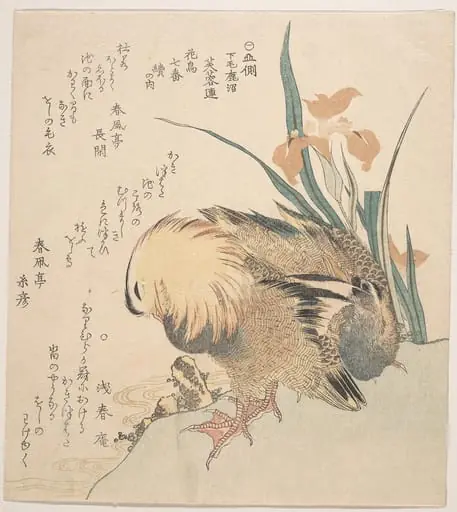
The image depicts a rooster perched on a rock beside water, its posture relaxed and alert. Roosters in Japanese art often symbolize vigilance, the dawn, or seasonal change. The floating red leaf and muted sky suggest autumn, reinforcing themes of transience. The quiet, unposed nature of the bird invites contemplation rather than narrative, aligning with the introspective tone common in surimono.
Technique & Style
The print’s restrained palette and lack of dramatic action reflect the refined aesthetic of surimono, prioritizing harmony over spectacle.
Hokkei employed fine, delicate lines and subtle gradations of color to render the rooster’s feathers, contrasting soft textures with bold red accents on the comb and tail. The background features minimal detail—a single leaf, a pale wash of sky—creating spatial depth without clutter. The print’s restrained palette and lack of dramatic action reflect the refined aesthetic of surimono, prioritizing harmony over spectacle.
History & Provenance
As a surimono, this print was likely produced in small quantities for a specialized audience, possibly as a New Year’s or poetic gift. It entered The Metropolitan Museum of Art’s collection through documented acquisitions of Japanese prints in the early 20th century. Its survival as part of an intact album suggests careful preservation by its original owners, a rarity given the fragile nature of such works.
Context
Surimono were luxury prints, often commissioned by poetry circles or wealthy patrons, combining visual art with literary themes. Unlike mass-produced ukiyo-e, they emphasized artistic experimentation and personal expression. Hokkei, trained in the Kano school, brought classical painting sensibilities to printmaking, blending naturalism with poetic restraint in a style that appealed to educated elites.
Legacy
Hokkei’s work, including this print, contributed to the evolution of Japanese printmaking by bridging painterly traditions with the woodblock medium. While not widely known outside specialist circles, his quiet, observational style influenced later artists interested in nature and subtlety. This piece remains a quiet testament to the sophistication of private print culture in Edo-period Japan.
Artist & collection
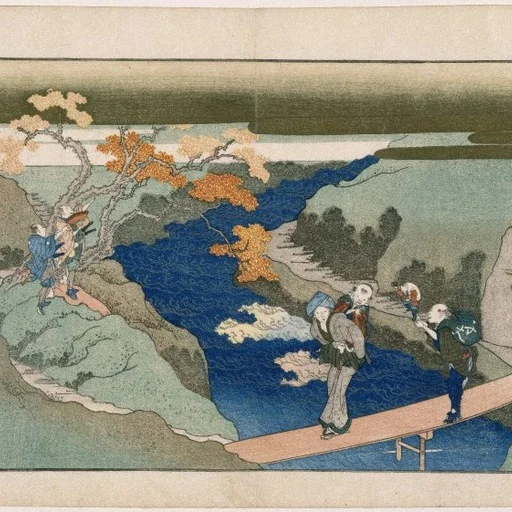

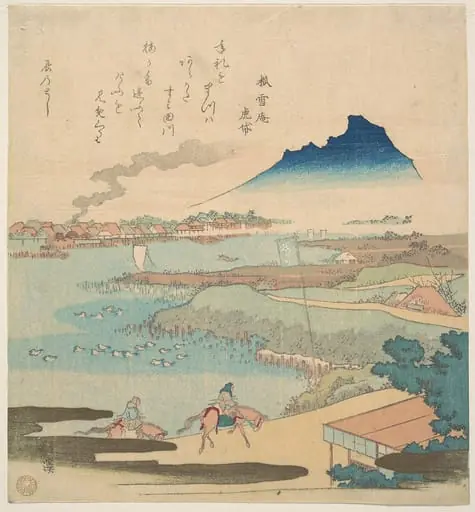 Sumidagawa|Sumida River
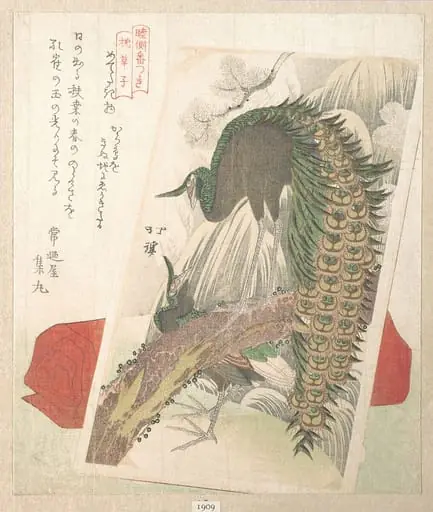 松・滝に孔雀図と緋毛氈|Painting of Peacocks, Pines, a Waterfall, and a Roll of Red Fabric
 Untitled
 Untitled
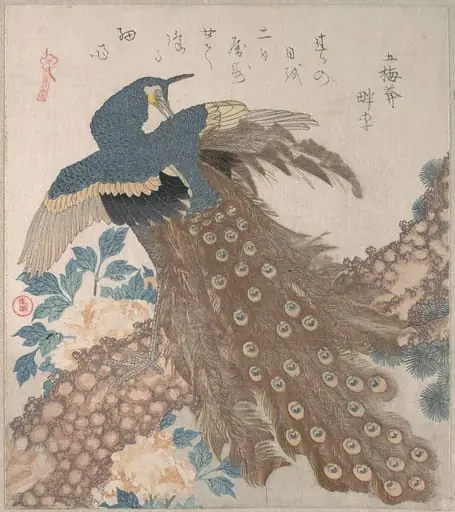 「三ひらの内」松・牡丹に孔雀|Peacock on Pine Tree and Peonies, from the series Three Sheets (Mihira no uchi)
 Untitled
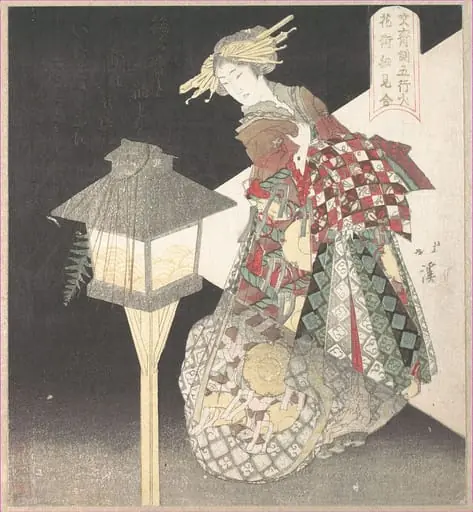 「文齊側五行火 花街細見合」|Courtesan by a Lantern, “Fire,” from the series Five Elements for the Bunsai Poetry Group, a Guide to the Yoshiwara Pleasure Quarters
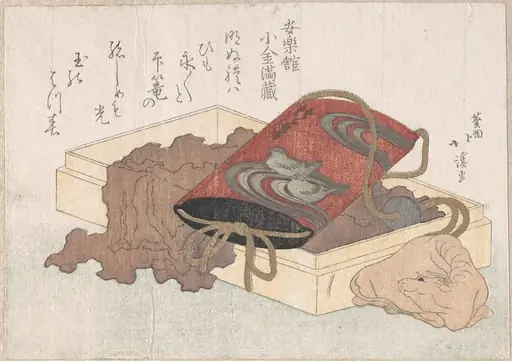 印籠と牛根付『春雨集』 摺物帖|Lacquer Inrō with Waterbirds and Ox-shaped Netsuke in a BoxFrom the Spring Rain Collection (Harusame shū), vol. 3
 Untitled
 Untitled
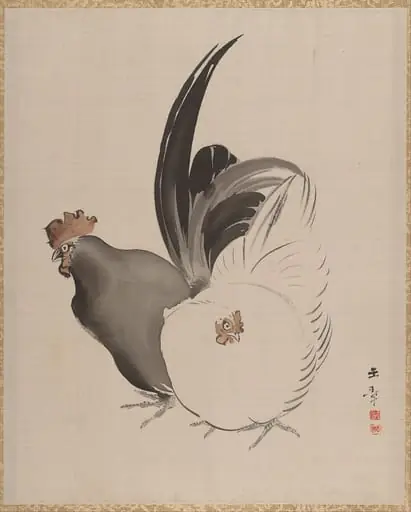 Untitled
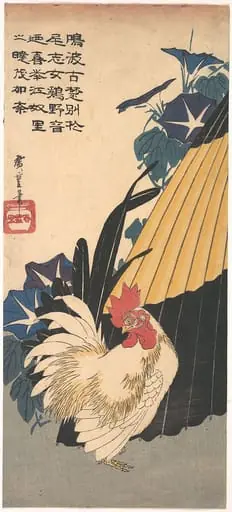 歌川広重画 朝顔に鶏と傘|Rooster, Umbrella, and Morning Glories
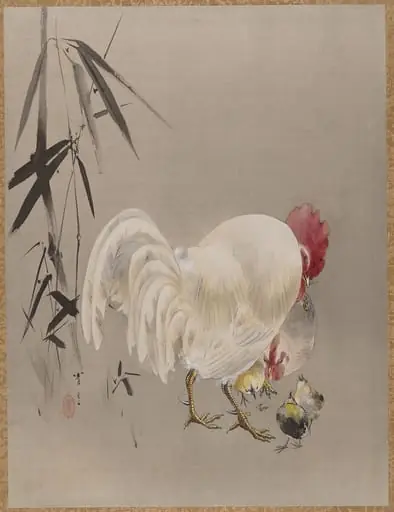 Untitled
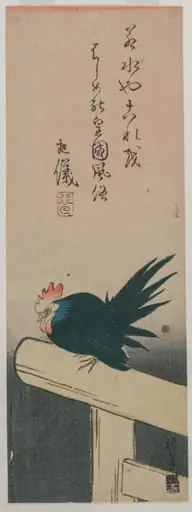 Green Rooster Perched on Torii (Shrine Gate)
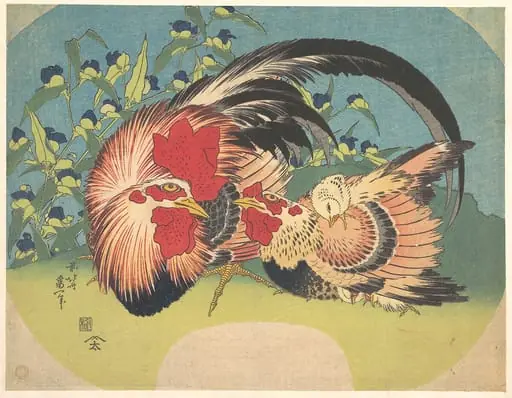 露草に鶏と雛|Rooster, Hen and Chicken with Spiderwort
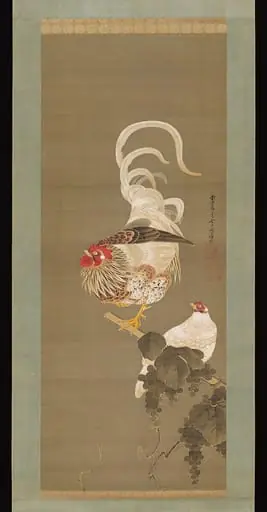 伊藤若沖筆 葡萄双鶏図|Hen and Rooster with Grapevine
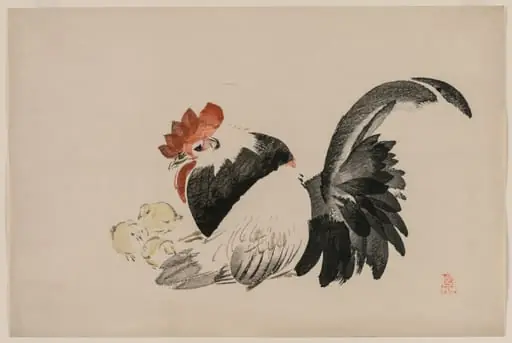 Rooster, Hen, and Chicks
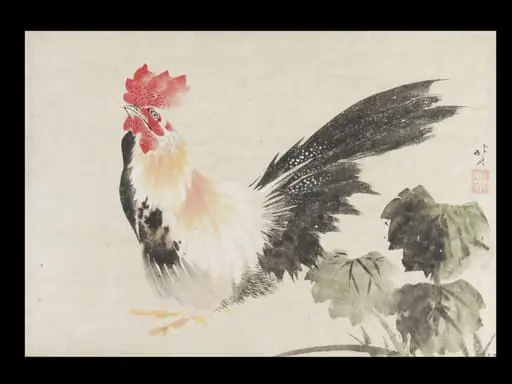 Rooster
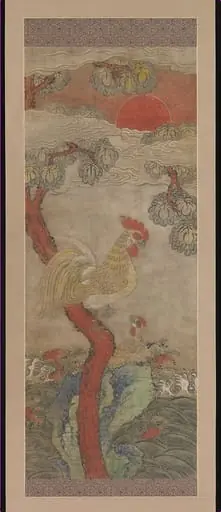 작자미상 화조도 조선|作者未詳 花鳥圖 朝鮮|Golden Rooster and Hen
 Untitled