Artwork
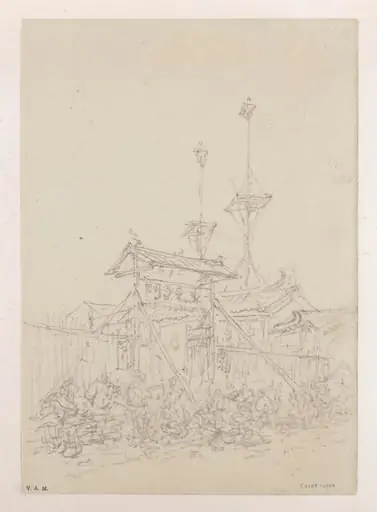
The gateway pavilion at the A-Ma temple, Macau, its guardian lions, and a cat
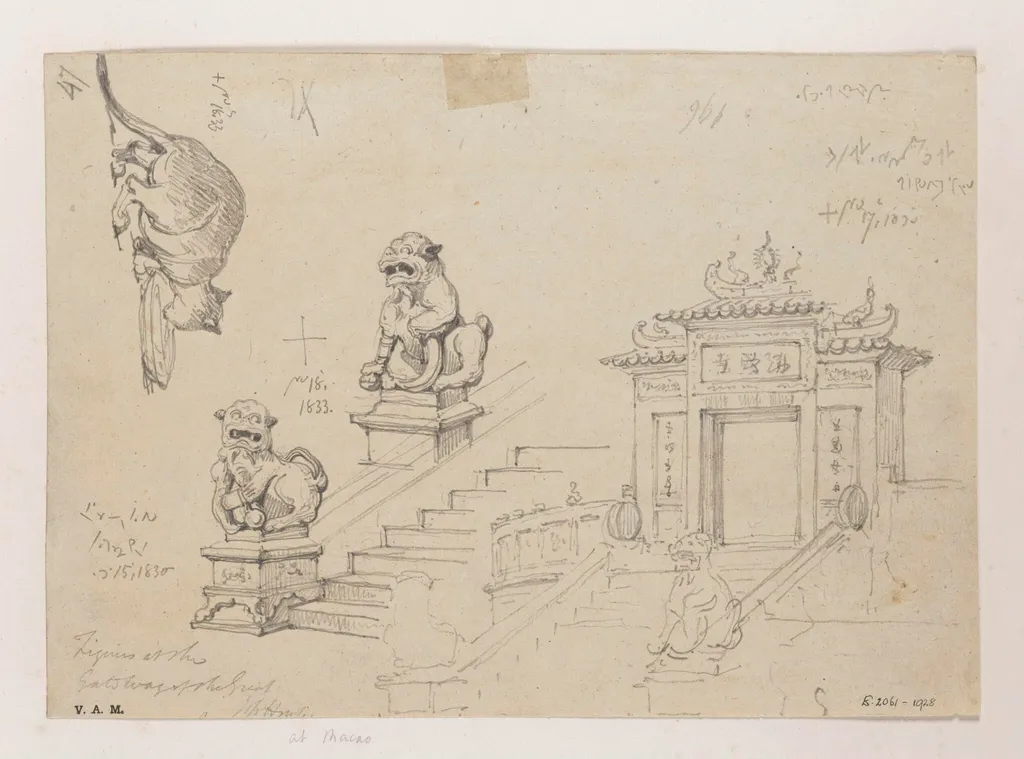
The gateway pavilion at the A-Ma temple, Macau, its guardian lions, and a cat is a drawing by the Romanticist artist George Chinnery. It dates from 10 and is held in the collection of the Victoria and Albert Museum.
About this work
This drawing shows the A-Ma temple gate in Macau. Two stone lions guard the stairs. A small cat sits nearby, watching.
Chinnery visited Macau in 1833. He made quick sketches of what he saw. The lions have rough textures from cross-hatching lines.
Look at the lions’ manes. They show how stone wears over time. Try the same with Chinnery, George
Overview
This drawing by George Chinnery captures the gateway pavilion of the A-Ma Temple in Macau, observed during his visit in 1833.
This drawing by George Chinnery captures the gateway pavilion of the A-Ma Temple in Macau, observed during his visit in 1833. It includes detailed studies of the two stone guardian lions flanking the entrance and a small cat resting nearby. The reverse side features sketches of Tanka boats, repurposed as homes, along with figures and a dog, reflecting Chinnery’s habit of recording everyday scenes with immediacy and attention to detail.
Subject & Meaning
The gateway lions, traditional symbols of protection in Chinese temple architecture, are rendered with emphasis on their weathered surfaces, suggesting age and endurance. The presence of the cat, unobtrusive yet observant, introduces a quiet, domestic counterpoint to the monumental stone figures. Together, they convey a sense of lived space—sacred architecture intertwined with the quiet rhythms of daily life around it.
Technique & Style
Chinnery employed fine cross-hatching to suggest the rough, eroded textures of the stone lions, particularly in their manes and bases. The lines are deliberate yet fluid, capturing both form and materiality without idealization. The cat and background elements are sketched with lighter, quicker strokes, creating a visual hierarchy that guides the eye from the monumental to the intimate, reflecting the spontaneity of on-site observation.
History & Provenance
Created during Chinnery’s time in Macau in 1833, the drawing is part of a series of rapid field sketches made as he traveled through southern China. These works were not intended for public display but served as personal records. The inclusion of both temple architecture and vernacular scenes like the Tanka boats suggests a documentary impulse, preserving details of a region undergoing cultural and economic change.
Context
In the early 1830s, Macau was a Portuguese trading post with deep Chinese cultural roots. The A-Ma Temple, dedicated to the sea goddess Mazu, was a focal point for local devotion and foreign curiosity. Chinnery’s sketches reflect this intersection—documenting religious architecture while also noting the lives of marginalized communities, such as the Tanka boat dwellers, whose existence was often overlooked by official records.
Legacy
Chinnery’s drawings offer a rare visual archive of Macau’s early 19th-century landscape, blending architectural observation with ethnographic detail. Unlike formal commissions, these sketches preserve the unpolished authenticity of everyday moments. Their value lies not in grandeur but in their quiet accumulation of detail, providing insight into a moment of cultural transition captured through the eye of a perceptive outsider.
Artist & collection
Artist
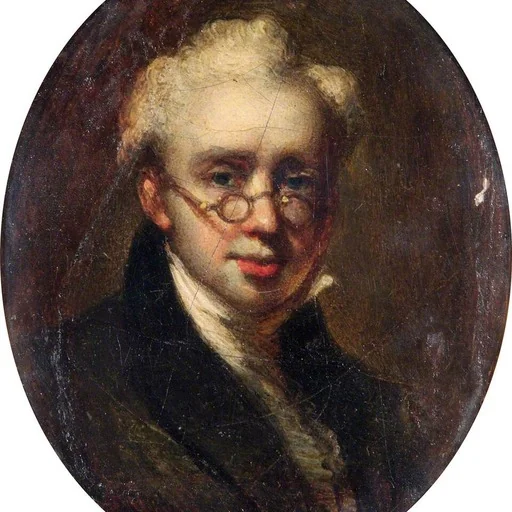
George Chinnery (Chinese: 錢納利; 5 January 1774 – 30 May 1852) was an English painter who spent most of his life in Asia, especially India and southern China.


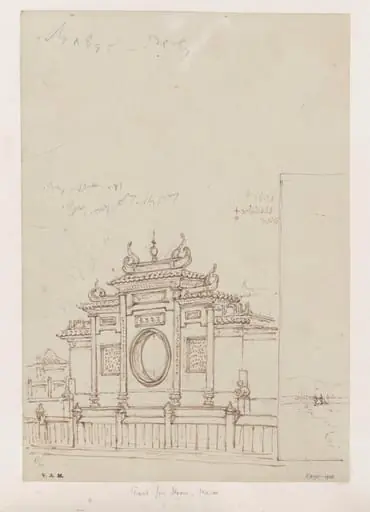 The main entrance to the A-Ma Temple, Macau
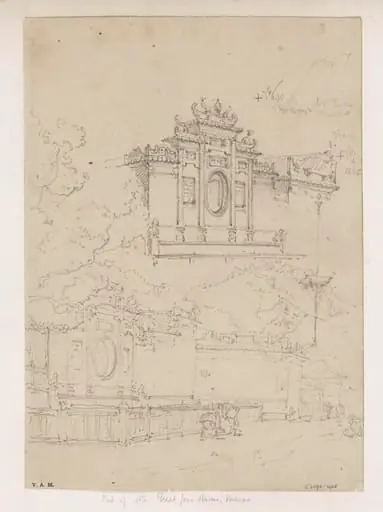 Drawings of the A-Ma temple, Macau
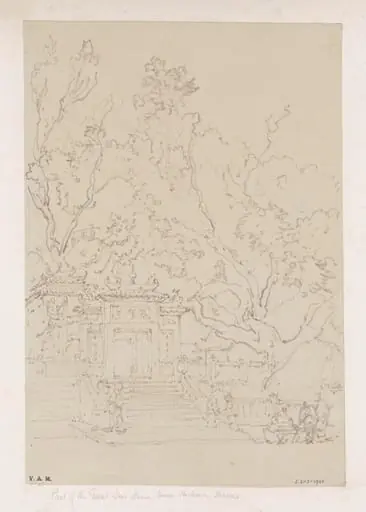 The A-Ma temple, Macau
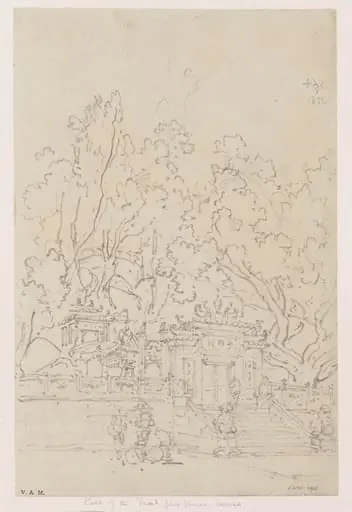 Part of the A-Ma Temple, Macau
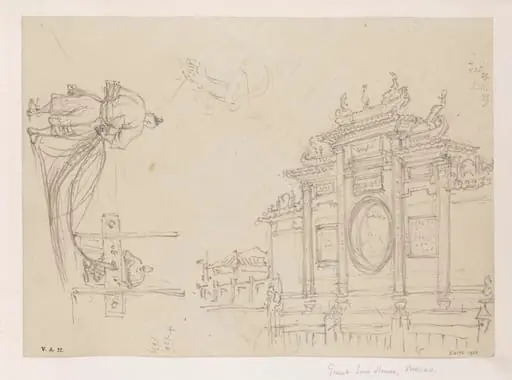 The main entrance to the A-Ma Temple, Macau
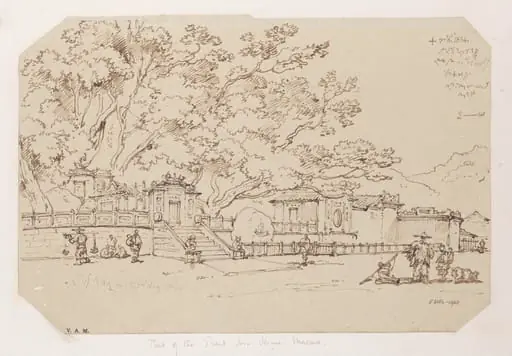 The A-Ma Temple, Macau
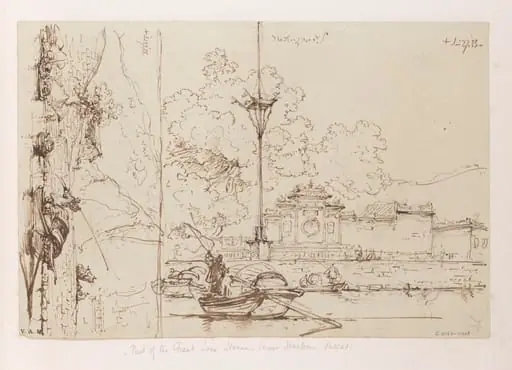 The A-Ma temple, Macau, and the nearby rocks, both seen from the bay
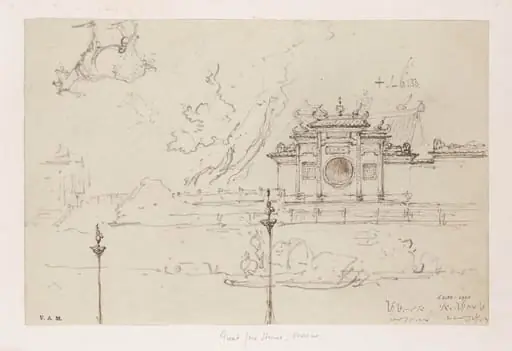 The Zhengjiao Chanlin Buddhist Temple, a part of the A-Ma Temple in Macau
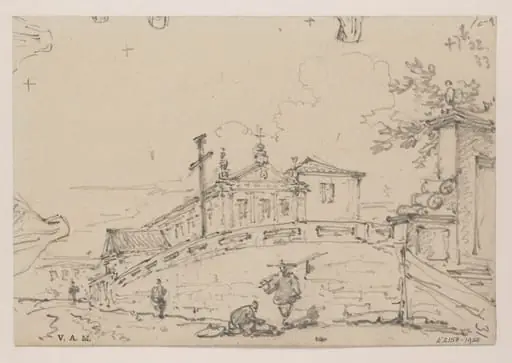 A church in Macau
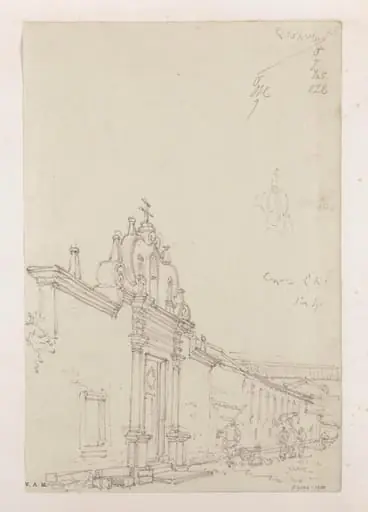 The gateway to the convent of Santa Clara, Macau
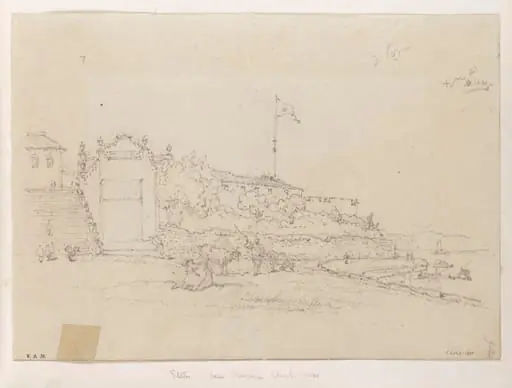 The church of S. Francisco and the adjacent fort, Macau
 Market stalls by an entrance to a Chinese temple, Macau