Artwork
Recipientul din lut are pântecul extins în zona mediană, cu gât îngust, cilindric. Acesta este prevăzut cu o toartă lată ce pornește din gât și se unește în zona diametrului maxim al corpului. Obiectul este angobat până aproape de fundul vasului, acesta rămânând cărămiziu. Ulciorul este decorat cu motive geometrice și vegetale, pictate cu smalț: zona mediană a vasului este marcată prin motivul valului punctat, încadrat de două linii circulare, verzi. Între acesta și baza gâtului, pe verticală, a fost pictat motivul braduțului, flancat de două spirale punctate. Pe fundul vasului, întâlnim o inscripție: ’’D. Schipou, C. Vladesti. 1980’’. Cromatică: fond: alb; cărămiziu; motive: maro; verde.
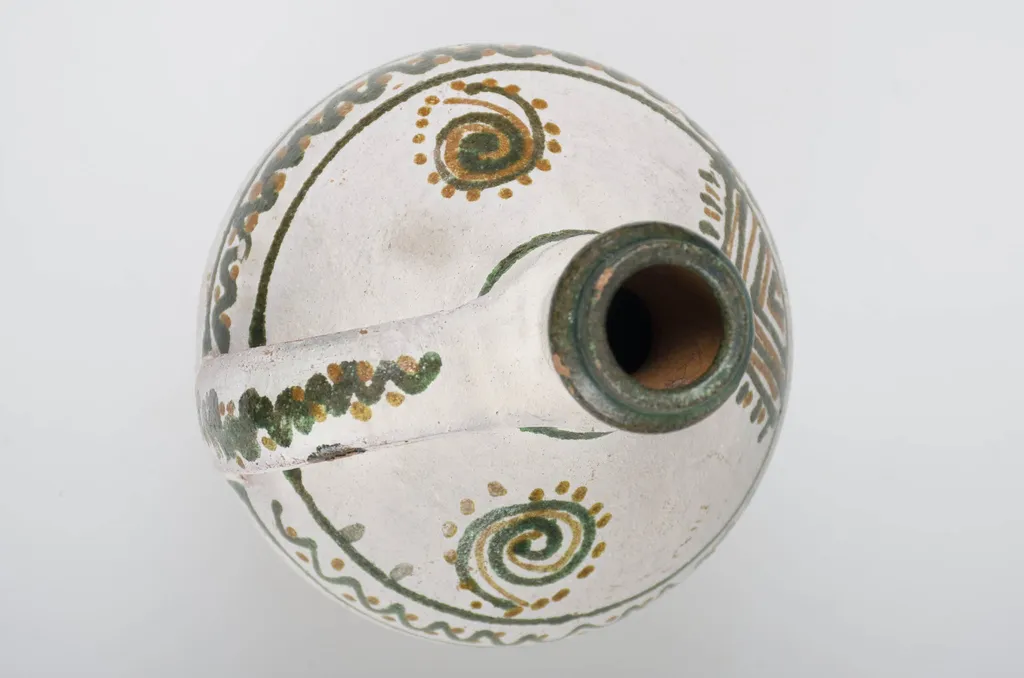
Recipientul din lut are pântecul extins în zona mediană, cu gât îngust, cilindric. Acesta este prevăzut cu o toartă lată ce pornește din gât și se unește în zona diametrului maxim al corpului. Obiectul este angobat până aproape de fundul vasului, acesta rămânând cărămiziu. Ulciorul este decorat cu motive geometrice și vegetale, pictate cu smalț: zona mediană a vasului este marcată prin motivul valului punctat, încadrat de două linii circulare, verzi. Între acesta și baza gâtului, pe verticală, a fost pictat motivul braduțului, flancat de două spirale punctate. Pe fundul vasului, întâlnim o inscripție: ’’D. Schipou, C. Vladesti. 1980’’. Cromatică: fond: alb; cărămiziu; motive: maro; verde. is a photography by Șchiopu Dumitru. It is held in the collection of the ASTRA National Museum Complex. A ceramic vessel with a narrow cylindrical neck and a broad, flaring handle that connects to the widest part of the body.
About this work
Painted on it are simple shapes—spirals, dots, and wavy lines—mostly in green and brown.
This is a round, clay pot with a narrow neck and a wide handle. The surface is mostly white, but the bottom is a brick-red color. Painted on it are simple shapes—spirals, dots, and wavy lines—mostly in green and brown.
The pot’s design looks handmade, with rough edges and uneven brushstrokes. The name "D. Schipou" is written on the bottom, along with the year 1980.
Look up artist: Șchiopu Dumitru next to see more of his work.
Overview
A ceramic vessel with a narrow cylindrical neck and a broad, flaring handle that connects to the widest part of the body. The surface is coated in a white slip, except for the base, which retains the natural reddish-brown hue of the clay. The form is simple and functional, with no glaze over the entire surface, suggesting utilitarian origins. The handle’s design provides both structural support and ergonomic use.
Subject & Meaning
Decorative motifs include wavy lines marked with dots, stylized fir-tree patterns, and paired spirals, all arranged in horizontal and vertical bands. These geometric and vegetal elements reflect regional folk traditions, possibly symbolizing natural cycles or protective signs. The inscribed name and date indicate personal authorship, positioning the object as a signed work rather than anonymous craft, bridging folk practice with individual expression.
Technique & Style
The vessel was hand-thrown and slip-coated, with decoration applied in matte pigments—brown and green—over the dried surface. Brushwork is uneven, with visible strokes and irregular dotting, suggesting hand-painted execution without molds or stencils. The lack of glaze on the base and the rough texture of the clay indicate a low-fired, non-industrial process, consistent with rural ceramic practices of the late 20th century.
History & Provenance
Marked with the name D. Schipou and the year 1980, the piece is attributed to Dumitru Șchiopu, a Romanian ceramicist active in the late 20th century. It originates from Călărași, a region with a tradition of utilitarian pottery. The inscription confirms local production and personal authorship, situating the object within a network of regional artisans preserving folk techniques during a period of state-led cultural standardization.
Context
Created in 1980, the vessel emerged during Romania’s communist era, when folk art was both promoted and controlled by state institutions. While many crafts were standardized for mass display, this piece retains individuality in form and decoration, suggesting private or semi-official production. Its motifs echo older rural designs, yet the signed attribution marks a shift toward recognizing the artisan as an individual creator.
Legacy
The object stands as a modest example of late 20th-century Romanian ceramic practice, where traditional forms persisted alongside emerging personal expression. Dumitru Șchiopu’s signature on the base signals a quiet resistance to anonymous production, preserving a link between communal heritage and individual identity. Such works contribute to the documentation of regional craft under political constraints, offering insight into cultural continuity beyond official narratives.
Artist & collection
Artist
Șchiopu Dumitru made ceramics and prints. Check out "Recipient ceramic" or "Disc concav smălțuit" to see their style. They used simple shapes and bold colors, like red and green. Look at "Vas ceramic" to see more of…

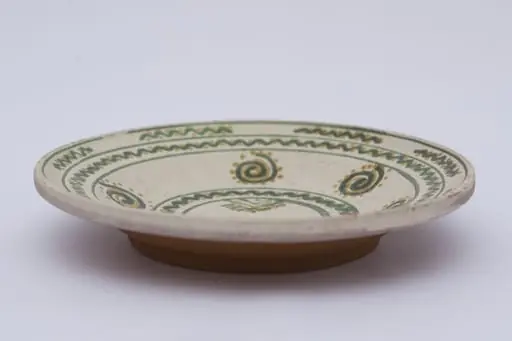 Vas ceramic de formă discoidală pe bază puțin înălțată. Fața farfuriei a fost introdusă în angobă albă, decorația a fost făcută cu pensula. Pe fundul vasului sunt două cercuri concentrice: în primul sunt doi brăduți, iar în al doilea valul punctat. Pe pereți sunt șase spirale punctate. Marginea vasului a fost împărțită în două registre, primul cu val punctat, în al doilea sunt șapte valuri întrerupte. La posterior, pe fund, semătura ”D Șchiopu ''. Pentru atârnare baza este perforată. Cromatică: fond: alb; motive; verde; galben.
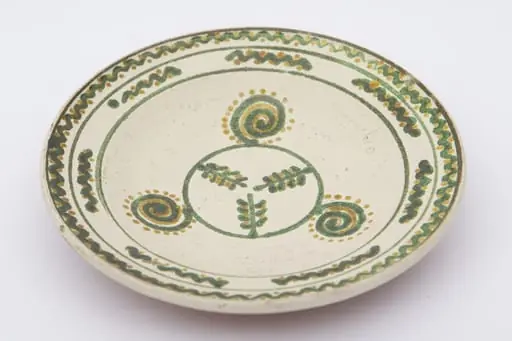 Vas ceramic de formă rotundă și profil tronconic aplatizat cu pereții larg evazați. Fața farfuriei a fost introdusă în angobă albă, decorația a fost făcută cu pensula. Pe fundul vasului sunt trei crengi de brad circumscrise. Pe pereți au fost pictate trei spirale punctate. Buza a fost împărțită în două registre: primul cu șapte valuri întrerupte; al doilea val continu, punctat. La posterior, baza este perforată pentru atârnare și incizată inscripția ,,D. Șchiopu''. Cromatica: fond: motive: verde, galben.
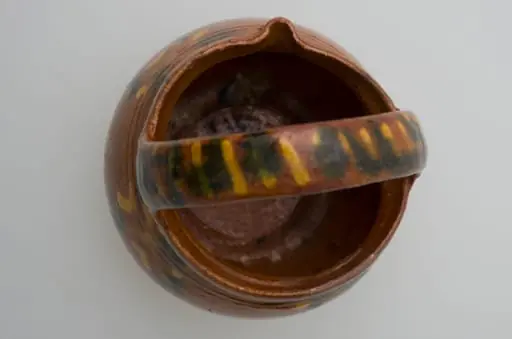 Vas de mici dimensiuni sub forma de bijou; pântecos cu gâtul scurt și gros, gură răsfrântă și cioc. Smălțuit în interior și la exterior. În partea superioară se află două linii incizate. Pe corp avem motive florale stilizate, iar pe mănușă decor geometrice: liniar și punctiform. Diametral, peste gură aven o mânușă aproximativ la fel de înaltă ca vasul. Cromatică: fond: cărămiziu; motive: galben, verde.
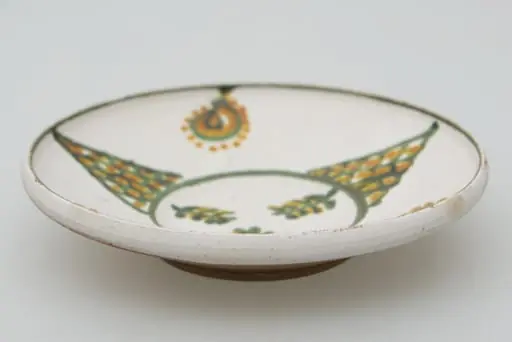 Disc concav smălțuit cu smalț incolor; decor amplasat pe toată suprafața; ordonat în registre; organizare radială; motive geometrice; triunghiuri; cerc; spirale; puncte. Cromatică: fond: alb; motive: verde; cărămiziu.
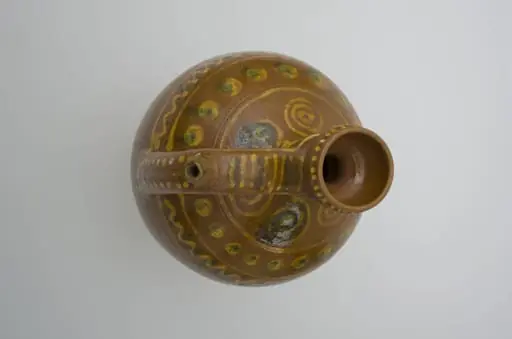 Ulcior de formă sferică cu gât înalt cu guler la mijloc; gura înaltă și largă, în formă de pâlnie tronconică. Buză rotundă și îngustă retrasă spre interior. Prezintă toartă goală aplatizată cu țâța ușor înălțată oblic ce pornește din gulerul gâtului și intră în pântece la diametrul maxim, într-un arc oval. Decorul este format din motive geometrice: brâu median de linii pararele și zig-zag; liniuțe orizontale și două șiruri de punctmotive florale; sub gât avem spirale. Smălțuit cu smalț incolor. Cromatică: fond: maro cărămiziu; motive: galben; verde.
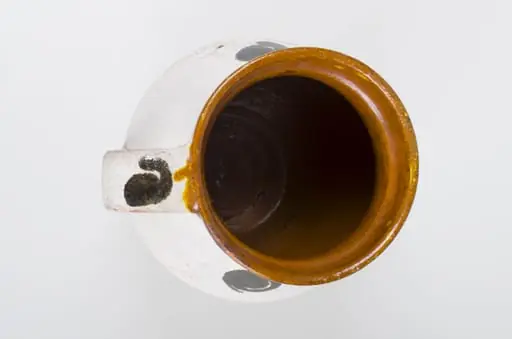 Vasul este confecționat din lut și este prevăzut cu toartă. Acesta este smălțuit în interior (maro), iar exteriorul este 3/4 angobat. Pe pântecul vasului au fost pictate cu pensula, cu smalț verde trei spirale, una dintre acestea aflându-se pe toartă. Cromatică: alb; maro; verde.
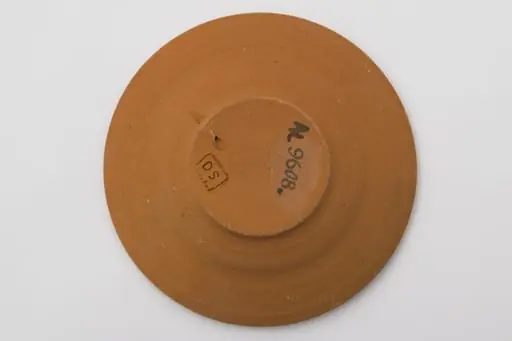 Vas ceramic cu fundul plat puțin adâncit și marginile evazate, puțin ridicate. Ornamentată cu pensula cu angoba albă. Fundul este marcat printr-o spirală din care ies alte șase spirale mici dispuse pe circumferința exterioară. Pe marginea vasului două benzi, una cu o linie întreruptă, a doua cu șase valuri întrerupte. La posterior ștanțat ”DS” încadrat într-un dreptunghi. Cromatică: fond: cărămiziu; motive: alb.
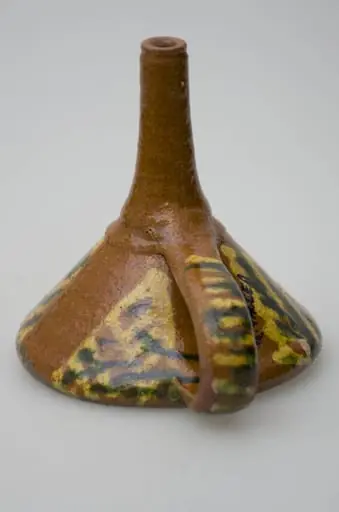 Pâlnie ceramică smălțuită, de formă tronconică, cu gura astupată cu o suprafață de lut găurită, formând o sită. La cealaltă latură a conului pâlnia este continuată printr-un tub cilindric, care se folosește la scurgerea lichidelor. Piesa de uz casnic este dotată cu un mâner care pleacă de la buză până la tubul cilindric de scurgere. Pe suprafața obiectului apar motive geometrice realizate cu pensula. Cromatică: fond: maro; motive: galben; verde.
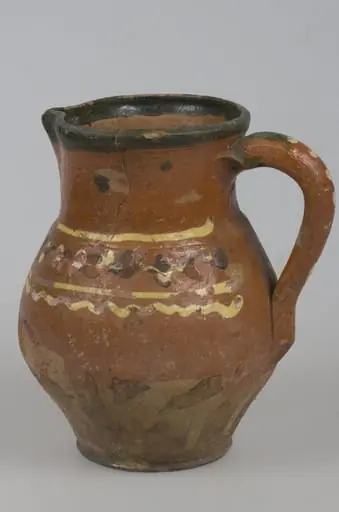 Vas de lut de mici dimensiuni, bombat, cu gât lung și puțin evazat, cu gură largă și cioc de scurgere. Toarta pornește de sub gură și coboară până în zona diametrului maxim al vasului. Este smălțuit în interior și exterior. Decorul dispus pe umărul vasului este format din: motive florale: o cunună din frunze încadrată de motive geometrice: o linie circulară în partea superioară și o linie circulară și una în val în partea inferioară. Buza vasului este vopsită în interior și exterior. Toarta este decorată cu puncte de culoare albă. Cromatică: fond: cărămiziu; motive: alb; verde; negru.
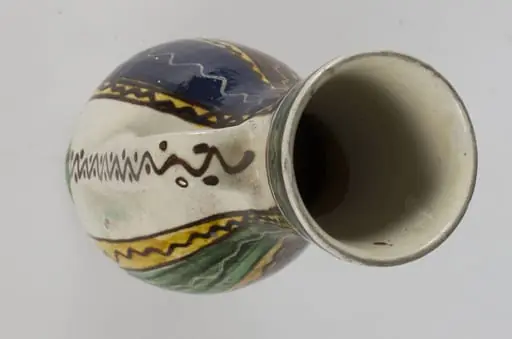 Vas piriform cu gât foarte înalt și gura largă și evazată, cu o toartă care pleacă din zona gâtului și se unește cu corpul deasupra diametrului maxim. Smălțuit în interior și exterior. Decorul este realizat din două registre orizontale ce încadrează unul vertical. Registrele orizontale prezintă un decor geometric format din două linii concentrice ce încadrează o linie în val toată de culoare maro pe un fond verde. Registrul vertical este împărțit în mai multe benzi cu fond verde, galben, maro, albastru alternante separate de linii drepte de culoare maro. Pe fondurile de culoare maro, verde, albastru sunt trasate linii în val de culoare albă dispuse vertical, iar pe cele de culoare galbenă linii în val de culoare maro. În dreptul torții corpul vasului nu este decorat. Toarta este decorată cu o linie în val dispusă vertical încadrată de două șiruri de puncte. În partea superioară și inferioară registrul vertical este încadrat de câte o linie maro. Baza vasului este pictată cu verde și mărginită în partea superioară tot cu o linie maro. Cromatică: fond: alb: motive: verde; maron; albastru; galben; alb.
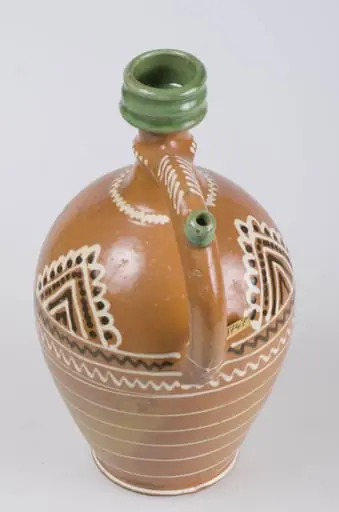 Vasul este zvelt și înalt, cu baza îngustă ce se lărgește spre pântecul vasului situat în partea de sus a lui, gâtul subțire, buza vasului largă, în trei trepte suprapuse, smălțuită verde. Până spre pântecul vasului, de la bază, opt linii circulare, paralele (în ultimele două a fost pictat motivul valului). Pe pântecul vasului decor geometric în alb și maro închis. Gâtul vasului marcat de un zig-zag alb. Toarta este decorată cu puncte și linii albe. Cromatică: maro; verde; alb.
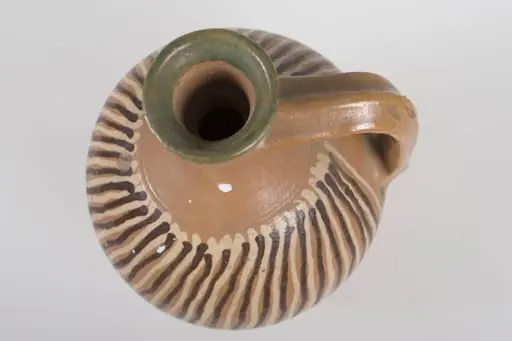 Recipient din lut de formă ovoidală cu gâtul scurt și buza avazată. Pe toată suprafața, pornind de pe umărul vasului, alternanțe de linii pictate albe și maro închis, dispuse vertical. Buza și partea superioară a gâtului sunt smălțuite în verde. Cromatică: fond: cărămiziu; motive: verde; alb; maro închis.
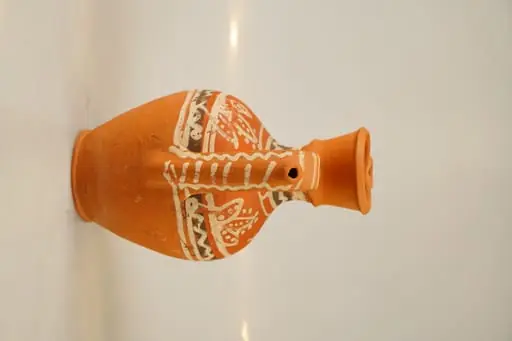 Vas mic cu corp tronconic bombat în jumătatea superioară, cu gât îngust subțire, gură cu ciur și cu buză bilobată; este prevăzut cu o toartă laterală de prindere, cu țâță, cu puncte de inserție la gât și în zona diametrului maxim al corpului. Decorul este realizat prin pictare cu pensula cu angobă albă și maro și se compune din motive geometrice și fitomorfe stilizate: două dungi de culoare maro, cu câte o linie albă ondulată pictată peste ele, dispuse circular, decorează gâtul vasului și corpul acestuia în zona diametrului maxim; linii circulare albe, neglijent realizate; trei grupuri de câte trei frunze cu contur alb, decorate cu puncte albe, dispuse în jumătatea superioară a corpului vasului, separate de câte un motiv format din două linii albe intersectate în formă de X, cu câte un punct alb între brațe. Toarta vasului este decorată cu două linii ondulate verticale și linii orizontale de culoare albă. Vasul nu este smălțuit.
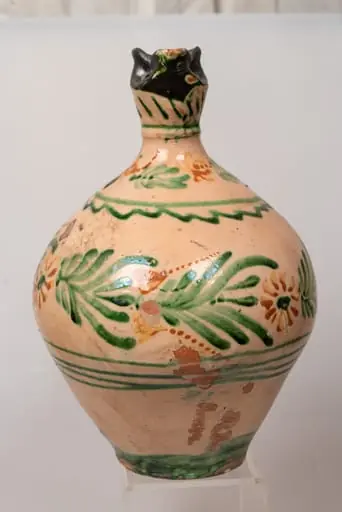 Piesă cu corp sfericl bombat, cu gât profilat, cu gât și gură îngustă, bilobată, cu cior. Din pântecul vasului pornește o toartă tubulară cu orificiu pronunțat pentru băut (cu țâță), care se unește cu vasul sub buza acestuia. Fața exterioară a ulciorului este angobată cu un strat de humă albă, peste care este pictat decorul, cu pensula și cu cornul, astfel: pe partea superioară a vasului, între două grupări de linii concentrice apare o bandă decorată cu motiv floral (o floare rotundă cu multe petale) alternând cu motivul fitomorf caracteristic centrului: frunze alungite, de culoare verde. Pe cant, delimitată de banda decorativă de pe burta vasului de către două linii concentrice, realizate drept și în valuri, este dispusă o bandă decorativă mai îngustă, cu motiv floral și motiv fitomorf delimitat de gât de un brâu colorat. Sub buza bilobată sunt realizate o serie de linii oblice paralele pictate, care continuă pe toată suprafața torții. Fundul vasului este marcat cu o bandă lată orizontală, pictată. Cromatica: alb, maro, verde. Vasul este acoperit cu un strat de smalț transparent.
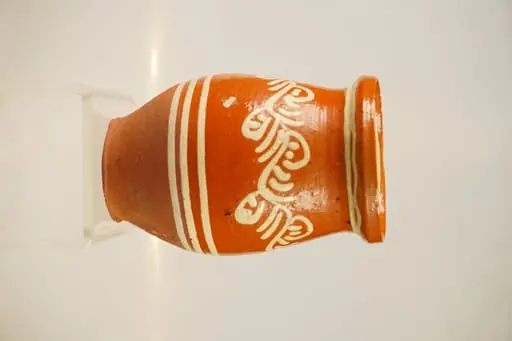 Vas cu corpul de formă bitronconică, ușor rotunjit în zona mediană, cu gât îngust, buză evazată și muchia buzei verticală; este prevăzut cu o toartă laterală de prindere, de formă aplatizată, cu puncte de inserție la buză și în zona mediană a piesei. Decorul monocromatic este realizat prin pictare cu cornul cu humă albă și se compune din motive geometrice (linii circulare paralele, de culoare albă: trei linii dispuse imediat sub toartă și două linii, neglijent realizate, plasate sub buză); motive vegetale geometrizate (un brâu dispus circular la baza gâtului, format din frunze și mici vrejuri pictate sub formă de ghirlandă continuă). Suprafața ornamentată a vasului este acoperită cu un strat de smalț transparent (baza vasului este nesmălțuită). Toarta vasului este decorată cu puncte alungite, realizate prin picurarea culorii. Cromatica: alb, pe fondul roșu al lutului ars.
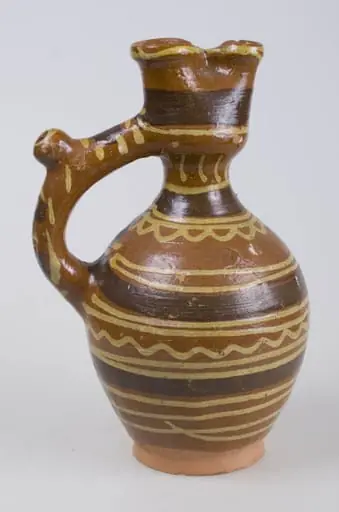 Recipientul este confecționat din lut, cu pântecul extins în zona mediană, cu gât îngust și gură bilobată. Acesta prezintă ciur la gură și în interior piatră sunătoare. Obiectul este prevăzut cu o toartă tubulară cu țâță pentru scurgerea lichidului, lipită de gât și de mijlocul diametrului maxim al corpului. Ulciorul este smălțuit până aproape de fundul vasului. Decorul este format din motive geometrice, pictate cu cornul, pe toată suprafața corpului, inclusiv pe mâner: linii circulare, linii vălurite, linii oblice dispuse vertical, semicercuri pe umeri. Cromatică: fond: cărămiziu; decor: galben; maro închis.
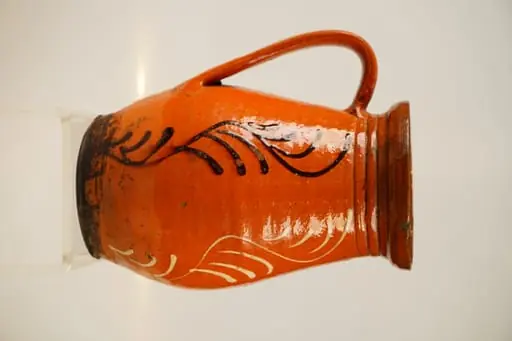 Vas cu corp bitronconic ușor rotunjit, gât scund, buză evazată cu muchia verticală; este prevăzut cu o toartă laterală de prindere, de formă aplatizată, cu puncte de inserție la gât și în zona diametrului maxim al corpului. Decorul este realizat prin pictare cu pensula și se compune din patru motive vegetale stilizate, aproximativ identice, două de culoare maro și două de culoare albă, pictate alternant și formate dintr-o linie verticală sub formă de S, ce are în onduleuri grupuri de câte trei linii curbe, sugerând niște frunze subțiri. Gâtul vasului este decorat cu trei linii circulare realizate prin incizare în pasta de lut. Suprafața vasului este acoperită cu un strat de smalț transparent.
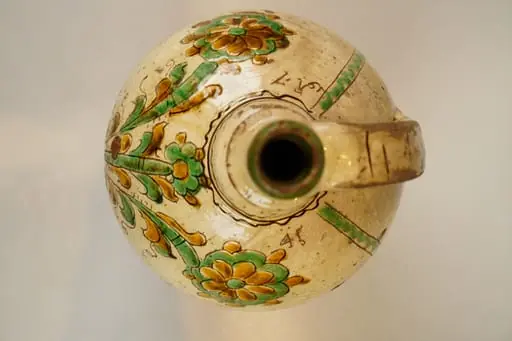 Ulcior cu corp sferic și gât înalt, profilat și cu buza invazată; este prevăzut cu o toartă laterală de prindere, de formă aplatizată, care se inserează începând din zona mediană a gâtului până la treimea superioară a corpului. Este acoperit pe suprafața exterioară cu un strat de angobă albă (exceptând baza vasului) peste care este realizat, prin sgrafitare în pasta de angobă și prin pictare cu pensula și cu cornul, decorul format din motive geometrice, florale și vegetale, dispuse astfel: partea frontală a corpului vasului (opusă torții) este decorată cu un motiv cu contur sgrafitat, reprezentând un buchet cu trei tulpini groase cu cinci flori (cele două flori de la bază posibil flori de lalea, cele trei din partea superioară având formă rotundă, cu petale ușor alungite sau rotunde), cu vrejuri și frunze, realizate în culorile galben-ocru și verde. Gura vasului este marcată cu culoare verde iar partea inferioară a corpului și baza gâtului sunt decorate cu linii circulare simple și ondulate, de culoare maro. Toarta vasului conține cîteva linii subțiri maro orizontale, iar de o parte și alta a acesteia se găsește câte o linie ondulată verticală de culoare verde, între două linii sgrafitate. Linii circulare realizate prin incizare decorează baza gâtului și partea superioară a acestuia, sub dunga verde. De o parte și de alta a decorului central, în partea superioară a corpului, se găsește înscris prin sgrafitare anul realizării piesei, 1745. Suprafața ornamentată a vasului este acoperită cu un strat de smalț transparent. Cromatica: alb, verde, galben ocru, maro.
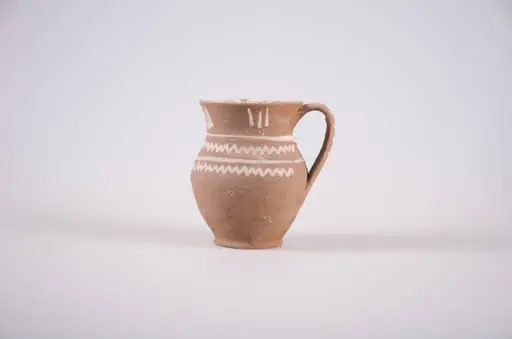 Recipient bitronconic cu gura largă. Are o toartă laterală care pleacă din buză până la diametrul maxim al vasului. Decor cu motive geometrice pe partea superioară a vasului și pe toartă: linii paralele, doua cercuri, linii ondulate. Cromatică: fond: cărămiziu; motive din angobă albă. Vasul este nesmălțuit.