Artwork
Lovers and beloveds: A composite of scenes from Persian, Urdu, and Sanskrit literature
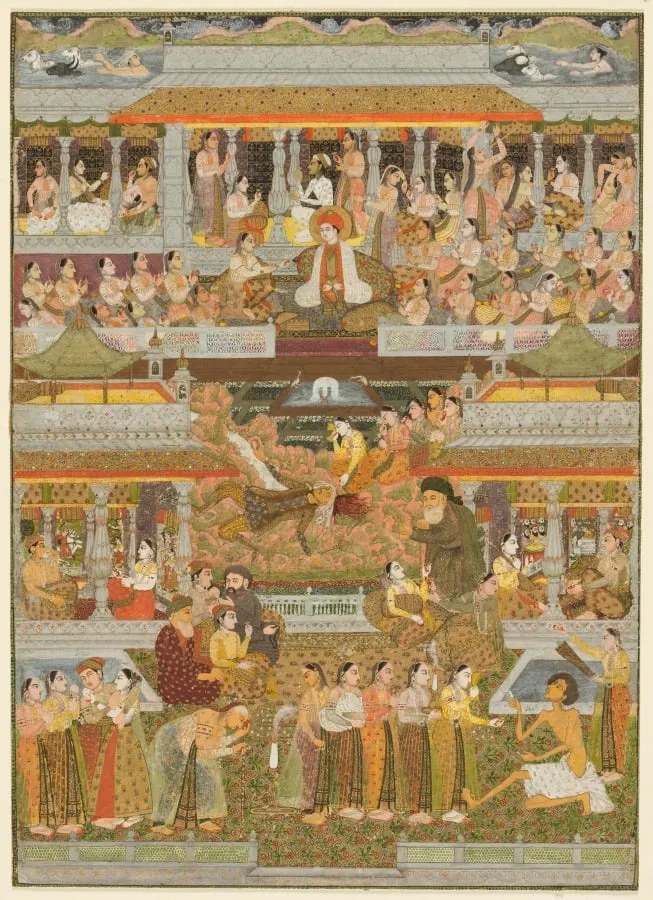
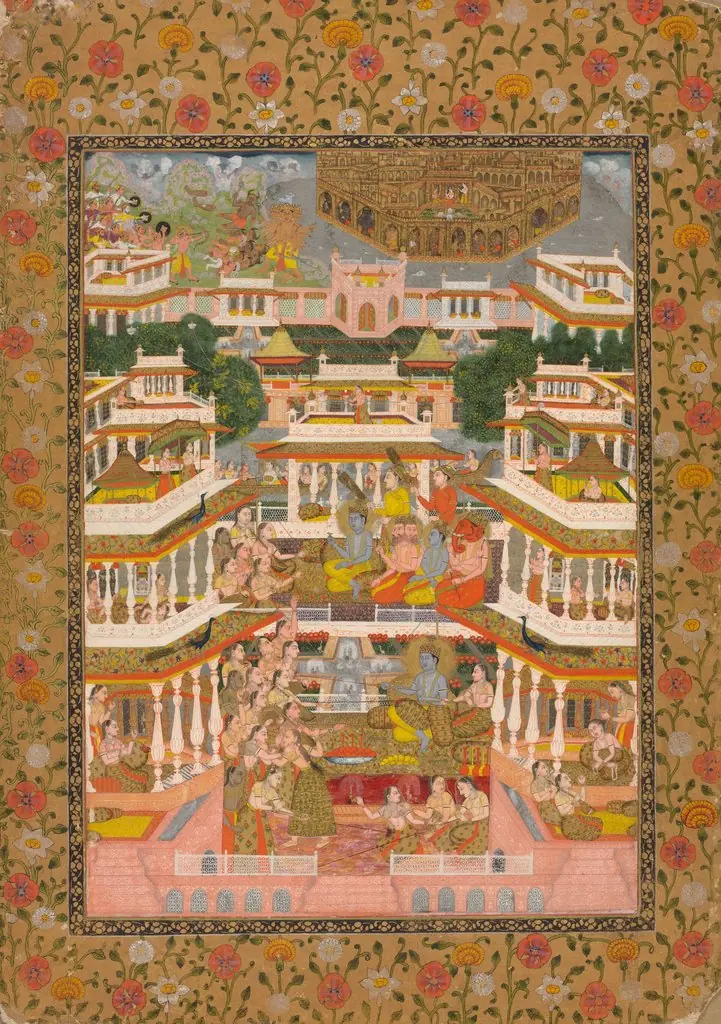
Lovers and beloveds: A composite of scenes from Persian, Urdu, and Sanskrit literature is an unspecified painting by the Baroque artist Chitarman II. It dates from 1735 and is held in the collection of the Cleveland Museum of Art.
About this work
Overview
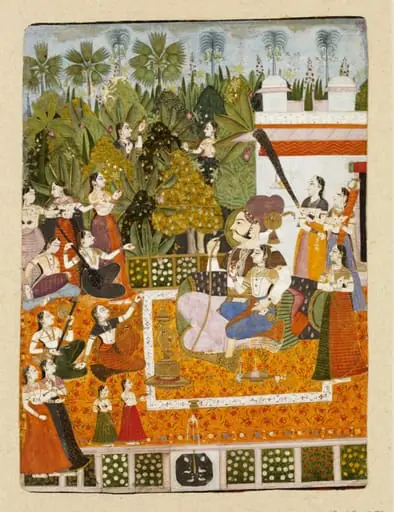
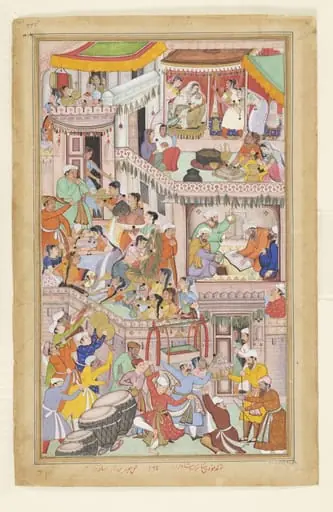
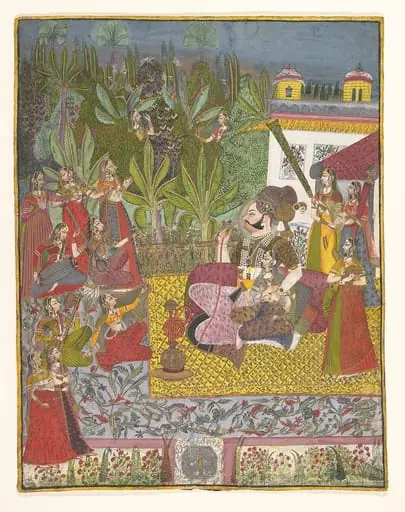
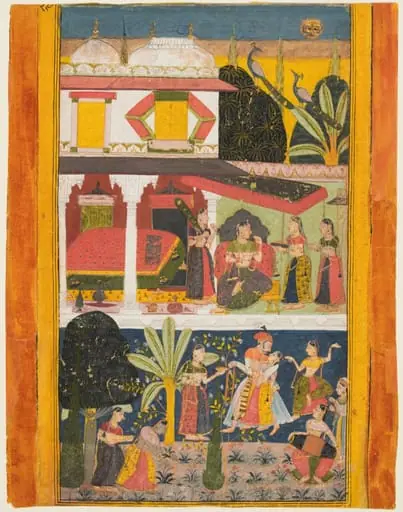
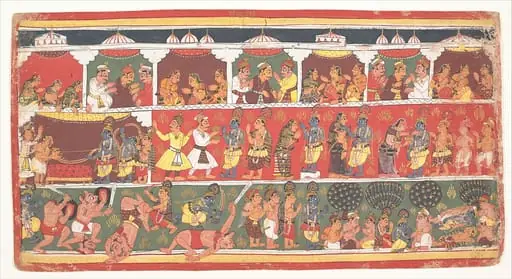
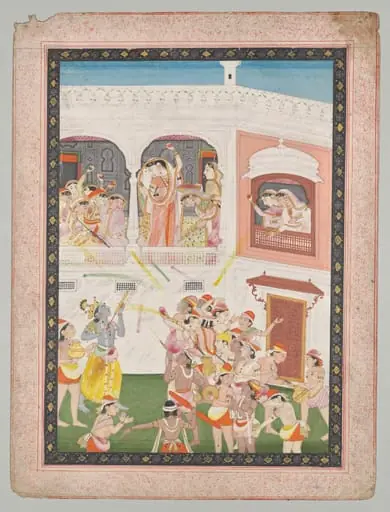
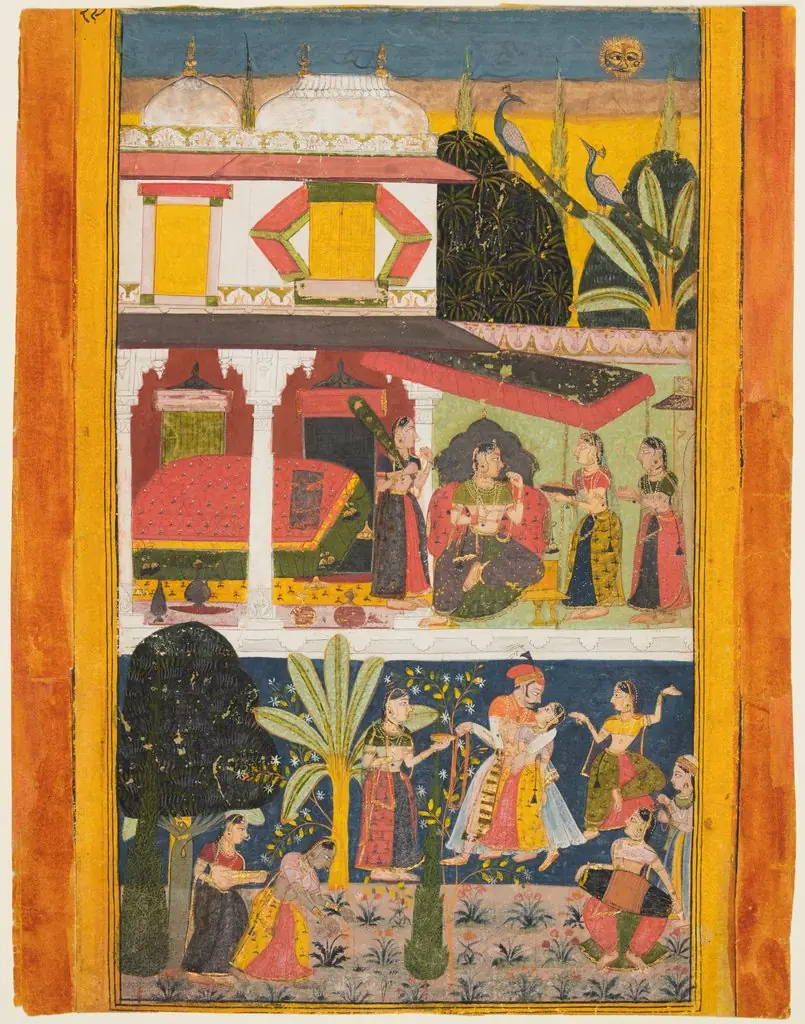
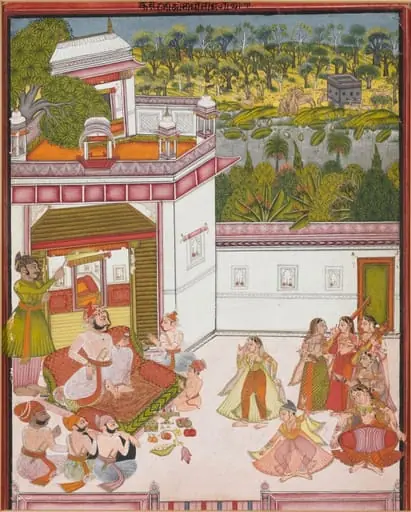
This painting synthesizes multiple romantic narratives from Persian, Urdu, and Sanskrit literary traditions into a single composite composition.
This painting synthesizes multiple romantic narratives from Persian, Urdu, and Sanskrit literary traditions into a single composite composition. Central to the scene is the figure of Joseph, marked by a golden halo, surrounded by figures drawn from ten distinct love stories. Each vignette is labeled with a small Persian inscription, guiding viewers through the layered narrative. The work functions as a visual anthology, uniting mythic and literary figures across cultural boundaries within one frame.
Subject & Meaning
Joseph, depicted in the moment after his purchase by Zulaykha, becomes the focal point of divine allure. As women around him slice oranges, their hands are cut not from negligence but from distraction by his beauty—a motif symbolizing transcendent attraction. Surrounding him are other legendary lovers: Majnun in despair, Farhad in tragedy, and Shirin in absence. The painting elevates romantic devotion as a universal, almost sacred force, regardless of cultural origin.
Technique & Style
The composition is densely packed with figures arranged in overlapping planes, creating a sense of crowded intimacy. Delicate brushwork defines facial expressions and textile patterns, while subtle color shifts distinguish emotional tones. Each narrative segment is contained within its own spatial zone yet visually connected through shared lighting and compositional rhythm. The use of Persian script as labels reflects a literate audience familiar with the source texts.
History & Provenance
Created in the late Mughal or post-Mughal period, likely in northern India, the painting reflects the cultural syncretism of the time. It draws from Persian poetic traditions circulating in Indian courts and Sanskrit narratives adapted into regional vernaculars. The inclusion of biblical Joseph alongside Islamic and Hindu romantic figures suggests a courtly environment where religious and literary boundaries were fluid.
Context
During the 17th and 18th centuries, Indian courts patronized illustrated manuscripts that blended Islamic, Hindu, and even Christian narratives. This painting aligns with a broader trend of visual storytelling that celebrated cross-cultural literary heritage. The choice to depict multiple lovers in one scene reflects a fascination with the universality of longing, loss, and beauty across traditions.
Legacy
The painting stands as a testament to the interconnectedness of South Asian literary cultures. Its layered imagery influenced later illustrative traditions that sought to visualize complex narratives in single compositions. While largely overlooked in Western art histories, it remains a significant example of how regional artists synthesized diverse textual sources into cohesive visual forms.
Artist & collection