Artwork
F.E. von Rochow
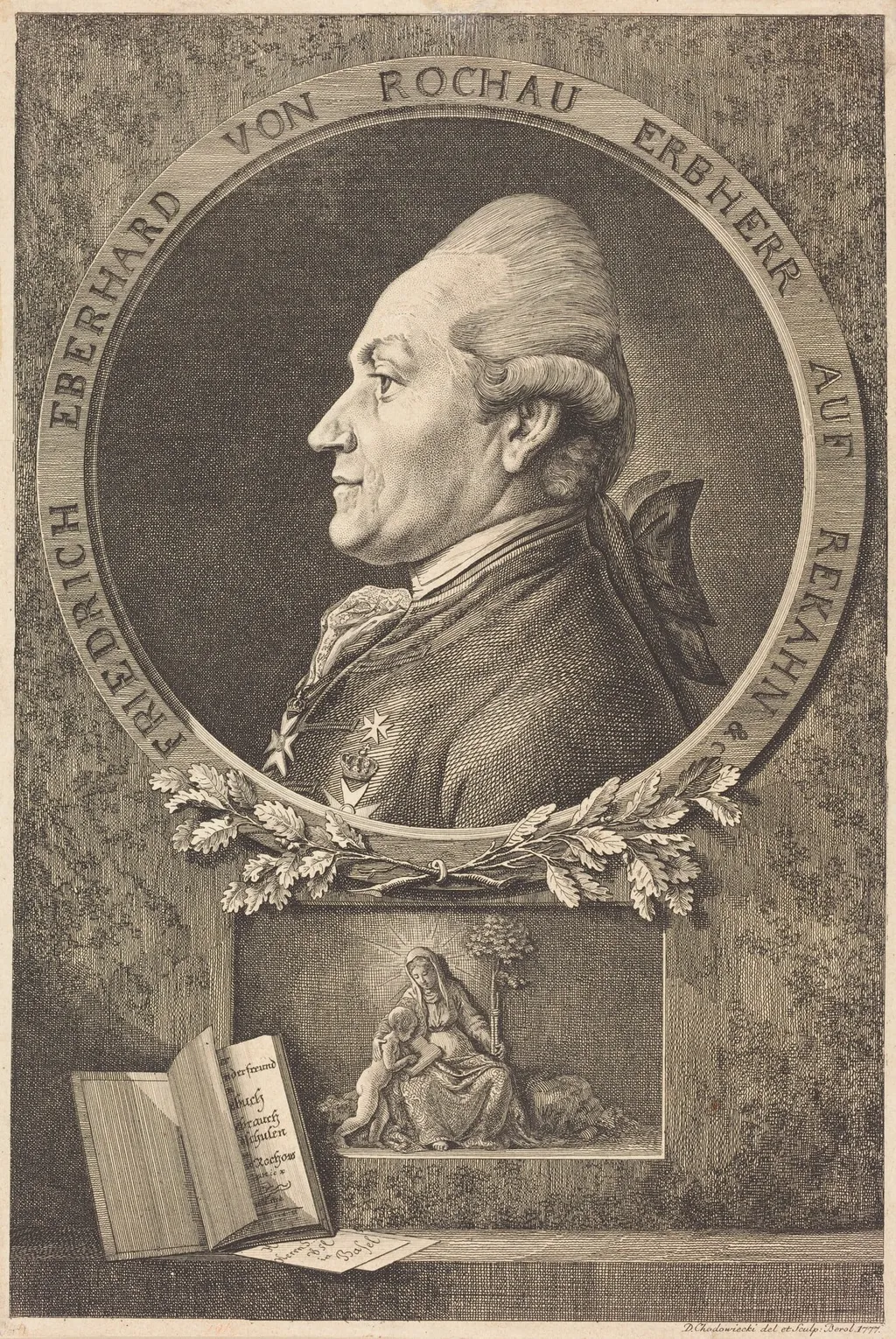
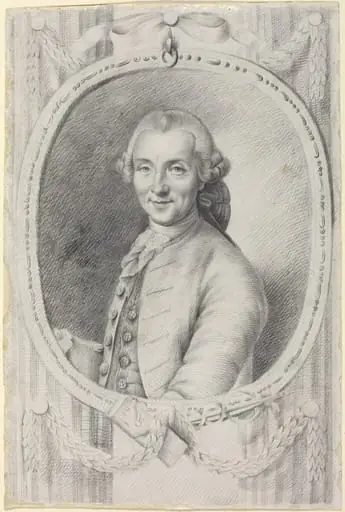
F.E. von Rochow is an ink print by the Romanticist artist Daniel Nikolaus Chodowiecki. It dates from 1777 and is held in the collection of the National Gallery of Art.
About this work
Overview
Created in 1777, this etching by Daniel Nikolaus Chodowiecki depicts Friedrich Ernst von Rochow, a Prussian educator and writer.
Created in 1777, this etching by Daniel Nikolaus Chodowiecki depicts Friedrich Ernst von Rochow, a Prussian educator and writer. Executed in black ink on paper, the work is a portrait print that combines a formal likeness with a symbolic vignette below. Chodowiecki, a prolific printmaker based in Berlin, used the etching technique to capture fine detail and tonal nuance, reflecting his mastery of the medium during the late Enlightenment.
Subject & Meaning
The portrait centers on von Rochow, identifiable by the banner above bearing his name and first name, Eberhard. His attire—a dark coat, high collar, and ornate medal with ribbon and star—signals his status and civic role. Below, a woman holding a book beside a child and a dog evokes themes of education and domestic virtue, aligning with von Rochow’s reputation as a reformer in pedagogy and moral instruction during the Enlightenment.
Technique & Style
Chodowiecki employed etching to render subtle textures: the lace of the collar, the sheen of the medal, and the soft folds of fabric. Fine lines define facial features and the wig’s curls, while the lower scene is rendered with lighter, more delicate strokes. The contrast between the solemn portrait and the gentle domestic vignette demonstrates his ability to layer meaning through compositional structure and varied line weight.
History & Provenance
The print was produced during Chodowiecki’s tenure in Berlin, where he was active in the city’s artistic circles and later led the Academy of Art. Though specific early ownership records are sparse, such portraits were commonly circulated among educated elites as both commemorative objects and endorsements of Enlightenment ideals. The work likely served to honor von Rochow’s contributions to public education in Prussia.
Context
In late 18th-century Prussia, portraiture in print often served civic and moral purposes. Von Rochow was known for promoting accessible education and moral training for children, ideas aligned with broader Enlightenment reforms. Chodowiecki, who frequently illustrated literary and educational themes, used his prints to visually support intellectual movements, making this work part of a wider cultural effort to elevate public discourse through imagery.
Legacy
Chodowiecki’s etchings, including this one, remain valued for their quiet precision and humanist tone. While not widely exhibited today, the print exemplifies how printmaking functioned as a vehicle for disseminating ideas beyond elite circles. It reflects a moment when visual art and pedagogical reform intersected, preserving the image of a thinker whose influence extended through education rather than politics.
Artist & collection
Artist
Daniel Niklaus Chodowiecki (16 October 1726 – 7 February 1801) was a German painter and printmaker of Huguenot and Polish ancestry, who is most famous as an etcher.