Artwork
Copy of detail of the Ghent Altarpiece, Virgin Annunciate and Prophet, by Hubert and Jan van Eyck in the church of St Bavon, Ghent.
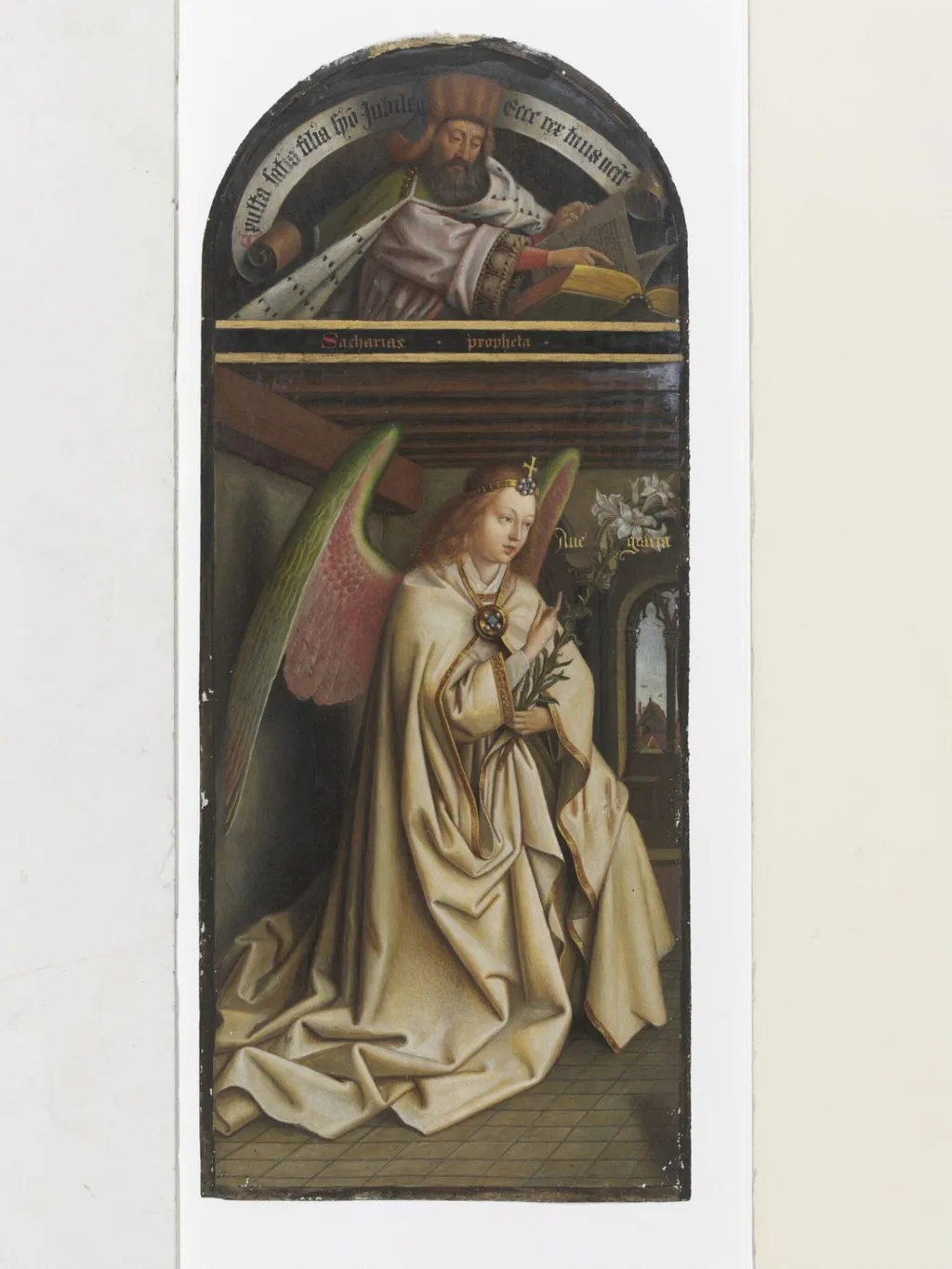
Copy of detail of the Ghent Altarpiece, Virgin Annunciate and Prophet, by Hubert and Jan van Eyck in the church of St Bavon, Ghent. is a watercolor work on paper by the Impressionist artist Christian Schultz. It dates from 1864 and is held in the collection of the Victoria and Albert Museum.
About this work
Overview
This watercolour is a faithful reproduction of a section from the Ghent Altarpiece, created in 1864 by Christian Schultz.
This watercolour is a faithful reproduction of a section from the Ghent Altarpiece, created in 1864 by Christian Schultz. Commissioned by the Arundel Society to document significant medieval artworks, the copy was produced under Schultz’s direct oversight and later published in 1871 by Hangard-Mauge. It captures a portion of the original polyptych housed in St. Bavo’s Cathedral, Ghent, preserving details otherwise difficult to access or study at the time.
Subject & Meaning
The scene portrays the Virgin Annunciate kneeling before an angel, while an elderly prophet, crowned and bearded, observes from above, holding a scroll. The angel, identified as Gabriel, gestures toward a distant structure, likely symbolizing the Incarnation. The prophet’s presence suggests a link between Old Testament prophecy and the fulfillment of divine promise in the Annunciation. Their spatial arrangement reinforces a theological hierarchy, with celestial revelation above human anticipation.
Technique & Style
Schultz employed delicate watercolour washes to replicate the luminous tones and fine detail of the van Eycks’ original. The angel’s golden hair, crimson and green wing feathers, and pale robe are rendered with subtle gradations, while soft light models the faces and hands. The background architecture is simplified but suggestive, preserving the original’s spatial depth. The medium’s transparency allows for a quiet clarity, mirroring the devotional stillness of the source.
History & Provenance
The watercolour was made during a period of renewed interest in early Netherlandish art, spurred by scholarly and preservation efforts in the 19th century. Commissioned by the Arundel Society, it was part of a broader initiative to disseminate high-quality reproductions of historic artworks. Published in 1871 under Schultz’s supervision, the print served educational purposes, making the altarpiece’s details accessible beyond Ghent’s cathedral walls.
Context
In the mid-19th century, institutions like the Arundel Society sought to document and circulate images of medieval and Renaissance art across Europe, often before modern conservation practices were established. Schultz’s copy reflects this movement, aligning with efforts to preserve visual records of artworks vulnerable to damage or political upheaval. The Ghent Altarpiece, recently restored and widely studied, was a natural subject for such documentation.
Legacy
Schultz’s watercolour remains a valuable record of the Ghent Altarpiece’s appearance in the 19th century, before later restorations altered surface details. It exemplifies the role of reproductive art in art historical scholarship, offering insight into how Victorian audiences engaged with early Netherlandish painting. The work is now held in institutional collections, contributing to ongoing studies of the altarpiece’s reception and visual transmission.
Artist & collection

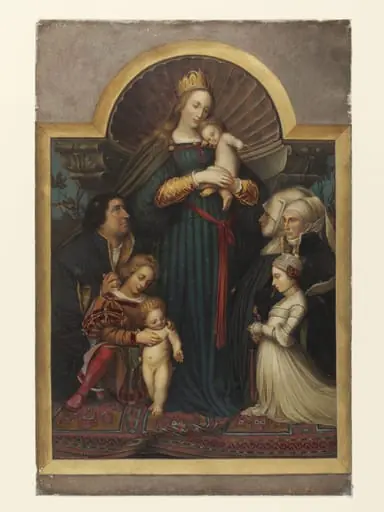 Copy after the painting Virgin and Child and Meyer Family by Hans Holbein in Darmstadt
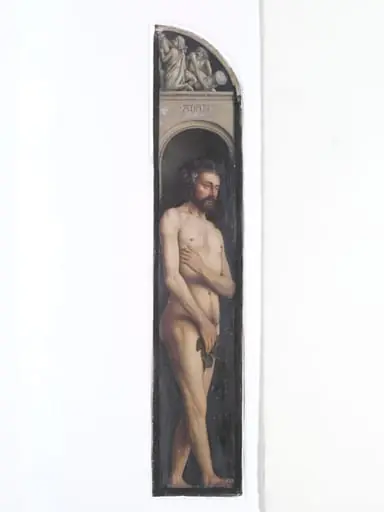 Copy of a detail from the Ghent Altarpiece, Adam, by Hubert and Jan van Eyck in the church of St Bavon, Ghent.
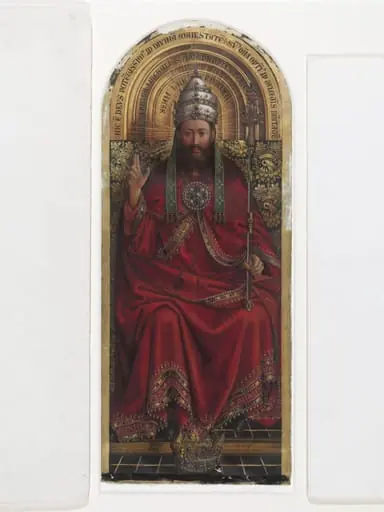 Copy of a detail of the Ghent Altarpiece, Triune God by Hubert and Jan van Eyck in the church of St Bavon, Ghent
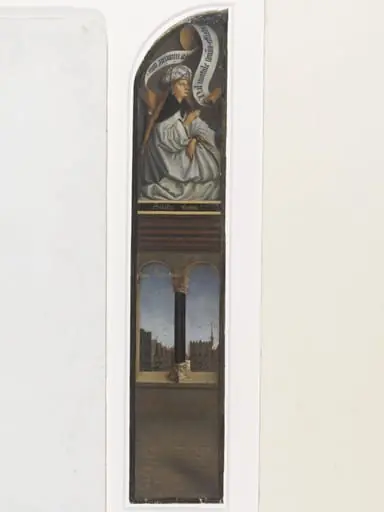 Copy of a detail of the Ghent Altarpiece, Sibyl of Erythrae, by Hubert and Jan van Eyck in the church of St Bavon, Ghent.
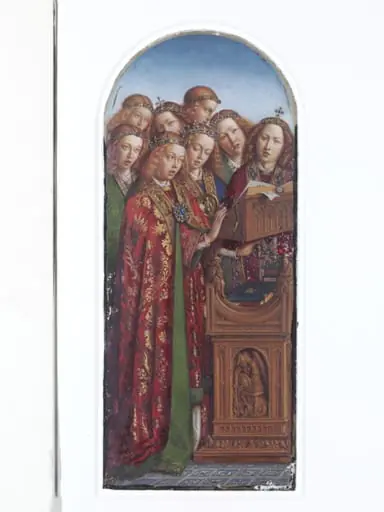 Copy of a detail of the Ghent Altarpiece, Angelic Choir, by Hubert and Jan van Eyck in the church of St Bavon, Ghent.
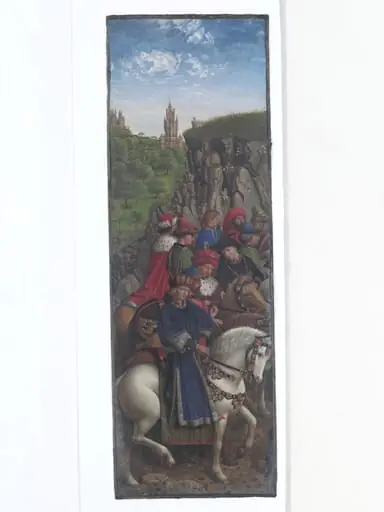 Copy of a detail of the Ghent Altarpiece, The Just Judges, by Hubert and Jan van Eyck in St Bavon, Ghent.
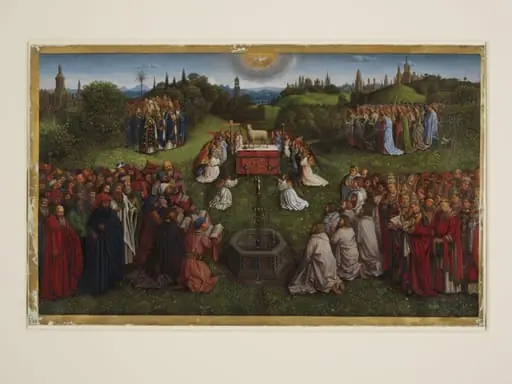 Copy of a detail of the Ghent Altarpiece, Adoration of the Lamb, by Hubert and Jan van Eyck in the church of St Bavon, Ghent.
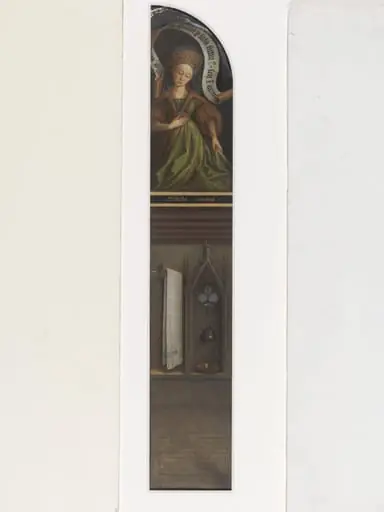 Copy of a detail of the Ghent Altarpiece, Sibyl of Cumaea, by Hubert and Jan van Eyck in the church of St Bavon, Ghent
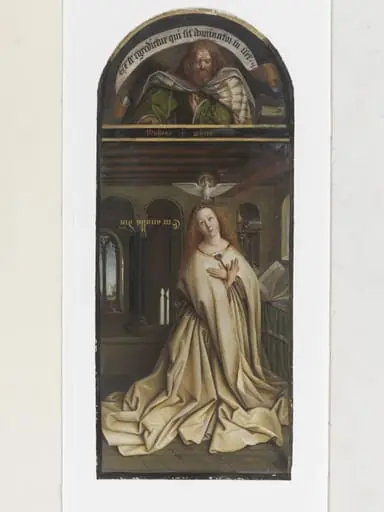 Copy of a detail of the Ghent Altarpiece, Annunicatory Angel and Prophet, by Hubert and Jan van Eyck in the church of St Bavon, Ghent.
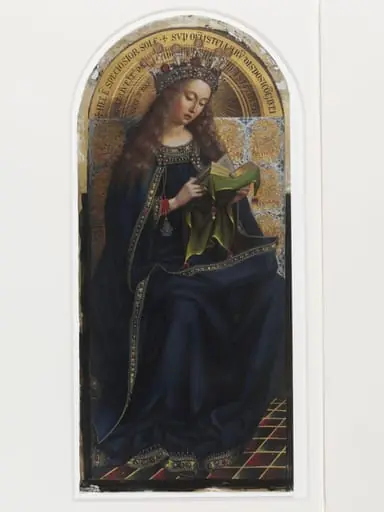 Copy of detail from the Ghent Altarpiece, The Virgin by Hubert and Jan van Eyck in the church of St Bavon, Ghent
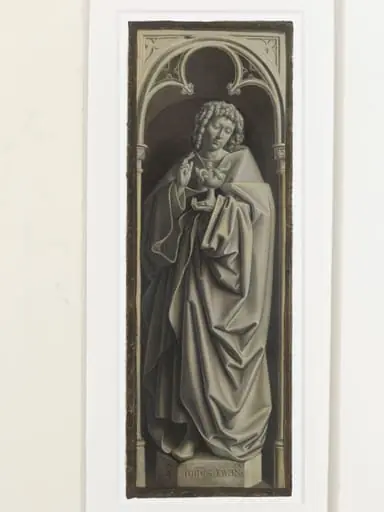 Copy of a detail of the Ghent Altarpiece, St John the Evangelist, by Hubert and Jan van Eyck in the church of St Bavon, Ghent.