Artwork
Copy of a detail of the Ghent Altarpiece, Angelic Choir, by Hubert and Jan van Eyck in the church of St Bavon, Ghent.
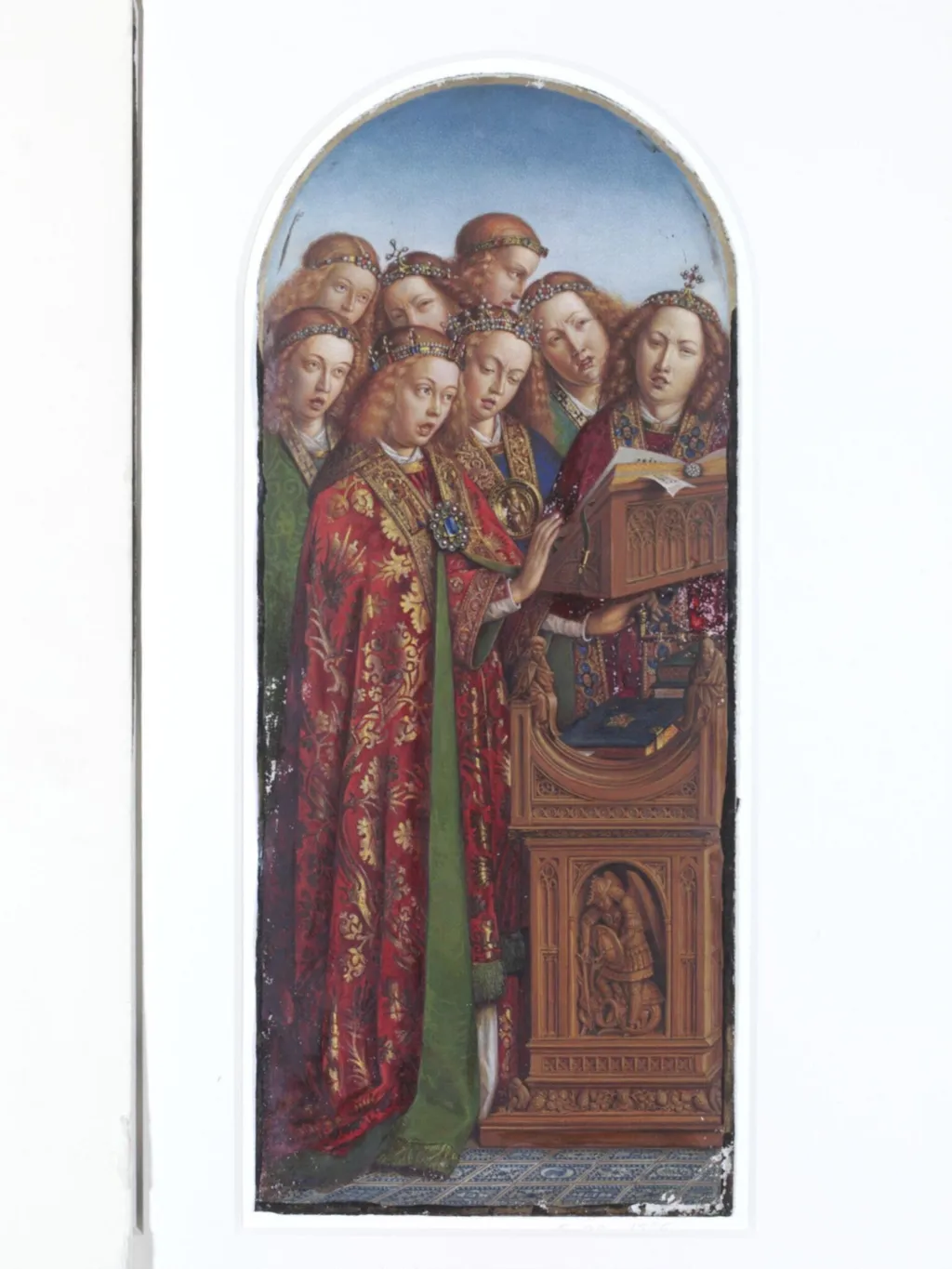
Copy of a detail of the Ghent Altarpiece, Angelic Choir, by Hubert and Jan van Eyck in the church of St Bavon, Ghent. is a watercolor work on paper by the Impressionist artist Christian Schultz. It dates from 1864 and is held in the collection of the Victoria and Albert Museum.
About this work
Overview
A watercolour copy made in 1864 by Christian Schultz captures a section of the Ghent Altarpiece’s Angelic Choir, originally painted by Hubert and Jan van Eyck.
A watercolour copy made in 1864 by Christian Schultz captures a section of the Ghent Altarpiece’s Angelic Choir, originally painted by Hubert and Jan van Eyck. Commissioned by the Arundel Society, the reproduction was produced under Schultz’s direction and published in 1871 by Hangard-Mauge. It serves as a faithful record of the altarpiece’s intricate detail, created decades before widespread photographic documentation.
Subject & Meaning
The scene portrays a celestial ensemble of angels gathered around a carved wooden pulpit, engaged in worship through song and instrumental music. Their postures vary—some eyes closed in reverie, others intoning or playing instruments—conveying a moment of divine harmony. The presence of a saintly figure atop the pulpit reinforces the sacred context, aligning the choir with liturgical devotion and heavenly order.
Technique & Style
Schultz employed fine watercolour washes to replicate the luminous textures and rich hues of the original panel. Delicate brushwork renders the metallic sheen of gold embroidery, the translucency of silk robes, and the subtle gradations of skin tones. The soft blue background enhances spatial depth, while the precision in facial expressions and fabric folds reflects a commitment to archaeological accuracy over artistic interpretation.
History & Provenance
The copy was commissioned by the Arundel Society, a British organization dedicated to preserving artistic heritage through accurate reproductions. Schultz, a Norwegian artist and scholar, worked under strict guidelines to document the altarpiece before potential damage from environmental or political change. The 1871 publication ensured wider access to the work for scholars and collectors in Europe and Britain.
Context
In the mid-19th century, European institutions sought to document medieval art before industrialization and restoration altered original surfaces. The Ghent Altarpiece, though revered, was vulnerable to neglect and political upheaval. Schultz’s watercolour emerged from this wave of scholarly preservation, offering a detailed visual archive at a time when colour reproduction technologies were still limited.
Legacy
Schultz’s copy remains a valuable reference for art historians studying the Ghent Altarpiece’s original appearance, particularly where pigments have faded or surfaces have been altered. Its meticulous execution exemplifies 19th-century academic dedication to documentation, bridging medieval art and modern conservation practices without imposing romanticized interpretation.
Artist & collection

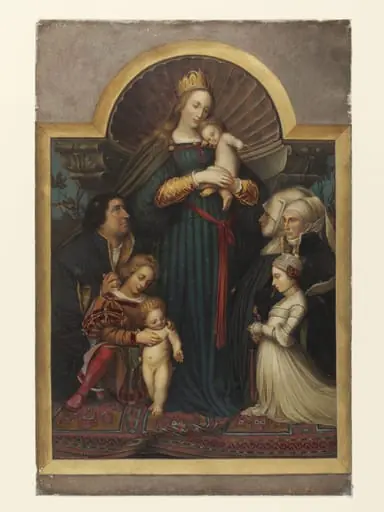 Copy after the painting Virgin and Child and Meyer Family by Hans Holbein in Darmstadt
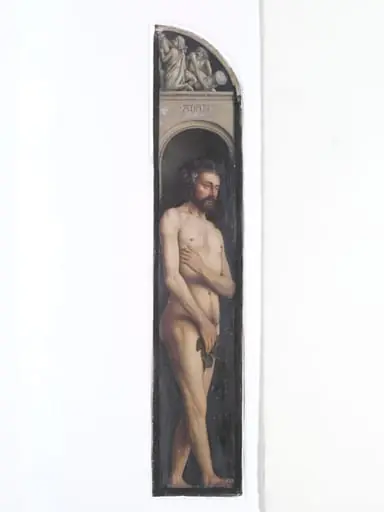 Copy of a detail from the Ghent Altarpiece, Adam, by Hubert and Jan van Eyck in the church of St Bavon, Ghent.
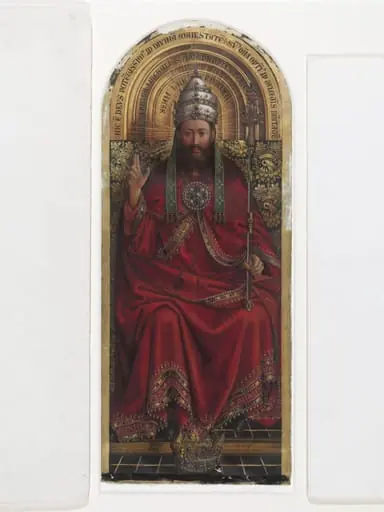 Copy of a detail of the Ghent Altarpiece, Triune God by Hubert and Jan van Eyck in the church of St Bavon, Ghent
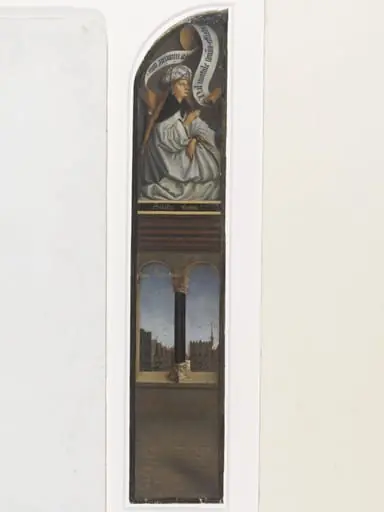 Copy of a detail of the Ghent Altarpiece, Sibyl of Erythrae, by Hubert and Jan van Eyck in the church of St Bavon, Ghent.
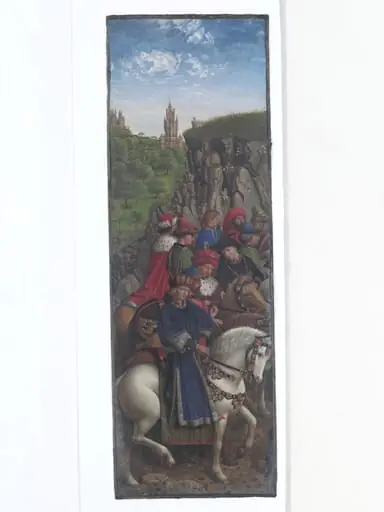 Copy of a detail of the Ghent Altarpiece, The Just Judges, by Hubert and Jan van Eyck in St Bavon, Ghent.
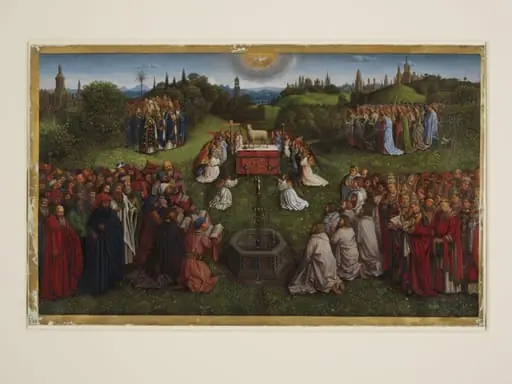 Copy of a detail of the Ghent Altarpiece, Adoration of the Lamb, by Hubert and Jan van Eyck in the church of St Bavon, Ghent.
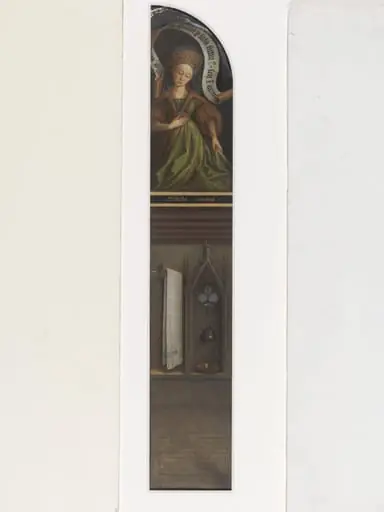 Copy of a detail of the Ghent Altarpiece, Sibyl of Cumaea, by Hubert and Jan van Eyck in the church of St Bavon, Ghent
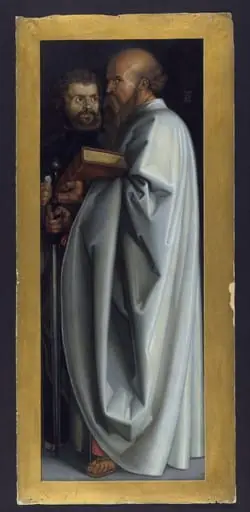 St Mark and St Paul
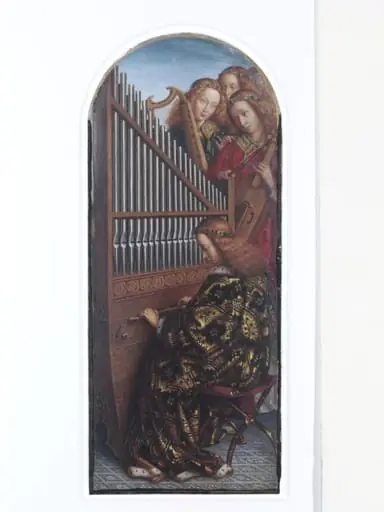 Copy of a detail of the Ghent Altarpiece, St Cecilia and the Organ, by Hubert and Jan van Eyck in the church of St Bavon, Ghent.
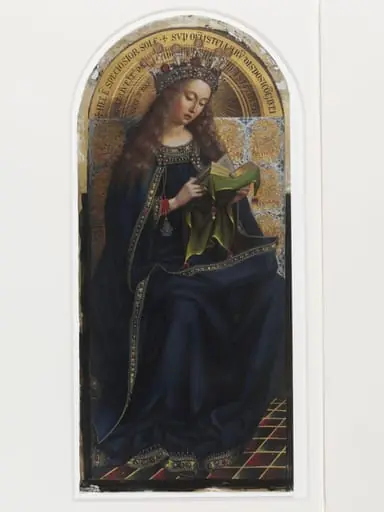 Copy of detail from the Ghent Altarpiece, The Virgin by Hubert and Jan van Eyck in the church of St Bavon, Ghent
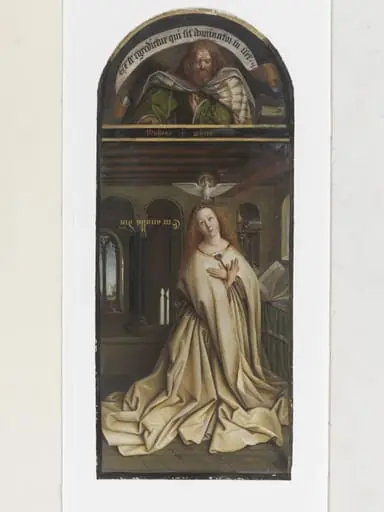 Copy of a detail of the Ghent Altarpiece, Annunicatory Angel and Prophet, by Hubert and Jan van Eyck in the church of St Bavon, Ghent.
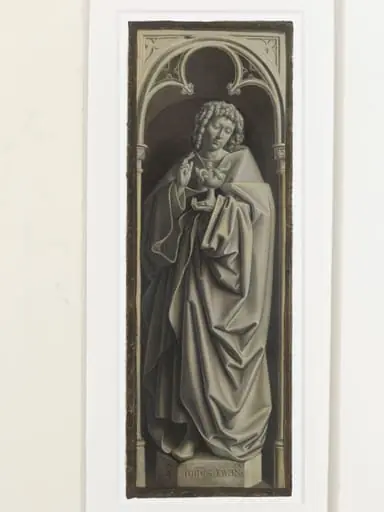 Copy of a detail of the Ghent Altarpiece, St John the Evangelist, by Hubert and Jan van Eyck in the church of St Bavon, Ghent.
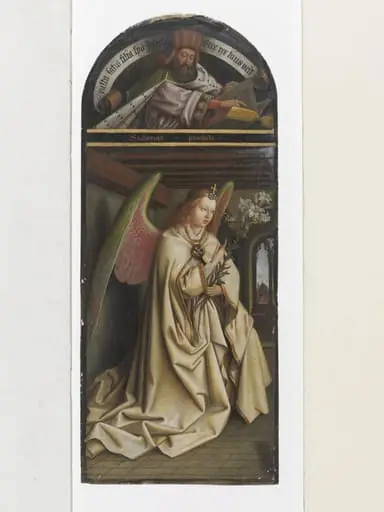 Copy of detail of the Ghent Altarpiece, Virgin Annunciate and Prophet, by Hubert and Jan van Eyck in the church of St Bavon, Ghent.
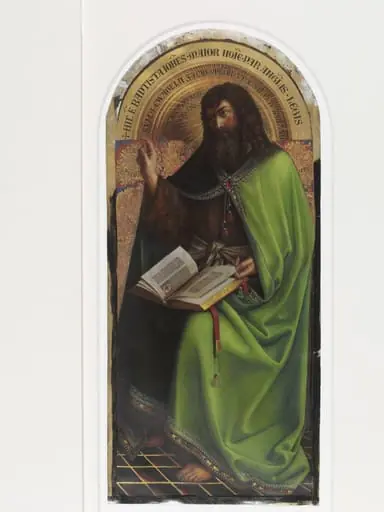 Copy of a detail from the Ghent Altarpiece, St John the Baptist by Hubert and Jan van Eyck in the church of St Bavon, Ghent.
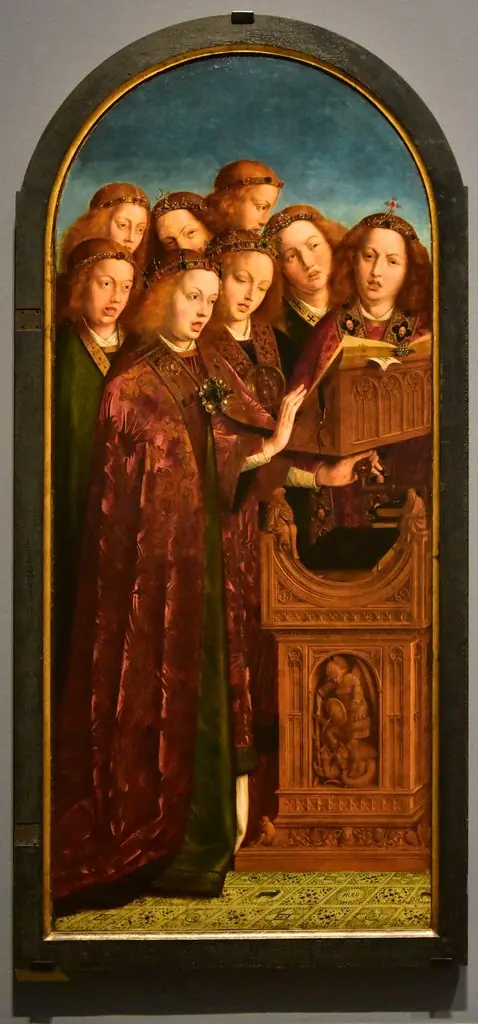 Singing angels (after The Ghent Altarpiece)
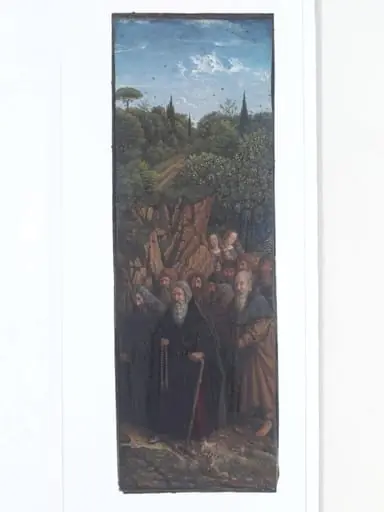 Copy of a detail of the Ghent Altarpiece, The Pilgrims, by Hubert and Jan van Eyck in the church of St. Bavon, Ghent.
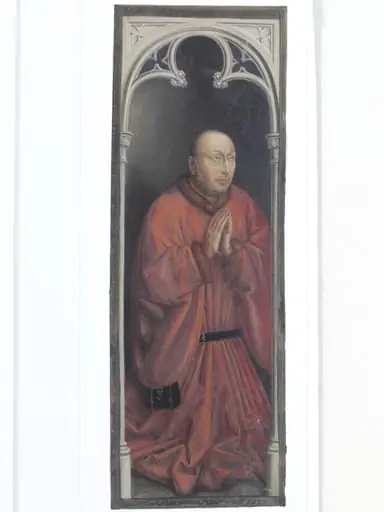 Copy of a detail of the Ghent Altarpiece, Josse Vyd, by Hubert and Jan van Eyck in the church of St Bavon, Ghent
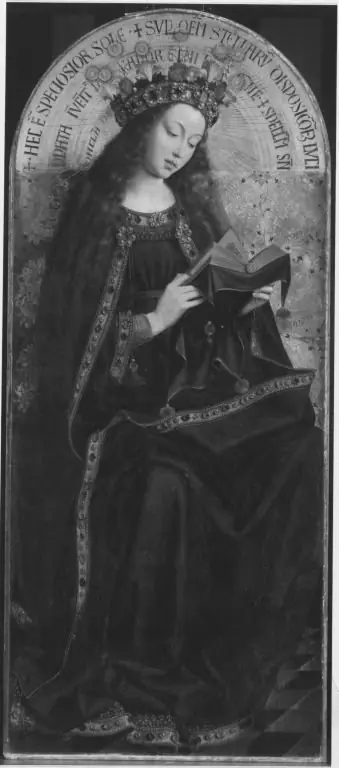 Mary (after The Ghent Altarpiece)