Artwork
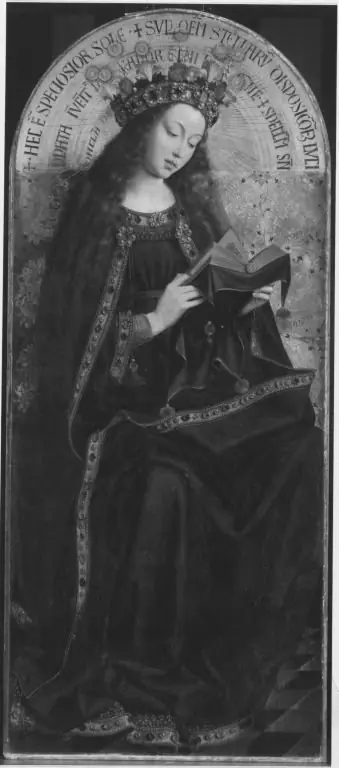
Copy of detail from the Ghent Altarpiece, The Virgin by Hubert and Jan van Eyck in the church of St Bavon, Ghent
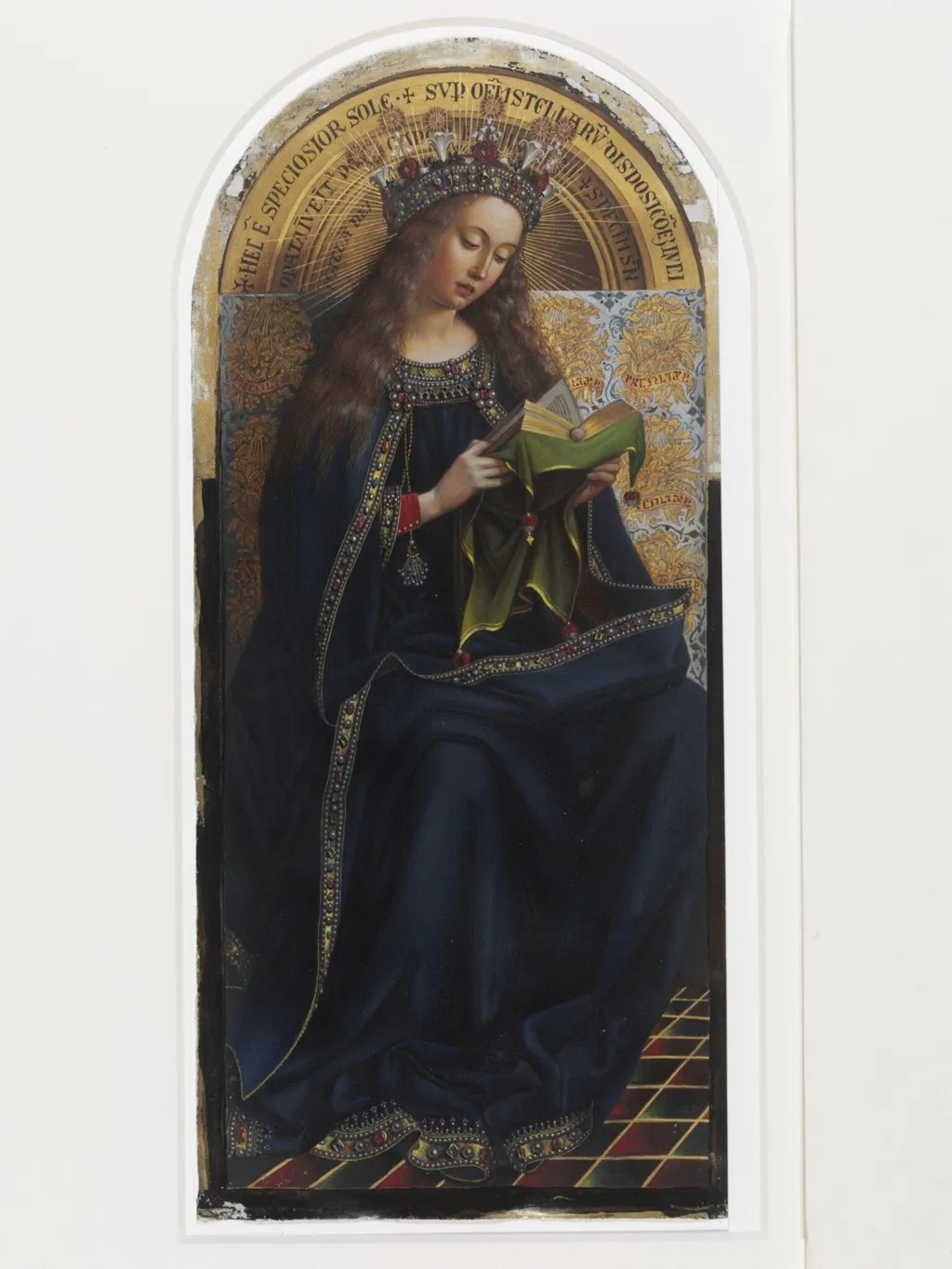
Copy of detail from the Ghent Altarpiece, The Virgin by Hubert and Jan van Eyck in the church of St Bavon, Ghent is a watercolor work on paper by Christian Schultz. It dates from 1858 and is held in the collection of the Victoria and Albert Museum.
About this work
Overview
A watercolour reproduction of the Virgin panel from the Ghent Altarpiece was made in 1858 by Christian Schultz for the Arundel Society.
A watercolour reproduction of the Virgin panel from the Ghent Altarpiece was made in 1858 by Christian Schultz for the Arundel Society. Published in 1870 under his oversight, the work was part of a broader effort to document and disseminate medieval and early Netherlandish art through accurate, handcrafted copies. The medium and execution reflect 19th-century scholarly practices rather than original creation.
Subject & Meaning
The figure depicts the Virgin Mary seated, holding an open book, symbolizing her role as a vessel of divine wisdom. She wears a dark blue robe edged in gold, a traditional color associated with purity and royalty, and is crowned with a heavy diadem. A golden halo inscribed with Latin script encircles her head, reinforcing her sacred status within Christian iconography.
Technique & Style
Executed in watercolour, the copy meticulously emulates the luminous gold detailing and fine linear precision of the original panel. The background features intricate blue-and-gold patterns, echoing the opulent decorative style of early Netherlandish altarpieces. The soft modeling of the Virgin’s face and the restrained palette convey solemnity, aligning with the devotional tone of the source.
History & Provenance
Christian Schultz produced the watercolour in 1858 as part of the Arundel Society’s mission to preserve visual records of important artworks. It was later published in 1870 by Hangard-Mauge, with Schultz supervising the printing process. The copy served as a scholarly resource, making the Ghent Altarpiece’s details accessible to institutions and collectors without access to the original in Ghent.
Context
In the mid-19th century, European art societies sought to document endangered or inaccessible works through precise reproductions. The Arundel Society focused on medieval and Renaissance art, prioritizing fidelity over artistic interpretation. Schultz’s copy reflects this ethos, positioning the Virgin as an object of historical study rather than religious veneration.
Legacy
This watercolour remains a valuable record of the Ghent Altarpiece’s appearance in the 19th century, capturing details that may have altered over time due to cleaning or damage. It exemplifies the role of reproductive art in art historical scholarship and can be found in institutional collections alongside other Arundel Society publications, contributing to the study of Northern Renaissance iconography.
Artist & collection

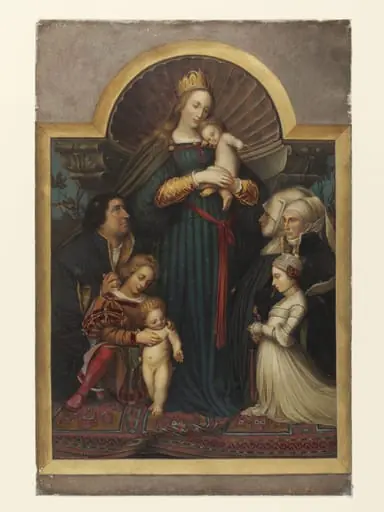 Copy after the painting Virgin and Child and Meyer Family by Hans Holbein in Darmstadt
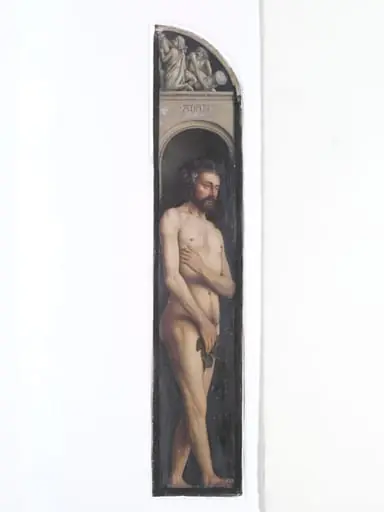 Copy of a detail from the Ghent Altarpiece, Adam, by Hubert and Jan van Eyck in the church of St Bavon, Ghent.
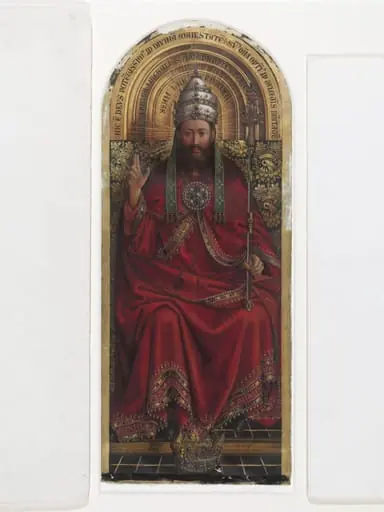 Copy of a detail of the Ghent Altarpiece, Triune God by Hubert and Jan van Eyck in the church of St Bavon, Ghent
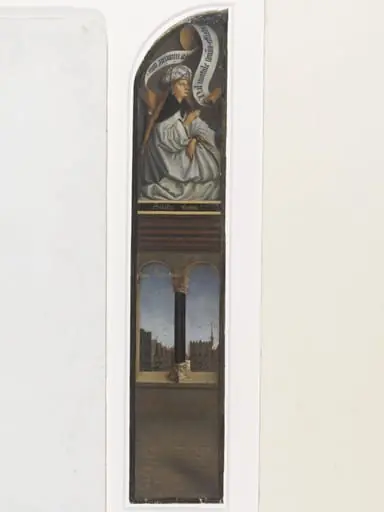 Copy of a detail of the Ghent Altarpiece, Sibyl of Erythrae, by Hubert and Jan van Eyck in the church of St Bavon, Ghent.
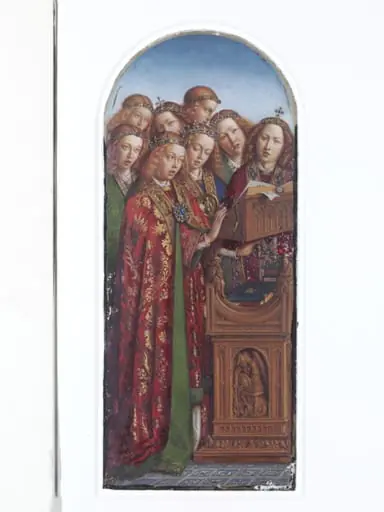 Copy of a detail of the Ghent Altarpiece, Angelic Choir, by Hubert and Jan van Eyck in the church of St Bavon, Ghent.
 Copy of a detail of the Ghent Altarpiece, The Just Judges, by Hubert and Jan van Eyck in St Bavon, Ghent.
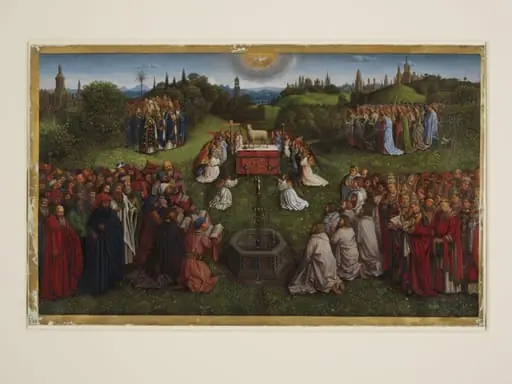 Copy of a detail of the Ghent Altarpiece, Adoration of the Lamb, by Hubert and Jan van Eyck in the church of St Bavon, Ghent.
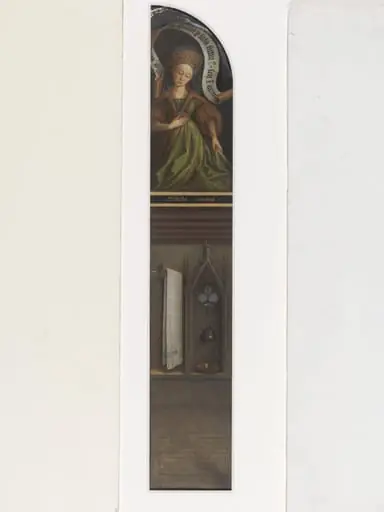 Copy of a detail of the Ghent Altarpiece, Sibyl of Cumaea, by Hubert and Jan van Eyck in the church of St Bavon, Ghent
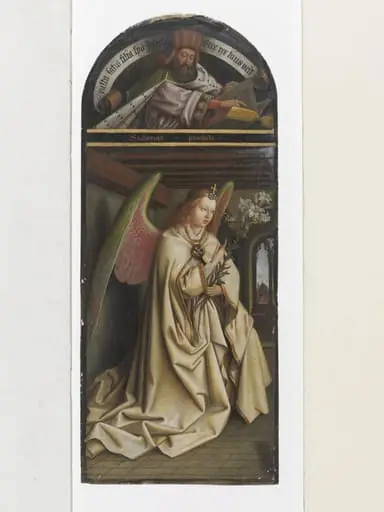 Copy of detail of the Ghent Altarpiece, Virgin Annunciate and Prophet, by Hubert and Jan van Eyck in the church of St Bavon, Ghent.
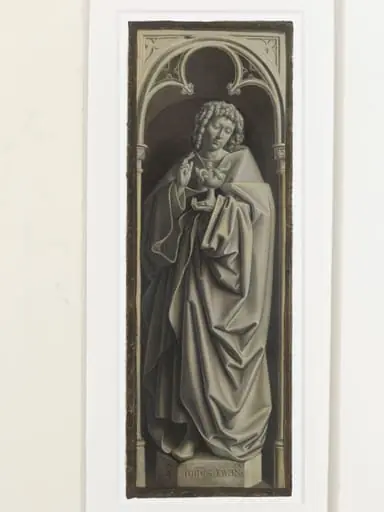 Copy of a detail of the Ghent Altarpiece, St John the Evangelist, by Hubert and Jan van Eyck in the church of St Bavon, Ghent.
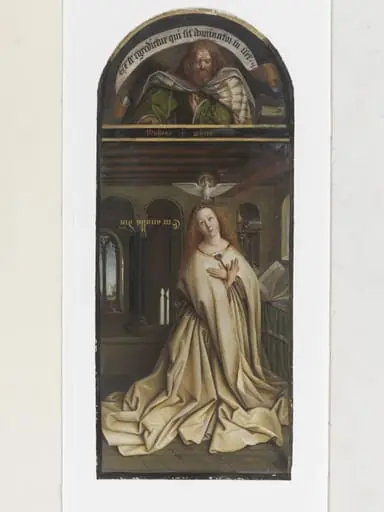 Copy of a detail of the Ghent Altarpiece, Annunicatory Angel and Prophet, by Hubert and Jan van Eyck in the church of St Bavon, Ghent.
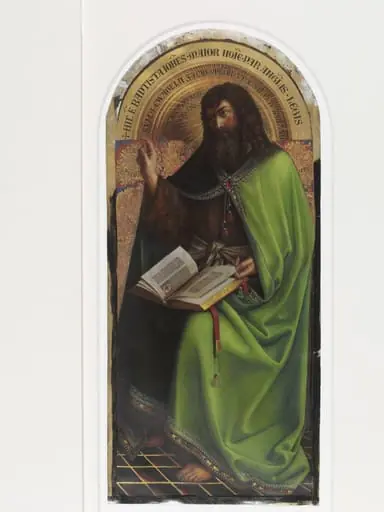 Copy of a detail from the Ghent Altarpiece, St John the Baptist by Hubert and Jan van Eyck in the church of St Bavon, Ghent.
 Mary (after The Ghent Altarpiece)