Artwork
Copy of a detail from the Ghent Altarpiece, Adam, by Hubert and Jan van Eyck in the church of St Bavon, Ghent.
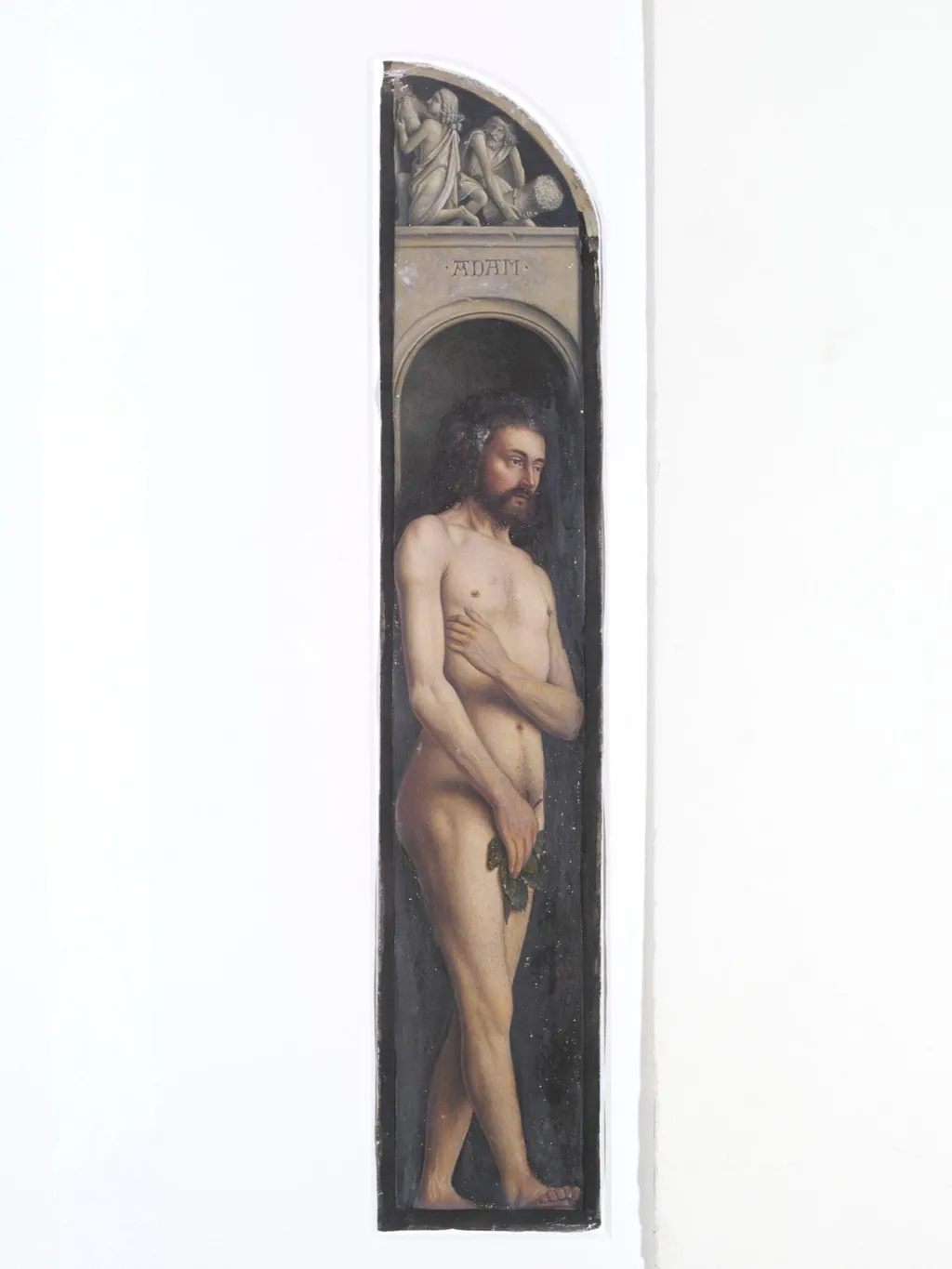
Copy of a detail from the Ghent Altarpiece, Adam, by Hubert and Jan van Eyck in the church of St Bavon, Ghent. is a watercolor work on paper by the Impressionist artist Christian Schultz. It dates from 1864 and is held in the collection of the Victoria and Albert Museum.
About this work
The original altarpiece is a famous work of art from the 15th century, known for its intricate details and realistic depictions of human figures.
This painting depicts a nude male figure standing in a doorway, with his left hand resting on his chest and his right hand holding a leafy branch in front of his groin. The figure is rendered in a realistic style, with attention to detail in the muscles and facial features. Above the doorway, a small sculpture of two figures can be seen.
The painting is a copy of a detail from the Ghent Altarpiece, created by Hubert and Jan van Eyck. The original altarpiece is a famous work of art from the 15th century, known for its intricate details and realistic depictions of human figures.
To learn more about the artistic style of this painting, explore the movement of Realism.
Overview
This watercolour copy, made in 1864 by Christian Schultz, reproduces the figure of Adam from the Ghent Altarpiece. Commissioned by the Arundel Society to document early Netherlandish art, it was published in 1871 under Schultz’s oversight. The work serves as a faithful transcription of a key panel from the original altarpiece, preserving its composition for study and dissemination during a period of renewed interest in medieval art.
Subject & Meaning
The figure depicts Adam, the first man in Christian tradition, shown nude and standing in a doorway. His left hand rests gently on his chest, while his right hand holds a branch to modestly cover his body. The pose reflects the biblical moment after the Fall, when shame enters human consciousness. Above him, a small sculpted pair of figures may allude to the divine presence or the consequences of disobedience.
Technique & Style
Schultz rendered Adam in watercolour with careful attention to anatomical detail, mirroring the naturalism of the van Eycks’ original. Skin tones, muscle definition, and facial structure are delicately modeled to capture the subtlety of the 15th-century panel. The medium’s transparency allows for layered washes that emulate the luminous quality of oil paint, while maintaining the precision characteristic of scholarly reproduction.
History & Provenance
Created during a wave of art-historical documentation in the mid-19th century, the watercolour was part of the Arundel Society’s mission to preserve and circulate images of important European artworks. Schultz’s copy was produced under direct supervision and later published by Hangard-Mauge, ensuring its accuracy. It entered institutional and private collections as a reference tool, not as an independent artwork.
Context
In the 1860s, European institutions sought to systematically record medieval and Renaissance art before industrialization altered their settings. The Ghent Altarpiece, though physically intact, was increasingly studied through reproductions. Schultz’s watercolour contributed to this scholarly effort, aligning with broader movements to authenticate and disseminate visual heritage beyond the original’s physical location.
Legacy
Schultz’s copy remains a valuable record of the Ghent Altarpiece’s condition in the mid-19th century, capturing details that may have shifted over time. While not an original work of art, it played a role in shaping academic understanding of Early Netherlandish painting. Today, it stands as an example of 19th-century art documentation practices, bridging historical reverence with emerging methods of preservation.
Artist & collection

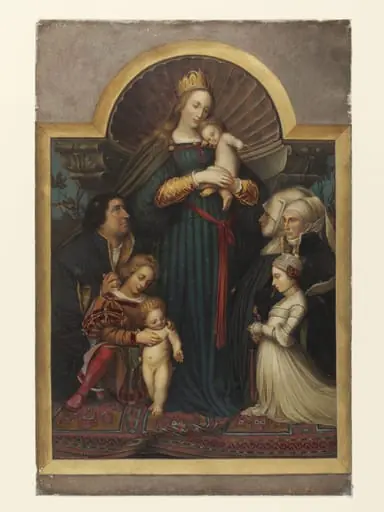 Copy after the painting Virgin and Child and Meyer Family by Hans Holbein in Darmstadt
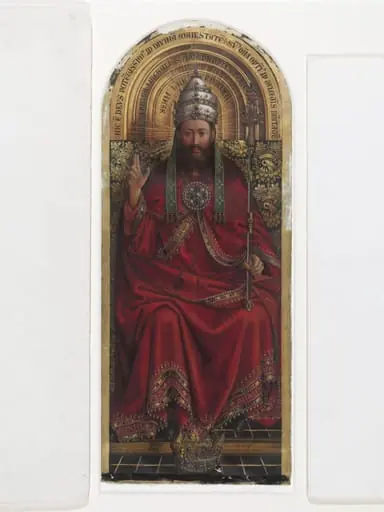 Copy of a detail of the Ghent Altarpiece, Triune God by Hubert and Jan van Eyck in the church of St Bavon, Ghent
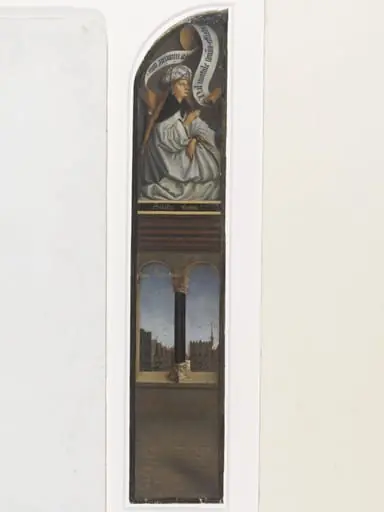 Copy of a detail of the Ghent Altarpiece, Sibyl of Erythrae, by Hubert and Jan van Eyck in the church of St Bavon, Ghent.
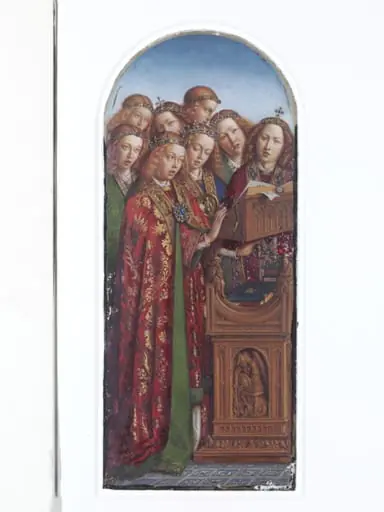 Copy of a detail of the Ghent Altarpiece, Angelic Choir, by Hubert and Jan van Eyck in the church of St Bavon, Ghent.
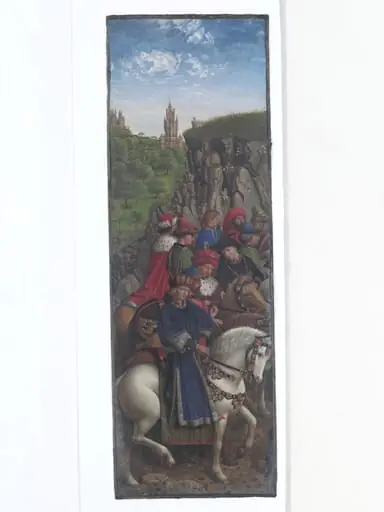 Copy of a detail of the Ghent Altarpiece, The Just Judges, by Hubert and Jan van Eyck in St Bavon, Ghent.
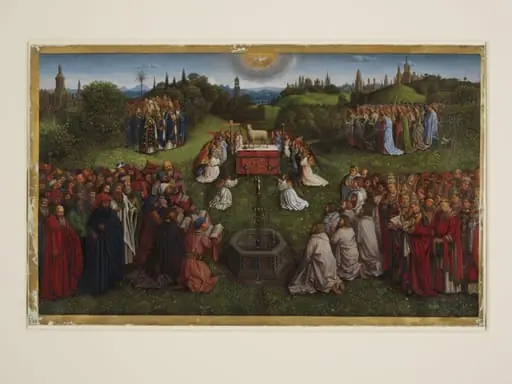 Copy of a detail of the Ghent Altarpiece, Adoration of the Lamb, by Hubert and Jan van Eyck in the church of St Bavon, Ghent.
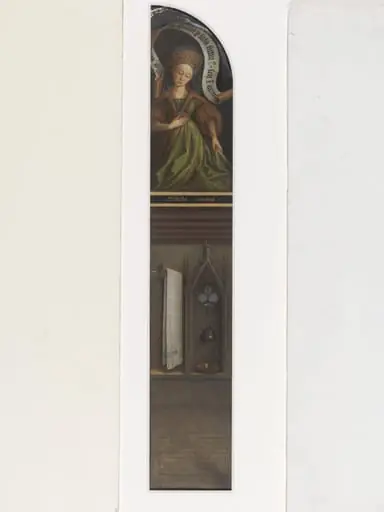 Copy of a detail of the Ghent Altarpiece, Sibyl of Cumaea, by Hubert and Jan van Eyck in the church of St Bavon, Ghent
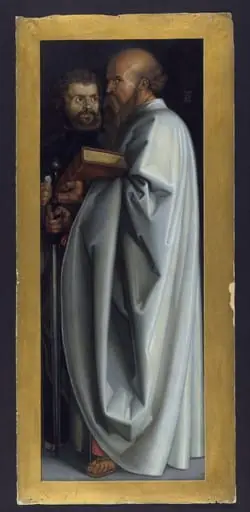 St Mark and St Paul
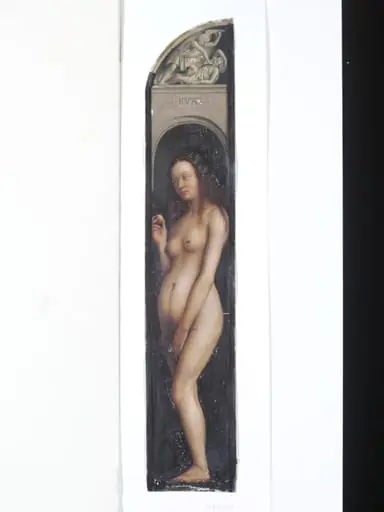 Copy of a detail of the Ghent Altarpiece, Eve, by Hubert and Jan van Eyck in the church of St Bavon, Ghent.
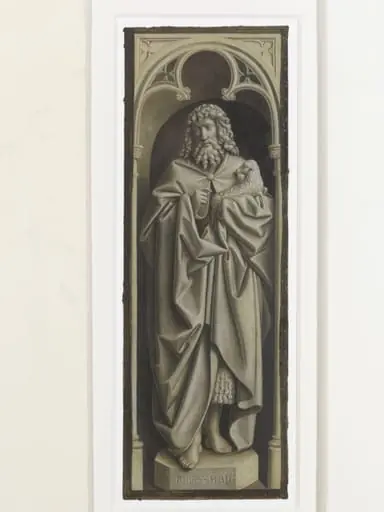 Copy of a detail of the Ghent Altarpiece, St John the Baptist by Hubert and Jan van Eyck in the church of St Bavon, Ghent.
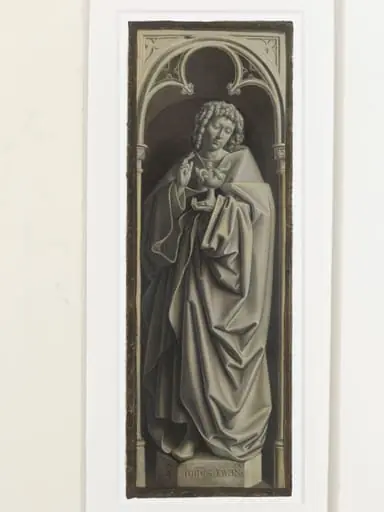 Copy of a detail of the Ghent Altarpiece, St John the Evangelist, by Hubert and Jan van Eyck in the church of St Bavon, Ghent.
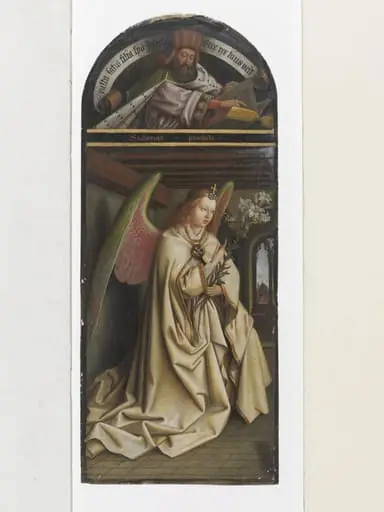 Copy of detail of the Ghent Altarpiece, Virgin Annunciate and Prophet, by Hubert and Jan van Eyck in the church of St Bavon, Ghent.
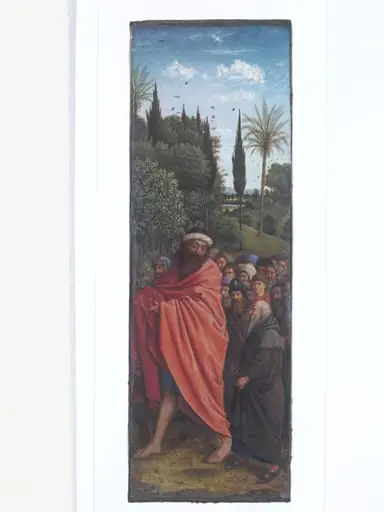 Copy of a detail of the Ghent Altarpiece, The Hermits, by Hubert and Jan van Eyck in the church of St. Bavon, Ghent.
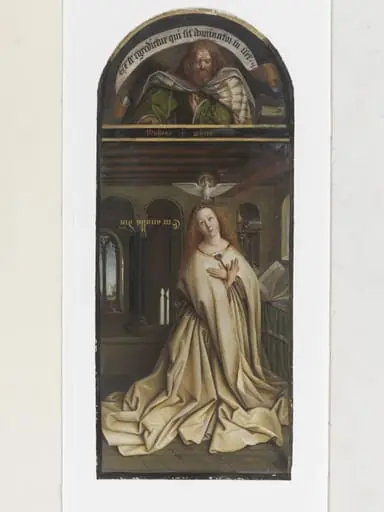 Copy of a detail of the Ghent Altarpiece, Annunicatory Angel and Prophet, by Hubert and Jan van Eyck in the church of St Bavon, Ghent.
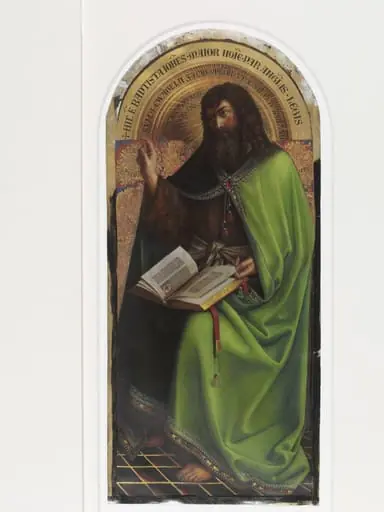 Copy of a detail from the Ghent Altarpiece, St John the Baptist by Hubert and Jan van Eyck in the church of St Bavon, Ghent.
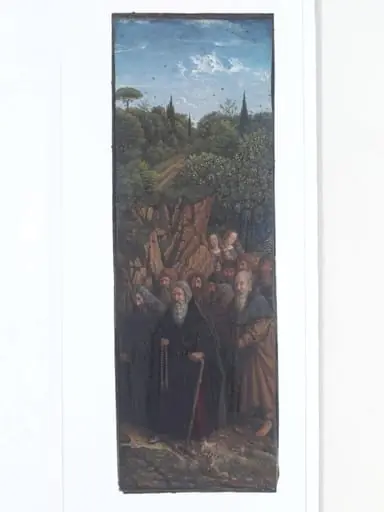 Copy of a detail of the Ghent Altarpiece, The Pilgrims, by Hubert and Jan van Eyck in the church of St. Bavon, Ghent.