Artwork
Blid tronconic cu fund plat, margine puțin ridicată și buza ușor oblică. Prezintă decor cu motive aviforme și florale: cocoș pe centru încadrat de trei flori; pe margine, circular, motive geometrice (semicercuri, lini, puncte, zig-zag). Cromatică: fond: brun-cărămiziu; motive: maro; verde; brun; galben.
Blid tronconic cu fund plat, margine puțin ridicată și buza ușor oblică. Prezintă decor cu motive aviforme și florale: cocoș pe centru încadrat de trei flori; pe margine, circular, motive geometrice (semicercuri, lini, puncte, zig-zag). Cromatică: fond: brun-cărămiziu; motive: maro; verde; brun; galben. is a photography by Ciungulescu Grigore. It is held in the collection of the ASTRA National Museum Complex. The object is a fragment of a fired clay vessel, its interior surface displaying a brown‑red slip.
About this work
Overview
The object is a fragment of a fired clay vessel, its interior surface displaying a brown‑red slip. Carved incisions outline a central bird motif, likely a rooster, encircled by three stylised flowers. A continuous border runs around the rim, composed of geometric elements such as semicircles, lines, dots and zig‑zag patterns.
Subject & Meaning
The central avian figure, paired with floral ornaments, reflects a common symbolic pairing in traditional pottery, where birds may signify vitality or domestic abundance and flowers represent fertility or seasonal cycles. The surrounding geometric band serves both decorative and possibly protective functions, framing the narrative scene.
Technique & Style
The decoration was achieved by incising the softened clay before firing, producing shallow grooves that contrast with the reddish‑brown background. The palette is limited to earthy tones—dark brown, green, yellow—applied as pigment washes that have darkened with age. The design balances naturalistic motifs with abstract geometric repetition, characteristic of folk ceramic traditions.
Context
Such vessels are typical of rural craft production in Eastern Europe, where utilitarian pottery often received modest yet purposeful adornment. The combination of avian and floral imagery with a geometric rim aligns with decorative conventions documented in ethnographic collections from the region during the late 19th to early 20th centuries.
Artist & collection
Artist
Grigore Ciungulescu spent his life in Oboga, a village where pottery wasn’t just a trade—it was a language.

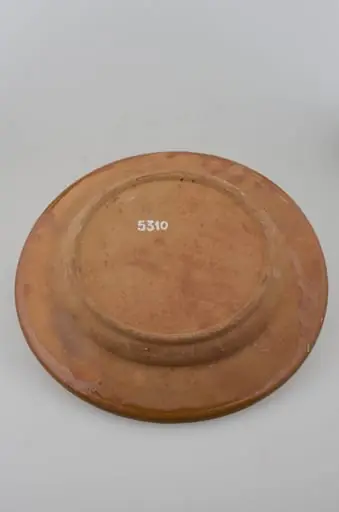 Blid tronconic cu fund plat, margine puțin ridicată și buza ușor oblică. Decor cu motive aviforme și florale: cocoș pe centru și o floare; pe margine, circular, motive geometrice (semicercuri, liniare, punctate, zig-zag). Cromatică: fond: cărămiziu; motive: maro; verde; alb; galben.
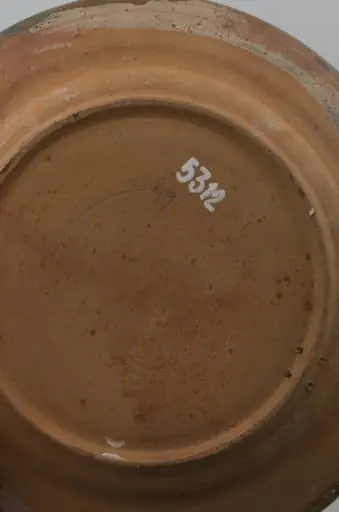 Vas circular cu fund plat, întins cu marginea puțin ridicată, continuată cu buza ușor oblică. Fundul farfuriei este de culoare verde închis. Întreaga suprafață este ornamentată cu motive geometrice (semicercuri, liniare, punctate, zig-zag, cercuri). Smălțuit în interior, exteriorul are culoarea lutului ars. Cromatică: fond: verde; motive: alb; brun; galben.
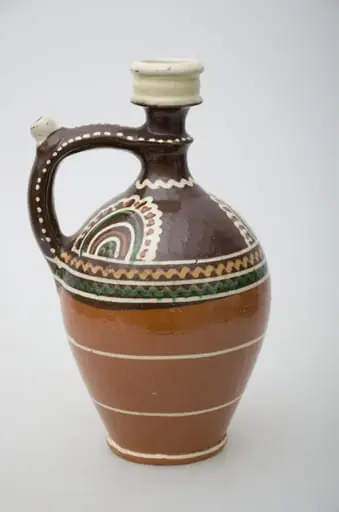 Vas smălțuit de formă ovoidală cu gât alungit care se termină cu o gură cu manșon și buza circulară. Prezintă o toartă lată, arcuită, prevăzută cu o ”țâță” ce se prinde de gâtul piesei pe un inel în relief iar celălalt capăt de zona mediană a recipientului. Decorul realizat din motive geometrice este predominant în registrul superior al vasului, ilustrând o succesiune de linii circulare, linii meandrice, semicercuri, puncte. Pe toartă sunt pictate trei șiruri de puncte albe. În partea inferioară sunt pictate trei linii circulare, distanțate. Cromatică: fond: maro închis (în partea superioară), maro deschis (în partea inferioară); motive: verde, crem, maro, alb.
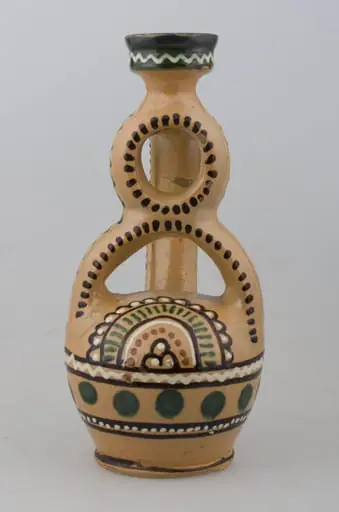 Corpul de formă sferică este plat în partea inferioară. Se continuă cu o mănușă dublă terminată printr-o gură ale cărei margini sunt rotunjite. Din mănușa dublă pornește o nouă mănușă care este prevăzută cu o ”țâță”, capătul celălalt este prins de corpul vasului. Gura și ”țâța” sunt verzi. Ulciorul este de culoare crem, ornamentul realizat cu cornul se compune din linii drepte și șerpuite, puncte și flori. Motivele sunt de culoare: verde; maro; alb. Smălțuit la exterior.
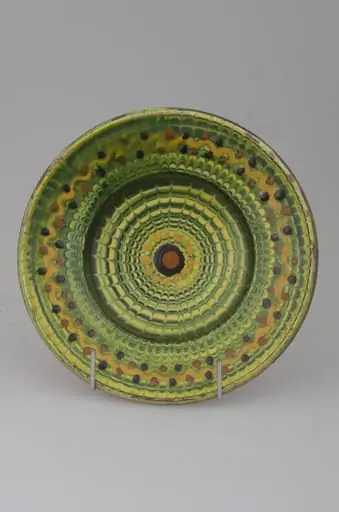 Vas cu fundul plat cu marginea puțin ridicată ce se continuă cu buza ușor oblică, având marginea puțin rotunjită. Întreaga suprafață este ornamentată în tehnica jirăvirii. Pe buza farfuriei peste jirăveală este trasă cu cornul o linie șerpuită însoțită de o parte și de alta de puncte maron închis și cărămiziu. Fondul este de culoare verde. Motive: negru; galben; cărămiziu.
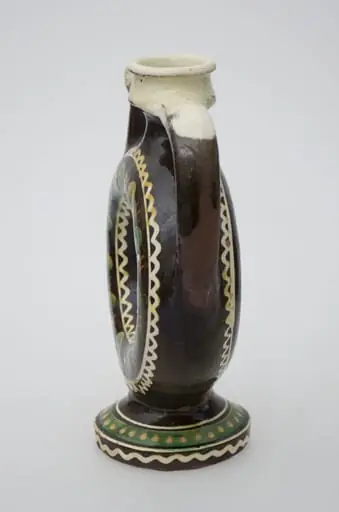 Ulcior-covrig cu manușă puternic arcuită având ”țâța” în părți: ornament cu"ochișori" încadrat de o linie dreptă și una șerpuită; Cromatică: fond: maron; motive: verde; cărămiziu; alb; crem.
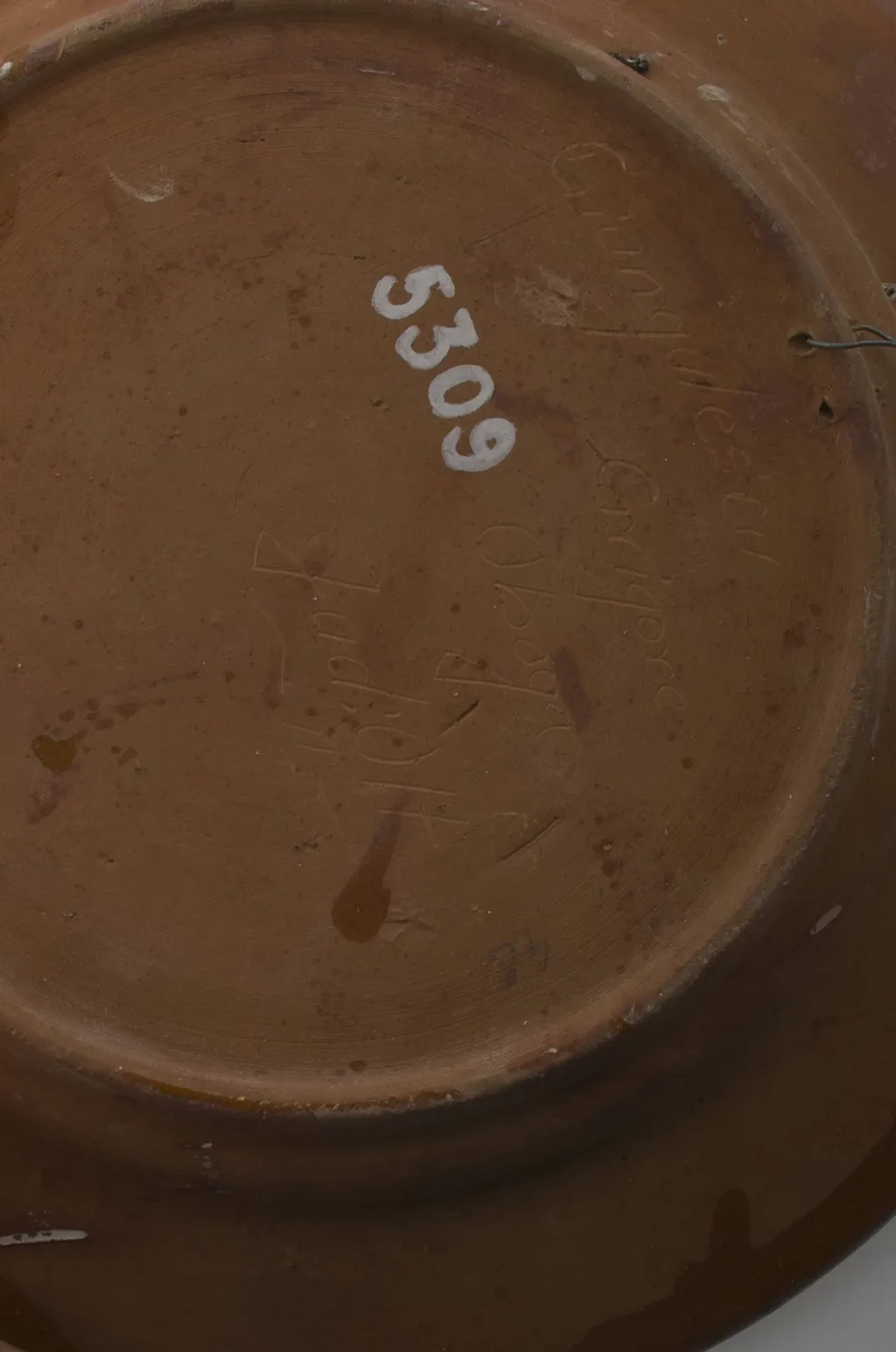
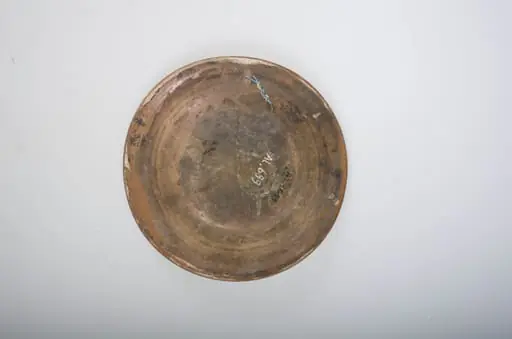
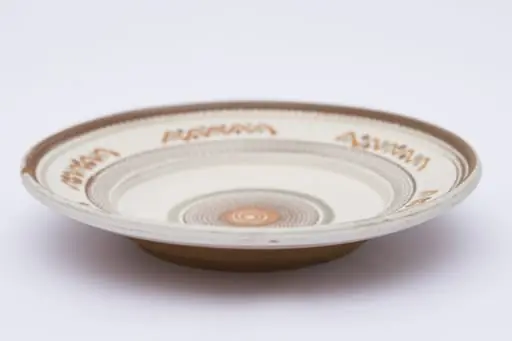 Farfurie nesmălțuită cu fundul lat, pereții puțin înălțați. Centrul farfuriei este marcat de o spirală înconjurată de o pânză de păianjen cu gaiță, închisă într-un cerc gri făcut cu pensula. Pe pereți pânza jirăvită, urmată de cinci motive cu val, în alternanță cu buline, și din nou pânza jirăvită. Prevăzută cu două găuri la baza inelară pe partea posterioară, pentru prindere. Dorsal, pe fundul vasului, incizată inscripția ”Ciungulescu Grigore Oboga 1980''. Cromatică: fond: alb; motive: maro; maro închis; cenușiu.
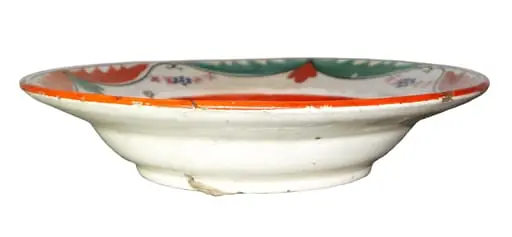 Obiectul are o formă tronconică cu baza mică în partea inferioară; pe spatele farfuriei se găsește o gaură pentru sfoara cu ajutorul căreia se atârnă pe perete. Piesa dispune de motive decorative vegetale, florale și geometrice realizate prin pictare, situate între două cercuri concentrice, unul la buza farfuriei, celălalt câțiva centrimetri mai jos; pe fundul farfuriei avem, de asemenea, motive decorative florale și vegetale. Motivele decorative (din partea superioară) reprezintă frunze, flori, "X"-uri și linii curbe asemănătoare acoladelor sau cârceilor de viță de vie, fiind pictate de jur-împrejurul suprafeței respective. Fundul farfuriei este decorat cu un trandafir mare cu frunze, plus alte două flori mai mici. Culoarea (fondul) piesei este albă iar pictura este realizată cu verde deschis, albastru, ocru, roz, galben și negru
 Blid de formă tronconică cu buza evazată și decor amplasat pe întreaga suprafață interioară. Blidul este decorat cu motive geometrice, linie, cerc, spirală, și motive vegetale stilizate. Cromatică: fond: crem; decor: cărămiziu; albastru; verde.
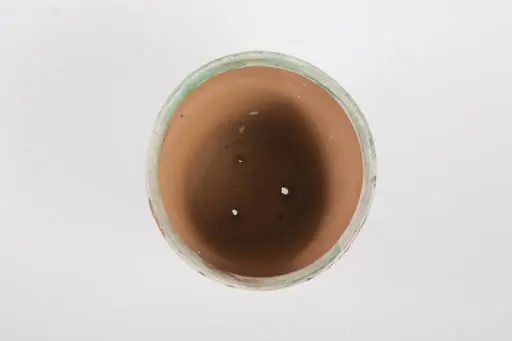 Vas de mici dimensiuni de formă tronconică cu baza mai mică; manșon sub gură lat de 4 cm, decorat cu motive geometrice: șir de romburi înscrise realizate cu cornul. Fund perforat pentru scurgerea apei. Cromatică: fond: cărămiziu; motive: galben; negru.
 Vas adânc, smălțuit pe întreaga suprafață. Pe fond alb prezintă motive florale și vegetale în interiorul vasului, realizate prin pictarea cu pensula. Gura vasului conturată cu culoarea maron, interior în partea superioară mai există o linie maron dispusă circular. Cromatică: fond: alb; culori: verde; albastru; ocru; maron. La baza vasului matrițat ”N 10” și scris prin incizare ”Grafit 4”.
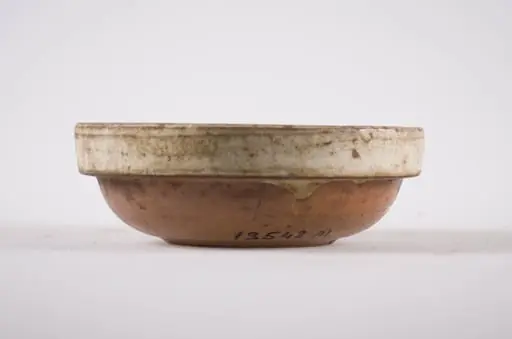
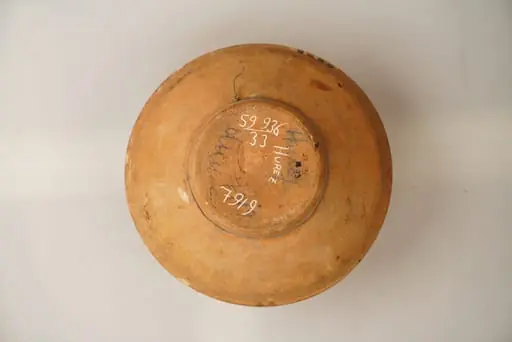 Farfurie adâncă de tip castron, cu corpul tronconic și buza dreaptă, verticală cu muchia buzei ușor răsfrântă spre exterior; este acoperită pe suprafața interioară cu un strat de angobă albă peste care este pictat cu cornul decorul format din motive geometrice dispuse astfel: centrul farfuriei este decorat cu un cerc de culoare maro ce este dublat pe exterior cu linii mici în formă de semicercuri, simulând petalele unei flori, iar în interior conținând un mic element decorativ neregulat, de culoare maro. Peretele farfuriei este decorat în jumătatea sa inferioară cu linii circulare în culorile roșu, verde-deschis, maro, completate cu șapte grupuri de motive formate din semicercuri mici de culoare maro și cu un șir de linii maro în formă de semicercuri mai mari, alăturate, având în interior linii curbe de culoare verde-deschis și roșu. Muchia buzei este decorată cu o linie circulară maro, ondulată mărunt. Suprafața farfuriei nu este smălțuită. Cromatica: alb, verde-deschis, roșu, maro.
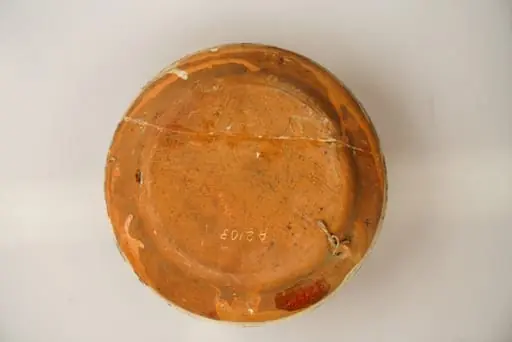 Farfurie de formă aplatizată, cu buza evazată și ușor concavă spre interior; este angobată pe suprafața interioară cu un strat de humă albă peste care este pictat cu pensula și cu cornul decorul format din motive geometrice, dispuse pe întreaga suprafață a piesei: linii groase verzi sub formă de semicerc, cu contur maro; grupuri de linii paralele crescătoare și descrescătoare dispuse pe buză sub formă de triunghi cu vârful orientat spre interior; linii circulare simple și ondulate; linii drepte groase de culoare verde cu contur maro; elemente vegetale geometrizate (frunze?) verzi sau cu linii mici maro în interior; motive sugerând mici flori cu petale rotunde. Suprafața ornamentată a farfuriei este acoperită cu un strat de smalț transparent. Cromatica: alb, albastru.
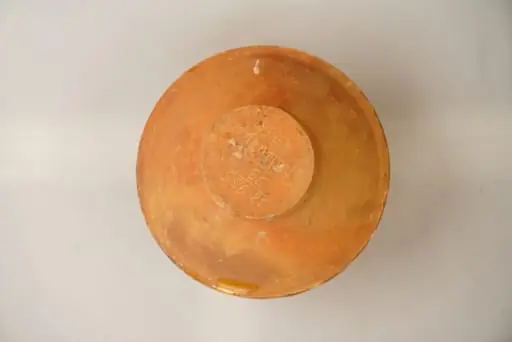 Farfurie adâncă de tip castron, cu fund îngust, corp tronconic și buză verticală, dreaptă. Decorul este pictat cu cornul, cu humă albă, direct pe suprafața neangobată a vasului și se compune din motive geometrice: două linii spiralate circulare, una care marchează centrul farfuriei, cea de-a doua pe peretele vasului, imediat sub buză; între aceste două linii spiralate se regăsește o linie circulară ondulată. Buza farfuriei este decorată pe exterior cu o linie circulară ondulată, de culoare albă, iar pe suprafața interioară, decorul farfuriei este completat cu pete de culoare verde, realizate prin picurarea culorii cu pensula. Suprafața ornamentată a farfuriei este acoperită cu un strat de smalț transparent. Cromatica: alb, verde, pe fondul roșu al lutului ars.