Artwork
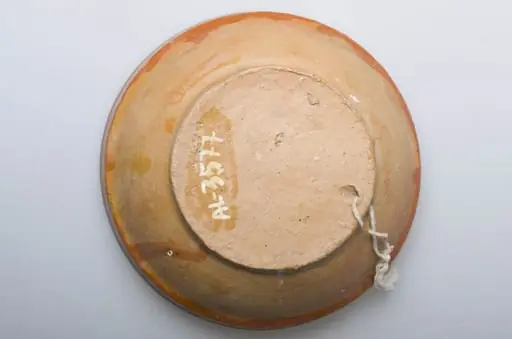
Vas circular cu fund plat, întins cu marginea puțin ridicată, continuată cu buza ușor oblică. Fundul farfuriei este de culoare verde închis. Întreaga suprafață este ornamentată cu motive geometrice (semicercuri, liniare, punctate, zig-zag, cercuri). Smălțuit în interior, exteriorul are culoarea lutului ars. Cromatică: fond: verde; motive: alb; brun; galben.
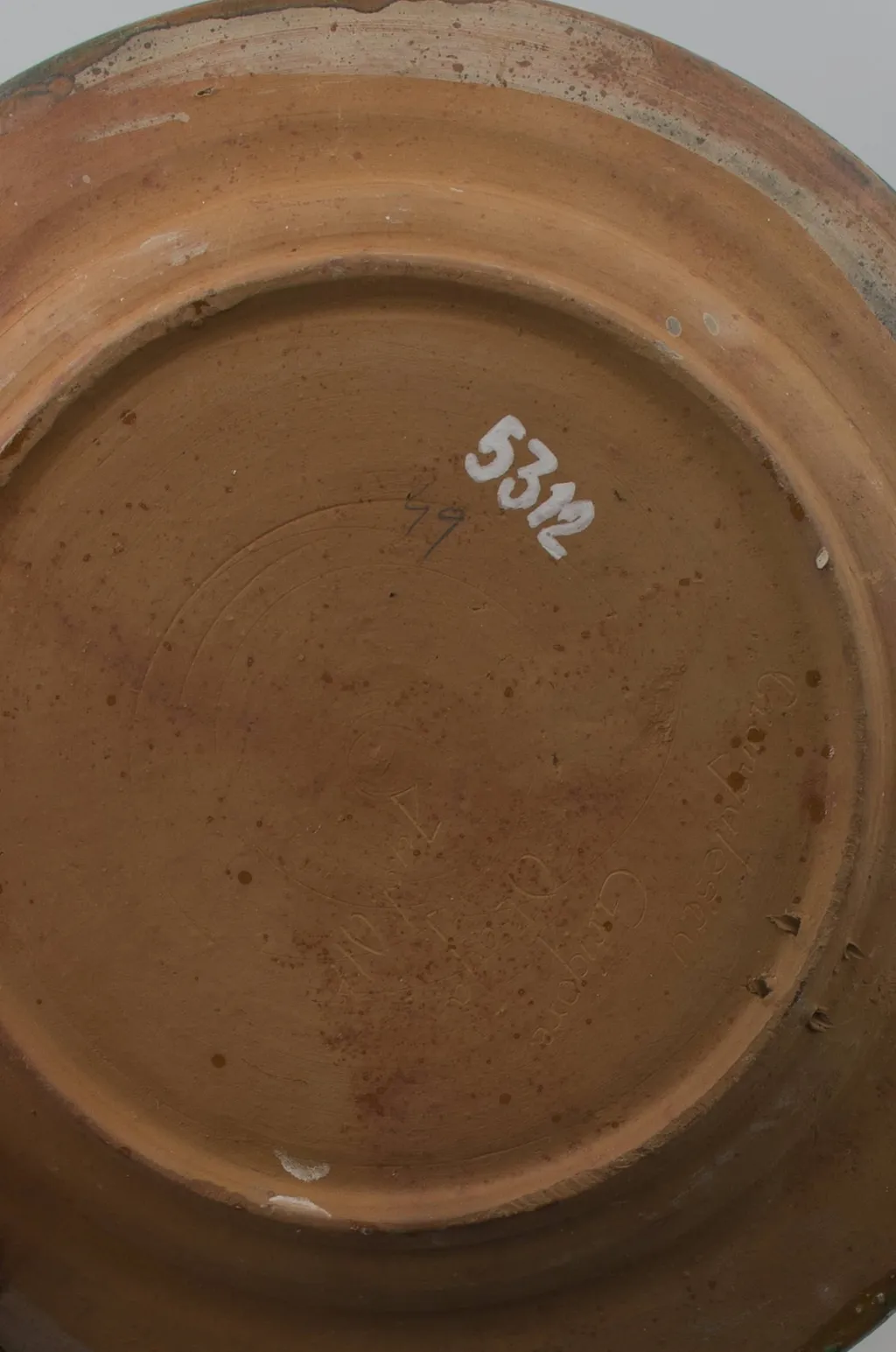
Vas circular cu fund plat, întins cu marginea puțin ridicată, continuată cu buza ușor oblică. Fundul farfuriei este de culoare verde închis. Întreaga suprafață este ornamentată cu motive geometrice (semicercuri, liniare, punctate, zig-zag, cercuri). Smălțuit în interior, exteriorul are culoarea lutului ars. Cromatică: fond: verde; motive: alb; brun; galben. is a print by Ciungulescu Grigore. It is held in the collection of the ASTRA National Museum Complex. The object is a shallow, circular clay bowl with a modestly raised rim and a flat base.
About this work
Overview
The object is a shallow, circular clay bowl with a modestly raised rim and a flat base. Its interior is left unglazed, displaying the natural brown of fired earthenware, while the exterior rim bears a faint reddish‑brown tone typical of the clay body. The piece measures a few centimeters in diameter and is functional in form.
Technique & Style
The bowl’s surface is covered with painted geometric motifs applied in green, white, brown and yellow pigments. Designs include semicircles, linear bands, dotted lines, zig‑zag patterns and circles, likely executed with simple brushes or pointed tools before the final firing. The painted decoration contrasts with the unglazed interior, emphasizing the exterior as the visual focus.
Subject & Meaning
The geometric ornamentation follows a decorative tradition that emphasizes abstract pattern over representational imagery. Repeated shapes such as zig‑zags and semicircles may have conveyed symbolic or aesthetic values linked to local visual language, serving both to beautify a utilitarian object and to mark cultural identity.
Context
Such painted earthenware bowls are typical of regional pottery workshops where low‑tech production methods were combined with modest surface decoration. The use of a green ground with white geometric designs aligns with broader patterns observed in neighboring ceramic traditions, suggesting shared aesthetic conventions across communities.
Artist & collection
Artist
Grigore Ciungulescu spent his life in Oboga, a village where pottery wasn’t just a trade—it was a language.

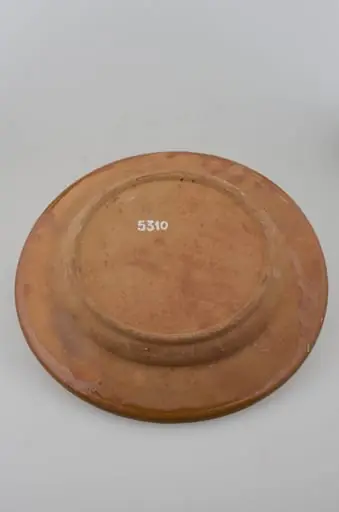 Blid tronconic cu fund plat, margine puțin ridicată și buza ușor oblică. Decor cu motive aviforme și florale: cocoș pe centru și o floare; pe margine, circular, motive geometrice (semicercuri, liniare, punctate, zig-zag). Cromatică: fond: cărămiziu; motive: maro; verde; alb; galben.
 Blid tronconic cu fund plat, margine puțin ridicată și buza ușor oblică. Prezintă decor cu motive aviforme și florale: cocoș pe centru încadrat de trei flori; pe margine, circular, motive geometrice (semicercuri, lini, puncte, zig-zag). Cromatică: fond: brun-cărămiziu; motive: maro; verde; brun; galben.
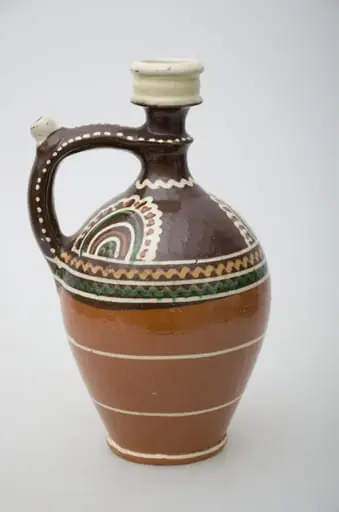 Vas smălțuit de formă ovoidală cu gât alungit care se termină cu o gură cu manșon și buza circulară. Prezintă o toartă lată, arcuită, prevăzută cu o ”țâță” ce se prinde de gâtul piesei pe un inel în relief iar celălalt capăt de zona mediană a recipientului. Decorul realizat din motive geometrice este predominant în registrul superior al vasului, ilustrând o succesiune de linii circulare, linii meandrice, semicercuri, puncte. Pe toartă sunt pictate trei șiruri de puncte albe. În partea inferioară sunt pictate trei linii circulare, distanțate. Cromatică: fond: maro închis (în partea superioară), maro deschis (în partea inferioară); motive: verde, crem, maro, alb.
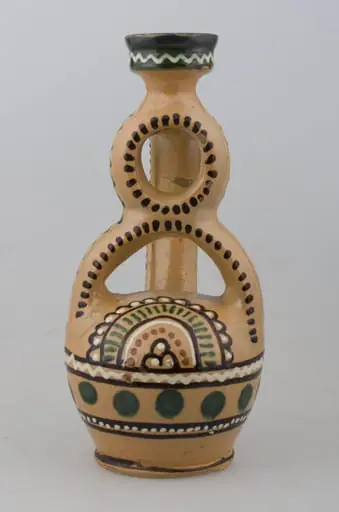 Corpul de formă sferică este plat în partea inferioară. Se continuă cu o mănușă dublă terminată printr-o gură ale cărei margini sunt rotunjite. Din mănușa dublă pornește o nouă mănușă care este prevăzută cu o ”țâță”, capătul celălalt este prins de corpul vasului. Gura și ”țâța” sunt verzi. Ulciorul este de culoare crem, ornamentul realizat cu cornul se compune din linii drepte și șerpuite, puncte și flori. Motivele sunt de culoare: verde; maro; alb. Smălțuit la exterior.
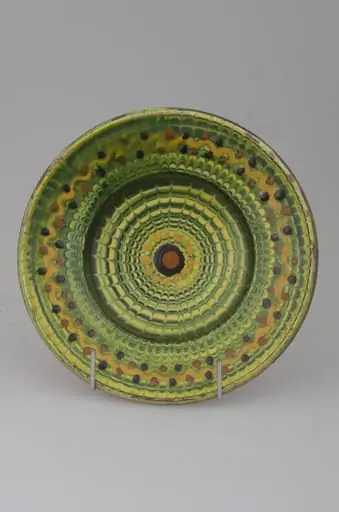 Vas cu fundul plat cu marginea puțin ridicată ce se continuă cu buza ușor oblică, având marginea puțin rotunjită. Întreaga suprafață este ornamentată în tehnica jirăvirii. Pe buza farfuriei peste jirăveală este trasă cu cornul o linie șerpuită însoțită de o parte și de alta de puncte maron închis și cărămiziu. Fondul este de culoare verde. Motive: negru; galben; cărămiziu.
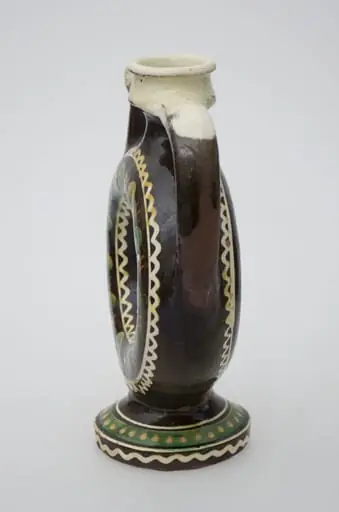 Ulcior-covrig cu manușă puternic arcuită având ”țâța” în părți: ornament cu"ochișori" încadrat de o linie dreptă și una șerpuită; Cromatică: fond: maron; motive: verde; cărămiziu; alb; crem.
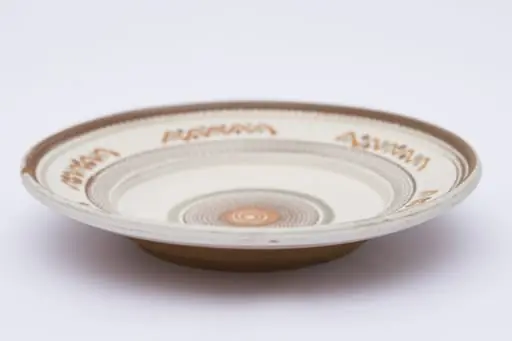 Farfurie nesmălțuită cu fundul lat, pereții puțin înălțați. Centrul farfuriei este marcat de o spirală înconjurată de o pânză de păianjen cu gaiță, închisă într-un cerc gri făcut cu pensula. Pe pereți pânza jirăvită, urmată de cinci motive cu val, în alternanță cu buline, și din nou pânza jirăvită. Prevăzută cu două găuri la baza inelară pe partea posterioară, pentru prindere. Dorsal, pe fundul vasului, incizată inscripția ”Ciungulescu Grigore Oboga 1980''. Cromatică: fond: alb; motive: maro; maro închis; cenușiu.
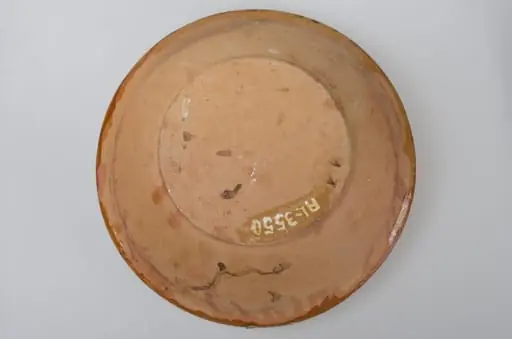 Vas de formă tronconică cu buza dreapta. Decorul este amplasat pe toată suprafața interioară și parțial în exterior, pe buză. Acesta este compus din motive geometrice (val); motive fitomorfe, plasate pe fund (frunza) și motive florale, tot pe fund (pansea). Blidul este smălțuit la interior și pe zona exterioară a buzei. Cromatică: fond: maron; motive: alb, verde.
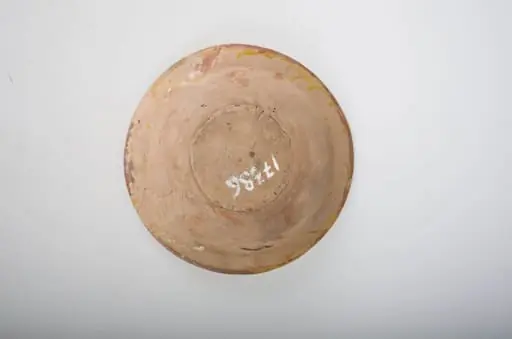 Vas din lut de formă tronconică, cu gura mai largă decât baza și smălțuită la interior. Ornamentată cu motive geometrice și vegetale în felul următor: pe fundul vasului este pictată cu pensula o crenguță cu frunze, împrejmuită în continuare spre pereții vasului de o spirală. Tot aici, este pictat cu negru, litera ”F” și ”R”. Pe marginea vasului, sunt flori dispuse circular cu tulpini și frunze mari, având petalele rotunde, bicolore. Prezintă uzură funcțională. Cromatică: fundal cărămiziu; motive: galben; negru.
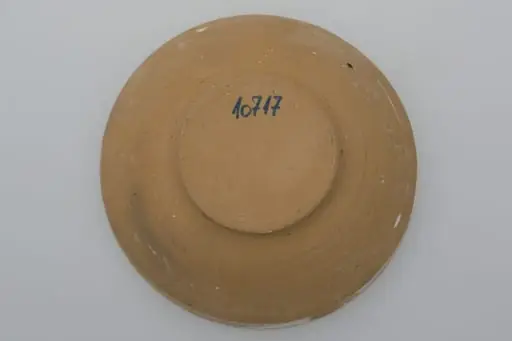 Recipient din lut de uz casnic, nesmălțuit, angobat, de formă circulară, cu profil tronconic, cu buza dreaptă și înaltă. Pe pereții interiori, vasul este decorat cu cornul, cu motive geometrice și florale: un contur de floare urmat de un șir de flori mici stilizate. Spre gura strachinii, la interior, sunt prezente linii concentrice, maro. În centrul vasului este pictată o spirală. Buza vasului este ornată cu o linie ondulată. Cromatică: fond: alb; motive: gri, maro închis, maro deschis.
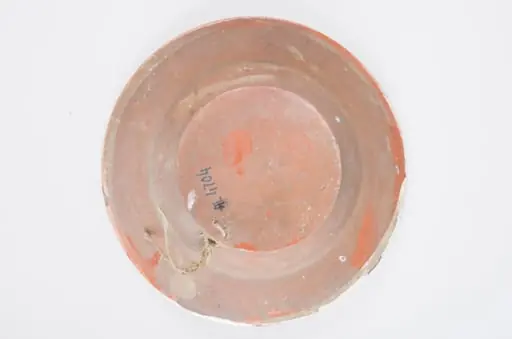 Farfurie cu fundul adâncit și buza evazată. Smălțuită numai în interior și cu scurgeri de smalț sub buză. Prezintă găuri pentru prinderea aței în vederea agățării. Decorată cu motive florale și geometrice: central un buchet de trei flori; pe margine trei linii frânte concentrice. Cromatică: fond: alb; motive: maro; portocaliu; verde; albastru.
 Blid de formă tronconică, cu gura largă, înaltă și dreaptă, smălțuit integral în partea interioară și în exterior doar la nivelul buzei. Este decorat din interior cu motive florale: trei flori - una albă central încadrată de doi brăduți și două verzi lateral; motive geometrice: trei linii ondulate deasupra florii albe și unghiuri de diferite dimensiuni între cele două flori verzi. Fundul este circular și prezintă un orificiu pentru agățare. Cromatică: fond: cărămiziu; motive: alb; verde; negru.