Artwork
Ulcior-covrig cu manușă puternic arcuită având ”țâța” în părți: ornament cu"ochișori" încadrat de o linie dreptă și una șerpuită; Cromatică: fond: maron; motive: verde; cărămiziu; alb; crem.
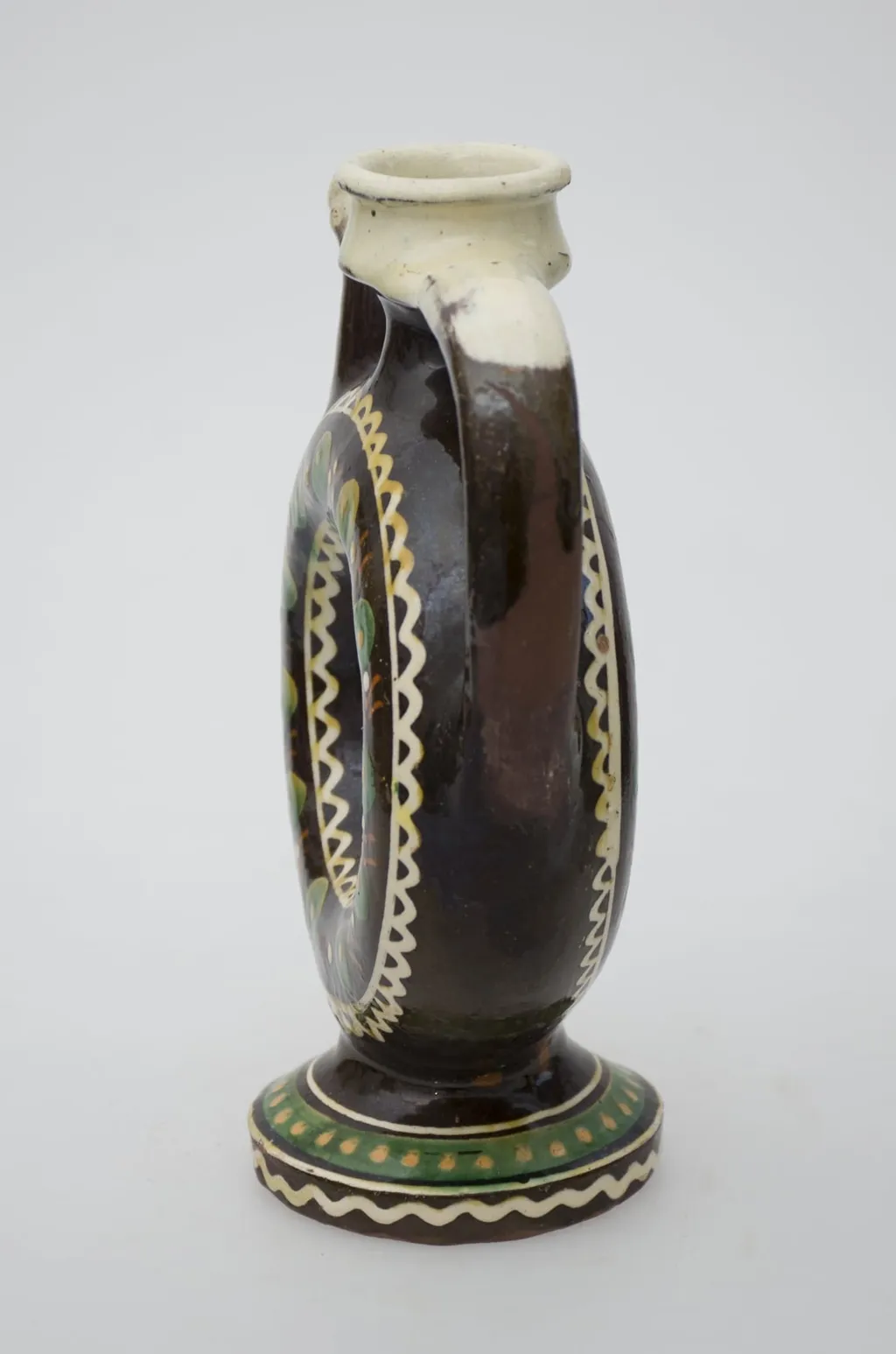
Ulcior-covrig cu manușă puternic arcuită având ”țâța” în părți: ornament cu"ochișori" încadrat de o linie dreptă și una șerpuită; Cromatică: fond: maron; motive: verde; cărămiziu; alb; crem. is a photography by Ciungulescu Grigore. It is held in the collection of the ASTRA National Museum Complex. This ceramic vessel features a robust, curved handle and a wide, scalloped base, suggesting functional use alongside decorative intent.
About this work
Overview
The surface displays a deliberate interplay of linear and organic forms, with outlined shapes and dotted accents arranged in rhythmic sequences.
This ceramic vessel features a robust, curved handle and a wide, scalloped base, suggesting functional use alongside decorative intent. Its dark brown body serves as a ground for painted motifs in green, cream, white, and reddish-orange. The surface displays a deliberate interplay of linear and organic forms, with outlined shapes and dotted accents arranged in rhythmic sequences. The rim is uniformly white, contrasting with the darker body and enhancing the vessel’s silhouette.
Subject & Meaning
The painted elements include small green forms with black borders and clusters of red-orange dots, possibly representing symbolic motifs common in regional folk traditions. The swirling lines and straight borders may denote natural or cosmological references, though their exact meaning remains undocumented. The arrangement suggests a coded visual language, perhaps tied to local rituals or identity, but no definitive iconographic interpretation has been established.
Technique & Style
The vessel was hand-formed, with a thick neck and uneven base indicating manual shaping rather than wheel-throwing. Pigments were applied with precision against the dark slip, using fine brushes or styluses to create sharp outlines and dense dot patterns. The color palette—limited to earth tones and white—reflects locally available materials. The contrast between bold lines and delicate dots reveals a controlled, deliberate aesthetic rooted in craft rather than mass production.
History & Provenance
The object’s origin is not definitively recorded, but its form and decoration align with pottery traditions from the Romanian countryside, particularly in the 19th to early 20th centuries. Similar vessels have been associated with rural households and regional artisans. The stylistic parallels to works by Ciungulescu Grigore suggest a connection to documented folk ceramic practices in Moldavia or Wallachia, though direct attribution remains unverified.
Context
This piece belongs to a broader corpus of Romanian folk ceramics that blend utility with symbolic ornamentation. Its color scheme and motifs echo regional practices where household pottery served both daily needs and cultural expression. The absence of glaze and the use of mineral-based pigments point to pre-industrial production methods. Such objects were often made for local use, passed down through generations, and rarely documented by contemporary sources.
Legacy
Though not widely exhibited or studied, this vessel contributes to the understanding of vernacular ceramic traditions in Eastern Europe. Its preservation offers insight into the visual vocabulary of rural artisans who adapted inherited forms to local materials and tastes. Scholars continue to compare such pieces with documented works by figures like Ciungulescu Grigore, seeking to map regional stylistic lineages within a broader folk art framework.
Artist & collection
Artist
Grigore Ciungulescu spent his life in Oboga, a village where pottery wasn’t just a trade—it was a language.

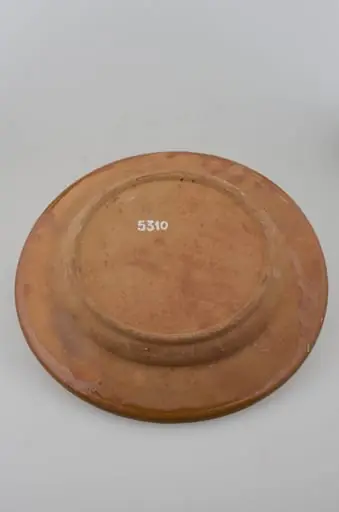 Blid tronconic cu fund plat, margine puțin ridicată și buza ușor oblică. Decor cu motive aviforme și florale: cocoș pe centru și o floare; pe margine, circular, motive geometrice (semicercuri, liniare, punctate, zig-zag). Cromatică: fond: cărămiziu; motive: maro; verde; alb; galben.
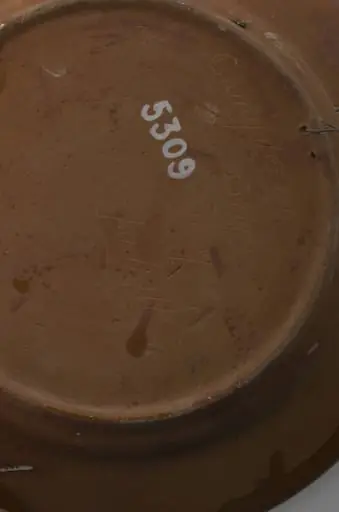 Blid tronconic cu fund plat, margine puțin ridicată și buza ușor oblică. Prezintă decor cu motive aviforme și florale: cocoș pe centru încadrat de trei flori; pe margine, circular, motive geometrice (semicercuri, lini, puncte, zig-zag). Cromatică: fond: brun-cărămiziu; motive: maro; verde; brun; galben.
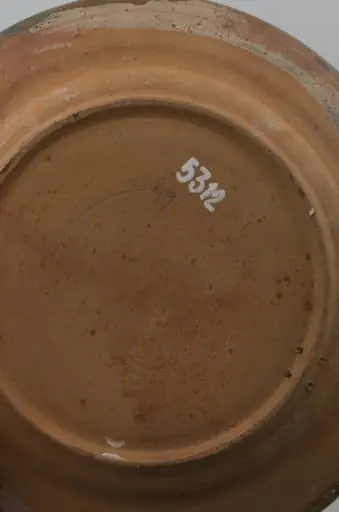 Vas circular cu fund plat, întins cu marginea puțin ridicată, continuată cu buza ușor oblică. Fundul farfuriei este de culoare verde închis. Întreaga suprafață este ornamentată cu motive geometrice (semicercuri, liniare, punctate, zig-zag, cercuri). Smălțuit în interior, exteriorul are culoarea lutului ars. Cromatică: fond: verde; motive: alb; brun; galben.
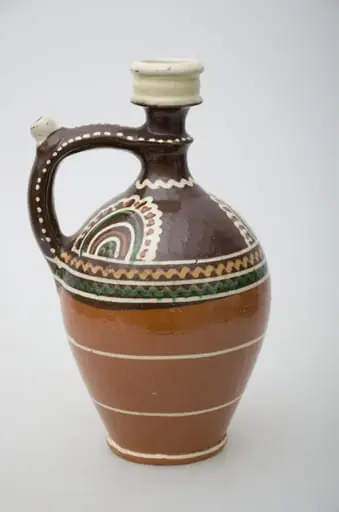 Vas smălțuit de formă ovoidală cu gât alungit care se termină cu o gură cu manșon și buza circulară. Prezintă o toartă lată, arcuită, prevăzută cu o ”țâță” ce se prinde de gâtul piesei pe un inel în relief iar celălalt capăt de zona mediană a recipientului. Decorul realizat din motive geometrice este predominant în registrul superior al vasului, ilustrând o succesiune de linii circulare, linii meandrice, semicercuri, puncte. Pe toartă sunt pictate trei șiruri de puncte albe. În partea inferioară sunt pictate trei linii circulare, distanțate. Cromatică: fond: maro închis (în partea superioară), maro deschis (în partea inferioară); motive: verde, crem, maro, alb.
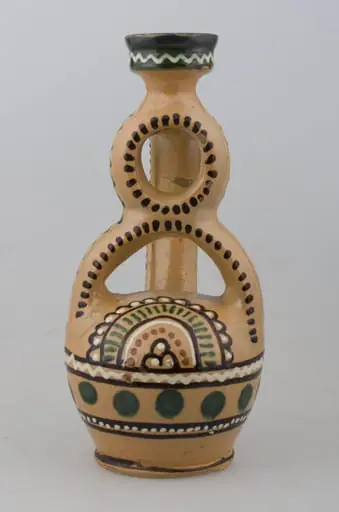 Corpul de formă sferică este plat în partea inferioară. Se continuă cu o mănușă dublă terminată printr-o gură ale cărei margini sunt rotunjite. Din mănușa dublă pornește o nouă mănușă care este prevăzută cu o ”țâță”, capătul celălalt este prins de corpul vasului. Gura și ”țâța” sunt verzi. Ulciorul este de culoare crem, ornamentul realizat cu cornul se compune din linii drepte și șerpuite, puncte și flori. Motivele sunt de culoare: verde; maro; alb. Smălțuit la exterior.
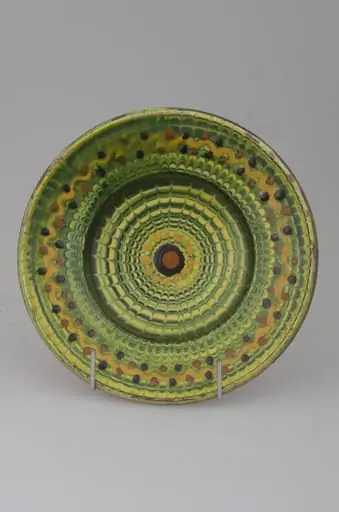 Vas cu fundul plat cu marginea puțin ridicată ce se continuă cu buza ușor oblică, având marginea puțin rotunjită. Întreaga suprafață este ornamentată în tehnica jirăvirii. Pe buza farfuriei peste jirăveală este trasă cu cornul o linie șerpuită însoțită de o parte și de alta de puncte maron închis și cărămiziu. Fondul este de culoare verde. Motive: negru; galben; cărămiziu.
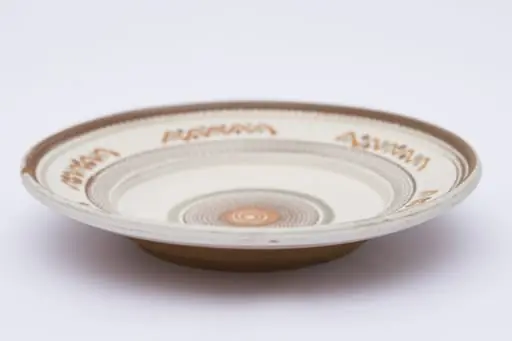 Farfurie nesmălțuită cu fundul lat, pereții puțin înălțați. Centrul farfuriei este marcat de o spirală înconjurată de o pânză de păianjen cu gaiță, închisă într-un cerc gri făcut cu pensula. Pe pereți pânza jirăvită, urmată de cinci motive cu val, în alternanță cu buline, și din nou pânza jirăvită. Prevăzută cu două găuri la baza inelară pe partea posterioară, pentru prindere. Dorsal, pe fundul vasului, incizată inscripția ”Ciungulescu Grigore Oboga 1980''. Cromatică: fond: alb; motive: maro; maro închis; cenușiu.
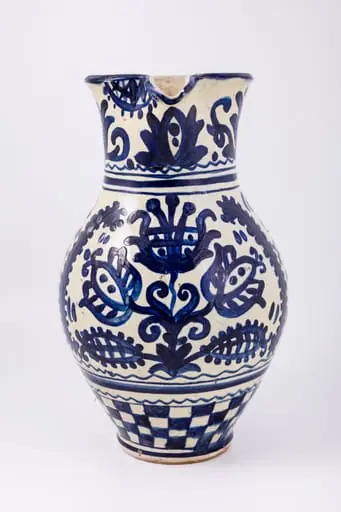 Cană piriformă prevăzută cu o toartă dreaptă și lată, gura rotundă, prevăzută cu cioc de scurgere. Suprafața decorativă a vasului este împărțită în patru registre decorative. Primul registru dispus pe gâtul piesei prezintă un decor floral și fitomorf reprezentând lalele și lujeri. Al doilea registru prezintă o linie vălurită și trei linii subțiri circulare. Decorul central, reprezintă trei „arbori ai vieții” stilizați realizați din trei lalele mari, înflorite, lujeri și frunze, separați de câte o semilună. Registrul al patrulea prezintă motivul tablei de șah. Deasupra toarte pictate cu motive florale și fitomorfe este redat anul confecționării piesei: 1980, iar pe fundul vasului numele persoanei care a pictat piesa: Herta Wilk. Cromatica: alb, albastru-cobalt.
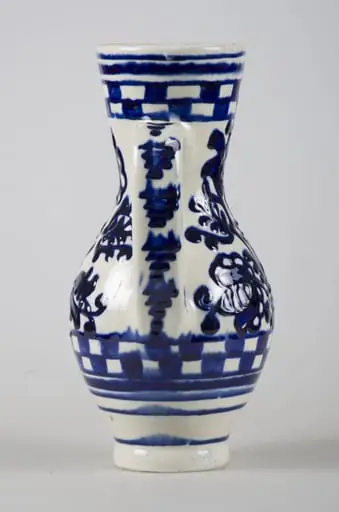 Vas ovoidal cu pântecul proeminent și relativ jos, cu gâtul înalt ce se lărgește spre buza evazată. Toarta pornește de la nivelul gâtului și se unește cu corpul în zona diametrului maxim al vasului. Este smălțuit în interior și exterior. Decorul este format din două vaze cu câte cinci lalele încadrate de motive geometrice: tabla de șah și câte două linii concentrice. Baza vasului este decorată cu două linii circulare. Toarta este decorată cu motive vegetale stilizate. Pe fundul vasului apare scris numele meșterului ”Jozsa Janos” și ”Korond”. Cromatică: fond: alb; motive: albastru.
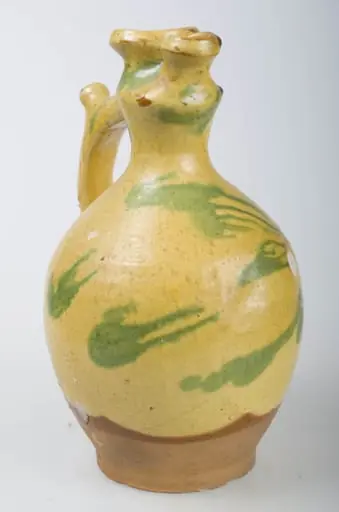 Recipient sferic cu gât îngust, gura bilobată, toartă cu țâță, piatră sunătoare și ciur. Ornamentat prin stropire cu smalț. Cromatică: fond: galben; decor: dungi verzi stropite.
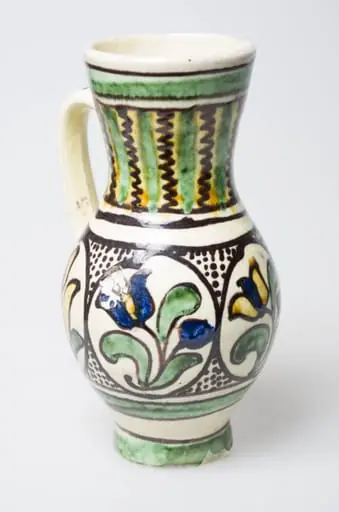 Recipient ceramic de formă ovoidală, smălțuit, cu gâtul lung, fund inelar și buza dreaptă. Prevăzut cu o toartă arcuită, care pleacă din mijlocul gâtului spre partea inferioară a vasului. Intens stilizat cu motive florale, vegetale și geometrice, pictate cu pensula, în două registre diferite. În primul registru, situat în zona gâtului, sunt pictate dungi late și linii meandrice dispuse pe verticală, alternativ. Aproape de gura vasului, sunt prezente dungi late și linii circulare. În al doilea registru întâlnim patru flori încadrate în cercuri și între acestea, puncte mici, umplând astfel cu decorații toată zona bombată a recipientului. Registrele sunt delimitate între ele de trei linii circulare. În partea inferioară, întâlnim ca și la gură, o dungă lată încadrată de două linii circulare. Prezent motiv geometric pe toartă sub formă de linie vălurită. Cromatică: fundal: alb; motive: galben; albastru; verde; maro închis.
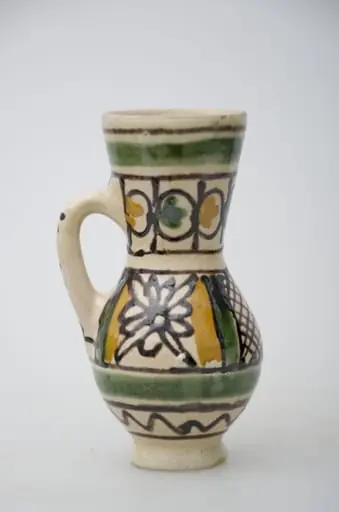 Vas ceramic de formă bitronconică, smălțuit de mici dimensiuni, cu baza plată și bombat în zona „pântecelui”. Prezintă o toartă ce pornește din zona gâtului redus ca dimensiuni și se termină în zona diametrul maxim al vasului. Decorul vasului este compus din două registre picturale. În primul registru, mărginit de două linii drepte subțiri, de culaore maro închis, au fost pictate două flori conturate cu negru și încadrate de câte două linii groase de culoare verde și galben. Cel de-al doilea registru este compus din boboci de culoare verde și galben, fiind dispuși concentric pe gâtul vasului. Ambele registre picturale sunt încadrate între două linii groase circulare, verzi. Pe toartă a fost redactat textul: „KORUND”. Prezintă uzură funcțională. Cromatică: fond: alb; motive: galben, verde, maro închis.
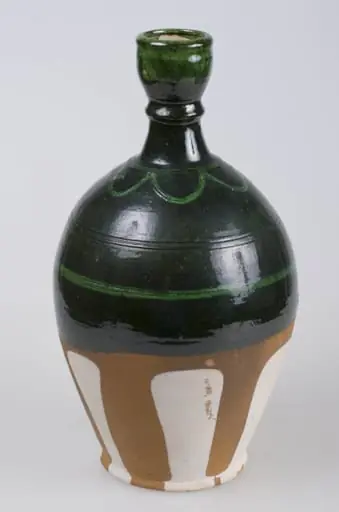 Vasul este zvelt și înalt, cu baza îngustă ce se lărgește spre pântecul vasului înălțat, gâtul subțire și lung, buza mai groasă și lată. De jumătatea gâtului se prinde toarta cu țâț printr-un guler. Jumătatea de jos este nesmălțuită și prezintă dungi verticale, de vopsea albă. Jumătatea de sus este smălțuită în verde închis. Decorul este format dintr-un brâu de semicercuri în jurul gâtului - două dungi paralele pe pântec realizat prin incizie de culoare verde închis. Cromatică: alb; maro; verde.
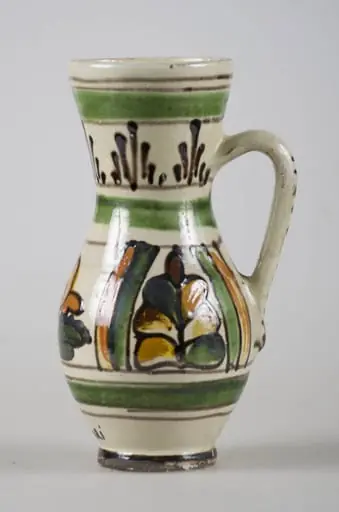 Vas de formă bitronconică; cu fundul plat din care pornește pântecul bombat, de formă ovală ce se îngustează în partea superioară, cu gâtul lung și evazat, buza largă. De la locul de întâlnire al gâtului cu corpul vasului pornește toarta arcuită ce se prinde în zona diametrului maxim al vasului. Este smălțuit în interior și exterior. Decorul este împărțit în două registre: unul situat pe gâtul vasului și este format din motive florale și vegetale stilizate realizate din linii, încadrate între două linii orizontale circulare, celălalt bombat albastru este format din trei flori separate între ele de câte două benzi verticale de culoare verde și cărămiziu, mărginite de câte o linie maro, întreg acest ansamblu fiind încadrat de câte o linie circulară maro. Deasupra primului registru vasul este decorat cu două linii maro urmate de o bandă verde. Cele două registre sunt separate de o bandă circulară de culoare verde. Sub al doilea registru este pictată o bandă de culoare verde încadrată de două linii de culoare maro urmată de o altă linie maro. Baza vasului este și ea pictată cu maro. Pe toartă este inscripționat „Korond 1974”, iar pe fundul vasului numelel meșterului ”Jozsa Janos”. Cromatică: fond: crem: motive: maro; verde; portocaliu.
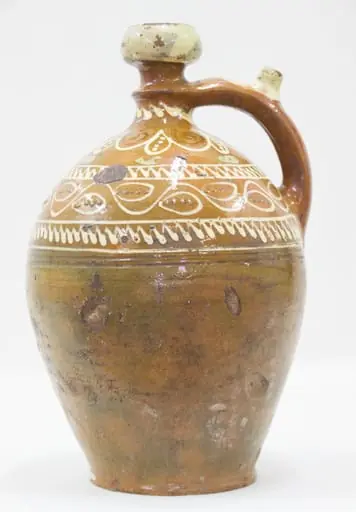 Ulcior de formă bitronconică cu gura îngustă și rotundă, cu o toartă și un orificiu pentru scurgerea lichidului, smălțuit și decorat pe jumătatea superioară cu motive vegetale (ghirlande) și geometrice (spirale; patru cercuri concentrice cu o linie șerpuită între ele).Cromatică: maro (fond), decor - galben, bej, alb, verde. Jumătatea inferioară a obiectului este nesmălțuită.