Artwork
Corpul de formă sferică este plat în partea inferioară. Se continuă cu o mănușă dublă terminată printr-o gură ale cărei margini sunt rotunjite. Din mănușa dublă pornește o nouă mănușă care este prevăzută cu o ”țâță”, capătul celălalt este prins de corpul vasului. Gura și ”țâța” sunt verzi. Ulciorul este de culoare crem, ornamentul realizat cu cornul se compune din linii drepte și șerpuite, puncte și flori. Motivele sunt de culoare: verde; maro; alb. Smălțuit la exterior.
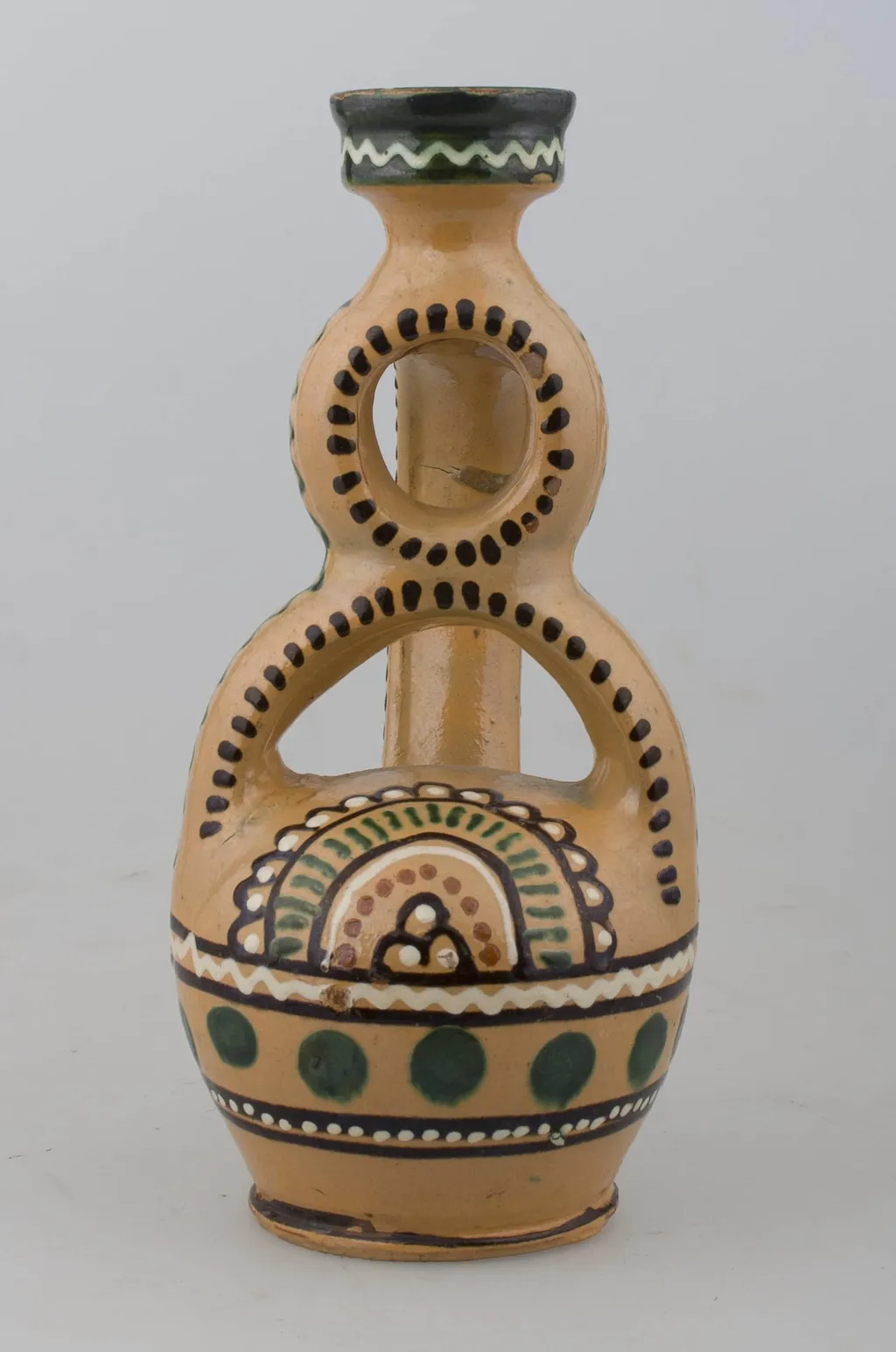
Corpul de formă sferică este plat în partea inferioară. Se continuă cu o mănușă dublă terminată printr-o gură ale cărei margini sunt rotunjite. Din mănușa dublă pornește o nouă mănușă care este prevăzută cu o ”țâță”, capătul celălalt este prins de corpul vasului. Gura și ”țâța” sunt verzi. Ulciorul este de culoare crem, ornamentul realizat cu cornul se compune din linii drepte și șerpuite, puncte și flori. Motivele sunt de culoare: verde; maro; alb. Smălțuit la exterior. is a print by Ciungulescu Grigore. It is held in the collection of the ASTRA National Museum Complex. This ceramic vase features a distinctive spherical body with a flat base, topped by a double handle and a rounded mouth.
About this work
Overview
This ceramic vase features a distinctive spherical body with a flat base, topped by a double handle and a rounded mouth. Its cream-colored body is adorned with a multi-colored ornamental pattern.
Subject & Meaning
The vase's design suggests a decorative purpose, potentially for holding flowers or small objects, with no apparent narrative or symbolic content beyond its aesthetic appeal.
Technique & Style
The vase is exterior-smalted and features a decorative motif created with a corn tool, combining straight and curved lines, dots, and flowers in green, brown, and white against a cream background.
History & Provenance
No specific historical or provenance details are provided about the vase's origin, creation date, or artist.
Context
The mix of geometric and organic shapes in its design, along with the use of earthy tones (cream, green, brown, white), may place it within a tradition of folk or artisanal ceramics, though exact cultural or temporal context is unspecified.
Legacy
The vase's impact or influence on subsequent ceramic art is not detailed, suggesting it may be appreciated more for its individual craftsmanship and aesthetic qualities.
Artist & collection
Artist
Grigore Ciungulescu spent his life in Oboga, a village where pottery wasn’t just a trade—it was a language.

 Blid tronconic cu fund plat, margine puțin ridicată și buza ușor oblică. Decor cu motive aviforme și florale: cocoș pe centru și o floare; pe margine, circular, motive geometrice (semicercuri, liniare, punctate, zig-zag). Cromatică: fond: cărămiziu; motive: maro; verde; alb; galben.
 Blid tronconic cu fund plat, margine puțin ridicată și buza ușor oblică. Prezintă decor cu motive aviforme și florale: cocoș pe centru încadrat de trei flori; pe margine, circular, motive geometrice (semicercuri, lini, puncte, zig-zag). Cromatică: fond: brun-cărămiziu; motive: maro; verde; brun; galben.
 Vas circular cu fund plat, întins cu marginea puțin ridicată, continuată cu buza ușor oblică. Fundul farfuriei este de culoare verde închis. Întreaga suprafață este ornamentată cu motive geometrice (semicercuri, liniare, punctate, zig-zag, cercuri). Smălțuit în interior, exteriorul are culoarea lutului ars. Cromatică: fond: verde; motive: alb; brun; galben.
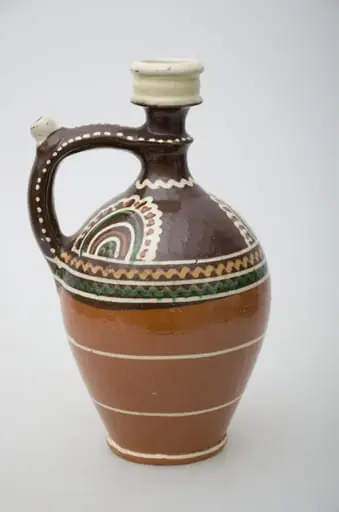 Vas smălțuit de formă ovoidală cu gât alungit care se termină cu o gură cu manșon și buza circulară. Prezintă o toartă lată, arcuită, prevăzută cu o ”țâță” ce se prinde de gâtul piesei pe un inel în relief iar celălalt capăt de zona mediană a recipientului. Decorul realizat din motive geometrice este predominant în registrul superior al vasului, ilustrând o succesiune de linii circulare, linii meandrice, semicercuri, puncte. Pe toartă sunt pictate trei șiruri de puncte albe. În partea inferioară sunt pictate trei linii circulare, distanțate. Cromatică: fond: maro închis (în partea superioară), maro deschis (în partea inferioară); motive: verde, crem, maro, alb.
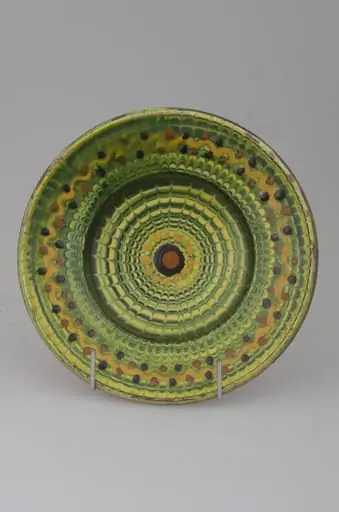 Vas cu fundul plat cu marginea puțin ridicată ce se continuă cu buza ușor oblică, având marginea puțin rotunjită. Întreaga suprafață este ornamentată în tehnica jirăvirii. Pe buza farfuriei peste jirăveală este trasă cu cornul o linie șerpuită însoțită de o parte și de alta de puncte maron închis și cărămiziu. Fondul este de culoare verde. Motive: negru; galben; cărămiziu.
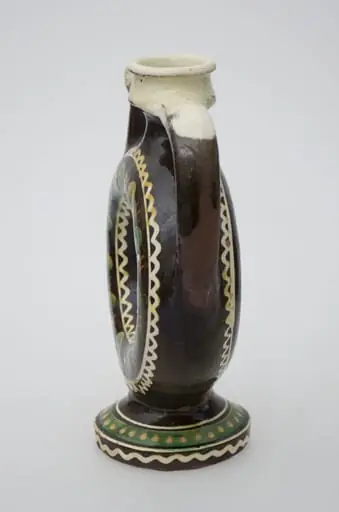 Ulcior-covrig cu manușă puternic arcuită având ”țâța” în părți: ornament cu"ochișori" încadrat de o linie dreptă și una șerpuită; Cromatică: fond: maron; motive: verde; cărămiziu; alb; crem.
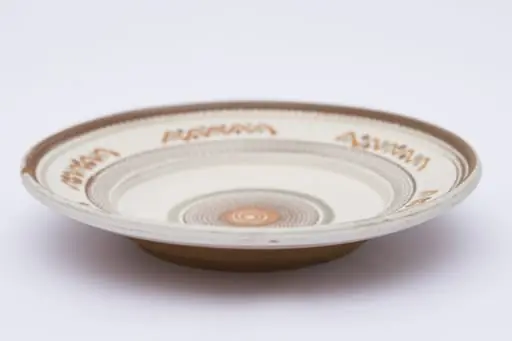 Farfurie nesmălțuită cu fundul lat, pereții puțin înălțați. Centrul farfuriei este marcat de o spirală înconjurată de o pânză de păianjen cu gaiță, închisă într-un cerc gri făcut cu pensula. Pe pereți pânza jirăvită, urmată de cinci motive cu val, în alternanță cu buline, și din nou pânza jirăvită. Prevăzută cu două găuri la baza inelară pe partea posterioară, pentru prindere. Dorsal, pe fundul vasului, incizată inscripția ”Ciungulescu Grigore Oboga 1980''. Cromatică: fond: alb; motive: maro; maro închis; cenușiu.
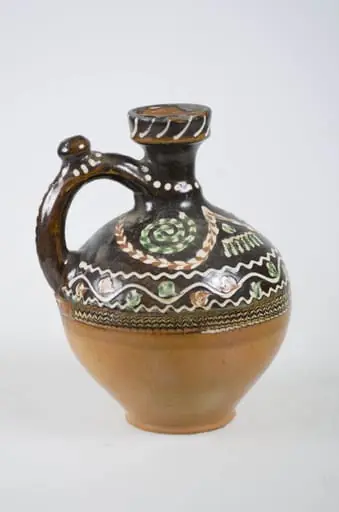 Vas ceramic sferic, ce prezintă baza plată din care pornesc pereții puternic arcuiți spre exterior, înalți, care în partea superioară se îngustează și se termină printr-un gât înalt cu marginea dreaptă ușor rotunjită. Ornamentul realizat cu cornul este dispus numai în partea superioară pe fond de angobă, realizat cu cornul. La diametrul maxim o porțiune jirăvită cu șarpe de o parte și de alta cu "altiță" și "boboci". Pe gât trei linii ondulate urmat de un șir de puncte. Pe marginea buzei linii. Mânerul prevăzut cu "țâță" are puncte. Jumătatea inferioară maro deschis. Smălțuit. Pe fundul vasului apare numele meșterului și localitatea "Ogrezeanu Stelian - Horezu". Cromatică: fond: maro închis partea superioară. Cărămiziu partea inferioară; motive: verde; alb; maro închis.
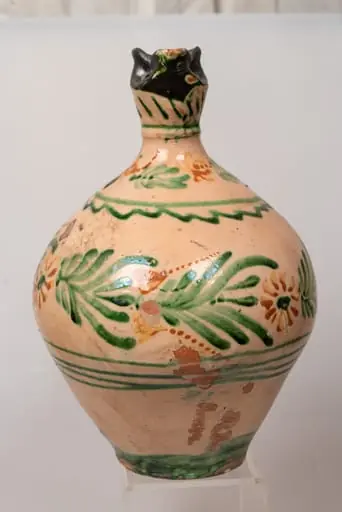 Piesă cu corp sfericl bombat, cu gât profilat, cu gât și gură îngustă, bilobată, cu cior. Din pântecul vasului pornește o toartă tubulară cu orificiu pronunțat pentru băut (cu țâță), care se unește cu vasul sub buza acestuia. Fața exterioară a ulciorului este angobată cu un strat de humă albă, peste care este pictat decorul, cu pensula și cu cornul, astfel: pe partea superioară a vasului, între două grupări de linii concentrice apare o bandă decorată cu motiv floral (o floare rotundă cu multe petale) alternând cu motivul fitomorf caracteristic centrului: frunze alungite, de culoare verde. Pe cant, delimitată de banda decorativă de pe burta vasului de către două linii concentrice, realizate drept și în valuri, este dispusă o bandă decorativă mai îngustă, cu motiv floral și motiv fitomorf delimitat de gât de un brâu colorat. Sub buza bilobată sunt realizate o serie de linii oblice paralele pictate, care continuă pe toată suprafața torții. Fundul vasului este marcat cu o bandă lată orizontală, pictată. Cromatica: alb, maro, verde. Vasul este acoperit cu un strat de smalț transparent.
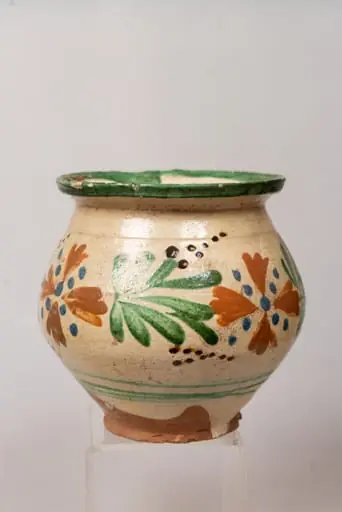 Piesă cu toartă în partea laterală, cu baza mai îngustă, joasă, cu corp sferic, cu gât scurt, buză îngustă și răsfrântă. Toartă simplă, în bandă, cu punctele de inserție la gura și la partea centrală a corpului. Vasul este angobat în întregime cu humă albă. Decorat la exterior, prin pictare cu pensula si cu cornul, cu motive florare și fitomorfe (patru flori de culoare siena arsă, cu petale sub forma frunzelor de trifoi cu puncte albastre între ele și cu frunze verzi) pe suprafața corpului și cu motive geometrice (linii paralele pe toartă). Partea inferioară a corpului este decorată cu patru linii paralele circulare, de culoare verde. Muchia buzei este marcată de o dungă verde. Smălțuit pe exterior și pe interior cu smalț transparent. Cromatica: alb, albastru, siena arsă, verde.
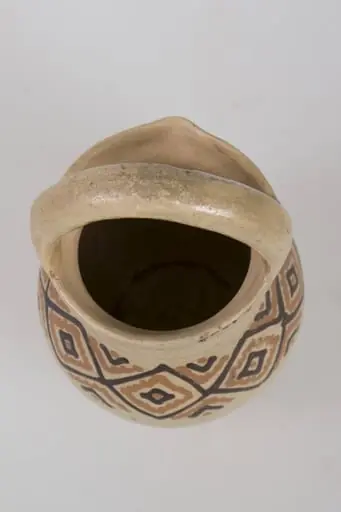 Mănușar cu corp sferoidal și gura largă. Prezintă o toartă peste gură. Decorul este geometric: linii drepte și ondulate pictate alternant în culorile crem și maro reprezentând litera ”V” și ”V” întors, puncte maro, și motivul rombului. Prezintă cioc ușor reliefat. Smălțuit la interior și exterior. Cromatică: fundal alb; maro deschis, maro închis.
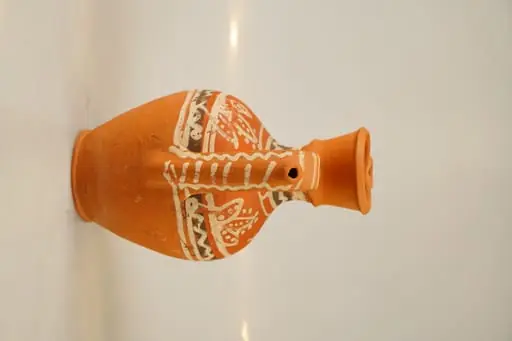 Vas mic cu corp tronconic bombat în jumătatea superioară, cu gât îngust subțire, gură cu ciur și cu buză bilobată; este prevăzut cu o toartă laterală de prindere, cu țâță, cu puncte de inserție la gât și în zona diametrului maxim al corpului. Decorul este realizat prin pictare cu pensula cu angobă albă și maro și se compune din motive geometrice și fitomorfe stilizate: două dungi de culoare maro, cu câte o linie albă ondulată pictată peste ele, dispuse circular, decorează gâtul vasului și corpul acestuia în zona diametrului maxim; linii circulare albe, neglijent realizate; trei grupuri de câte trei frunze cu contur alb, decorate cu puncte albe, dispuse în jumătatea superioară a corpului vasului, separate de câte un motiv format din două linii albe intersectate în formă de X, cu câte un punct alb între brațe. Toarta vasului este decorată cu două linii ondulate verticale și linii orizontale de culoare albă. Vasul nu este smălțuit.
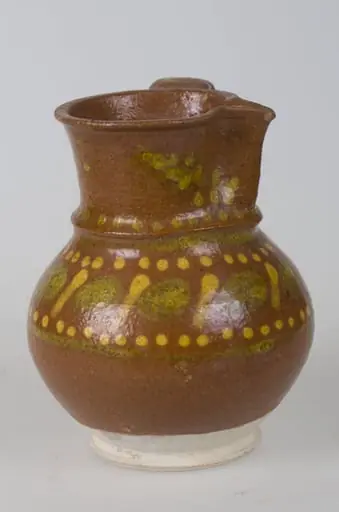 Vas cu corpul de formă cilindrică, cu fundul plat, corpul pântecos, gâtul înalt și gura largă, este prevăzută cu un cioc de scurgere așezat la nouăzeci grade față de toartă. Decorul pictat a fost realizat cu pensula în zona pântecului și a gâtului, format din motive geometrice. Pe pântecul vasului a fost pictat un registru încadrat între două linii de culoare verzuie, între care se află alte două linii realizate din puncte de culoare galbenă. În interiorul liniilor menționate anterior se află registre circulare format din pete de culoare verzuie, separate de linii galbene orizontale înclinate. Pe marginea vasului și pe toartă au fost pictate trei flori de culoare verde, de tipul „spicului de grâu”. Cromatică: alb (fund), maro-roșcat restul suprafeței; motive: galben; verde.
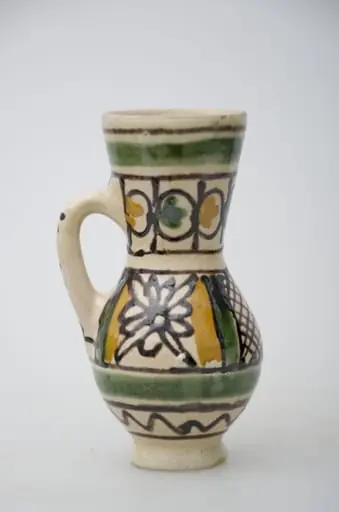 Vas ceramic de formă bitronconică, smălțuit de mici dimensiuni, cu baza plată și bombat în zona „pântecelui”. Prezintă o toartă ce pornește din zona gâtului redus ca dimensiuni și se termină în zona diametrul maxim al vasului. Decorul vasului este compus din două registre picturale. În primul registru, mărginit de două linii drepte subțiri, de culaore maro închis, au fost pictate două flori conturate cu negru și încadrate de câte două linii groase de culoare verde și galben. Cel de-al doilea registru este compus din boboci de culoare verde și galben, fiind dispuși concentric pe gâtul vasului. Ambele registre picturale sunt încadrate între două linii groase circulare, verzi. Pe toartă a fost redactat textul: „KORUND”. Prezintă uzură funcțională. Cromatică: fond: alb; motive: galben, verde, maro închis.
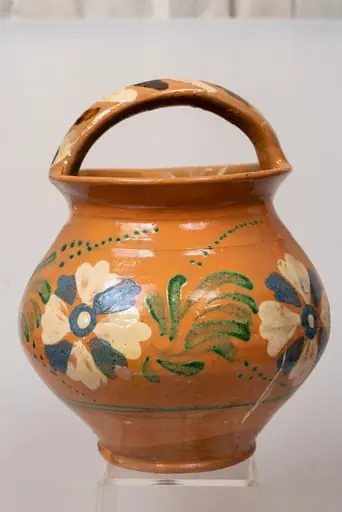 Piesă cu corp sferic, bombat, modelată din lut la roata olarului, gât îngust, drept și buză evazată; oala este prevăzută la gură cu o toartă orizontală pe post de mâner de prindere. Vasul este angobat pe suprafața exterioară cu un strat de angobă de culoare siena naturală, peste care este realizat decorul, prin pictare cu cornul și cu pensula. Toarta este decorată cu un șir de linii groase pictate în formă de V, de culoare albă și maro. Pe corpul vasului se desfășoară decorul principal, format din motive florale stilizate (patru flori cu opt petale de trifoi, de culoare albă și albastră) alternând cu motivul fitomorf caracteristic centrului: frunze alungite, de culoare verde. Partea inferioară a corpului este decorată cu trei linii subțiri concentrice, de culoare verde, pictate cu cornul. Cromatica: alb, siena naturală, maro, verde, albastru. Piesa este acoperită pe ambele fețe cu un strat de smalț transparent.
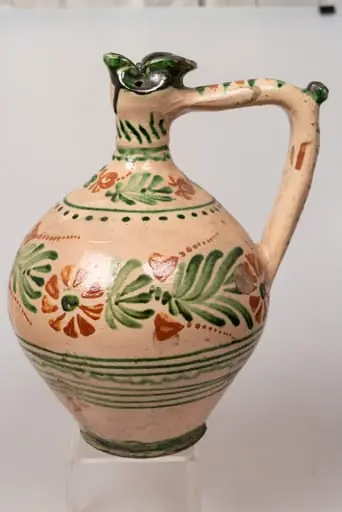 Piesă cu corp sferic bombat, cu gât profilat, cu gât și gură îngustă, bilobată, cu cior. Din pântecul vasului pornește o toartă tubulară cu orificiu pronunțat pentru băut (cu țâță), care se unește cu vasul sub buza acestuia. Fața exterioară a ulciorului este acoperită cu un strat de angobă albă peste care este pictat decorul, cu pensula și cu cornul, astfel: pe partea superioară a vasului apare o bandă decorată cu motiv floral (o floare rotundă cu multe petale) alternând cu motivul fitomorf caracteristic centrului: frunze alungite, de culoare verde. Pe cant, delimitată de banda decorativă de pe burta vasului de către o linie și un șir de puncte concentrice, este dispusă o bandă decorativă mai îngustă cu motiv floral și motiv fitomorf, delimitat de gât de un brâu colorat. Sub buza bilobată sunt realizate o serie de linii oblice paralele pictate, care continuă pe toată suprafața torții. Partea inferioară a vasului este decorată cu linii orizontale și o linie în valuri dispuse concentric. Cromatica: alb, maro, verde. Vasul este smălțuit cu un strat de smalț transparent.
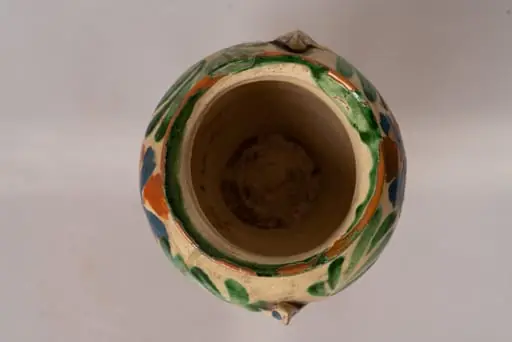 Piesă cu corp discoidal bombat, cu doi butoni triunghiulari aplicați pe corpul vasului în zona mediană și decorați cu puncte pictate. Buza vasului este marcată cu o linie pictată iar gâtul de un șir de puncte de culoare maro și albastru. Corpul vasului este decorat cu motive florale (floare rotundă cu opt petale) și motive fitomorfe, caracteristice centrului: frunze alungite de culoare verde. Sub decorul central apar linii concentrice pictate cu cornul, de culoare verde. Cromatica: alb, verde, maro, albastru. Vasul este smaălțuit transparent pe ambele fețe.
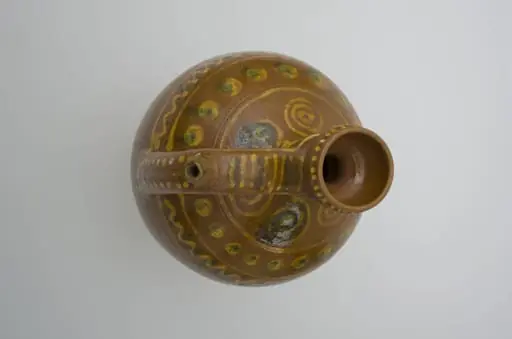 Ulcior de formă sferică cu gât înalt cu guler la mijloc; gura înaltă și largă, în formă de pâlnie tronconică. Buză rotundă și îngustă retrasă spre interior. Prezintă toartă goală aplatizată cu țâța ușor înălțată oblic ce pornește din gulerul gâtului și intră în pântece la diametrul maxim, într-un arc oval. Decorul este format din motive geometrice: brâu median de linii pararele și zig-zag; liniuțe orizontale și două șiruri de punctmotive florale; sub gât avem spirale. Smălțuit cu smalț incolor. Cromatică: fond: maro cărămiziu; motive: galben; verde.