Artwork
Actualités: Les Inconvénients des voitures publique: Le cocher de...
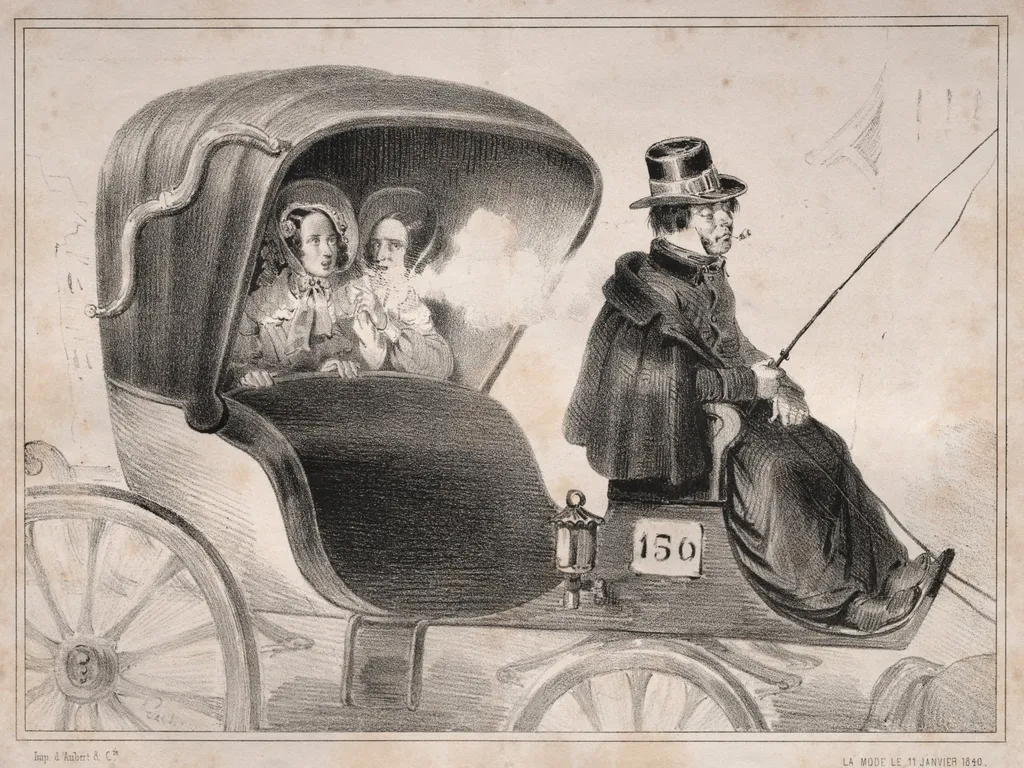
Actualités: Les Inconvénients des voitures publique: Le cocher de... is a print by the Romanticist artist Clémente Pruche. It dates from 1839 and is held in the collection of the Cleveland Museum of Art.
About this work
Overview
Created in 1839 by French artist Clémente Pruche, this print titled *Actualités: Les Inconvénients des voitures publique: Le cocher de…* is part of the collection of the Cleveland Museum of Art. The image presents a street scene centered on a coachman guiding a horse‑drawn carriage, while the passengers appear uneasy, suggesting the discomforts of contemporary public transport.
Subject & Meaning
The composition focuses on the coachman, whose posture and expression dominate the picture, while the figures inside the carriage display various signs of inconvenience—slumped shoulders, strained faces, and cramped positions. By highlighting these details, the work comments on the practical difficulties faced by ordinary citizens relying on shared carriage services in mid‑nineteenth‑century France.
Technique & Style
Executed as a print, the piece employs fine line work and tonal contrasts to delineate the bustling urban environment. Pruche’s handling of light and shadow emphasizes the interior cramped space versus the open street, while the careful rendering of clothing and carriage details reflects a realistic, observational approach typical of early‑19th‑century French genre prints.
History & Provenance
After its creation in 1839, the print entered private collections before being acquired by the Cleveland Museum of Art, where it remains on view. The museum’s records indicate the work was donated as part of a larger acquisition of French prints, underscoring its value as a documentary example of everyday life during the period.
Context
In the 1830s, horse‑drawn carriages served as the primary means of public conveyance in French cities, yet they were often overcrowded and uncomfortable. Pruche’s depiction aligns with contemporary social commentary that critiqued urban infrastructure, offering a visual counterpart to written observations about the inefficiencies of early public transportation systems.
Artist & collection

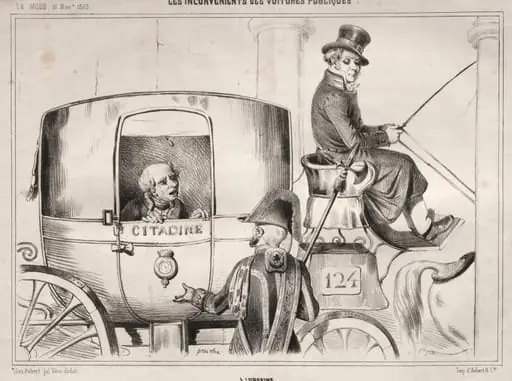 Actualités: Les Inconvénients des voitures publique: L'Urbaine
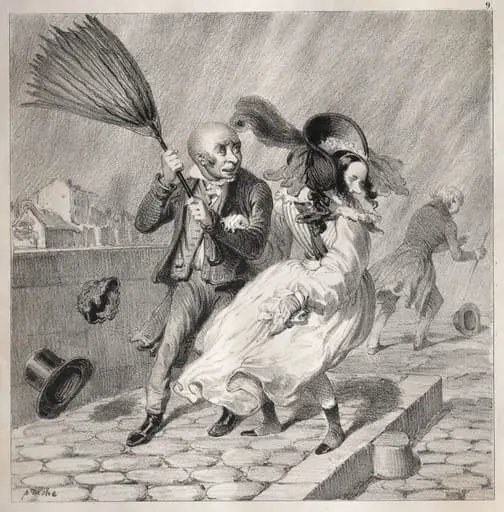 Bambochades: Vois-tu que mon baromêtre est au beau!...c'est un riche temps pour les biens de la terre!!!
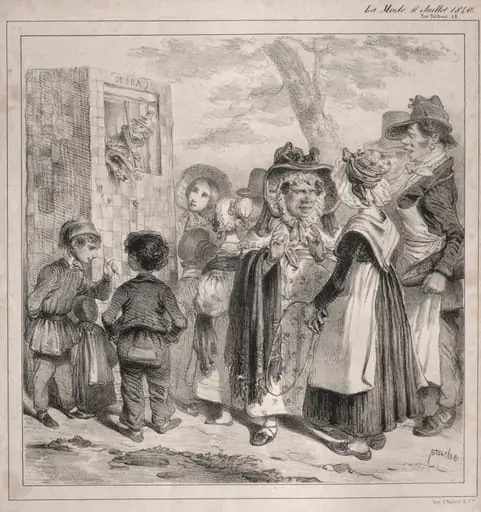 Voyez-vous ma Chère! c'est la police qui fait jouer ces polichinels là, pour détourner l'attention...
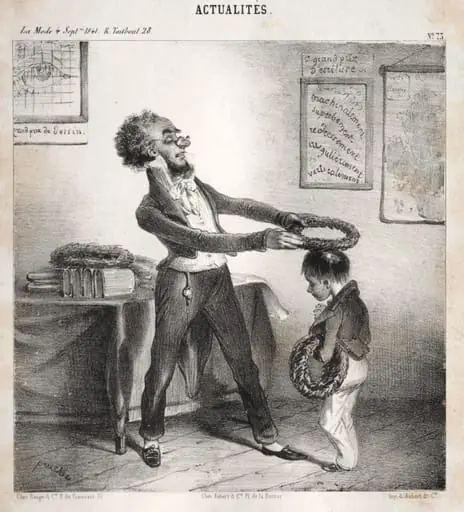 Actualités: Les distributions de Prix
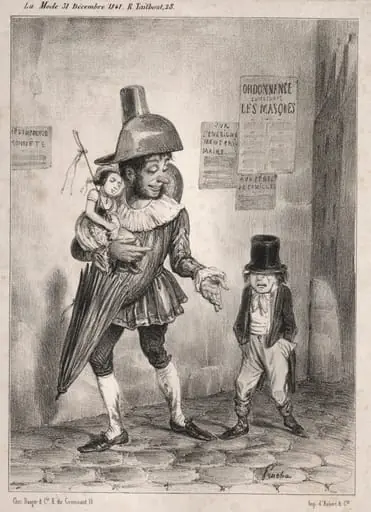 Pochades de carnaval: Vois-tu, si ton maître est bien content de toi et si tu as le prix de sagesse cette année! je te laisserai deguiser en paillasse! ...l'année prochaine!!
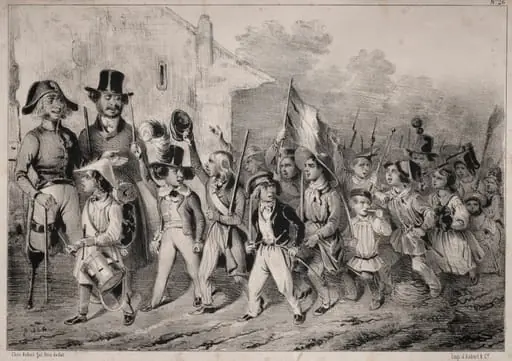 Actualités: Bon! Les moutards en veulent sussi! quand on parle de guerre! comme toute ca prend feu! ... On voit que c'est de la plante indigène!... ca promet!!
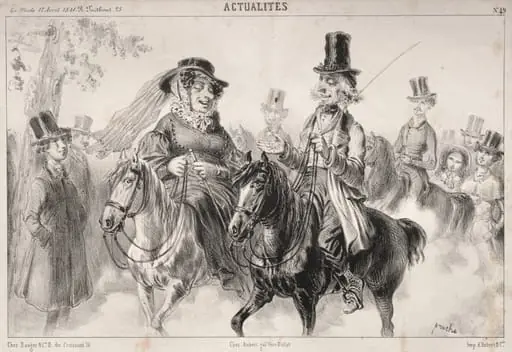 Actualités: Dis donc Madame Miroton il paraitrait que c'est nous qui donnons le ton à Longchamps cette année....
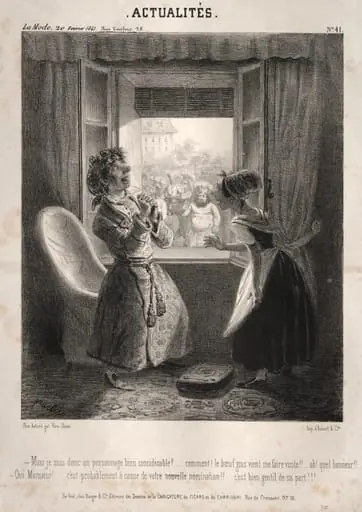 Actualités: ---Mais je suis donc un personnage bien considerable?
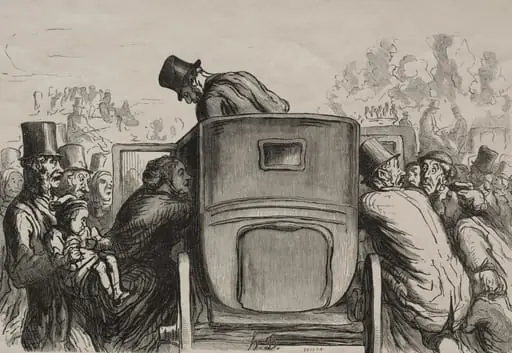 At the Universal Exhibition: The visitor will find all means of transportation desirable to return to his hotel.
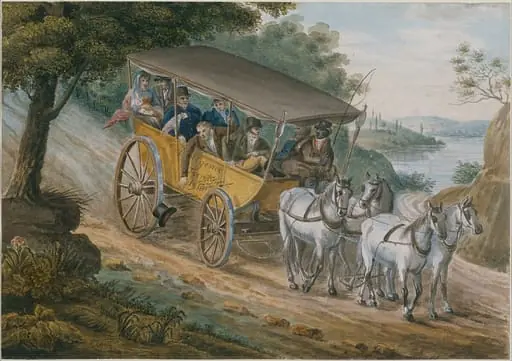 Travel by Stagecoach Near Trenton, New Jersey
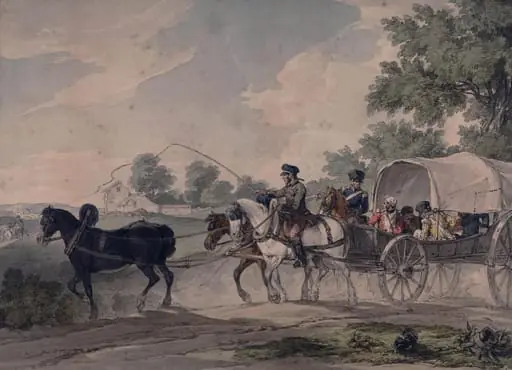 A Belgian Waggon Conveying Wounded from the Field after the Battle of Waterloo
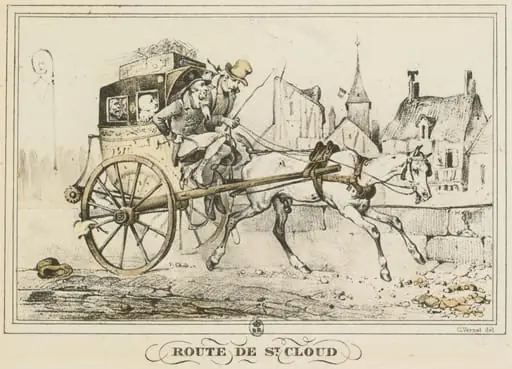 Scenes of Daily Life, Roads and Paths: Road to Saint-Cloud (Scènes de la vie quotidienne, Route et Chemins: Route de Saint-Cloud)
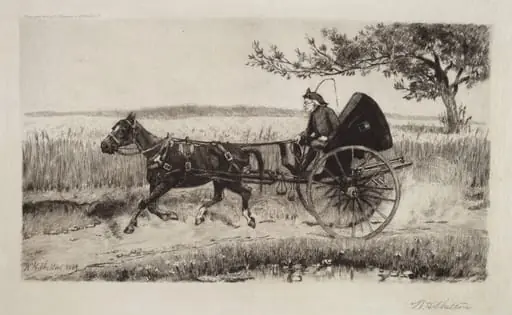 The One Hoss Shay
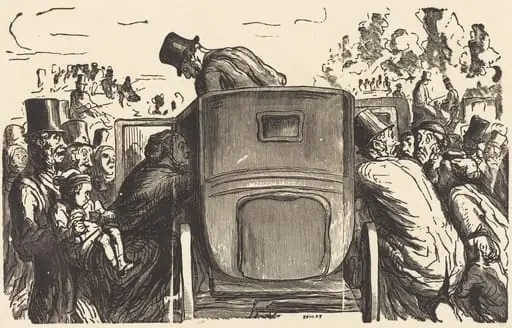 Exposition universelle: L'Etranger trouve toutes les facilites desirables...
 Le Déménagement de la Censure
 Désolé, citoyenne... je ne reçois pas de chiens...
 Carriage in the Bois de Boulogne