Artwork
At the Universal Exhibition: The visitor will find all means of transportation desirable to return to his hotel.
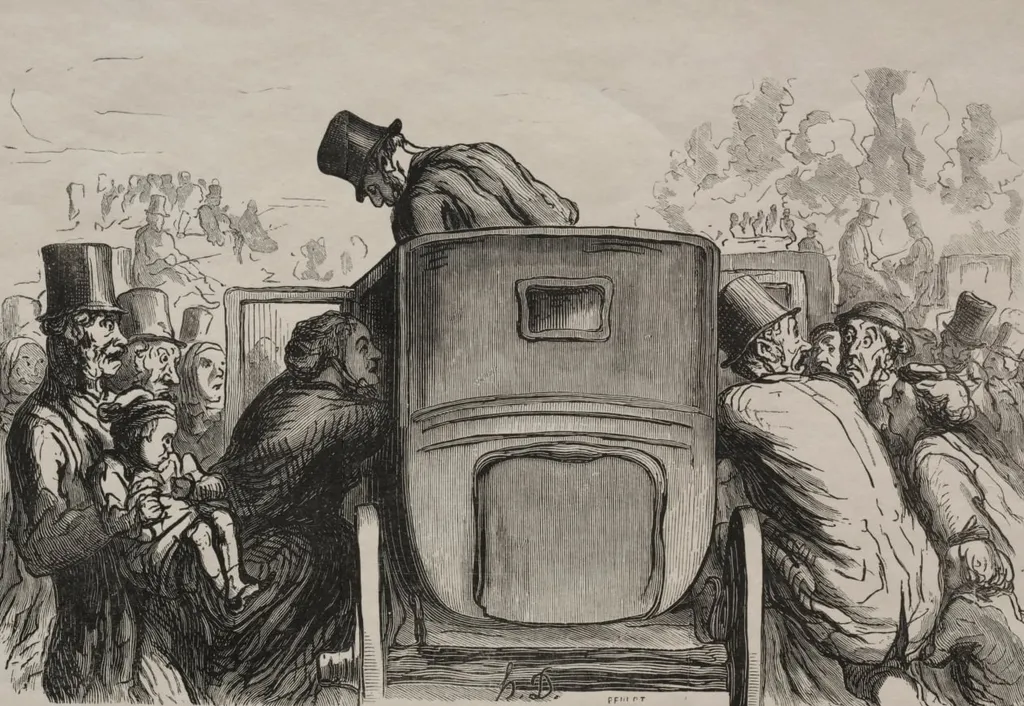
At the Universal Exhibition: The visitor will find all means of transportation desirable to return to his hotel. is a print by the Impressionist artist Honoré Daumier. It dates from 1867 and is held in the collection of the Cleveland Museum of Art.
About this work
Overview
Created in 1867, this lithograph by Honoré Daumier captures a moment at the Universal Exhibition in Paris. It depicts the bustling crowd surrounding a modest, boxy train car, emphasizing the practicality of modern transport over grandeur. The scene conveys the everyday chaos of urban mobility during a time of rapid industrial change, rendered with Daumier’s characteristic observational precision.
Subject & Meaning
Rather than glorifying progress, Daumier highlights the disarray of mass transit—individuals clinging to the vehicle, others pointing or shouting.
The print portrays travelers of varying social standings jostling near a train, their gestures suggesting urgency, confusion, or excitement. Rather than glorifying progress, Daumier highlights the disarray of mass transit—individuals clinging to the vehicle, others pointing or shouting. The focus on mundane struggle reflects a broader commentary on the human experience within emerging public infrastructure.
Technique & Style
Daumier employed lithography to achieve rapid, expressive lines that convey motion and texture without detail. Figures are rendered with loose, energetic strokes, their forms simplified yet instantly recognizable. The train’s blunt geometry contrasts with the fluid chaos of the crowd, enhancing the sense of imbalance. His use of ink and tone creates depth without shading, typical of his journalistic approach to social observation.
History & Provenance
The work was produced during Daumier’s prolific period of social satire, likely as part of a series commenting on public life at the 1867 Exposition Universelle. It entered the Cleveland Museum of Art’s collection through established acquisition channels, preserving its place within a broader archive of 19th-century French graphic art documenting urban transformation.
Context
In 1867, Paris was transforming under Haussmann’s renovations and expanding rail networks. The Universal Exhibition showcased technological advances, yet Daumier turned his attention to the human friction beneath progress. His work stands apart from official celebrations, offering a ground-level view of how ordinary people navigated the new urban landscape—crowded, unpredictable, and unglamorous.
Legacy
Daumier’s lithographs like this one influenced later realist and modernist artists by demonstrating how everyday scenes could carry critical weight. His unembellished depictions of transit and public behavior laid groundwork for visual narratives of modern life, prioritizing authenticity over idealization. This piece remains a quiet but enduring record of mobility’s social realities in the Industrial Age.
Artist & collection

Artist
Honoré-Victorin Daumier was a French painter, sculptor, and printmaker, whose many works offer commentary on the social and political life in France, from the Revolution of 1830 to the fall of the Second French Empire in 1870.









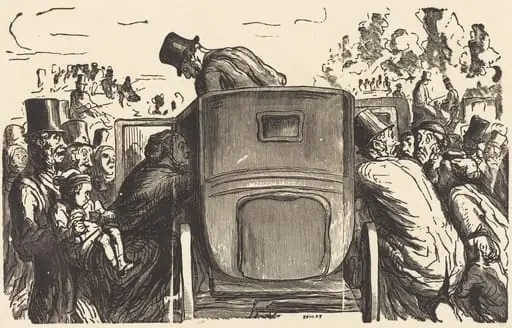 Exposition universelle: L'Etranger trouve toutes les facilites desirables...
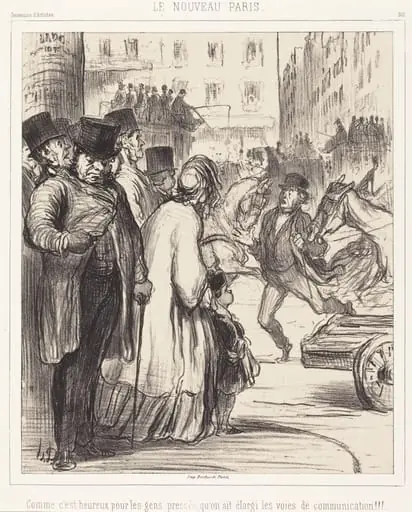 Le Nouveau Paris
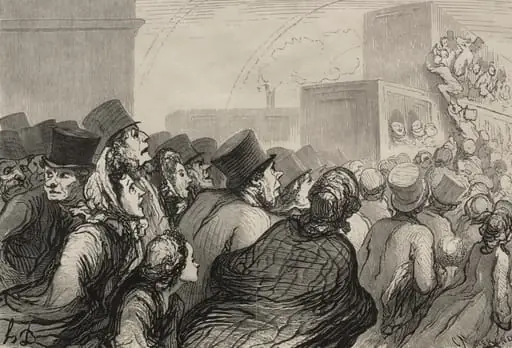 The Railway: The Sunday Excursion
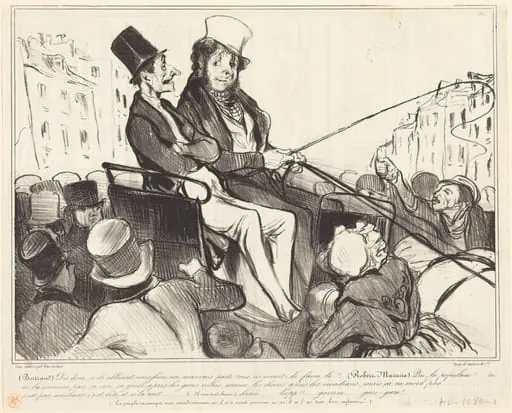 Bertrand, dis donc, s'ils allaient nous faire...
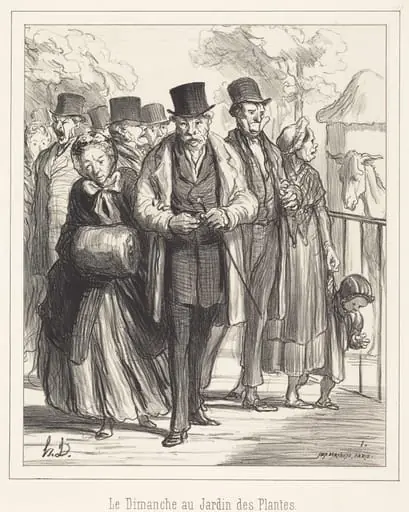 Le Dimanche au Jardin des Plantes
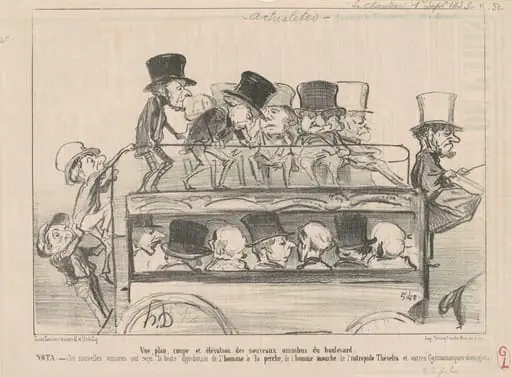 Vue ... et elévation des ... omnibus du boulevard ...
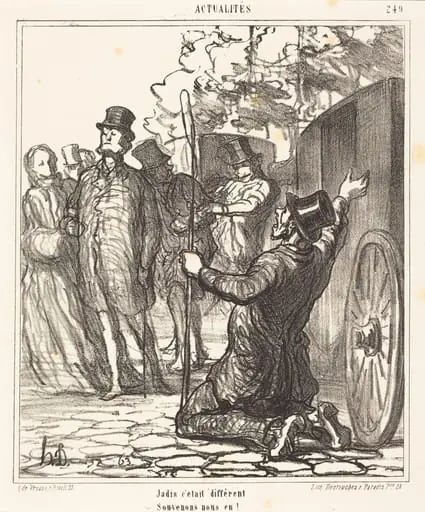 Jadis c'était différent
![Interieur d'un omnibus [bottom half], by Charles Maurand](https://artifactworldgallery.com/img/charles-maurand--interieur-d-un-omnibus-bottom-half--56e13655b1da7619-w320.webp) Interieur d'un omnibus [bottom half]
Interieur d'un omnibus [bottom half]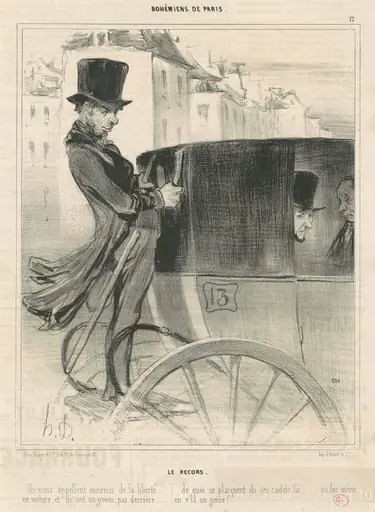 Le recors
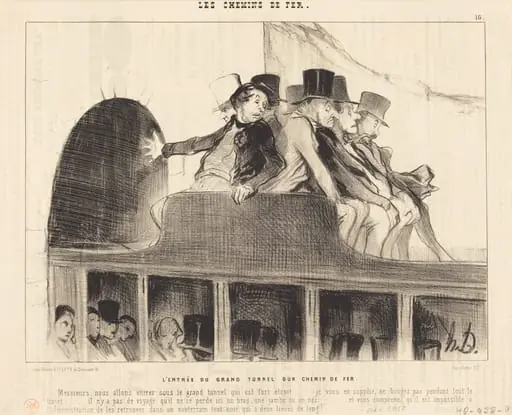 L'Entrée du Grand tunnel d'un chemin de fer
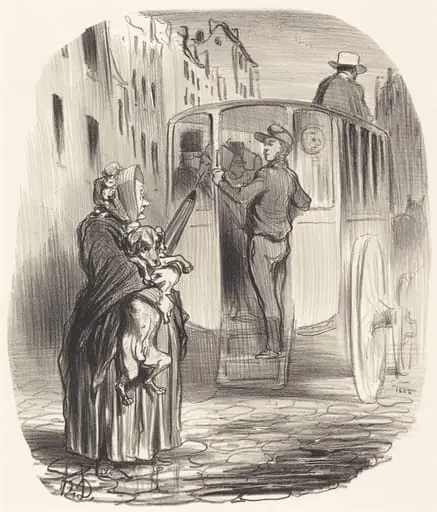 Désolé, citoyenne... je ne reçois pas de chiens...
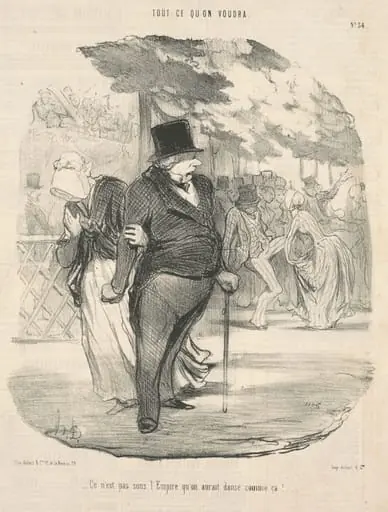 Ce n'est pas sous l"empire qu'on aurait dansé comme ca! ...