Artwork
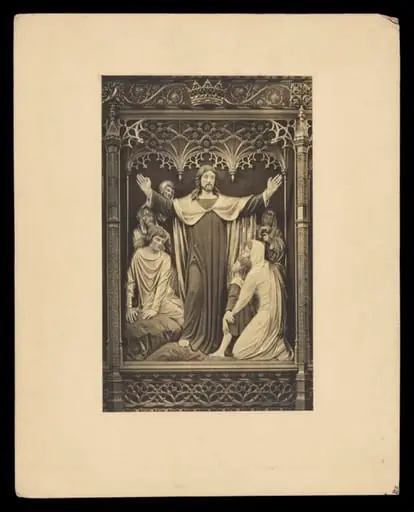
Pulpit Panel, Wragby Church
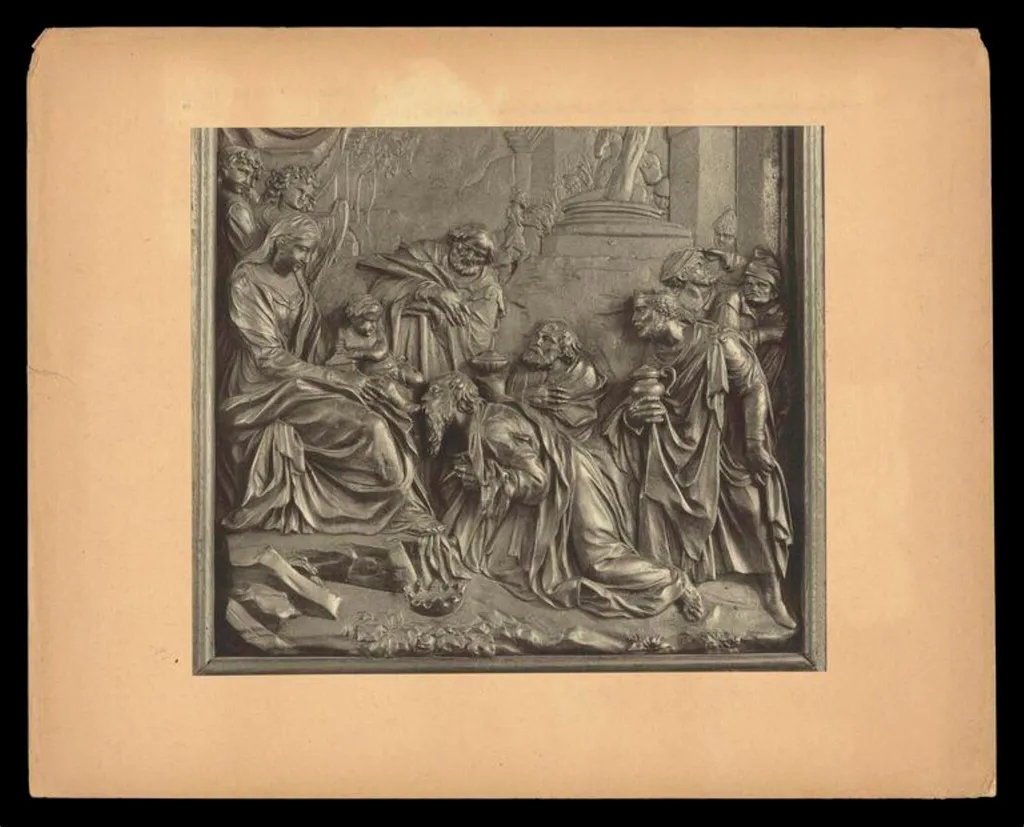
Pulpit Panel, Wragby Church is a photographic photography by J. Crowther Cox. It dates from 1947 and is held in the collection of the Victoria and Albert Museum. The image is a sepia‑toned photograph taken in 1947 by J.
About this work
Overview
The image is a sepia‑toned photograph taken in 1947 by J. Crowther Cox, showing a metal relief panel originally installed in the pulpit of Wragby Church. The picture captures the sculptural composition in detail, emphasizing its dramatic chiaroscuro and the narrative scene it portrays.
Subject & Meaning
The relief illustrates a biblical gathering in which Mary holds the infant Jesus while a group of figures, dressed in flowing robes, present gifts. One kneeling figure cradles a small child, and the surrounding participants gesture upward or point, suggesting reverence and communal devotion within a rocky, outdoor‑like setting.
Technique & Style
Carved from metal, the work features deep incised folds that render the fabric with convincing three‑dimensionality. Strong, well‑defined silhouettes are enhanced by pronounced shadows, creating a sense of depth and drama that is highlighted by the photograph’s tonal range.
History & Provenance
The relief was documented in a mounted photograph by photographer J. Crowther Cox in 1947, shortly after its installation in the church’s pulpit. The image serves as an early visual record of the piece, preserving its condition and context for later study.
Context
Located in the Anglican parish church of Wragby, the panel forms part of the liturgical furnishings, integrating visual storytelling with the worship space. Its subject matter aligns with traditional Christian iconography that emphasizes the veneration of the Christ child and the offering of gifts.
Legacy
The photograph is held by the Victoria and Albert Museum, where it remains accessible to scholars and the public as a reference for mid‑20th‑century ecclesiastical art and metal relief techniques.
Artist & collection
Artist
J. Crowther Cox spent his life pointing a camera at old buildings, especially churches, before the stones could forget their stories. He liked the way light hit carved saints and weathered coats of arms, so he returned…

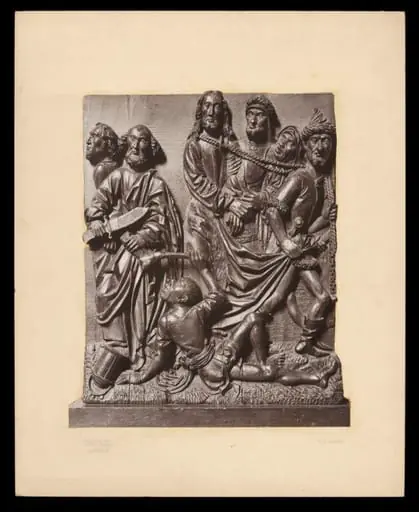 Panel Lincoln
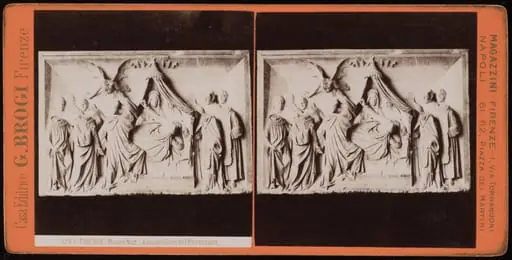 Bassorilievo del Rovezzano
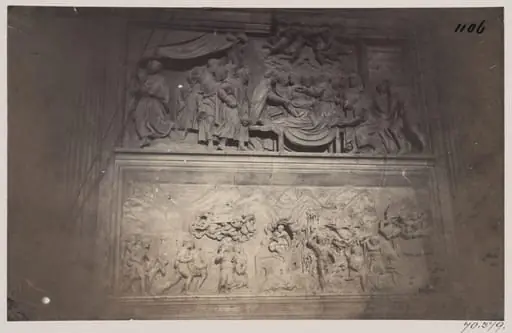 Out of Rome - House of the Blessed Virgin at Loreto. Sculpture of the Santissima Casa carried by Angels, A.D. 1520
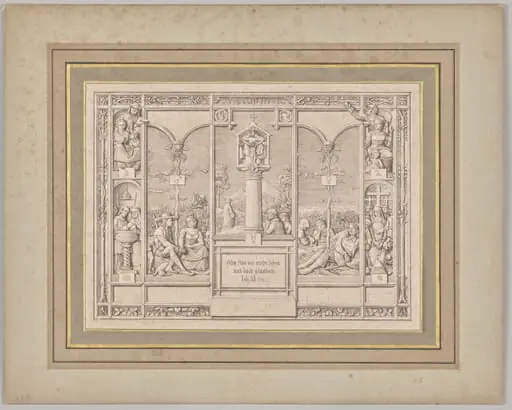 Capstone. John XX, 29
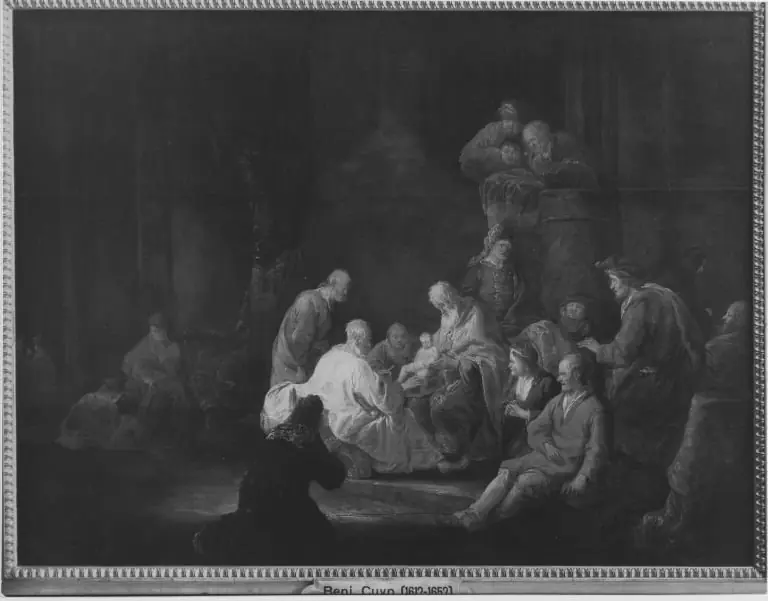 Beschneidung Christi (Circumcisio)
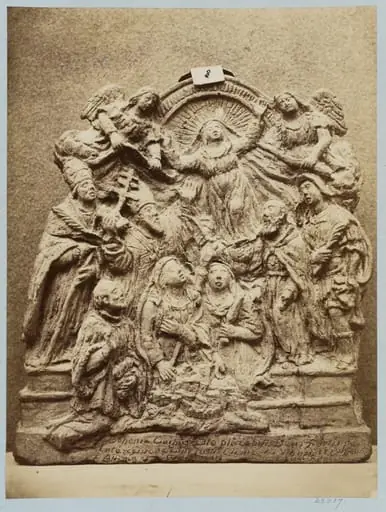 Fifth Series
![The Triumph of Julius Caesar [no.7 and 8 plus 2 columns], by Andrea Andreani](https://artifactworldgallery.com/img/andrea-andreani--the-triumph-of-julius-caesar-no-7-and-8-plus-2-columns--75ccf1616a5609e2-w320.webp) The Triumph of Julius Caesar [no.7 and 8 plus 2 columns]
The Triumph of Julius Caesar [no.7 and 8 plus 2 columns]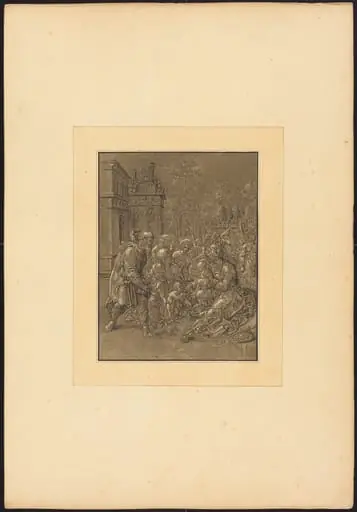 Visit of Saint Elizabeth to the Holy Family
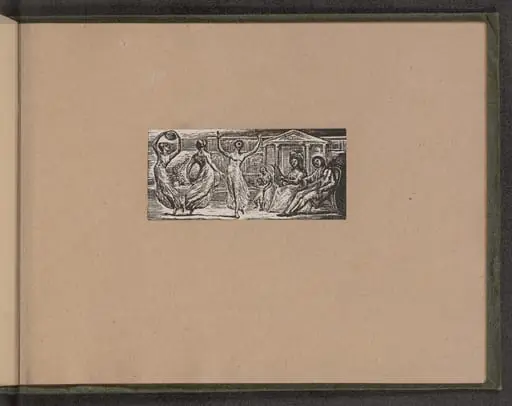 Menalcas Watching Women Dance
 King Richard the Second