Artwork
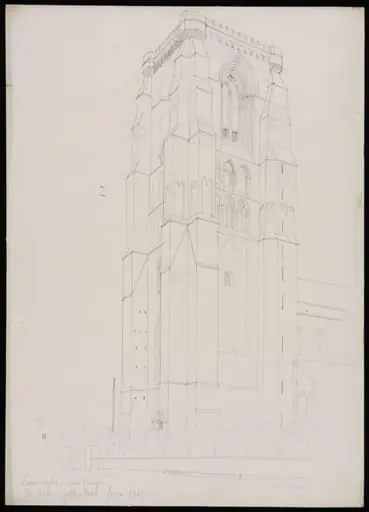
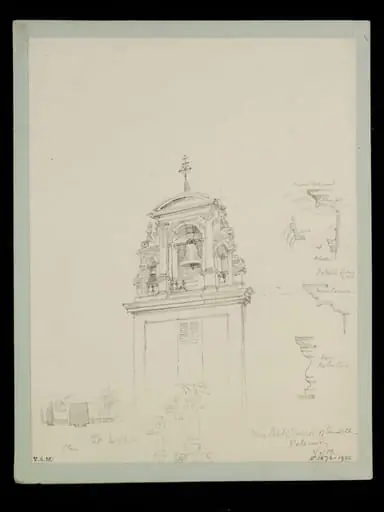
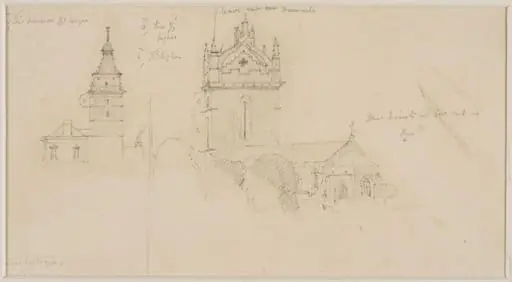
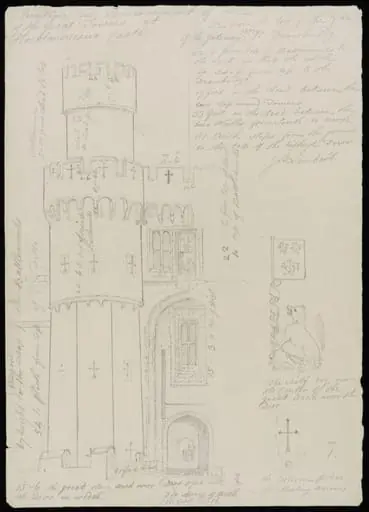
Bell cote, Foot Cray's Church, Kent
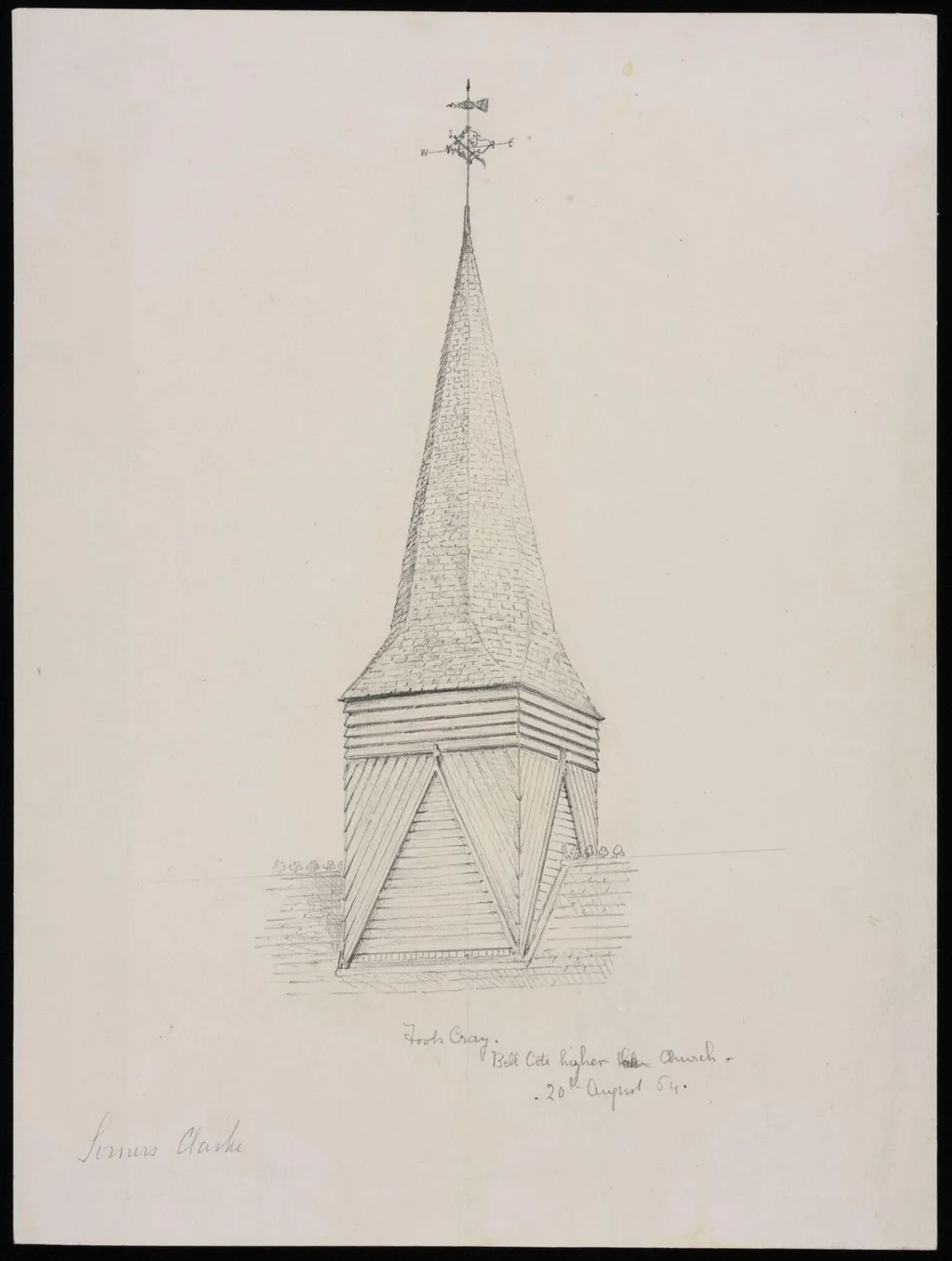
Bell cote, Foot Cray's Church, Kent is a drawing by the Impressionist artist Somers Clarke. It dates from 14 and is held in the collection of the Victoria and Albert Museum.
About this work
Below it, the tower has a square base with a slanted roof, and the walls are made of small, neat lines that look like bricks.
This is a pencil sketch of a tall, narrow church tower. The drawing shows a simple, pointed steeple with a small cross on top. Below it, the tower has a square base with a slanted roof, and the walls are made of small, neat lines that look like bricks.
The artist wrote the name "Foot Cray" and the date "20th August 1864" at the bottom. This sketch is a close-up, focusing only on the tower’s shape and details.
If you like this kind of drawing, look up cross-hatching next.
Overview
This pencil drawing, executed by Somers Clarke in 1864, depicts the bell cote of the parish church at Foot Cray in Kent. The work is a close‑up study of the tower’s form, rendered in fine linear strokes and held in the collection of the Victoria and Albert Museum.
Subject & Meaning
The image isolates the church’s vertical element—a slender, pointed spire crowned with a small cross—emphasising its architectural silhouette. By focusing on the tower’s geometry, the drawing highlights the modest yet distinctive character of rural English ecclesiastical architecture.
Technique & Style
Clarke employed a precise pencil technique, using tight, regular hatching to suggest the brickwork of the tower’s square base and a smoother, lighter hand for the sloping roof. The cross‑hatching creates a sense of texture and depth while maintaining a clear, schematic quality typical of 19th‑century architectural sketches.
History & Provenance
The sketch bears the inscription “Foot Cray” and the date “20th August 1864” in the lower margin, indicating the moment of its creation. It entered the Victoria and Albert Museum’s holdings as part of its architectural drawing collection, where it serves as a documentary record of the church’s original appearance.
Context
Created during a period of heightened interest in documenting historic buildings, the drawing reflects the Victorian era’s concern with preserving England’s ecclesiastical heritage. Clarke, an architect and draughtsman, produced similar studies for restoration projects and scholarly publications.
Artist & collection

Artist
George Somers Clarke was an architect and English Egyptologist who worked on the restoration and design of churches and at a number of sites throughout Egypt, notably in El Kab, where he built a mud brick house.

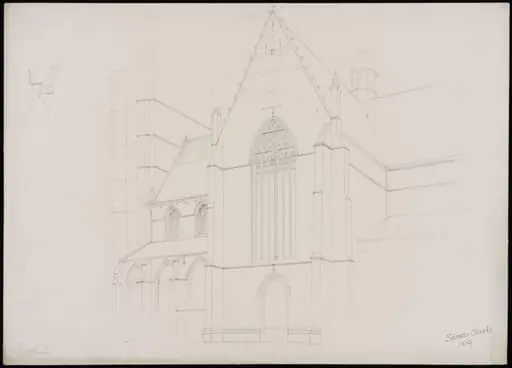
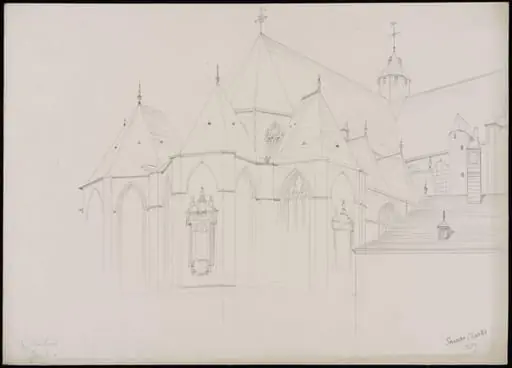 View of the Church of St. Michael, Ghent, from N.E.
 One of 235 drawings of architectural subjects in France, Germany, and Italy
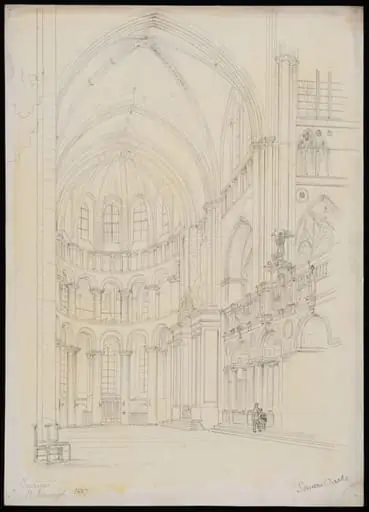
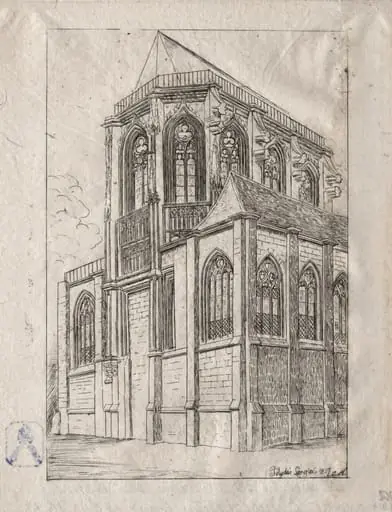 The Apse of the Church of St. Martin-sur-Renelle
 Untitled
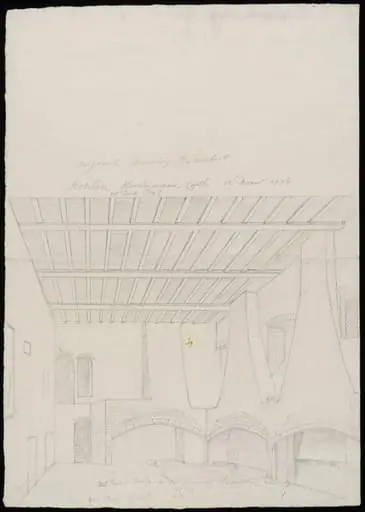 Interior of kitchen.
 Untitled
![The New Church of St. Mary - Old Hagerston [sic], July 1827, by T. H. Shepherd](https://artifactworldgallery.com/img/t-h-shepherd--the-new-church-of-st-mary-old-hagerston-sic-july-1827--b5b98602e349ff69-w320.webp) The New Church of St. Mary - Old Hagerston [sic], July 1827
The New Church of St. Mary - Old Hagerston [sic], July 1827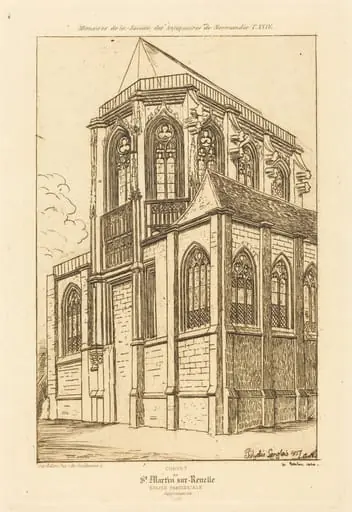 Chevet de St. Martin-sur-Renelle (The Apsis of the Church of St. Martin-sur-Renelle)
 Elevation of one of the great towers.
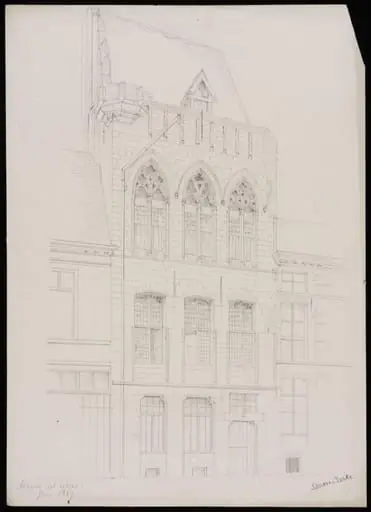 House at Ypres