Artwork
Interior of kitchen.
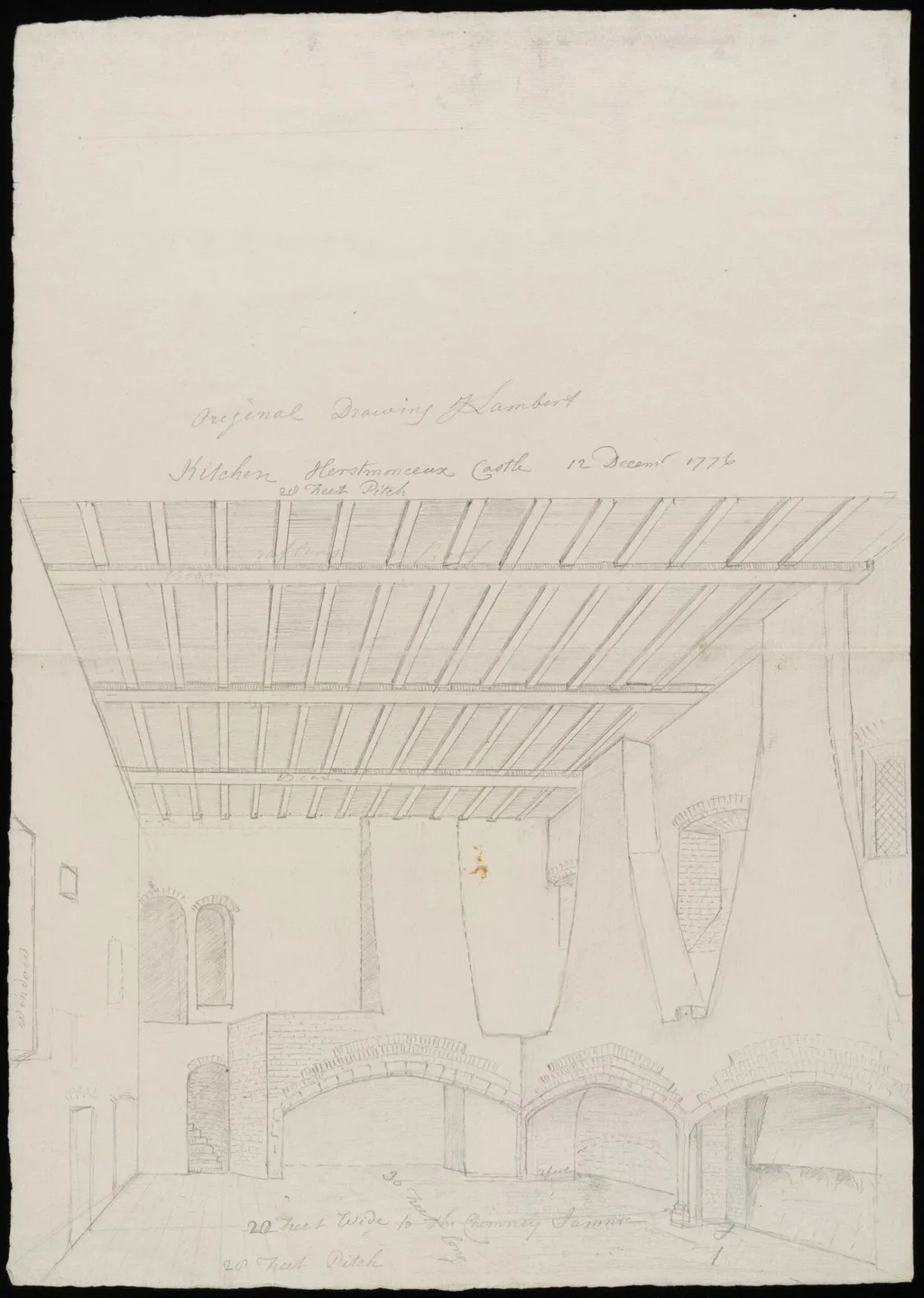
Interior of kitchen. is a drawing by the Romanticist artist James Lambert senior. It dates from 12 and is held in the collection of the Victoria and Albert Museum.
About this work
The drawing looks simple but careful, with lots of thin lines marking every detail.
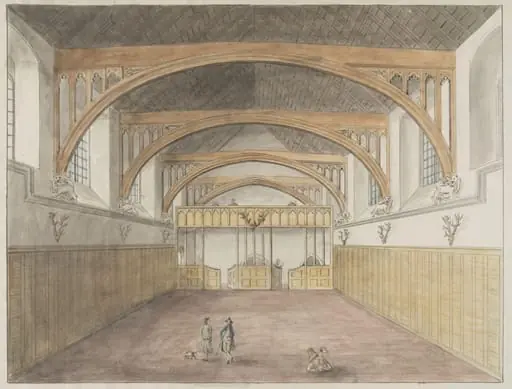
This sketch shows a big, empty kitchen with high wooden beams across the ceiling. A huge stone fireplace takes up one wall, with a small fire burning inside. The walls are plain brick, and there’s a large arched doorway on the right. The drawing looks simple but careful, with lots of thin lines marking every detail.
The notes say this was drawn in 1776, showing how kitchens were built back then. The artist measured everything, like the fireplace being 20 feet wide.
Want to see more old drawings like this? Check out the Victoria and Albert Museum.
Overview
This pencil drawing by James Lambert senior, dated 1776, depicts the interior of a domestic kitchen with precise architectural detail. Executed in fine, deliberate lines, the work captures the spatial layout and structural elements of an 18th-century English kitchen. It is part of the Victoria and Albert Museum’s collection, where it serves as a documentary record of domestic architecture from the period.
Subject & Meaning
The drawing presents a functional, unadorned kitchen space, emphasizing its utilitarian design. A massive stone fireplace dominates one wall, flanked by plain brick walls and a high, beam-supported ceiling. The arched doorway suggests access to other areas of the house. The absence of people or furnishings underscores the building’s structure rather than its daily use, highlighting the artist’s interest in measurement and form.
Technique & Style
Lambert employed fine, controlled pencil strokes to render every architectural feature with accuracy. The lines are light but deliberate, defining the texture of brick, the grain of timber beams, and the solidity of the hearth. Proportions are carefully observed—such as the 20-foot width of the fireplace—indicating a surveyor’s approach. The composition avoids embellishment, favoring clarity and precision over aesthetic flourish.
History & Provenance
Created in 1776, the drawing likely originated as part of a personal or professional architectural record. James Lambert senior, known for his measured sketches of buildings, may have produced it for documentation or study. It entered the Victoria and Albert Museum’s collection as part of its broader mission to preserve examples of British design and domestic life from the 18th century.
Context
In late 18th-century England, kitchens were often large, utilitarian rooms located away from main living areas. This drawing reflects the practical priorities of the time: heat retention, durability, and ease of cleaning. The scale of the fireplace, typical for large households, indicates the room’s role in both cooking and heating. Such drawings were rare as standalone works, making this an unusual example of architectural observation.
Legacy
The drawing remains a valuable resource for historians studying domestic architecture and material culture. Its measured precision offers insight into construction methods and spatial organization of the period. While not widely exhibited, it contributes to scholarly understanding of how ordinary spaces were recorded and valued in pre-industrial Britain.
Artist & collection
Artist
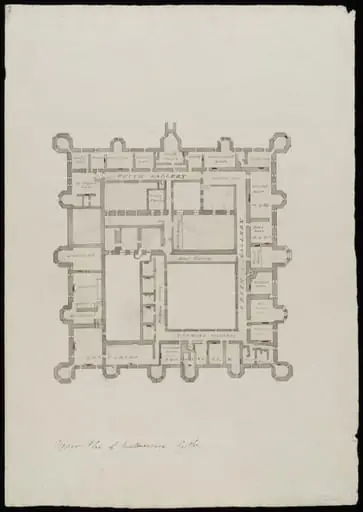
James Lambert senior drew precise sketches of buildings in 1776. His pencil lines map a grand house’s halls, kitchens, and floor plans with everyday dates—“Aug 6th,” “Nov 1st,” “Dec 12th”—as if recording a house under…

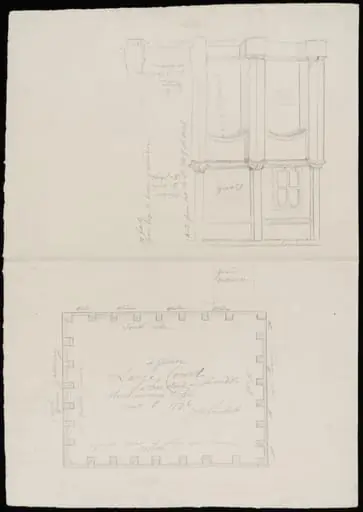
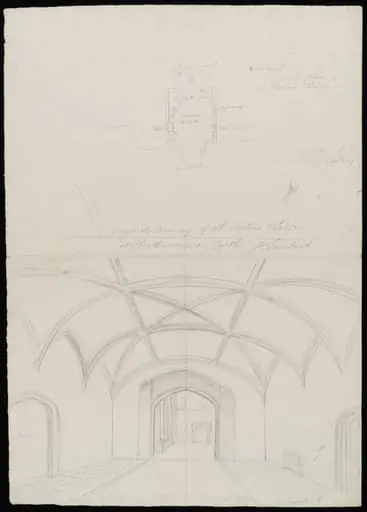 Interior, with sketch plan, of porter's lodge.
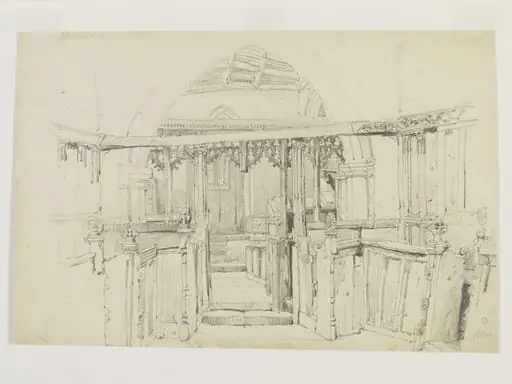 Blore-Ray Church in Staffordshire
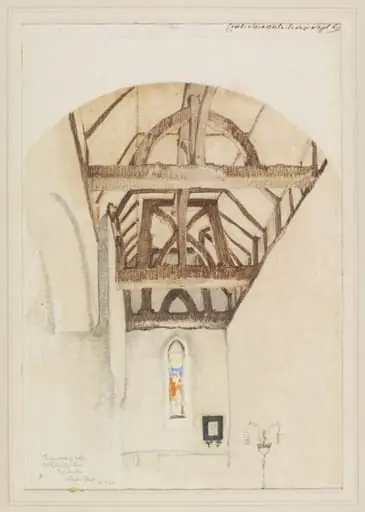 Timber work of Roof, St. Peter-the-Less, Chichester
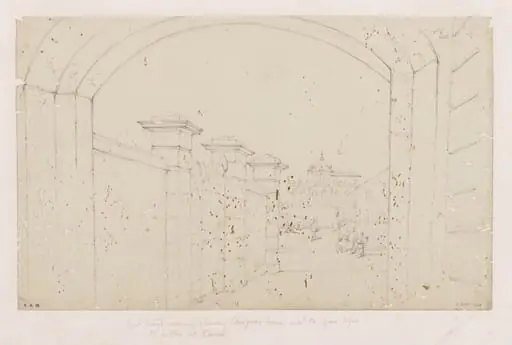 Chungqua's premises seen from the portico of the East India Company's 'factory' at Guangzhou (Canton)
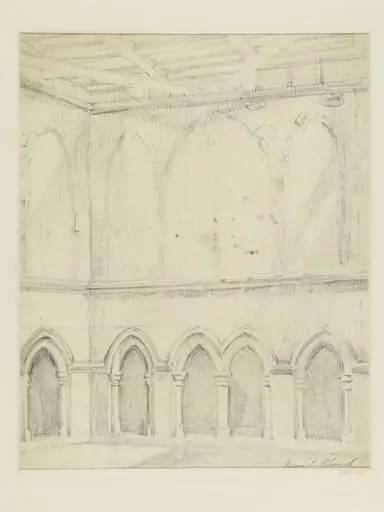 Temple Church
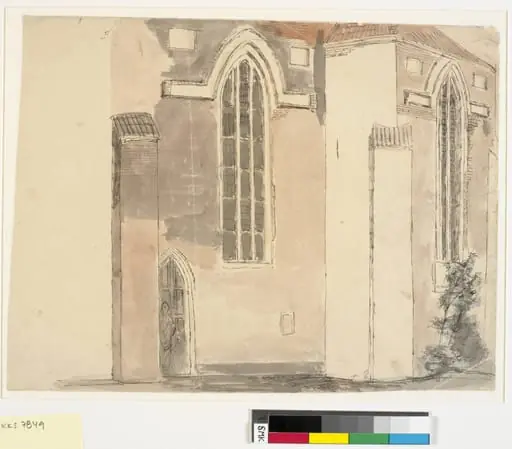 Parti af St. Hans' kirke i Odense
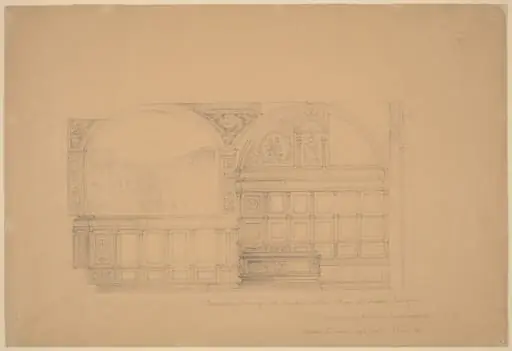 Perugino's Udienza del Cambio in the Collegio del Cambio, Perugia
 Drawing showing the interior decoration of houses in Cairo
 Architectural drawing
 Untitled
 The Court of the Lions, Alhambra