Artwork
Seaweed Gatherers, Yport
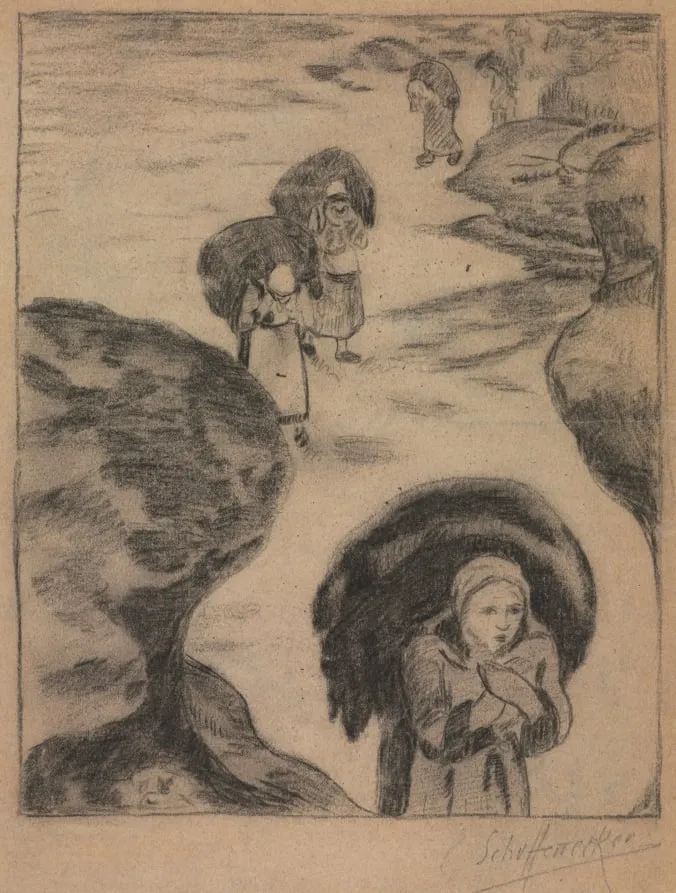
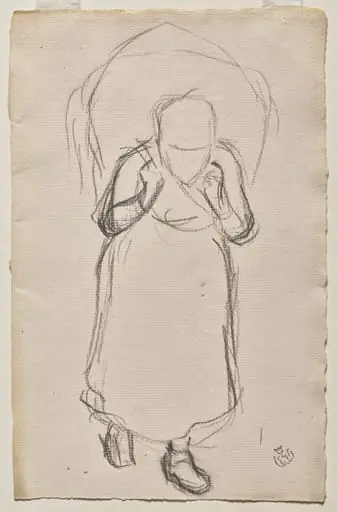
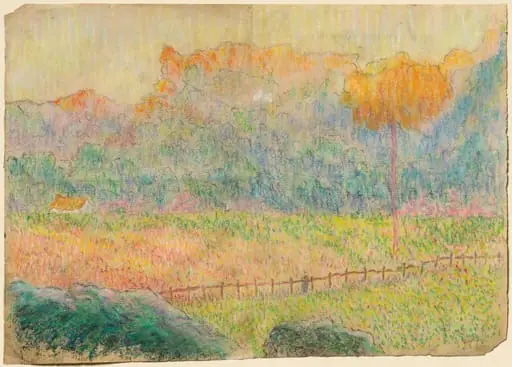
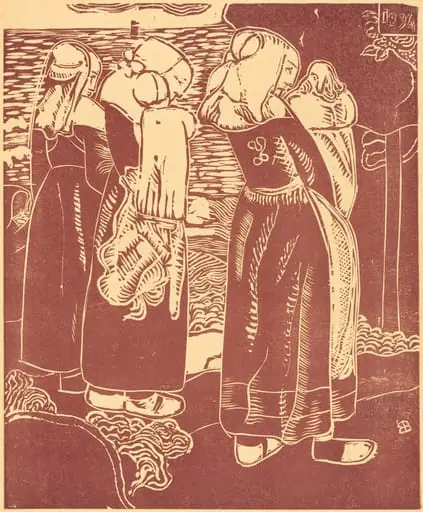
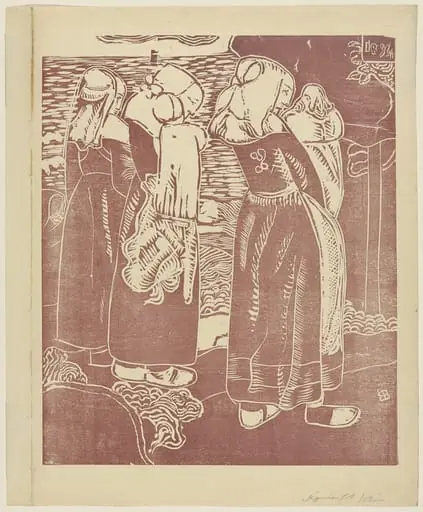
Seaweed Gatherers, Yport is a drawing by the Impressionist artist Émile Schuffenecker. It dates from 1889 and is held in the collection of the Cleveland Museum of Art.
About this work
Overview
Created by Claude-Émile Schuffenecker, this drawing is one of two versions depicting seaweed gatherers in Yport, a coastal village in Normandy.
Created by Claude-Émile Schuffenecker, this drawing is one of two versions depicting seaweed gatherers in Yport, a coastal village in Normandy. Executed in pastel, it belongs to a small body of work from the late 1880s when Schuffenecker collaborated closely with Paul Gauguin. The piece reflects their shared interest in moving beyond Impressionist naturalism toward simplified forms and symbolic content, aligning with the emerging Synthetist approach.
Subject & Meaning
The scene portrays two women in traditional dress stooping to collect seaweed along a rocky shore, a labor common among rural coastal communities. Schuffenecker and Gauguin viewed such everyday tasks as emblematic of an unmediated, authentic life—contrasting with urban modernity. The figures are rendered without narrative detail, emphasizing their quiet endurance and integration with the landscape, reinforcing the Synthetist pursuit of emotional and spiritual essence over literal representation.
Technique & Style
Schuffenecker employs flat, unmodulated areas of color with minimal shading, rejecting chiaroscuro and atmospheric perspective. The pastel medium allows for crisp edges and a matte, almost paper-cut quality. Forms are simplified into silhouettes, and the sky and sea are rendered in broad, pale washes. The absence of texture or brushstroke variation contributes to a stillness that heightens the scene’s meditative tone, characteristic of Synthetist ideals.
History & Provenance
The drawing was completed around 1889, contemporaneous with Schuffenecker’s involvement in Gauguin’s exhibition at the Café Volpini during the Paris Universal Exposition. While the oil version was included in that show, the pastel version remained in the artist’s possession. It later entered the collection of the Cleveland Museum of Art, where it has been held since the mid-20th century, preserving its original condition and early Synthetist context.
Context
In the late 1880s, artists in Brittany and Normandy sought alternatives to Impressionism’s fleeting effects. Schuffenecker and Gauguin, alongside others, turned to folk life, local traditions, and non-Western art for inspiration. Seaweed gathering, a seasonal, physically demanding task, became a symbol of resilience and simplicity. This subject, rendered without sentimentality, aligned with broader Symbolist and Post-Impressionist efforts to convey inner truth through distilled imagery.
Legacy
Though Schuffenecker is less known than Gauguin, this work remains a key example of Synthetism’s early development. Its restrained palette and formal clarity influenced later modernist movements that valued abstraction and emotional economy. The drawing’s quiet dignity and deliberate simplification continue to be studied as a quiet counterpoint to the more flamboyant expressions of contemporaneous avant-garde art.
Artist & collection
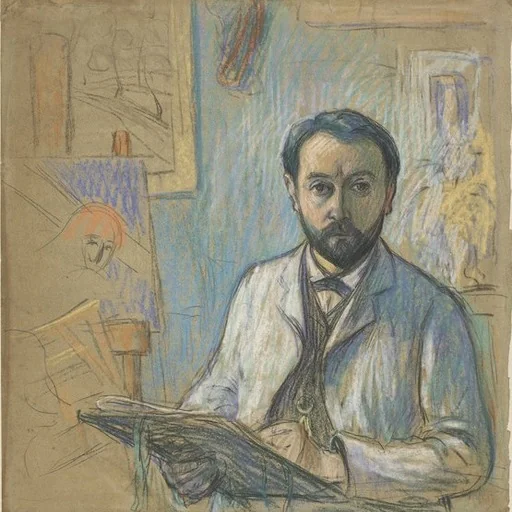
Artist
Claude-Émile Schuffenecker (8 December 1851 – 31 July 1934) was a French Post-Impressionist artist, painter, art teacher and art collector.