Artwork
Untitled
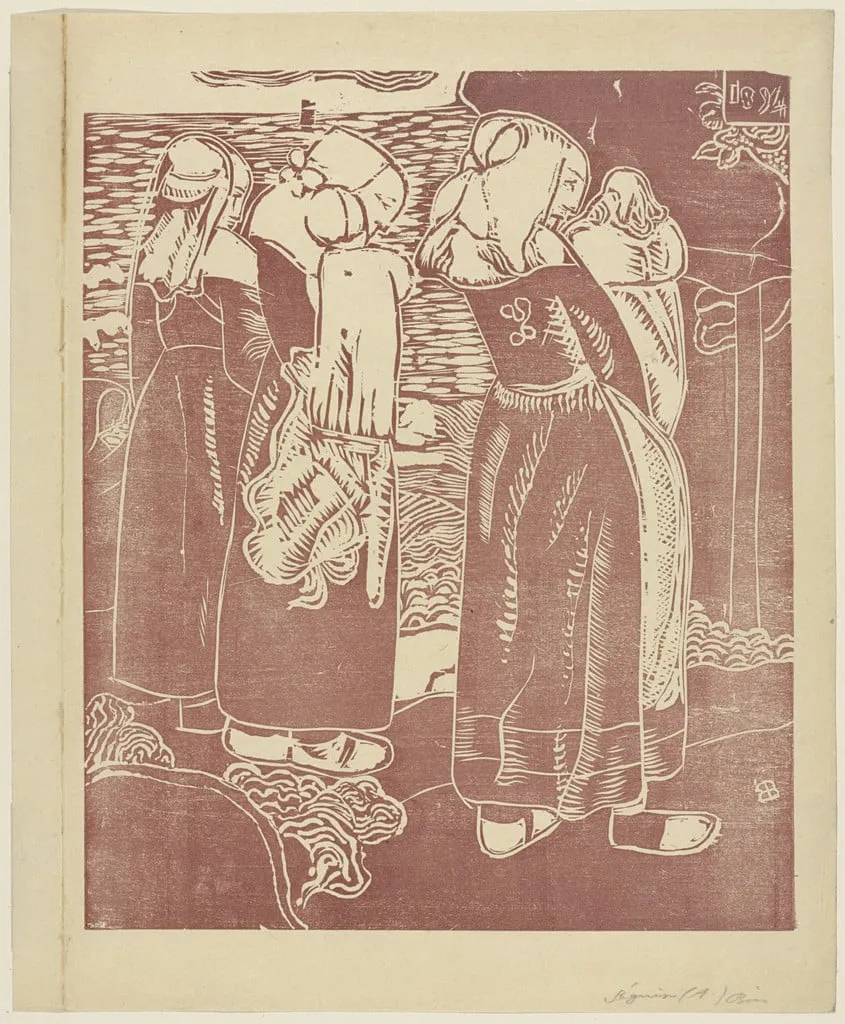
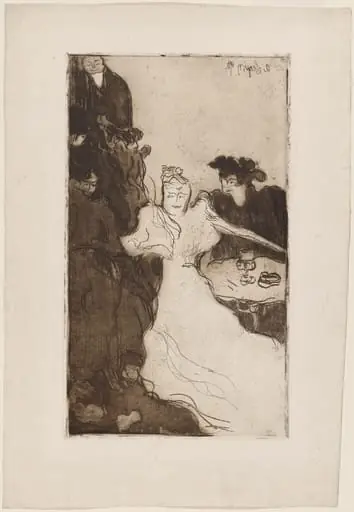
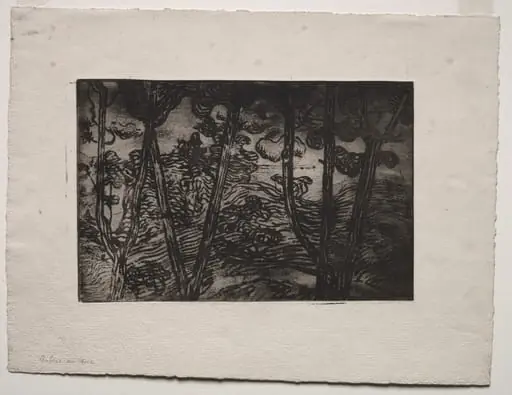
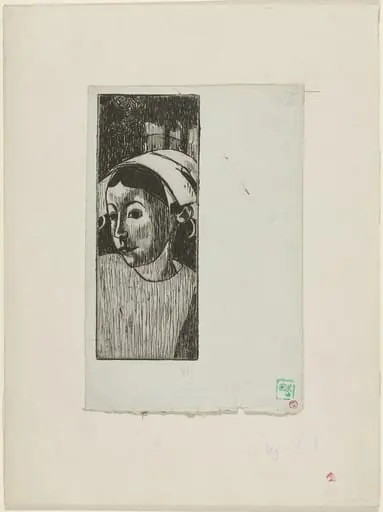
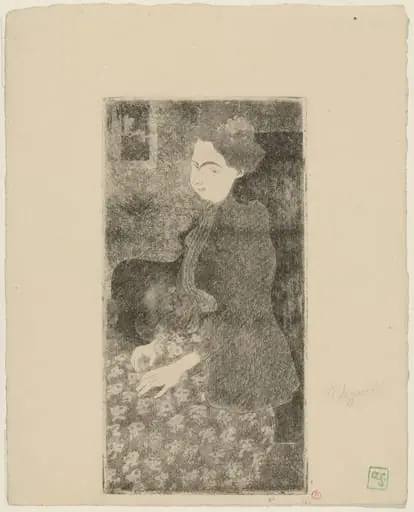
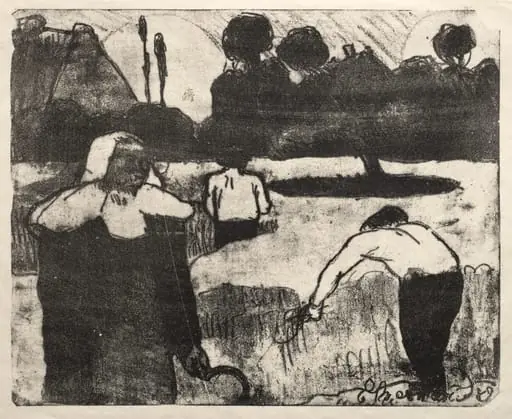
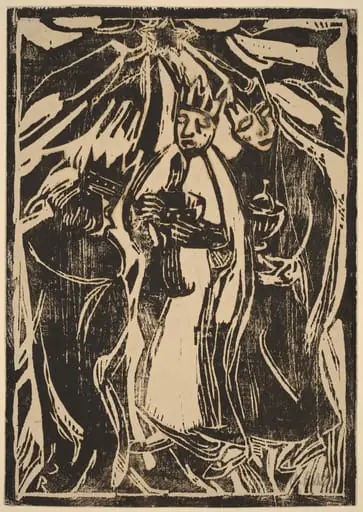
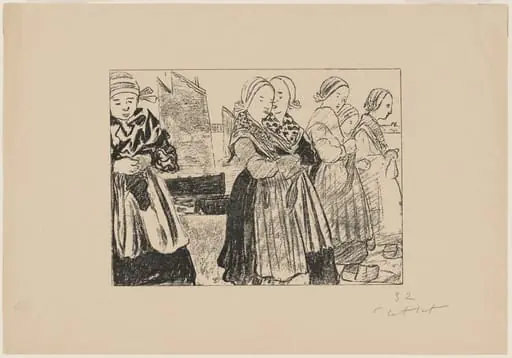
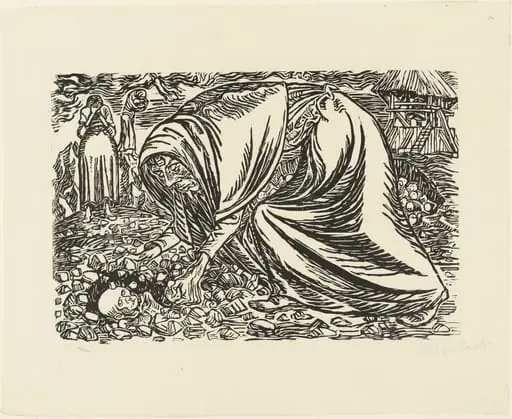
Untitled is an ink print by the Impressionist artist Armand Séguin. It dates from 1894 and is held in the collection of the Museum of Modern Art.
About this work
Overview
Associated with the Pont-Aven School, Séguin worked alongside figures like Paul Gauguin, absorbing their interest in symbolic form and simplified composition.
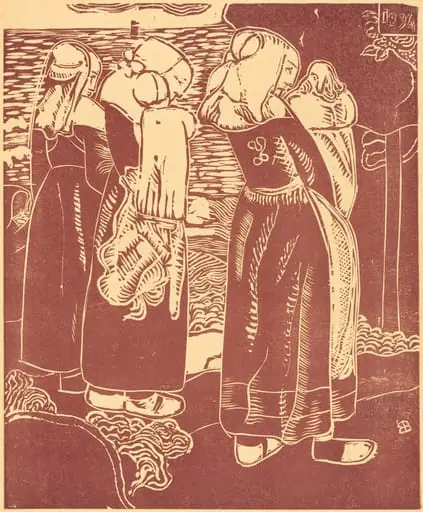
Created in 1894, this woodcut by Armand Séguin is a rare surviving print from his brief but intense period of artistic activity. Associated with the Pont-Aven School, Séguin worked alongside figures like Paul Gauguin, absorbing their interest in symbolic form and simplified composition. The piece reflects his engagement with printmaking as a medium for expressive reduction, distinct from his painted works.
Subject & Meaning
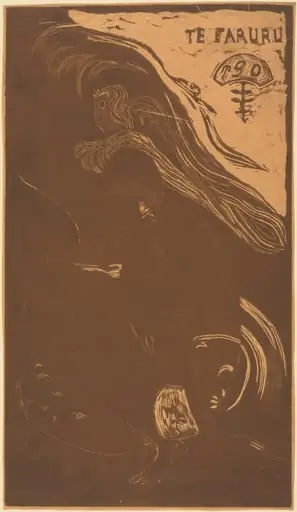
The image depicts a group of figures in long, draped garments, gathered in a quiet, ritualistic arrangement. Their hooded forms suggest a communal or spiritual act, though no specific religious tradition is identified. The absence of facial detail and the uniformity of posture emphasize anonymity and collective contemplation, aligning with Symbolist tendencies to evoke inner states over literal narrative.
Technique & Style
Séguin employed bold, carved lines and flat planes of tone to construct the scene, characteristic of woodcut’s capacity for stark contrast. Earthy browns and beiges dominate, with minimal color variation enhancing the meditative mood. The background suggests water through horizontal bands, while the figures are arranged in a shallow, stage-like space, prioritizing symbolic presence over realistic depth.
History & Provenance
The woodcut entered the collection of The Museum of Modern Art, where it remains as part of its early modern print holdings. Séguin’s output was limited due to his early death in 1903 at age 34, exacerbated by tuberculosis and alcoholism. His collaboration with Roderic O'Conor in printmaking during 1893–94 contributed to a small but significant body of work now recognized for its quiet intensity.
Context
Séguin’s work emerged within the broader Post-Impressionist shift away from naturalism toward symbolic and emotional expression. Influenced by Gauguin’s emphasis on flatness and spiritual themes, his prints reflect the Pont-Aven School’s interest in non-Western aesthetics and simplified form. This woodcut aligns with contemporaneous efforts to use printmaking as a vehicle for personal, non-academic vision.
Legacy
Though Séguin’s career was cut short, his woodcuts, including this untitled work, are noted for their restraint and emotional gravity. They represent a lesser-known but vital strand of late 19th-century printmaking that bridged Symbolism and early modern abstraction. His influence endures in the recognition of print as a serious medium for introspective, non-narrative art.
Artist & collection
Artist
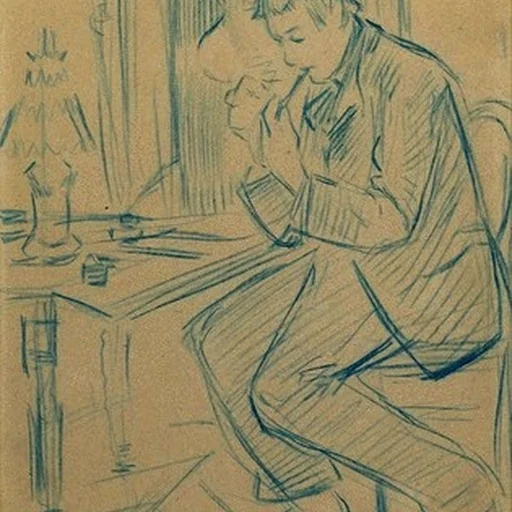
Armand Séguin (1869–1903) was a post-Impressionist French painter who is remembered for his involvement in the Pont-Aven School beginning in 1891.