Artwork
Landscape with Noli me tangere Scene
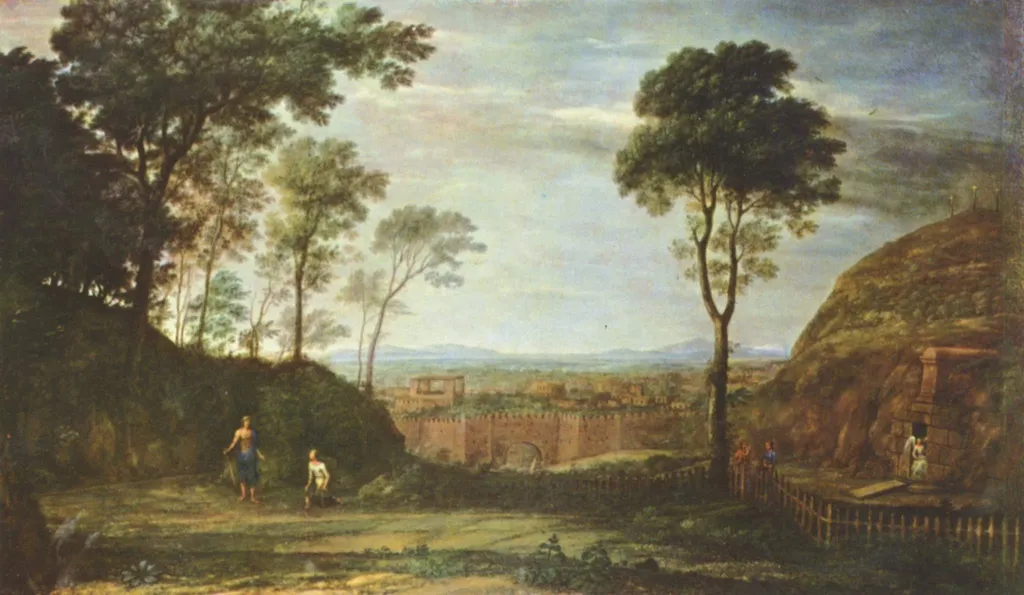
Landscape with Noli me tangere Scene is an oil painting by Claude Lorrain. It is held in the collection of the Städel Museum.
About this work
Overview
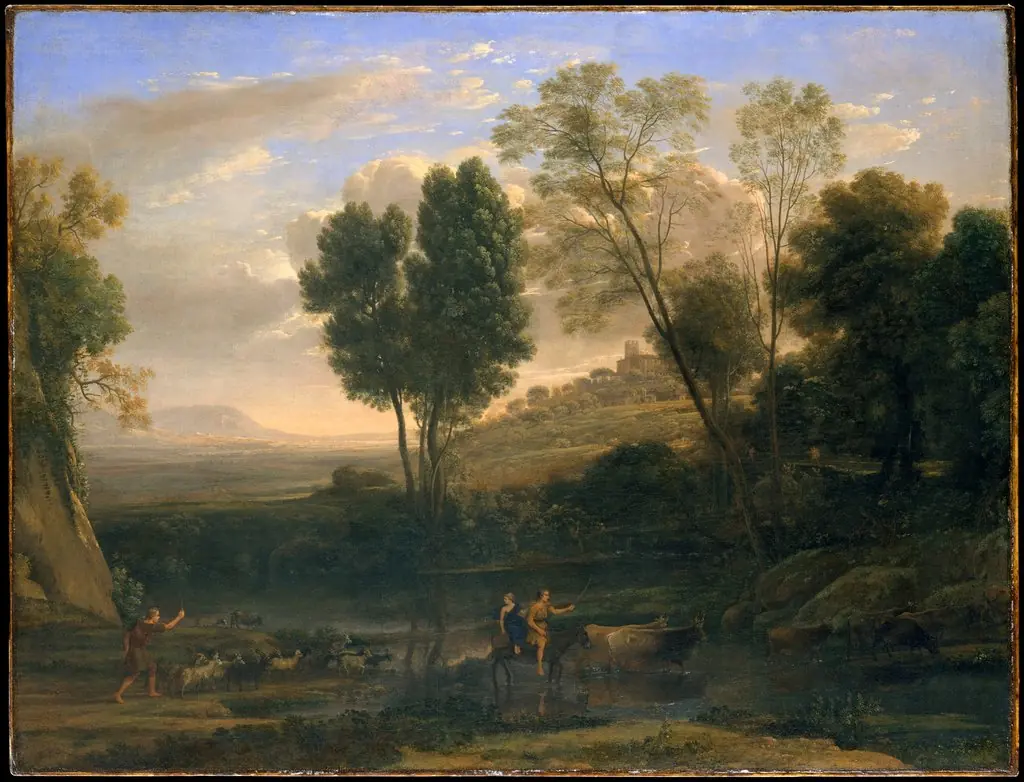
Though dominated by expansive natural elements—rolling hills, dense foliage, and a soft sky—the composition centers on two modestly rendered figures.
Painted in 1691, this oil-on-canvas work by Claude Lorrain presents a tranquil rural scene infused with a biblical narrative. Though dominated by expansive natural elements—rolling hills, dense foliage, and a soft sky—the composition centers on two modestly rendered figures. Lorrain, a French artist who spent most of his life in Italy, specialized in landscapes that subtly integrated sacred stories, blending topographical detail with spiritual resonance.
Subject & Meaning
The painting illustrates the moment from the Gospel of John when the risen Christ appears to Mary Magdalene outside the empty tomb, instructing her not to touch him. The woman in blue, likely Magdalene, is shown recoiling slightly as the figure in white, representing Christ, gestures gently. Their small scale within the vast landscape underscores the quiet intimacy of the encounter, framing divine revelation within the calm of nature rather than dramatic spectacle.
Technique & Style
Lorrain employed subtle gradations of light and atmospheric perspective to create depth, guiding the viewer’s eye from the foreground figures toward the distant gate and architecture. His use of chiaroscuro is restrained, enhancing mood without theatricality. The brushwork is smooth and deliberate, with soft transitions between tones. Trees and clouds are rendered with a lyrical precision that unites naturalism with idealized harmony, characteristic of his mature style.
History & Provenance
The painting entered the Städel Museum’s collection in the 19th century, having passed through private European hands since its creation. It was likely acquired during a period of heightened interest in 17th-century Italianate landscapes. No significant alterations or reworkings are documented, and its condition remains consistent with careful preservation over three centuries.
Context
In late 17th-century Rome, landscape painting was increasingly valued as an independent genre, though still often infused with classical or biblical themes. Lorrain’s works catered to collectors seeking serene, morally elevated scenes that reflected humanist ideals. His integration of scripture into idealized nature aligned with broader trends among patrons who favored contemplative art over overt religious drama.
Legacy
Lorrain’s approach influenced generations of landscape painters, particularly in England and France, where his compositional balance and atmospheric effects became benchmarks. While not widely imitated in subject matter, his method of embedding narrative within expansive, luminous scenery helped define the aesthetic of poetic landscape for over a century. This painting exemplifies his enduring contribution to the evolution of Western landscape tradition.
Artist & collection
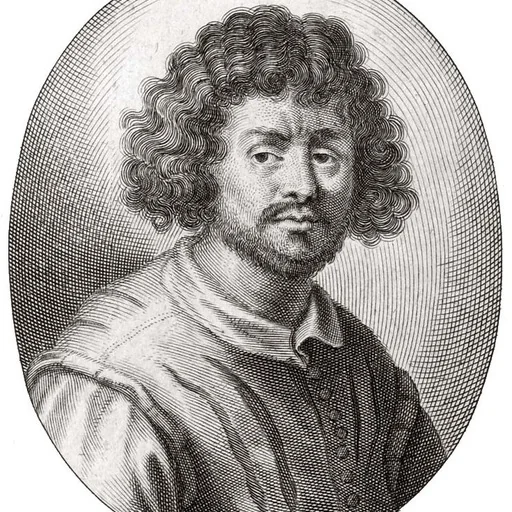
Artist
Claude Lorrain (French: ; born Claude Gellée , called le Lorrain in French; traditionally just Claude in English; c.

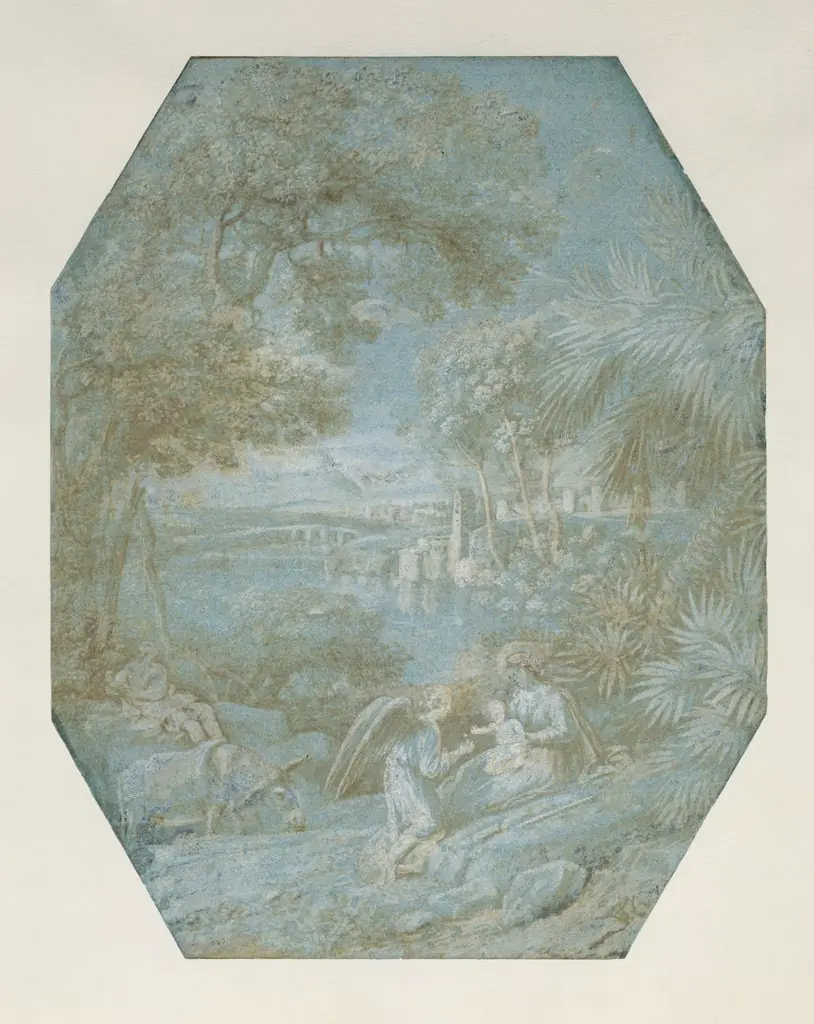
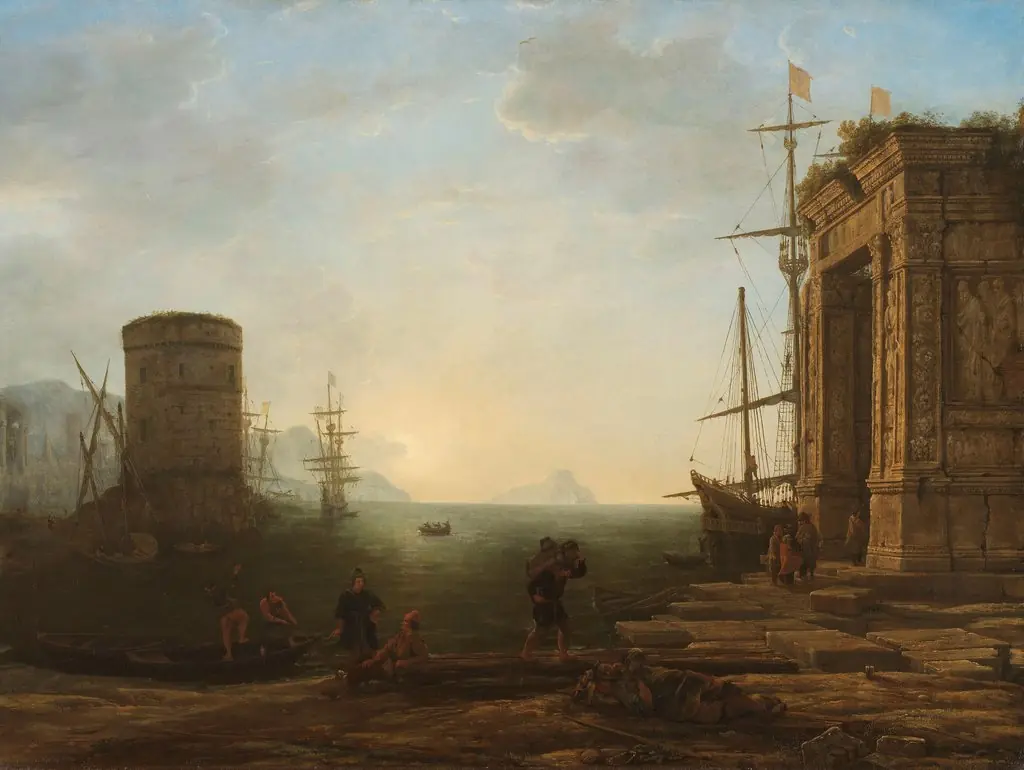
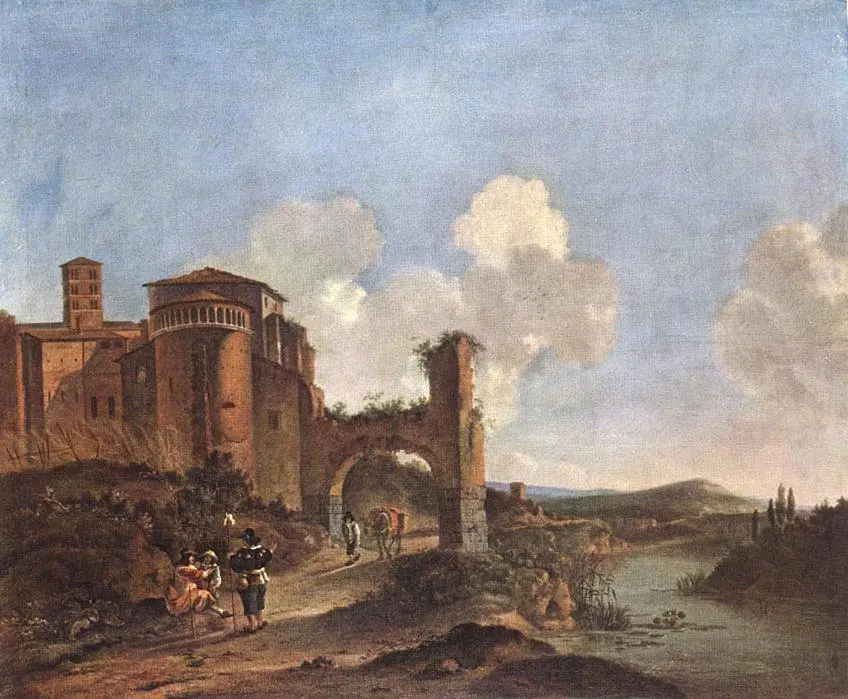 Italian Landscape with Santi Giovanni e Paolo in Rome
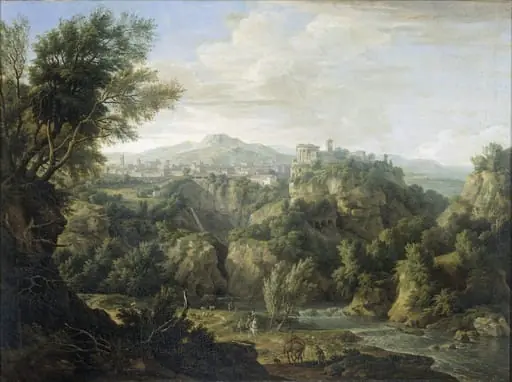 View of Tivoli
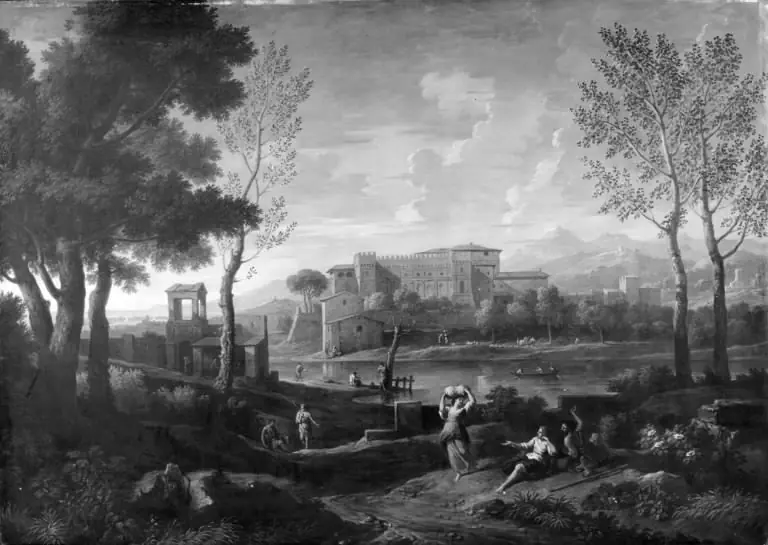 Roman Landscape with the Tiber and the Casino Belvedere
 Roman Landscape with the Tiber and the Casino Belvedere
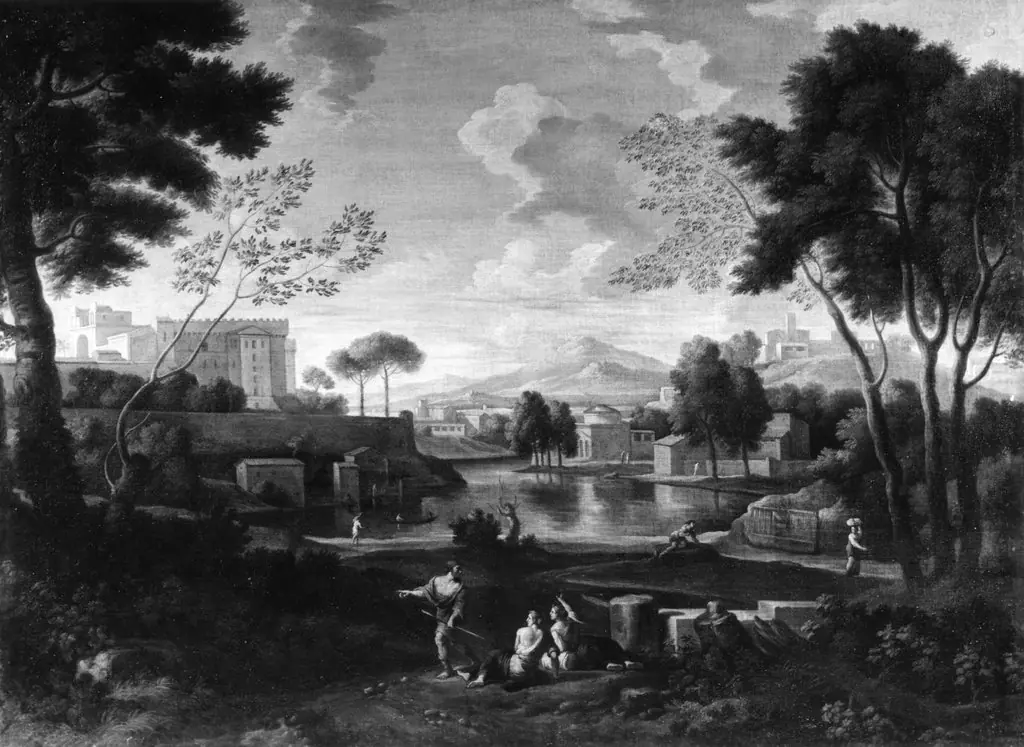 Classical Landscape with the Vatican Belvedere
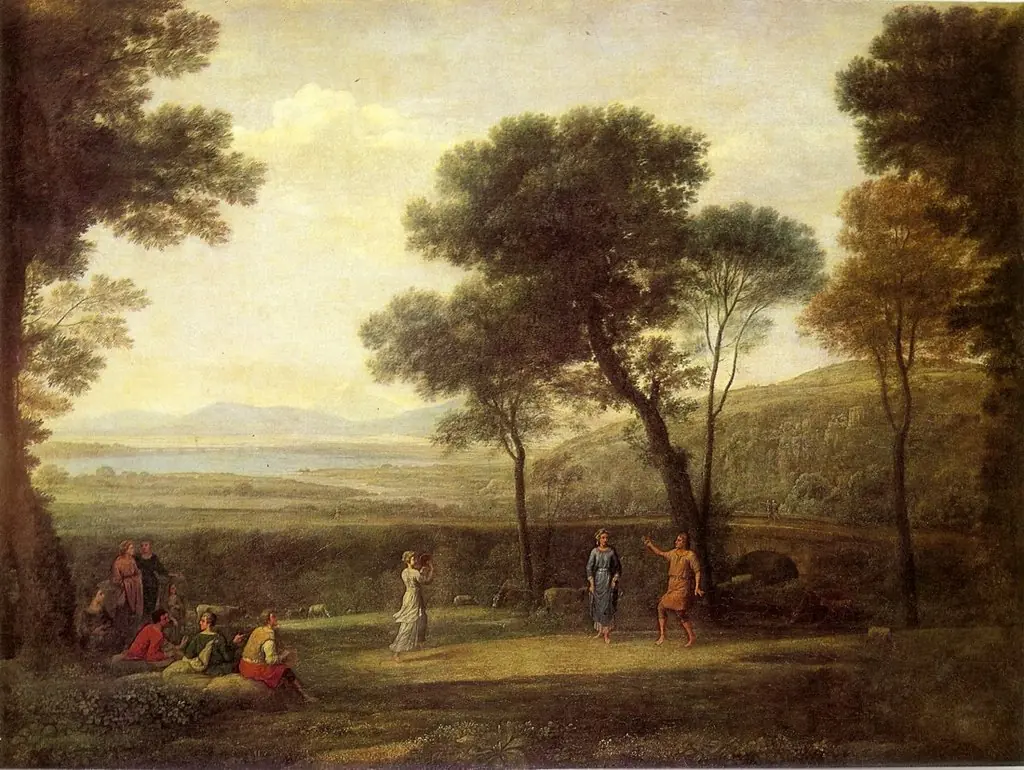 Landscape with Dancing Figures
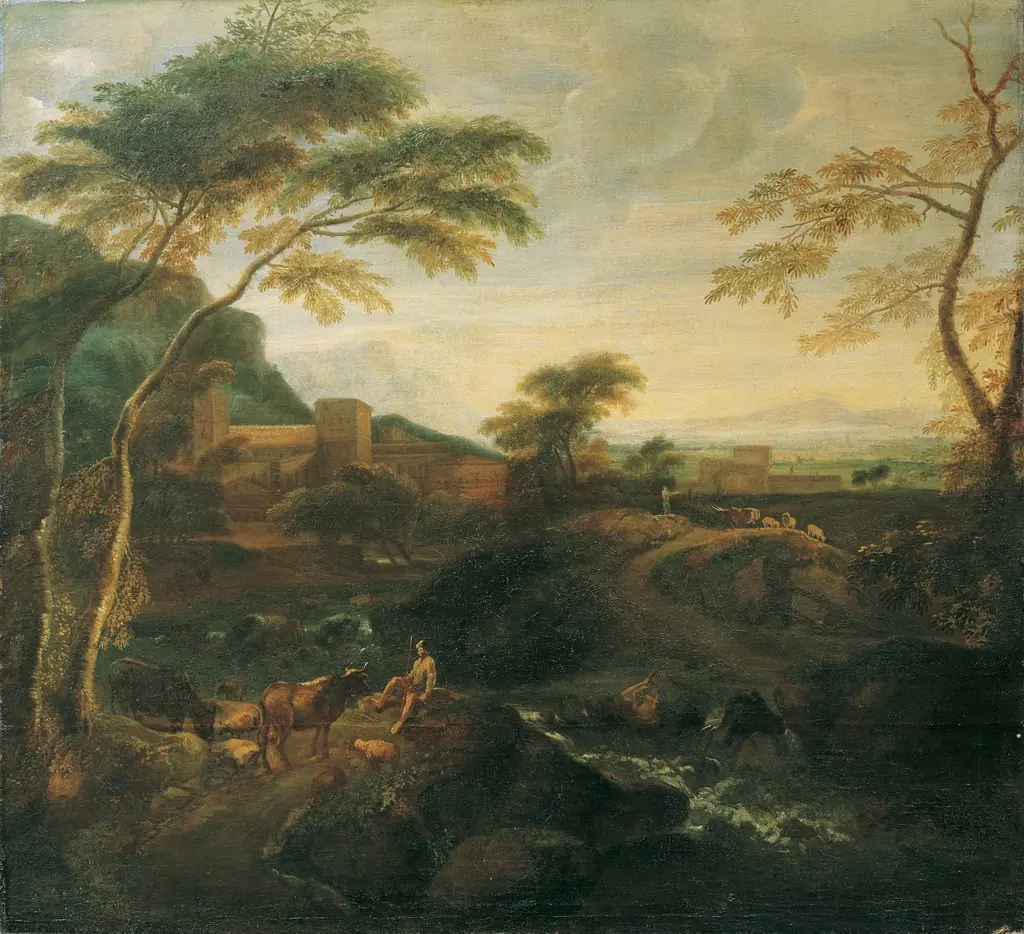 Landscape with Grazing Cattle
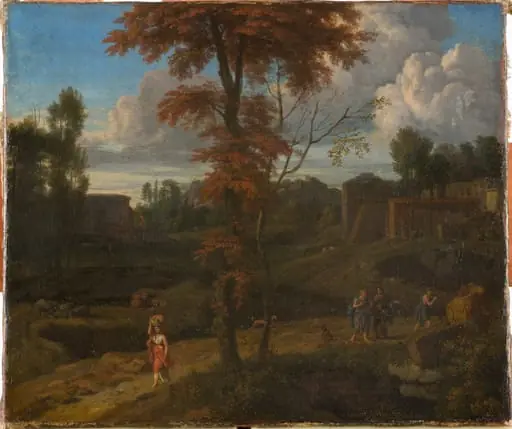 Der Morgen
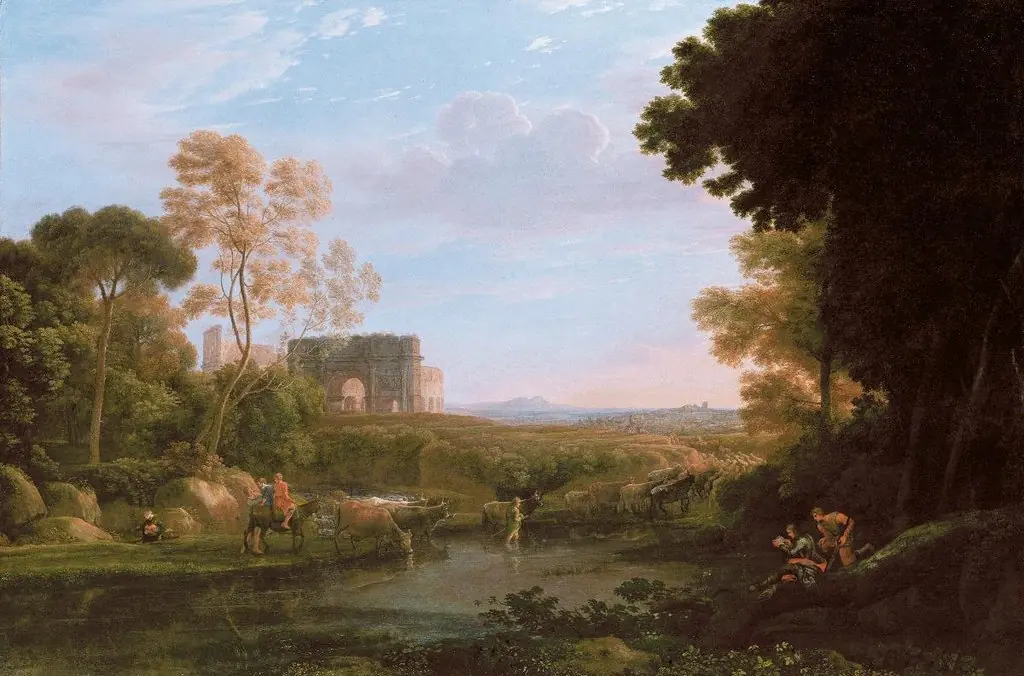 Pastorale avec l’Arc de Constantin
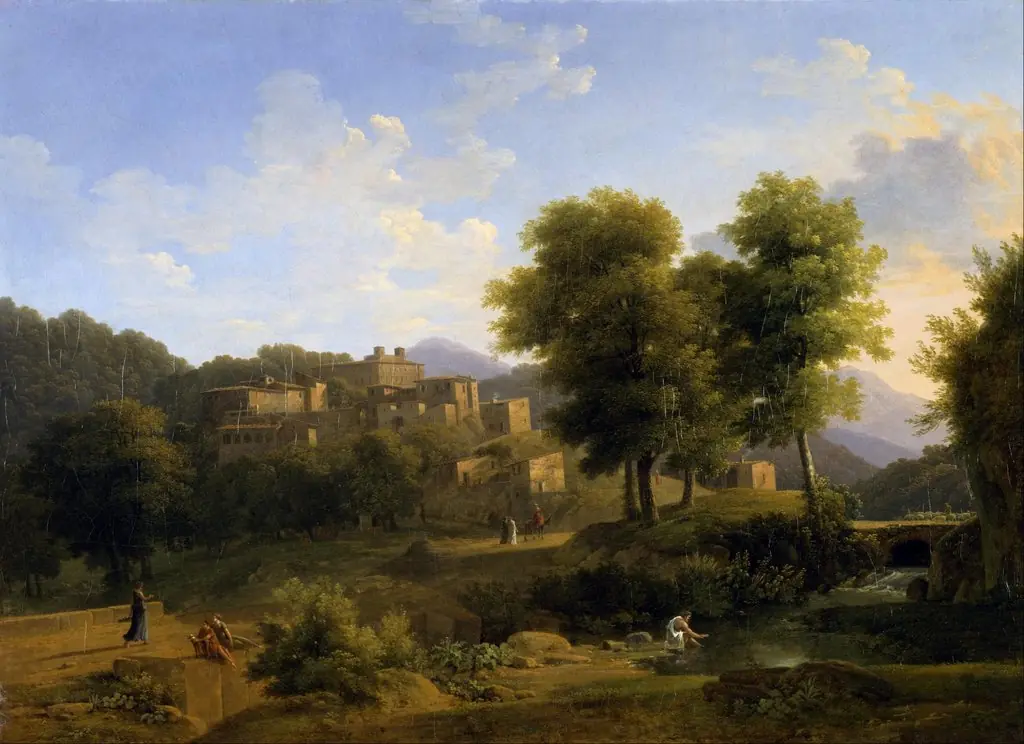 View of a Town in the Sabine Hills
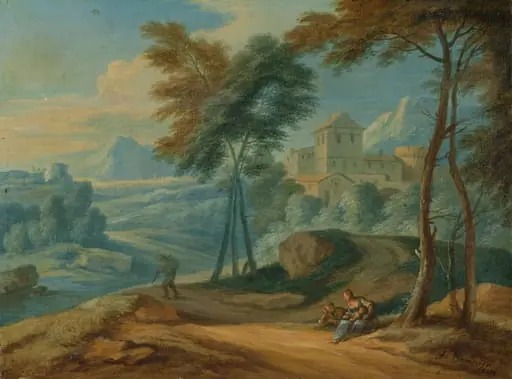 Wooded Italianate Landscape with Figures
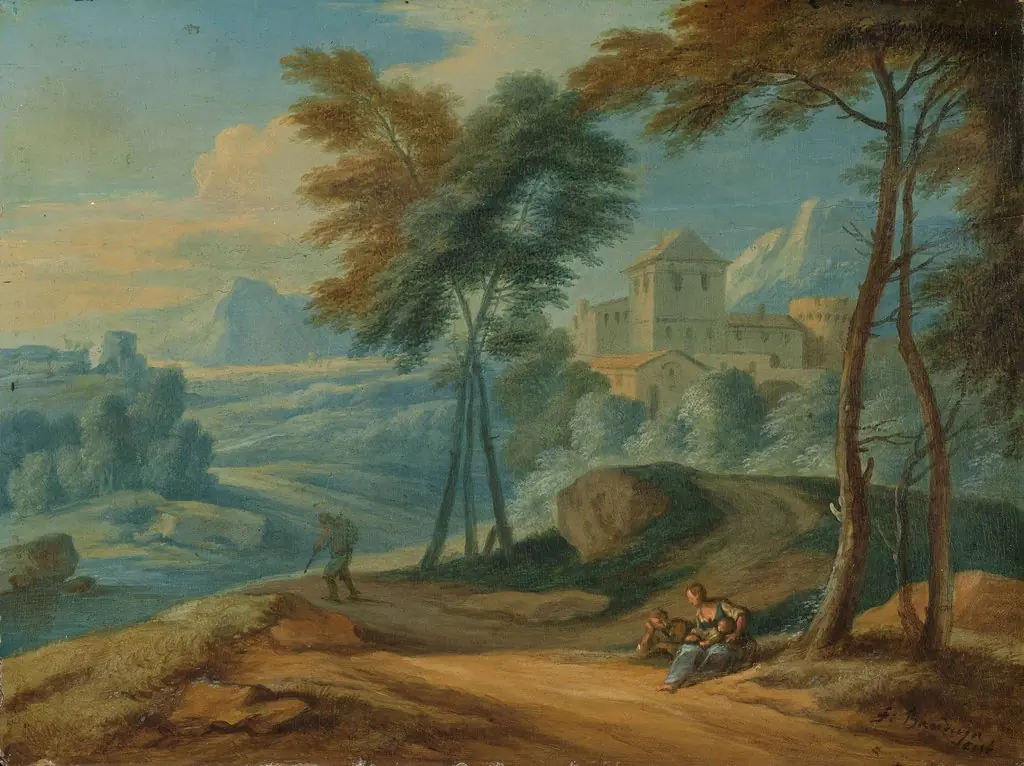 Mountainous landscape